

Managing debt can feel overwhelming, especially when you're juggling multiple financial obligations. Whether you're dealing with personal loans for home improvements, medical expenses, or educational costs, having a structured approach makes all the difference. The right loan repayment strategies can help you eliminate debt faster, save thousands in interest, and build a stronger financial foundation for your future. Understanding your options and choosing a method that aligns with your financial situation empowers you to take control of your money and work toward true financial independence.
Understanding Your Current Debt Situation
Before implementing any repayment strategy, you need a clear picture of your financial landscape. Start by listing every loan you currently have, including the outstanding balance, interest rate, minimum monthly payment, and due date.
This comprehensive inventory reveals patterns you might have missed. Many borrowers discover they're paying significantly more interest on certain loans than others, or that multiple small debts are consuming a disproportionate amount of mental energy and administrative time.
Key information to gather:
- Total balance owed on each loan
- Annual percentage rate (APR) for every account
- Minimum payment requirements
- Remaining term length
- Any prepayment penalties or fees
Creating a spreadsheet or using a debt tracking app helps visualize the full scope of your obligations. This foundation allows you to make informed decisions about which loan repayment strategies will deliver the best results for your specific circumstances.
The Debt Avalanche Method
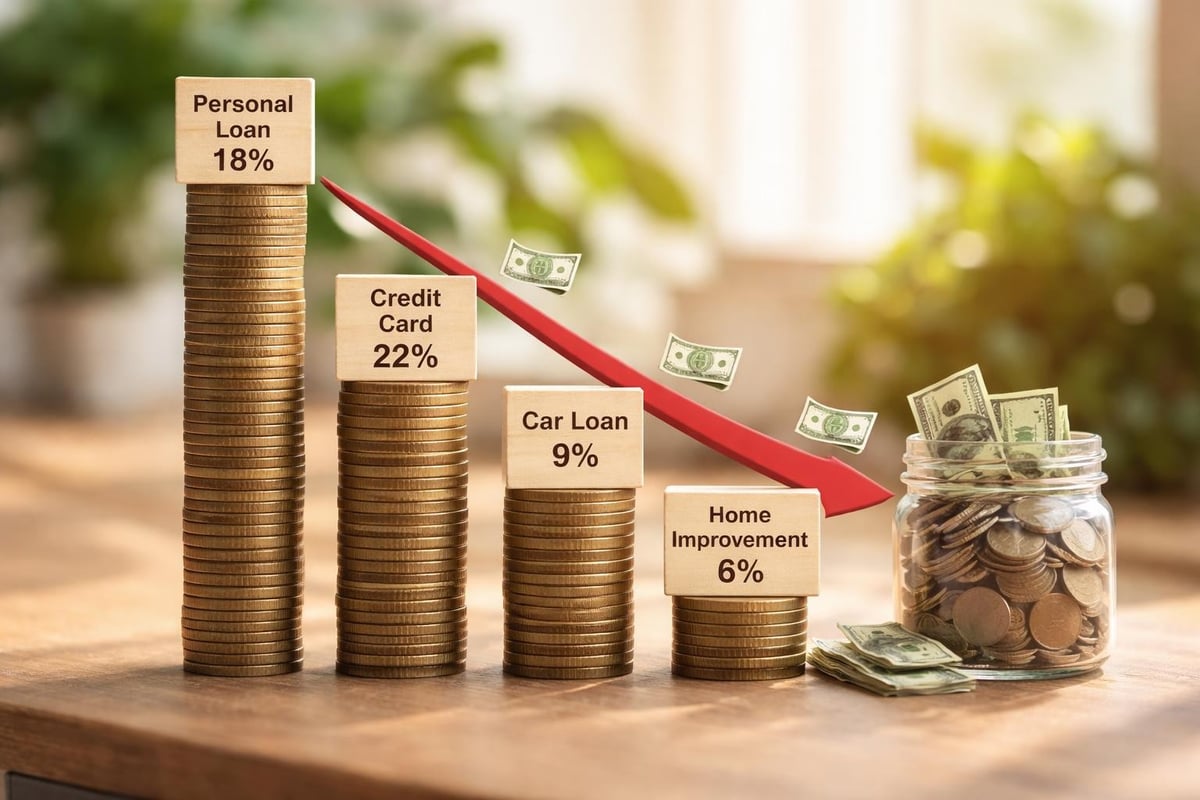
The avalanche method prioritizes loans by interest rate, targeting the highest-rate debt first while maintaining minimum payments on everything else. This mathematical approach minimizes total interest paid over time, making it the most cost-effective strategy for many borrowers.
Here's how it works: identify your loan with the highest interest rate and direct every extra dollar toward that balance. Once you eliminate that debt, move to the account with the next-highest rate, rolling over the previous payment amount plus any additional funds you can allocate.
Why the Avalanche Works
Financial advantages include:
- Maximum interest savings over the life of your loans
- Faster overall debt elimination compared to paying minimums
- Reduced total cost of borrowing
- Strategic allocation of limited resources
The debt avalanche and debt snowball methods each offer distinct advantages depending on your psychological preferences and financial goals. The avalanche method particularly benefits borrowers with high-interest personal loans or credit card balances, where interest charges accumulate rapidly.
The Debt Snowball Approach
While mathematically less efficient than the avalanche method, the snowball approach offers powerful psychological benefits. This strategy focuses on paying off your smallest balance first, regardless of interest rate, creating momentum through quick wins.
Start by listing debts from smallest to largest balance. Attack the smallest debt with all available extra funds while maintaining minimum payments on larger obligations. When that first loan disappears, you experience an immediate sense of accomplishment that fuels continued progress.
| Method | Priority | Best For | Key Benefit |
|---|---|---|---|
| Avalanche | Highest interest rate | Math-focused savers | Minimum interest paid |
| Snowball | Smallest balance | Motivation-driven borrowers | Quick psychological wins |
| Hybrid | Mix of both | Balanced approach | Customized strategy |
Psychological Power of Small Wins
The snowball method recognizes that personal finance is deeply emotional. Each paid-off loan eliminates a monthly obligation, freeing up cash flow and mental energy. This visible progress maintains motivation during the marathon of debt repayment.
For borrowers managing multiple smaller personal loans for medical expenses or educational costs, the snowball approach can transform an overwhelming situation into a manageable, step-by-step process.
Making Extra Principal Payments
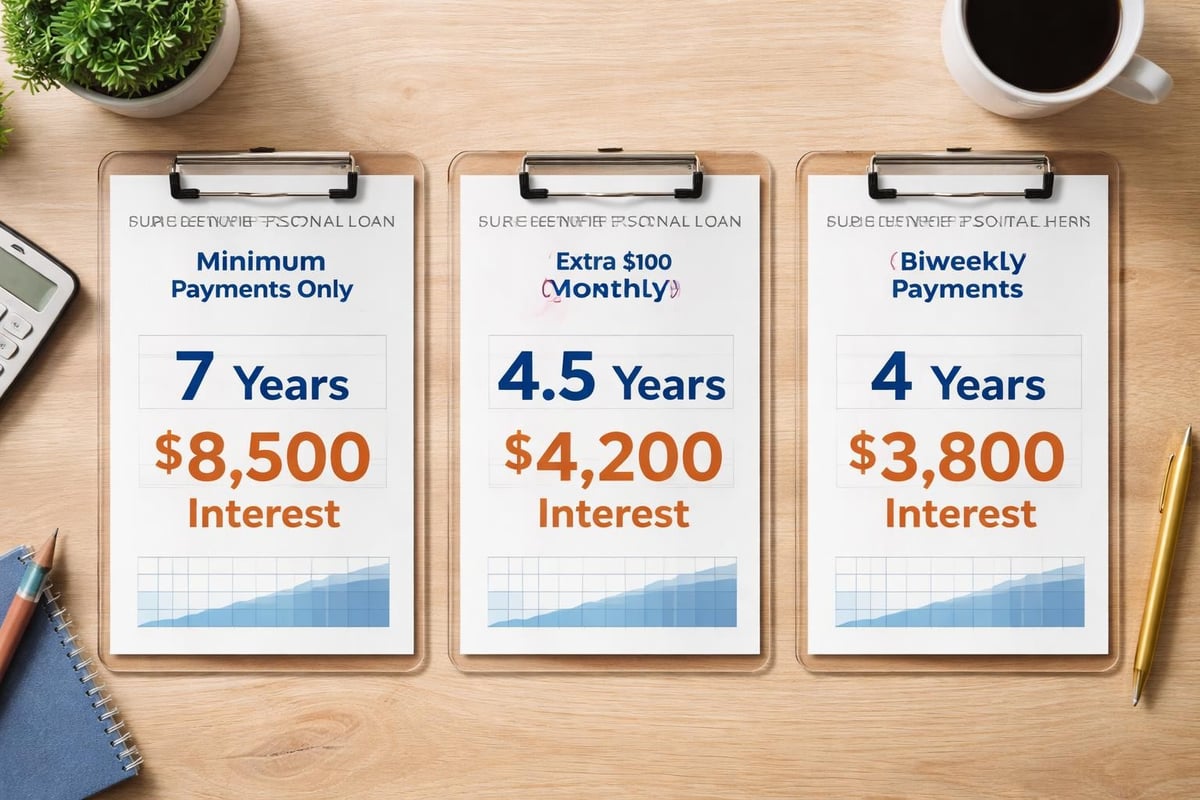
Regardless of which loan repayment strategies you choose, directing additional funds toward principal balances accelerates your timeline dramatically. Even modest extra payments compound over time, reducing both the total interest paid and the length of your repayment period.
When you make an extra payment, specify that the funds should apply to principal, not future interest. Contact your lender to confirm their process, as some automatically apply extra payments to upcoming scheduled payments rather than reducing the principal balance immediately.
Effective approaches for generating extra payments:
- Apply work bonuses directly to loan balances
- Use tax refunds for principal reduction
- Round up monthly payments to the nearest hundred
- Dedicate raises or income increases to debt
- Apply windfalls from gifts or unexpected income
Many successful borrowers schedule automatic payments to ensure consistency and remove the temptation to spend available cash elsewhere. Automation transforms good intentions into guaranteed progress.
Biweekly Payment Strategy
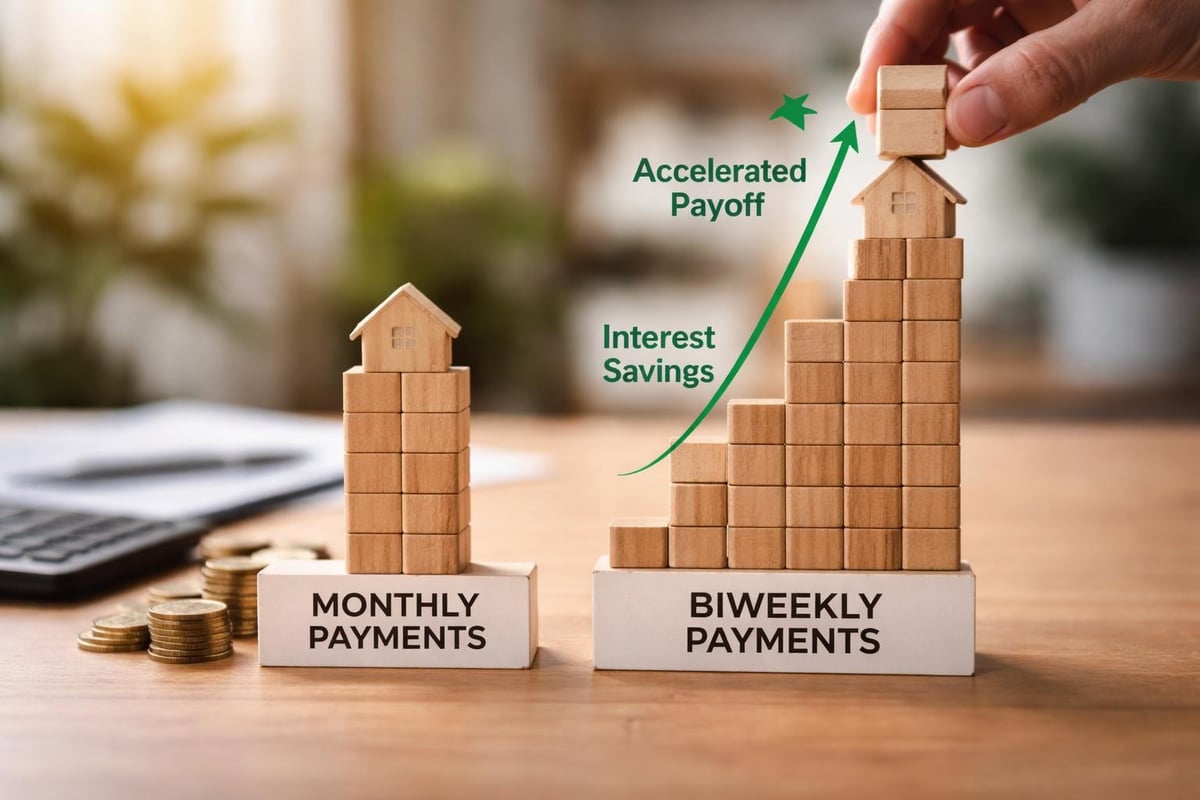
Switching from monthly to biweekly payments creates an extra full payment each year without straining your budget. Since there are 52 weeks annually, making half-payments every two weeks results in 26 half-payments, equivalent to 13 full monthly payments instead of 12.
This strategy works particularly well if you receive biweekly paychecks. Align your loan payments with your income schedule to maintain consistent cash flow and avoid the feast-or-famine cycle many borrowers experience.
Implementation Steps
Schedule biweekly payments to match your pay schedule. Contact your lender to confirm they accept this payment frequency and that extra funds apply to principal reduction rather than prepaying future interest.
Some lenders charge fees for biweekly payment programs, so verify terms before committing. If fees apply, you can replicate the same benefit by making one extra monthly payment each year, divided into twelve additional amounts added to your regular payment.
Refinancing for Better Terms
Refinancing replaces your current loan with a new one, ideally at a lower interest rate or better terms. This strategy makes sense when interest rates have dropped since you borrowed, or when your credit score has improved significantly.
For borrowers in Louisiana, Mississippi, Tennessee, and Georgia, regional economic conditions and local lending markets create opportunities for refinancing personal loans. Even a modest rate reduction on a substantial balance generates meaningful savings.
When refinancing makes sense:
- Your credit score has increased by 50+ points
- Market interest rates have decreased substantially
- You can shorten your repayment term without unaffordable payments
- You need to consolidate multiple loans for simplicity
- Your current lender offers loyalty refinancing programs
Before refinancing, calculate the total cost including fees, and compare against your current loan's remaining interest. Understanding new repayment terms ensures you're genuinely improving your financial position rather than simply resetting the clock on your debt.
Balancing Debt Repayment with Savings
While aggressive debt repayment delivers substantial benefits, maintaining emergency savings prevents financial setbacks that could derail your progress. Financial experts typically recommend keeping three to six months of expenses in an accessible savings account.
Consider this balanced approach: build a modest emergency fund of $1,000 to $2,000, then focus intensely on high-interest debt while contributing smaller amounts to savings. Once you eliminate the most expensive loans, increase savings contributions while continuing to pay down remaining balances.
| Scenario | Emergency Fund Target | Debt Focus | Savings Rate |
|---|---|---|---|
| Stable income, low expenses | 3 months expenses | Aggressive | 5-10% |
| Variable income | 6 months expenses | Moderate | 15-20% |
| Single income household | 6 months expenses | Moderate | 10-15% |
| Dual income household | 3-4 months expenses | Aggressive | 5-10% |
This balanced strategy prevents the cycle of paying down debt only to use credit cards for unexpected expenses, which restarts the debt accumulation process. Strategic loan repayment strategies account for real-life emergencies rather than assuming perfect conditions.
Leveraging Windfalls Strategically
Tax refunds, work bonuses, inheritances, and other financial windfalls present powerful opportunities to accelerate debt elimination. Rather than allowing lifestyle inflation to consume these amounts, direct at least 75% of unexpected income toward your highest-priority loan.
The psychological temptation to spend windfalls on immediate gratification is strong, but the long-term benefit of debt reduction far outweighs short-term pleasure. Calculate how much interest you'll save by applying a windfall to principal, making the invisible benefit visible and compelling.
Creating a Windfall Action Plan
Before receiving extra money, decide how you'll allocate it. A predetermined plan removes emotional decision-making and prevents rationalization. Consider splitting windfalls into three categories: 75% to debt, 15% to savings, and 10% for something enjoyable that maintains motivation.
This balanced approach acknowledges human psychology while maintaining progress toward financial freedom. You deserve recognition for your hard work, but that celebration shouldn't derail months of disciplined repayment efforts.
Income-Based Repayment Considerations
For certain types of loans, income-driven repayment plans adjust monthly payments based on your earnings and family size. While these programs offer relief during financial hardship, they typically extend the repayment period and increase total interest paid.
Understanding when to use income-based repayment versus aggressive payoff strategies requires honest assessment of your financial trajectory. Temporary reduced payments during career transitions or family changes make sense, but treating reduced payments as a permanent solution often prolongs debt unnecessarily.
Situations where income-based repayment helps:
- Recent job loss or income reduction
- Medical emergencies affecting earning capacity
- Career transition periods
- Temporary family circumstances requiring reduced expenses
Monitor your situation regularly and increase payments as income improves. New rules for federal student loans effective July 2026 will impact borrowers' options, making it essential to stay informed about changing policies that affect your repayment strategy.
Addressing Multiple Loan Types Simultaneously
Many borrowers manage various loan types concurrently, including personal loans for home improvements, medical expenses, and educational costs. Each loan type may have different terms, interest rates, and tax implications, requiring a coordinated strategy.
Prioritize based on a combination of factors beyond just interest rates. Consider whether interest is tax-deductible, whether the loan is secured by collateral, and the flexibility of repayment terms when ranking your debts.
Creating a Unified Repayment Plan
Map all loans onto a single timeline showing when each debt will be eliminated based on your chosen strategy. This visual representation reveals your path to becoming debt-free and helps maintain motivation during challenging months.
Proven strategies for smart loan repayment emphasize the importance of customization rather than following generic advice. Your specific loan portfolio, income stability, and financial goals should shape your personalized approach.
Avoiding Common Repayment Mistakes
Even well-intentioned borrowers make predictable errors that slow progress or increase costs. Recognizing these pitfalls helps you navigate the repayment journey more efficiently.
Mistakes to avoid:
- Paying only minimum amounts indefinitely
- Ignoring high-interest debt while focusing on low-rate loans
- Failing to communicate with lenders during financial hardship
- Missing the opportunity to refinance when rates drop
- Neglecting to verify extra payments apply to principal
- Accumulating new debt while paying off existing loans
One particularly costly mistake involves continuing to borrow while attempting to pay down debt. The cycle of taking new personal loans before eliminating existing ones extends the timeline indefinitely and prevents building financial stability.
Communicating with Your Lender
Establishing open communication with your lender creates opportunities for assistance you might not discover otherwise. Many lenders offer hardship programs, payment deferrals, or modified terms for borrowers experiencing temporary difficulties.
Contact your lender before missing payments rather than after falling behind. Proactive communication demonstrates good faith and often results in more favorable outcomes than reactive damage control after accounts become delinquent.
Regional lenders in the Southeast often provide more personalized service and flexibility than national institutions, particularly for borrowers with past credit issues who have demonstrated recent responsibility. Building relationships with loan officers at your local branch can open doors during challenging financial periods.
Tracking Progress and Celebrating Milestones
Maintaining motivation throughout the debt repayment journey requires visible progress indicators. Create a chart tracking total debt reduction, celebrate when you eliminate individual loans, and acknowledge the discipline required to stick with your strategy.
Milestone celebrations to consider:
- First loan completely paid off
- Reducing total debt by 25%
- Reaching the halfway point
- Paying off the highest-interest loan
- Final debt elimination
These celebrations need not be expensive. The goal is acknowledging progress and reinforcing the behaviors that create positive financial outcomes. Consider experiences rather than purchases to avoid creating new debt while celebrating debt reduction.
Adapting Your Strategy Over Time
Life circumstances change, requiring flexibility in your loan repayment strategies. Marriage, divorce, job changes, relocations, health issues, and family additions all impact your financial capacity and priorities.
Review your repayment strategy quarterly to ensure it still aligns with your current situation. What worked brilliantly when you were single and living with roommates may need adjustment after purchasing a home or starting a family.
| Life Change | Strategy Adjustment | Timeline Impact |
|---|---|---|
| Income increase | Accelerate payments | Shorten 20-40% |
| Job loss | Switch to minimums temporarily | Extend as needed |
| Marriage | Combine strategies, attack jointly | Potentially shorten |
| New child | Reduce aggressive payments temporarily | Extend 10-20% |
| Health issue | Adjust based on medical costs | Variable |
This adaptive approach recognizes that financial management is an ongoing process rather than a set-it-and-forget-it decision. Determining which loan payment strategy works best requires honest assessment of your current capacity and future expectations.
Tax Implications of Debt Repayment
Understanding the tax treatment of your loans influences repayment prioritization. While personal loans for home improvements, medical expenses, or education typically don't offer tax deductions, the interest on certain loans may be deductible depending on how you used the funds.
Consult with a tax professional to understand whether any of your loan interest qualifies for deductions. This information affects which debt to prioritize, as paying off tax-deductible loans early reduces your available deductions and may increase your tax liability.
The intersection of debt repayment and tax planning requires coordination to optimize your overall financial position. Aggressive repayment that eliminates deductible interest might make sense in some situations but not others, depending on your tax bracket and total deduction amounts.
Building Long-Term Financial Health
Successful debt repayment represents the foundation for building lasting financial security, not the endpoint. As loans disappear, redirect those payment amounts toward wealth-building activities rather than increasing lifestyle expenses.
The discipline developed during intensive debt repayment transfers directly to savings accumulation, investment contributions, and long-term financial planning. Borrowers who maintain their "repayment budget" after eliminating debt build substantial wealth remarkably quickly.
Consider this powerful strategy: when you pay off a loan, continue making that payment amount to yourself through automatic transfers to savings or investment accounts. This approach harnesses the momentum you've built while transforming debt payments into wealth accumulation.
Implementing effective loan repayment strategies transforms your financial future by reducing interest costs, shortening debt timelines, and building strong money management habits. Whether you choose the avalanche method for maximum savings or the snowball approach for psychological wins, consistent progress matters more than perfect strategy selection. If you're managing personal loans and seeking flexible solutions tailored to your unique situation, Standard Financial offers personalized lending options across Louisiana, Mississippi, Tennessee, and Georgia, including refinancing opportunities and support for borrowers with diverse credit backgrounds. Take control of your financial journey today with a partner committed to your long-term success.



No comment yet, add your voice below!