

Personal loan refinancing offers borrowers the opportunity to secure better terms, lower monthly payments, or reduce total interest costs. However, many consumers wonder about the timing restrictions and optimal windows for pursuing refinancing. Understanding when you can refinance and when you should refinance are two distinct but equally important considerations that can significantly impact your financial outcomes.
Understanding Personal Loan Refinancing Fundamentals
Personal loan refinancing involves taking out a new loan to pay off an existing one, ideally with more favorable terms. The Consumer Financial Protection Bureau defines refinancing as creating a new obligation that satisfies and replaces an existing obligation by the same creditor or a different lender.
When you refinance, you're essentially starting fresh with a new loan agreement. This new loan may feature a lower interest rate, different repayment term, or adjusted monthly payment amount. The process involves credit checks, income verification, and application procedures similar to your original loan.
The Technical Answer to "How Soon Can You Refinance a Personal Loan"
Most lenders allow refinancing as soon as you close on your original loan, but several important caveats apply:
- No mandatory federal waiting period exists for personal loan refinancing
- Individual lender policies vary significantly and may impose their own seasoning requirements
- Prepayment penalties on your current loan may make immediate refinancing financially unwise
- Credit score impacts from recent inquiries may affect your approval odds
Some lenders impose a seasoning period ranging from three to twelve months before they'll refinance a loan they originated. This waiting period helps lenders ensure loan performance and reduces their risk exposure.

Lender-Specific Waiting Periods and Policies
Different financial institutions maintain varying policies regarding how soon you can refinance a personal loan. Understanding these distinctions helps you plan your refinancing strategy effectively.
Traditional Banks and Credit Unions
Traditional lenders typically require a minimum seasoning period before considering refinance applications:
| Institution Type | Typical Waiting Period | Additional Requirements |
|---|---|---|
| National Banks | 6-12 months | Minimum payment history, no late payments |
| Regional Banks | 3-6 months | Improved credit score or income documentation |
| Credit Unions | 3-12 months | Membership duration, relationship history |
| Online Lenders | 0-6 months | Varies widely by platform and product |
Community-focused lenders like Standard Financial often provide more flexible approaches, particularly for borrowers who have demonstrated responsible payment behavior or experienced positive financial changes since origination.
Same-Lender vs. Different-Lender Refinancing
Refinancing with your current lender versus switching to a new institution presents different timing considerations. Your existing lender may offer streamlined refinancing with reduced documentation requirements but might enforce longer waiting periods to protect their investment.
Switching lenders eliminates internal waiting periods but requires full application processing. According to Bankrate’s refinancing guide, shopping among multiple lenders within a 14-45 day window typically counts as a single inquiry for credit scoring purposes.
Credit Score Considerations and Impact Timing
Your credit score plays a crucial role in determining both when you can refinance and whether you should pursue refinancing at a given moment.
How Recent Loan Activity Affects Your Score
Taking out a personal loan impacts your credit profile in several ways:
- Hard inquiry temporarily reduces your score by 5-10 points
- New account lowers your average account age
- Credit mix may improve if diversifying account types
- Payment history begins building on the new tradeline
Most credit score models recover from hard inquiry impacts within 3-6 months. However, your score may actually improve faster if you're using refinancing to consolidate higher-interest debt or reduce credit utilization.
Optimal Credit Score Timing for Refinancing
Wait at least three to six months after your original loan before refinancing if you want your credit score to reflect:
- Several on-time payments demonstrating reliability
- Recovery from the initial hard inquiry
- Reduced overall debt burden if paying down balances
- Improved debt-to-income ratio from income increases
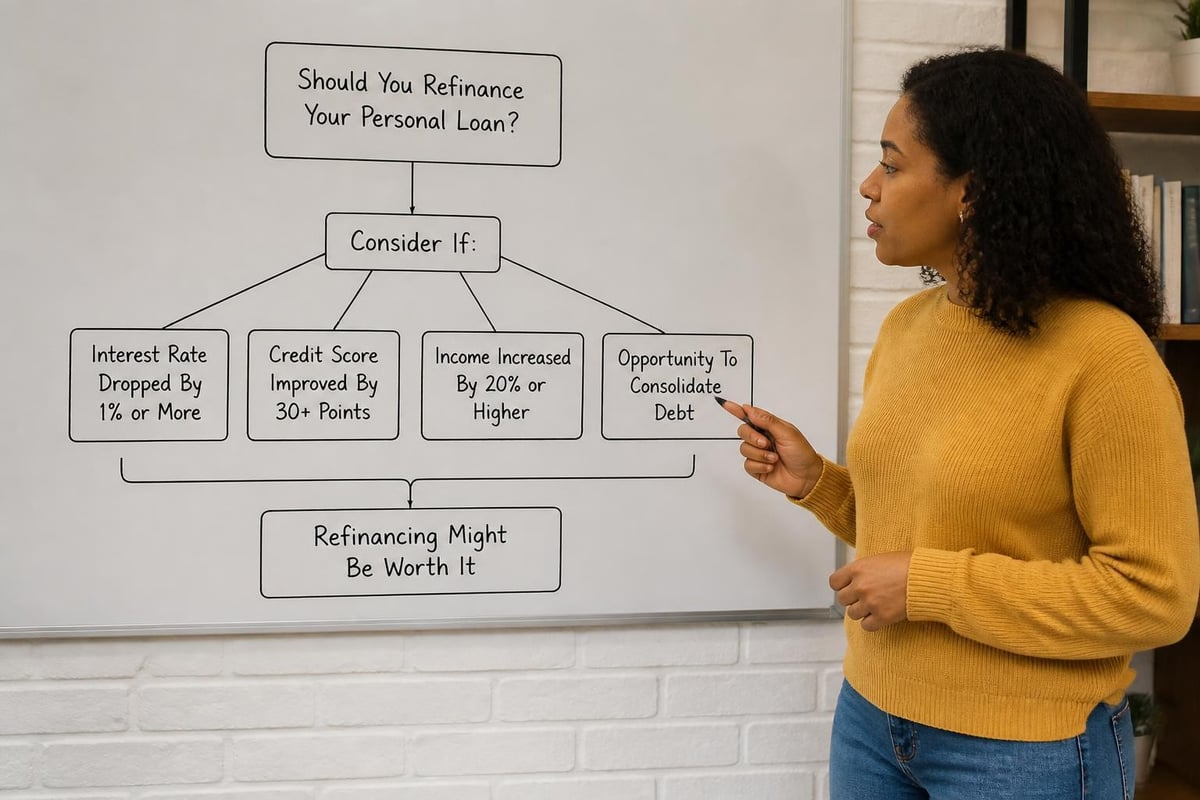
Experian’s refinancing guidance emphasizes that borrowers who have improved their credit scores by 30 points or more since origination often qualify for significantly better rates.
Financial Circumstances That Trigger Refinancing Opportunities
Beyond the technical question of how soon can you refinance a personal loan, identifying the right financial triggers ensures refinancing delivers meaningful benefits.
Interest Rate Environment Changes
Market interest rates fluctuate based on Federal Reserve policy and broader economic conditions. When rates drop substantially below what you're currently paying, refinancing becomes attractive regardless of how recently you originated your loan.
In 2026, monitoring rate trends helps you capitalize on favorable windows. A general rule suggests that refinancing makes sense when you can reduce your rate by at least 0.75-1.00 percentage points after accounting for any fees.
Income Increases and Employment Changes
Positive changes in your financial situation create compelling refinancing opportunities:
- New job with higher salary
- Additional income sources
- Reduced monthly obligations from other debts
- Improved employment stability
These improvements strengthen your application and may qualify you for lower rates even weeks after your original loan. Lenders view increased income favorably and may waive typical waiting periods for well-qualified borrowers.
Prepayment Penalties and Early Refinancing Costs
Understanding prepayment penalties is essential when evaluating how soon can you refinance a personal loan without incurring unnecessary expenses.
Types of Prepayment Penalties
Personal loans may include several prepayment penalty structures:
- Percentage-based penalties charge a percentage of the remaining balance (typically 2-5%)
- Flat fees impose a fixed dollar amount for early payoff
- Interest-based penalties require payment of a certain number of months' interest
- Declining penalties reduce over time (e.g., 5% year one, 3% year two, 0% year three)
Review your original loan agreement to identify any prepayment terms. Many modern personal loans carry no prepayment penalties, making refinancing possible at any time without extra costs.
Calculating Break-Even Points
Even without formal penalties, refinancing carries costs that affect timing decisions:
| Cost Type | Typical Range | Impact on Timing |
|---|---|---|
| Origination Fees | 1-6% of loan amount | Add 12-18 months to break-even |
| Application Fees | $25-$100 | Minimal impact |
| Credit Report Fees | $10-$50 | Minimal impact |
| Prepayment Penalty | 2-5% of balance | Add 6-24 months to break-even |
The CFPB’s refinancing handout provides a practical checklist for weighing these costs against potential savings. Calculate whether the monthly savings justify the upfront expenses based on how long you plan to maintain the new loan.
Practical Strategies for Timing Your Refinance
Knowing how soon can you refinance a personal loan is only valuable when combined with strategic timing that maximizes your financial benefit.
The Six-Month Sweet Spot
For most borrowers, waiting six months after loan origination provides an optimal balance:
- Credit score has recovered from initial inquiry
- Payment history demonstrates reliability
- Sufficient time to experience financial changes
- Market conditions may have shifted favorably
- Prepayment penalties (if any) may have decreased
This timeframe gives you bargaining power while remaining responsive to opportunities. You've established a track record without waiting so long that you've paid excessive interest on unfavorable terms.
Market-Driven vs. Personal-Situation Refinancing
Two primary refinancing motivations require different timing approaches:
Market-driven refinancing responds to falling interest rates or improved product offerings. When rates drop significantly, move quickly rather than waiting for arbitrary seasoning periods. The savings from a lower rate typically outweigh concerns about appearing unstable to lenders.
Personal-situation refinancing addresses changes in your financial circumstances. This approach allows more flexibility in timing since you control the variables. Focus on establishing a stronger profile before applying.
Special Considerations for Different Borrower Profiles
Your individual circumstances significantly influence how soon you should refinance a personal loan, regardless of technical eligibility.
Borrowers with Past Credit Issues
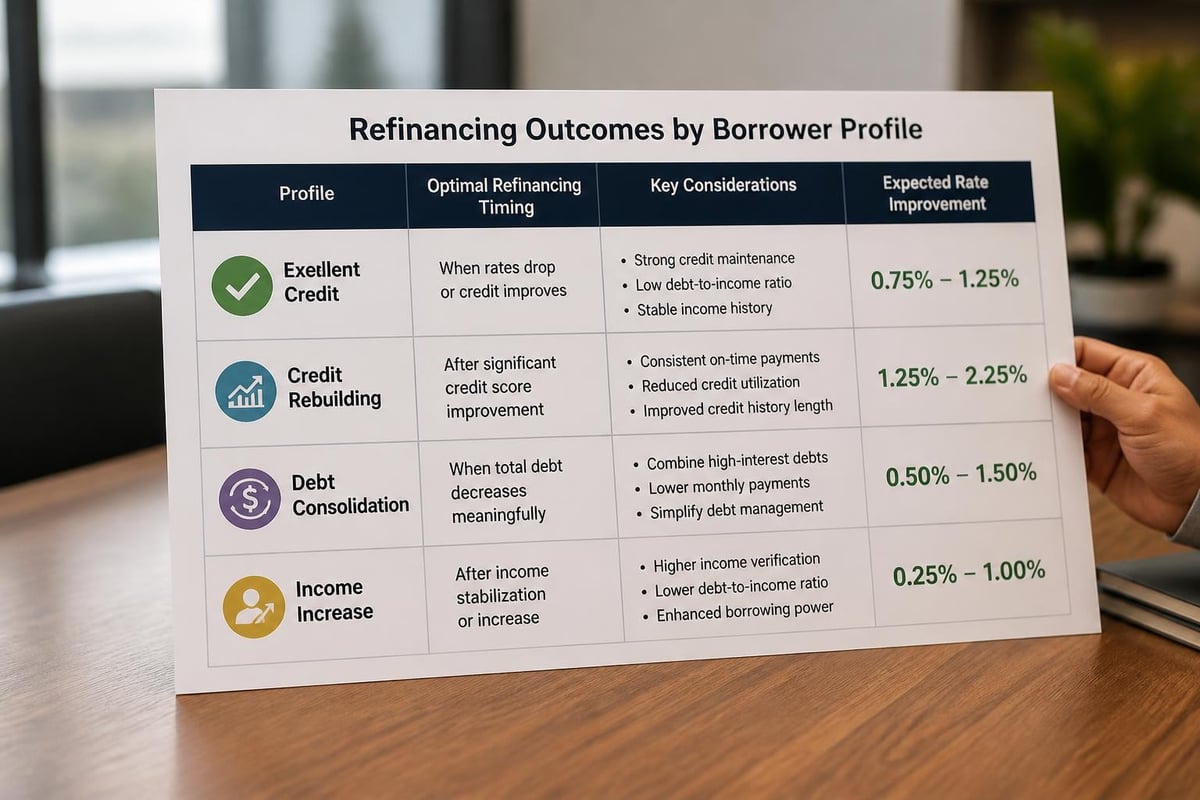
Standard Financial specializes in working with clients who have experienced credit challenges. If you obtained your original loan with less-than-perfect credit, refinancing after demonstrating payment responsibility offers powerful benefits.
Wait at least 6-12 months to build a solid payment history, then refinance when you've:
- Made all payments on time
- Reduced other outstanding debts
- Increased your credit score by 30+ points
- Stabilized your employment situation
This patience pays dividends through substantially better rates and terms on your refinanced loan.
Debt Consolidation Scenarios
Borrowers using personal loans for debt consolidation face unique timing considerations. If your original loan consolidated high-interest debt but you've since accumulated new balances, refinancing to include these new obligations might make sense sooner than traditional waiting periods suggest.
Consider refinancing when:
- New high-interest debt exceeds 20% of your refinanced loan balance
- Your total monthly debt payments have increased significantly
- You can secure a rate lower than the blended rate of all current obligations
NerdWallet’s refinancing calculator helps model these scenarios to determine whether earlier refinancing delivers net savings.
The Application Process and Timeline Expectations
Understanding the refinancing process helps you time your application strategically and set realistic expectations.
Documentation and Approval Timelines
Personal loan refinancing typically requires:
- Proof of income (pay stubs, tax returns, bank statements)
- Identification (driver's license, Social Security number)
- Current loan details (account number, payoff amount, payment history)
- Employment verification (recent pay stubs or employer contact)
Most lenders process refinance applications within 1-7 business days, with online lenders often providing faster decisions. Plan accordingly if you're trying to refinance before a specific date or rate change.
Rate Shopping Best Practices
When determining how soon can you refinance a personal loan, factor in time for proper rate shopping:
- Gather current loan information and determine your payoff amount
- Check your credit score to understand your likely qualification tier
- Apply with 3-5 lenders within a concentrated timeframe
- Compare total costs, not just interest rates
- Negotiate using competing offers as leverage
This process typically takes 2-3 weeks when done thoroughly. Rushing immediately after loan origination may not allow sufficient time for proper comparison shopping.
Regional Considerations for Southern State Borrowers
Borrowers in Louisiana, Mississippi, Tennessee, and Georgia benefit from understanding regional lending patterns and state-specific regulations that affect refinancing timing.
State Regulatory Environments
Different states maintain varying consumer protection laws and licensing requirements that influence lender behavior:
| State | Notable Regulations | Impact on Refinancing |
|---|---|---|
| Louisiana | Interest rate caps on certain loan types | May limit refinancing benefits |
| Mississippi | Shorter statute of limitations on debt | Affects long-term refinancing strategy |
| Tennessee | Strong consumer protection laws | More transparent fee structures |
| Georgia | Industrial Loan Act provisions | Broader lender participation |
These regulatory frameworks don't typically impose waiting periods but do affect the competitive landscape and available products.
Local Economic Factors
Regional economic conditions influence optimal refinancing timing. The Southeast has experienced varied employment growth and housing market dynamics in 2026, affecting both income stability and refinancing opportunities.
Borrowers in growing metro areas like Nashville, Atlanta, or Jackson may find more competitive refinancing options due to intense lender competition. Those in rural areas might benefit from relationships with community lenders like Standard Financial who understand local economic patterns.
Refinancing for Specific Loan Purposes
The original purpose of your personal loan influences refinancing timing and strategy.
Home Improvement Loans
Borrowers who financed home improvements may find refinancing advantageous once projects are complete and home values have increased. This improved equity position strengthens refinancing applications even shortly after the original loan.
Consider refinancing home improvement loans when:
- Projects are completed and add verifiable home value
- You can document the improvements with receipts and permits
- Local real estate values have appreciated
- Interest rates have fallen since your original loan
Medical Expense Financing
Personal loans for medical expenses often carry urgency that may result in less favorable initial terms. Once the medical crisis has passed and financial stability returns, refinancing these loans should be a priority.
Wait 3-6 months to allow your financial situation to stabilize, then pursue refinancing to secure better long-term rates. Medical expense loans particularly benefit from refinancing when your credit score has recovered from any impacts caused by medical bills or income disruption.
Education and Career Development Loans
Borrowers who financed education or career training may see income increases within months of loan origination. These positive changes create compelling refinancing opportunities despite recent loan origination.
Don't hesitate to refinance education-related personal loans when:
- Your training resulted in immediate income increases
- You secured full-time employment in your field
- Your debt-to-income ratio improved significantly
- You completed your program and reduced expenses
Common Refinancing Mistakes to Avoid
Understanding how soon can you refinance a personal loan includes recognizing timing-related mistakes that undermine your financial goals.
Refinancing Too Frequently
Serial refinancing-repeatedly refinancing every few months-damages your credit profile and costs money in fees. Each refinance generates a hard inquiry, creates a new account, and potentially involves origination fees.
Limit refinancing to situations offering meaningful improvement: rate reductions of at least 1 percentage point, substantial term changes, or significant payment decreases.
Ignoring the Total Cost Picture
Monthly payment amounts can be misleading. Extending your loan term reduces monthly payments but may increase total interest paid over the life of the loan.
Calculate the total cost of refinancing:
- Current loan: remaining balance × interest rate × remaining months
- Refinance option: new balance × new rate × new term + fees
- Net savings or cost: compare total amounts paid
Only refinance when the total cost decreases or when specific cash flow needs justify higher long-term costs.
Refinancing Without Rate Improvement
Some borrowers refinance simply because they can, without securing better terms. Unless you're achieving specific goals like debt consolidation or term adjustment, avoid refinancing when rates haven't improved.
According to Federal Reserve commentary on consumer loan activity, refinancing volumes fluctuate with rate environments, with the most successful refinances occurring when borrowers capture rate decreases of 1-2 percentage points or more.
Alternative Options to Immediate Refinancing
If you're asking how soon can you refinance a personal loan because you're experiencing financial difficulty, consider alternatives that may provide relief without a full refinance.
Loan Modification Requests
Your current lender may offer loan modifications that adjust terms without requiring a complete refinance:
- Payment deferrals during temporary hardship
- Term extensions to reduce monthly payments
- Interest rate adjustments for valued customers
- Payment plan restructuring without new applications
These options often have no waiting periods and minimal impact on your credit score. Contact your lender as soon as financial challenges arise rather than waiting for refinancing eligibility.
Making Extra Payments
If your goal is reducing interest costs and you have no prepayment penalties, making additional principal payments achieves savings without refinancing. Even small extra payments significantly reduce total interest and shorten your loan term.
This strategy works particularly well when refinancing isn't yet optimal due to timing constraints or market conditions. You improve your financial position while waiting for the right refinancing opportunity.
Building Your Credit Profile
Sometimes the best "refinancing" strategy is improving your credit profile before applying. Spend 6-12 months optimizing your creditworthiness:
- Pay down revolving credit balances
- Dispute any credit report errors
- Add positive payment history across multiple accounts
- Reduce hard inquiries by avoiding new credit applications
This patient approach often yields better refinancing terms than rushing to refinance immediately after loan origination.
Understanding how soon you can refinance a personal loan empowers you to make strategic decisions that align with your financial goals and timeline. While most lenders allow refinancing shortly after loan origination, the optimal timing depends on your credit profile, financial circumstances, market conditions, and the specific terms of your current loan. Whether you're located in Louisiana, Mississippi, Tennessee, or Georgia and need flexible refinancing options, Standard Financial offers personalized solutions for borrowers at every credit level, helping you secure better terms when the timing is right for your unique situation.





No comment yet, add your voice below!