

Purchasing furniture represents a significant investment for most households, whether you're furnishing a first apartment, upgrading a family home, or replacing worn-out pieces. The total cost of outfitting even a single room can quickly climb into the thousands of dollars, making it difficult to pay upfront in cash. Fortunately, today's consumer lending landscape offers numerous financing options for furniture that allow shoppers to spread payments over time while managing their monthly budgets. Understanding these options, their terms, and which solution aligns best with your financial situation can help you make informed decisions that protect your long-term financial health while getting the furniture you need now.
Understanding the Range of Furniture Financing Solutions
The market for financing options for furniture has expanded dramatically in recent years, driven by both consumer demand and retailer competition. Traditional installment loans, store-branded credit cards, third-party financing partnerships, and newer buy-now-pay-later services all compete for your business when you walk into a furniture showroom or browse online.
Traditional Personal Loans for Furniture Purchases
Personal loans from banks, credit unions, and consumer finance companies represent one of the most straightforward financing options for furniture. These loans provide a lump sum that you can use to purchase furniture outright, then repay over a fixed term with predictable monthly payments.
Key advantages of personal loans include:
- Fixed interest rates that won't change over the life of the loan
- Predictable monthly payments that simplify budgeting
- No restrictions on where you purchase your furniture
- Potential for lower rates if you have strong credit
- Clear repayment timeline with a definite end date
Personal loan terms typically range from 12 to 60 months, with interest rates varying based on creditworthiness, loan amount, and lender. According to recent household credit data from the New York Federal Reserve, consumer installment lending has remained stable even as households manage various credit obligations, demonstrating the ongoing appeal of this straightforward financing method.

Store-Branded Credit Cards and Promotional Financing
Many furniture retailers offer their own credit cards or partner with third-party lenders to provide store-specific financing. These cards frequently feature promotional periods with deferred interest or zero-percent financing, making them attractive financing options for furniture when used strategically.
A typical promotional offer might provide 0% interest for 12, 18, or even 24 months on qualifying purchases. However, the terms require careful attention. Most deferred-interest promotions will charge you interest retroactively on the entire original balance if you don't pay it off completely before the promotional period ends.
| Feature | Store Credit Card | General Credit Card |
|---|---|---|
| Interest Rate (standard) | 24-30% APR | 16-25% APR |
| Promotional Periods | Common (0% for 12-24 months) | Less frequent |
| Usability | Limited to specific retailer | Accepted everywhere |
| Approval Requirements | Often more lenient | Varies by issuer |
| Rewards Programs | Store-specific benefits | Broader rewards categories |
The Consumer Financial Protection Bureau’s analysis of the credit card market shows that promotional financing remains a popular tool for retailers and consumers alike, particularly for big-ticket purchases like furniture and appliances.
Buy Now, Pay Later Programs Transforming Furniture Shopping
Buy now, pay later services have emerged as one of the fastest-growing financing options for furniture in recent years. Companies like Affirm, Klarna, and Afterpay partner with furniture retailers to offer installment plans at checkout, both online and in-store.
How BNPL Works for Furniture Purchases
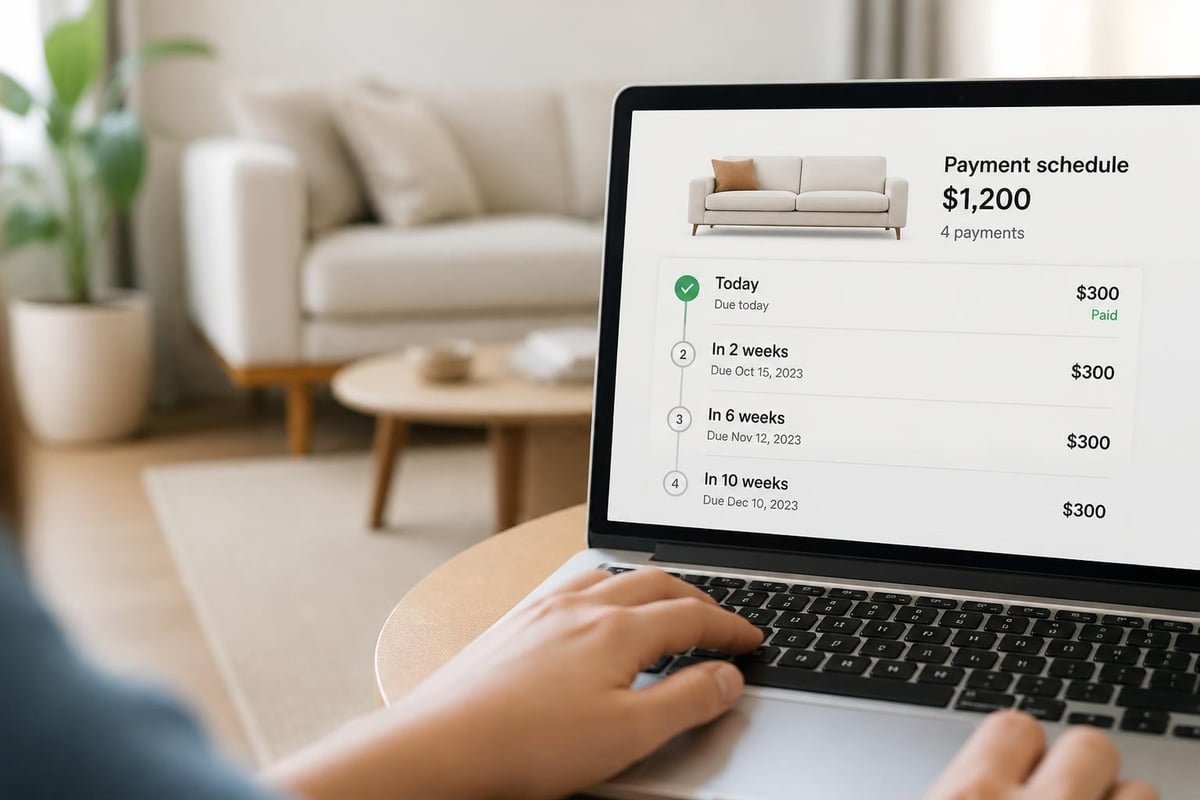
BNPL services split your purchase into multiple payments, typically four equal installments paid every two weeks or monthly payments spread over 6 to 36 months for larger purchases. The application process is usually instant, with approval decisions made in seconds based on a soft credit check that doesn't impact your credit score initially.
According to Furniture Today’s reporting on BNPL trends, consumer interest in these services for furniture purchases has grown substantially, particularly among younger shoppers who appreciate the transparency and simplicity of the repayment structure.
Common BNPL features include:
- No interest charges on short-term plans (typically 6 weeks to 4 months)
- Interest-bearing options for longer repayment periods
- Instant approval for many applicants
- No hard credit inquiry for initial approval
- Automatic payment deduction from linked bank account or card
The CFPB’s guidance on buy now, pay later products explains important consumer protections and potential risks, including the ease of accumulating multiple BNPL obligations across different retailers and the potential for late fees if automated payments fail.
Understanding BNPL Terms and Limitations
While BNPL services offer convenience, they come with important considerations. Interest rates on longer-term BNPL furniture loans can range from 0% to 30% or higher, depending on the provider and your creditworthiness. Late or missed payments often trigger fees of $5 to $15 and may be reported to credit bureaus, potentially damaging your credit score.
Purchase limits vary by provider and individual approval, typically ranging from $200 to $17,500 for furniture purchases. Your spending limit depends on factors including your credit history, income verification, and existing BNPL obligations with that provider.
Lease-to-Own Arrangements as Alternative Financing
Lease-to-own programs represent another category of financing options for furniture, particularly valuable for consumers who may not qualify for traditional credit products. Companies like Aaron's and Rent-A-Center offer furniture on a rental basis with the option to own the item after making all scheduled payments.
How Lease-to-Own Differs from Traditional Financing
Unlike loans or credit cards where you own the furniture immediately, lease-to-own arrangements mean you're technically renting the furniture until you complete all payments. You can typically return the furniture at any time without further obligation, but you won't own it unless you fulfill the entire payment schedule.
- Select your furniture from the lease-to-own provider's inventory
- Agree to weekly, biweekly, or monthly payment terms without a credit check in most cases
- Take the furniture home immediately after the first payment
- Make regular payments throughout the lease term (typically 12-24 months)
- Gain ownership after completing all scheduled payments
The total cost of ownership through lease-to-own programs significantly exceeds the retail price, sometimes costing two to three times what you'd pay upfront. However, these programs serve consumers who lack credit access or need the flexibility to return furniture without long-term obligation.
In-House Retailer Financing Programs
Many furniture stores operate their own financing programs, sometimes in partnership with banks or finance companies. These financing options for furniture often feature competitive terms designed to close sales while providing retailers with interest income or fees from their lending partners.
Benefits of Retailer Direct Financing
Streamlined approval process:
Applications are processed on-site, often with same-day decisions that allow you to take furniture home immediately.
Relationship pricing:
Some retailers offer better terms to repeat customers or those making larger purchases.
Coordinated delivery and payment:
Your financing and furniture delivery are managed by the same company, simplifying the process.
Industry analysis from Furniture Today on consumer credit powering home furnishings sales demonstrates that point-of-sale financing has become integral to furniture retail strategy, with many stores reporting that 40-60% of purchases involve some form of financing.
Evaluating Which Financing Option Suits Your Situation
Choosing among the various financing options for furniture requires honest assessment of your financial situation, credit profile, and purchasing timeline. No single option works best for everyone, and the right choice depends on multiple factors working together.
| Your Situation | Best Option | Why |
|---|---|---|
| Excellent credit, want lowest rate | Personal loan or 0% store card | Access to best rates and terms |
| Need furniture immediately, uncertain income | Lease-to-own | Flexibility to return without obligation |
| Poor credit, stable income | Personal loan from consumer lender | Designed for credit-challenged borrowers |
| Small purchase, short payoff | BNPL (short-term) | Often zero interest if paid quickly |
| Large purchase, want predictability | Personal installment loan | Fixed rate and payment over time |
Calculating Total Cost of Financing
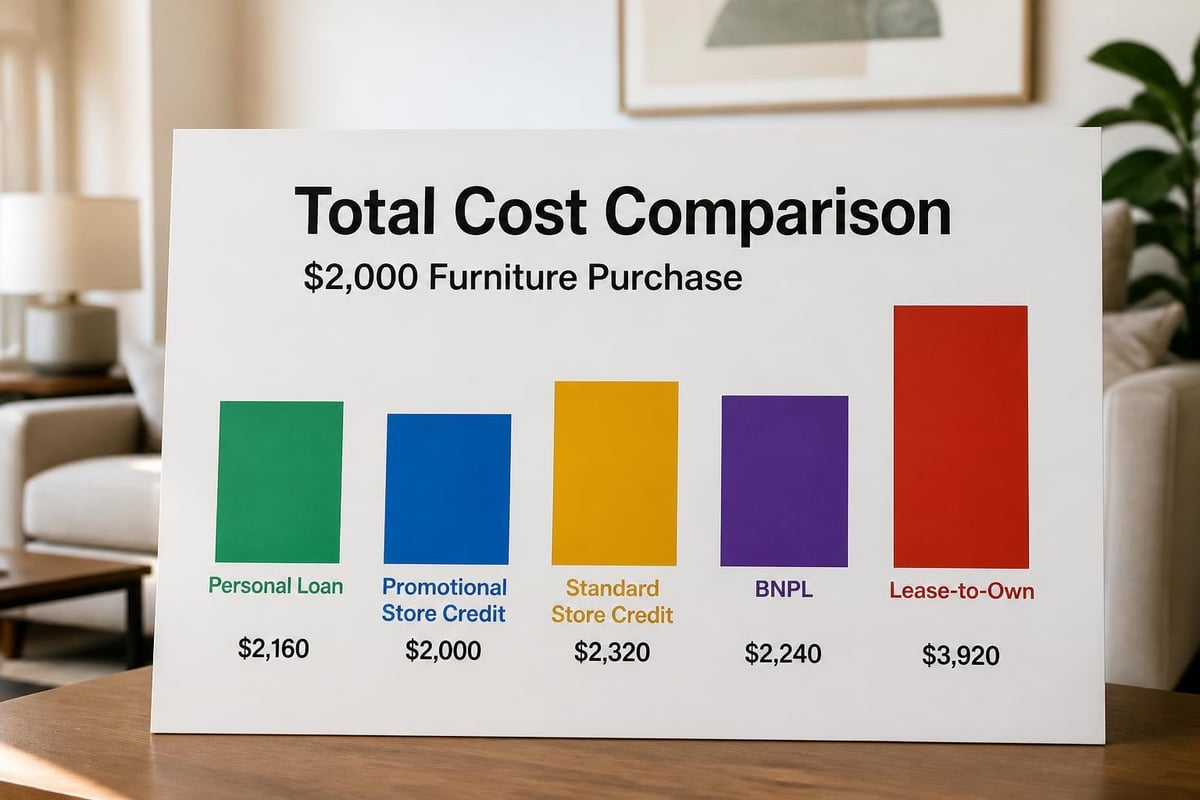
When comparing financing options for furniture, look beyond the monthly payment to understand the total cost. A $2,000 sofa purchased with different financing methods illustrates the dramatic differences:
Personal loan (15% APR, 24 months): Total paid = $2,329
Store card (0% for 12 months, paid off in full): Total paid = $2,000
Store card (0% for 12 months, not paid off, 27% APR): Total paid = $2,540+
BNPL (10% APR, 18 months): Total paid = $2,164
Lease-to-own (weekly payments, 18 months): Total paid = $3,600+
Credit Score Considerations and Building Financial Health
Your credit score plays a crucial role in determining which financing options for furniture are available to you and at what cost. Lenders use credit scores to assess risk, with higher scores unlocking lower interest rates and better terms.
Understanding Credit Requirements by Financing Type
Different financing methods require different credit thresholds. Traditional bank loans typically require scores above 660 for competitive rates, while consumer finance companies often work with borrowers in the 580-660 range. Store credit cards may approve applicants with scores as low as 600, though with higher interest rates.
BNPL services use proprietary algorithms that consider factors beyond traditional credit scores, making approval possible even for consumers with limited credit history. Lease-to-own programs rarely check credit at all, focusing instead on income verification and rental history.
The Federal Reserve’s report on household economic well-being provides valuable context about how Americans are managing large purchases and seeking credit, showing that access to financing remains a critical factor in consumers' ability to make necessary home purchases.
Using Furniture Financing to Improve Your Credit
Responsible use of financing options for furniture can actually help build or rebuild your credit score. Installment loans add to your credit mix, and consistent on-time payments demonstrate creditworthiness to future lenders.
Credit-building strategies:
- Make payments on or before the due date every month
- Keep credit card balances below 30% of the credit limit
- Avoid applying for multiple credit products simultaneously
- Set up automatic payments to prevent missed due dates
- Monitor your credit reports for accuracy and fraud
Special Financing Considerations for Different Life Situations
Your personal circumstances should heavily influence which financing options for furniture you pursue. Recent life changes, upcoming expenses, or employment situations all factor into the wisest financing choice.
Financing Furniture After a Move or Home Purchase
Relocating to a new home often creates immediate furniture needs but also strains your budget after moving expenses and potential down payments. If you've recently purchased a home, your debt-to-income ratio may limit your ability to take on additional credit immediately.
In these situations, consider delaying non-essential furniture purchases, buying gradually as budget allows, or choosing shorter-term financing options that won't extend your debt obligations for years. Zero-percent promotional financing through store cards can work well if you're confident you can pay the balance before the promotional period expires.
Furnishing After Divorce or Major Life Changes
Life transitions often require establishing a new household on a tighter budget than you're accustomed to. Financing options for furniture that offer flexibility, such as lease-to-own programs, may provide breathing room while you stabilize your financial situation, despite their higher total cost.
Alternatively, personal loans from consumer lenders who specialize in working with non-traditional credit situations can provide the funds you need with clear repayment terms that fit within your rebuilt budget.
Smart Shopping Strategies to Minimize Financing Costs
The best financing deal won't help if you overpay for furniture in the first place. Combining smart shopping practices with appropriate financing options for furniture maximizes your purchasing power and minimizes long-term costs.
Effective furniture shopping tactics:
- Research prices across multiple retailers before committing to a financing offer
- Negotiate the purchase price even when using financing (the two are separate discussions)
- Time purchases strategically around major sale events like Presidents' Day or Labor Day
- Compare financing terms from at least three different sources
- Read all fine print regarding fees, penalties, and interest calculations
- Calculate your budget based on total cost, not just monthly payment
Retailers often emphasize monthly payments rather than total cost, which can obscure expensive financing. A $3,000 bedroom set at "only $89 per month" might sound affordable until you realize the 60-month term means you'll pay $5,340 total.
Managing Multiple Furniture Financing Accounts Responsibly
Furnishing an entire home might require multiple purchases and potentially multiple financing arrangements. Managing several accounts simultaneously requires organization and discipline to avoid missed payments and accumulating excessive debt.
Creating a Payment Tracking System
Whether using a smartphone app, spreadsheet, or written calendar, track all furniture financing obligations in one place. Record the following for each account:
- Lender name and account number
- Monthly payment amount and due date
- Current balance remaining
- Interest rate and any promotional period end dates
- Total amount financed and total amount to be paid
- Contact information for customer service
Set reminders for three days before each payment is due, giving yourself time to ensure sufficient funds are available. Review your tracking system weekly to stay aware of your total debt obligations and celebrate progress as you pay down balances.
Prioritizing Repayment When You Have Multiple Accounts
If you're carrying balances on several financing options for furniture, strategically prioritize which to pay off first. The avalanche method targets the highest interest rate debt first while making minimum payments on others, minimizing total interest paid over time.
Alternatively, the snowball method focuses on paying off the smallest balance first for psychological wins and momentum, then rolling that payment into the next-smallest debt. Either approach works, choose the one that fits your personality and keeps you motivated.
Red Flags and Predatory Lending Practices to Avoid
While most financing options for furniture are legitimate, predatory practices do exist. Protecting yourself requires recognizing warning signs and walking away from deals that seem too good to be true or contain hidden traps.
Warning Signs of Problematic Financing
Pressure tactics:
Retailers or lenders who pressure you to sign immediately without time to review documents are prioritizing their interests over yours.
Vague or missing terms:
Any financing agreement should clearly state the interest rate, payment schedule, total amount financed, and total amount to be repaid. Missing or unclear information suggests potential problems.
Balloon payments:
Financing that requires a large final payment to pay off the balance can leave you trapped if you can't secure refinancing or come up with the lump sum.
Mandatory add-ons:
Lenders who require you to purchase insurance, warranties, or other products as a condition of financing may be padding their profits at your expense.
Excessive fees:
Application fees, origination fees, and processing fees should be reasonable and disclosed upfront. Excessive fees increase your cost and may indicate an unscrupulous lender.
If you encounter any of these red flags, step back and explore alternative financing options for furniture from established, reputable lenders who clearly explain all terms and give you time to make informed decisions.
Planning for Furniture Financing in Your Overall Budget
Sustainable furniture financing fits within a balanced monthly budget that accounts for all your financial obligations and goals. Before committing to any financing options for furniture, map out where the payment fits alongside your other expenses.
The 50/30/20 Budget Framework Applied to Furniture
Financial advisors often recommend the 50/30/20 budget rule: 50% of after-tax income for needs, 30% for wants, and 20% for savings and debt repayment. Furniture purchases straddle the line between needs and wants, depending on whether you're replacing a broken bed or buying a decorative accent chair.
If furniture financing payments push your total debt obligations above 35% of your gross income, you may be overextending yourself. This threshold includes your mortgage or rent, car payments, student loans, credit cards, and furniture financing combined.
Before signing any furniture financing agreement, update your budget spreadsheet to confirm the new payment fits comfortably without requiring you to skimp on necessities, eliminate all discretionary spending, or stop saving for emergencies and retirement.
Understanding the full spectrum of financing options for furniture empowers you to make purchases that enhance your home without compromising your financial stability. Whether you choose a personal loan, store credit, BNPL service, or another path, the key is selecting terms you can comfortably afford while minimizing total interest costs. If you need flexible financing for furniture or other important purchases, Standard Financial specializes in helping consumers throughout Louisiana, Mississippi, Tennessee, and Georgia access the credit they need, even if past credit challenges have limited your options elsewhere. Our team can help you explore personal loan solutions tailored to your situation and budget.





No comment yet, add your voice below!