

Finding yourself without a job doesn't mean you're out of financial options. While traditional employment certainly makes borrowing easier, loans for unemployed individuals are available through various channels. Understanding how lenders evaluate applications, what alternative income sources they accept, and which loan types best suit your situation can make the difference between approval and rejection. This comprehensive guide explores the landscape of borrowing without traditional employment, helping you navigate your options with confidence.
Understanding How Lenders View Unemployment
Lenders primarily want to know one thing: can you repay the loan? Traditional employment provides predictable income that reassures lenders, but unemployment doesn't automatically disqualify you. The key lies in demonstrating consistent cash flow from other sources.
Most financial institutions assess your debt-to-income ratio, credit history, and overall financial stability. When you lack a W-2 job, lenders scrutinize these factors more carefully. They need evidence that you can meet monthly payments despite your employment status.
Alternative Income Sources Lenders Accept
When applying for loans for unemployed borrowers, you'll need to document income from non-traditional sources. Lenders typically recognize these alternatives:
- Unemployment benefits (temporary but verifiable)
- Social Security or disability payments
- Retirement income from pensions or 401(k) distributions
- Investment dividends and interest
- Rental property income
- Alimony or child support
- Freelance or gig economy earnings
- Trust fund distributions
According to Finder’s guide on getting loans without a job, proving these income streams requires documentation like bank statements, tax returns, or official letters from government agencies. The more comprehensive your proof, the better your approval odds.

Types of Loans Available to Unemployed Borrowers
Not all loan products work equally well for those without traditional employment. Understanding the distinctions helps you choose wisely and avoid predatory lending practices.
Personal Loans
Personal loans remain one of the most flexible options. These unsecured installment loans don't require collateral, though you'll need strong credit or substantial alternative income. Personal loan amounts typically range from $1,000 to $50,000, with repayment terms between two and seven years.
Standard Financial specializes in personal loans for various purposes, including medical expenses, home improvements, and education costs. They work with clients across Louisiana, Mississippi, Tennessee, and Georgia, even those with past credit challenges.
Secured Loans
Secured loans require collateral-an asset like a vehicle, savings account, or valuable property. Because the lender can seize the collateral if you default, approval is easier for unemployed applicants. Common secured loan types include:
| Loan Type | Collateral Required | Typical Amounts | Best For |
|---|---|---|---|
| Auto Title Loans | Vehicle title | $100-$10,000 | Emergency cash needs |
| Secured Personal Loans | Savings, CD, or other asset | $1,000-$100,000 | Lower rates with collateral |
| Home Equity Loans | Home equity | $10,000-$250,000 | Major expenses, debt consolidation |
| Pawn Shop Loans | Jewelry, electronics, valuables | $50-$5,000 | Very short-term needs |
Be cautious with auto title loans, as defaulting means losing your vehicle, which could further complicate your job search and daily life.
Emergency and Payday Loans
For immediate needs, emergency loans without traditional employment offer quick funding but come with significant drawbacks. Payday loans charge extremely high interest rates-often 400% APR or more-and trap borrowers in debt cycles.
Emergency loan alternatives include:
- Credit union emergency loans (typically under $1,000)
- Payment plans directly with service providers
- Community assistance programs
- Borrowing from family or friends
Only consider payday loans as an absolute last resort after exhausting all other options.
Improving Your Approval Odds Without Employment
Getting approved for loans for unemployed individuals requires strategic preparation. These steps significantly improve your chances.
Strengthen Your Credit Profile
Your credit score becomes even more critical when you lack employment income. Before applying, take these actions:
- Check your credit reports from all three bureaus for errors
- Dispute inaccuracies that negatively impact your score
- Pay down existing debt to improve your debt-to-income ratio
- Make all current payments on time to avoid additional damage
- Avoid new credit applications that trigger hard inquiries
Even a 30-50 point improvement in your credit score can expand your loan options and reduce interest rates substantially.
Consider a Co-Signer or Co-Borrower
Adding someone with stable income and good credit to your application dramatically increases approval likelihood. A co-signer guarantees the loan but doesn't have ownership rights, while a co-borrower shares both the debt and any proceeds.
This arrangement benefits you through better rates and higher loan amounts, but it puts your co-signer's credit and finances at risk if you default. Only pursue this option if you're confident in your repayment ability.

Document Everything
Lenders want assurance, and documentation provides it. Gather these materials before applying:
- Bank statements showing consistent deposits from alternative income
- Tax returns demonstrating historical income patterns
- Award letters from Social Security, disability, or unemployment offices
- Contracts or invoices for freelance work
- Proof of assets like property deeds or investment statements
LegalClarity’s guide on unemployment loans emphasizes that thorough documentation can overcome employment gaps in lender eyes.
Loan Application Strategies for Maximum Success
How you approach the application process matters as much as your financial situation. These strategies improve outcomes.
Shop Around but Be Strategic
Different lenders have varying criteria for loans for unemployed applicants. Credit unions often show more flexibility than major banks, while online lenders may specialize in alternative income verification.
Application strategy tips:
- Start with pre-qualification tools that don't impact your credit
- Compare at least three to five lenders
- Complete applications within a 14-30 day window (FICO treats this as one inquiry)
- Focus on lenders experienced with non-traditional borrowers
- Avoid predatory lenders advertising "guaranteed approval"
Standard Financial's multiple branch locations throughout the Southeast provide personalized service for borrowers facing unique circumstances, including unemployment.
Be Transparent About Your Situation
Attempting to hide unemployment or misrepresenting your income always backfires. Lenders verify information, and dishonesty can result in application denial, loan recall, or even fraud charges.
Instead, proactively explain your situation:
- Detail your job search efforts and prospects
- Highlight your employment history and skills
- Explain any severance packages or savings
- Demonstrate your budget and repayment plan
Honesty builds trust and may lead lenders to work with you on terms that fit your circumstances.
Start Small
If you're struggling to get approved for larger amounts, consider requesting less. A smaller loan presents less risk to lenders and may be easier to secure. Successfully repaying a small loan also establishes a positive relationship for future borrowing needs.
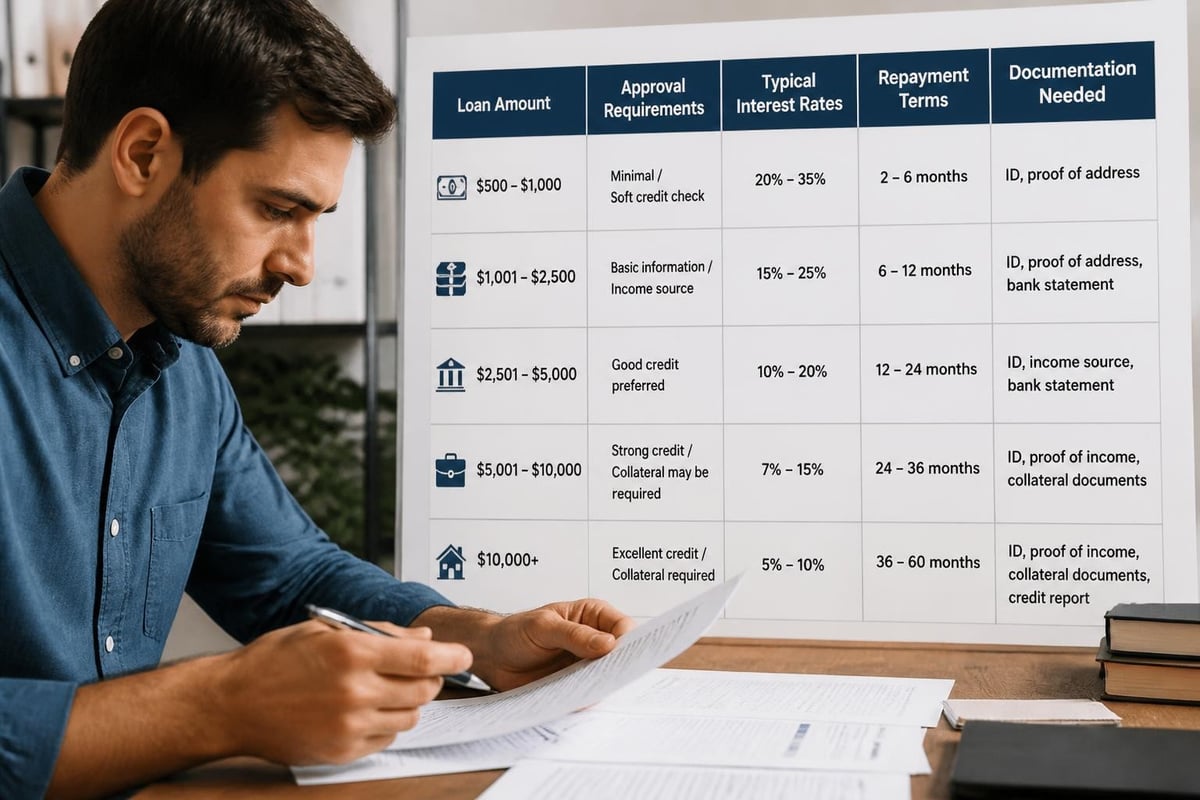
Specific Loan Amounts and Options
Different financial needs require different approaches when you're unemployed. Let's examine common scenarios.
Small Emergency Loans ($500-$1,500)
For unexpected bills or immediate expenses, obtaining smaller loans like $1,500 while unemployed often proves easier than securing larger amounts. Options include:
| Option | Typical Amount | Speed | Considerations |
|---|---|---|---|
| Credit union loans | $500-$2,000 | 1-3 days | Membership required, better rates |
| Online installment loans | $500-$5,000 | Same day-2 days | Higher rates, quick process |
| Credit card cash advance | Varies by limit | Immediate | Very high APR, fees |
| Friends/family | Negotiable | Immediate | Relationship risk, formalize terms |
These smaller amounts require less stringent income verification and present manageable repayment schedules even on limited income.
Mid-Range Personal Loans ($2,000-$10,000)
Loans for unemployed borrowers in this range typically require stronger alternative income proof or collateral. You might pursue these for:
- Medical procedures not covered by insurance
- Home repairs that can't wait
- Debt consolidation to lower overall payments
- Education or certification programs to improve employability
Mid-range loans benefit from installment structures spreading payments over 12-60 months, making them more affordable monthly than smaller, short-term options.
Larger Loans ($10,000+)
Securing substantial amounts without employment presents significant challenges. Most lenders require either exceptional credit, substantial collateral, or a co-signer with strong finances.
Alternatives to traditional large loans:
- Home equity loans or HELOCs (if you own property)
- Retirement account loans (borrow from your 401(k))
- Business loans (if you're starting self-employment)
- Family loans with formal agreements
These larger obligations demand careful consideration of your repayment capacity, especially given employment uncertainty.
Understanding the True Cost of Borrowing
Interest rates and fees significantly impact the total cost of loans for unemployed individuals. Unemployment often means higher rates due to perceived risk.
Interest Rate Expectations
Without employment, expect rates higher than advertised minimums. Here's a realistic breakdown:
- Excellent credit (720+): 8-15% APR
- Good credit (680-719): 12-20% APR
- Fair credit (640-679): 18-25% APR
- Poor credit (below 640): 25-36% APR or higher
These rates assume alternative income verification. Some specialized lenders charge even more, particularly for payday or title loans.
Hidden Fees to Watch For
Beyond interest, loans carry various fees that increase total costs:
- Origination fees (1-8% of loan amount)
- Late payment penalties
- Prepayment penalties (less common but significant)
- Annual fees (for some credit products)
- Check processing fees
Always review the Annual Percentage Rate (APR), which includes interest plus most fees, giving you a true cost comparison between lenders.
Alternatives to Traditional Loans
Before committing to loans for unemployed borrowers, explore these alternatives that might better serve your needs.
Government and Nonprofit Assistance
Numerous programs help unemployed individuals without requiring repayment:
- Unemployment insurance extensions and benefits
- SNAP (food stamps) to reduce grocery expenses
- LIHEAP for utility bill assistance
- Medicaid for healthcare coverage
- Local charity programs for specific needs
These resources free up existing income for other expenses, potentially eliminating loan necessity.
Negotiating with Creditors
If you need a loan to pay existing debts, contact creditors directly first. Many offer:
- Temporary payment reductions
- Interest rate decreases
- Forbearance periods
- Settlement options
Creditors often prefer working with you over sending accounts to collections.
Generating Quick Income
Sometimes increasing cash flow works better than borrowing:
- Sell unused items through online marketplaces
- Gig economy work (delivery, rideshare, task services)
- Freelance services using your skills
- Temporary or seasonal employment
- Rent out assets (parking space, storage, equipment)
These strategies address immediate cash needs while improving your employment prospects and future loan applications.
Special Considerations for Different Life Situations
Unemployment affects people in various circumstances, each requiring tailored approaches to loans for unemployed individuals.
Recent Job Loss
If you recently lost employment but have savings or severance, lenders may view you more favorably. Emphasize your employment history, explain the job loss circumstances, and demonstrate active job searching.
Recent job loss typically means you still have:
- Strong credit built during employment
- Emergency savings to show financial responsibility
- Professional references and marketable skills
- Unemployment benefits as temporary income
Use this transition period to secure loans before credit deteriorates.
Long-Term Unemployment
Extended unemployment creates more challenges but doesn't eliminate options. Focus on:
- Establishing alternative income streams
- Rebuilding credit through secured cards
- Considering secured loans using available assets
- Working with specialized lenders or credit unions
Standard Financial works with clients facing various credit challenges, understanding that past difficulties don't define future potential.
Retirement or Disability
Retirees and disabled individuals without traditional employment often have steady alternative income through Social Security, pensions, or disability payments. These predictable income sources make loan approval more achievable.
Lenders generally view retirement and disability income favorably because it's:
- Guaranteed by government or legal agreements
- Deposited consistently on schedule
- Continues indefinitely (in most cases)
- Documented through official channels
Building Financial Stability During Unemployment
While securing loans for unemployed situations addresses immediate needs, long-term financial health requires broader strategies.
Creating a Survival Budget
Track every dollar and prioritize essential expenses:
- Housing (rent/mortgage)
- Utilities (electricity, water, heat)
- Food (groceries, not dining out)
- Transportation (to job interviews, medical appointments)
- Insurance (health, auto if required)
- Minimum debt payments
Cut all discretionary spending until you regain employment. Even small savings accumulate into emergency funds.
Protecting Your Credit
Unemployment threatens credit scores, but strategic actions minimize damage:
- Pay minimums on all accounts to avoid delinquencies
- Contact creditors before missing payments
- Prioritize secured debts (mortgage, auto) to avoid repossession
- Monitor credit reports for accuracy
- Avoid new credit applications unless absolutely necessary
Maintaining decent credit during unemployment expands your options when opportunities arise.
Planning for Repayment
Before accepting any loan, create a realistic repayment plan accounting for your limited income. Consider:
- How long unemployment might last
- Whether alternative income covers the payment
- What expenses you can reduce to afford payments
- Emergency backup plans if income decreases further
Never borrow more than you can realistically repay, even in worst-case scenarios.
Avoiding Predatory Lending Practices
Desperation makes unemployed individuals targets for predatory lenders. Recognize and avoid these warning signs:
- Guaranteed approval regardless of circumstances
- No credit check advertising
- Extremely high fees or unclear cost structures
- Pressure tactics to sign immediately
- Upfront fees before loan disbursement
- Unlicensed lenders operating illegally
Advance America’s guidance on unemployment loans emphasizes working with reputable, licensed lenders who follow state and federal regulations.
Red flags in loan agreements:
- Balloon payments requiring large final payments
- Variable rates that can increase dramatically
- Automatic renewals or rollovers with additional fees
- Authorization to access your bank account
- Requirements to waive legal rights
Always read contracts thoroughly and consider having someone you trust review terms before signing.
Navigating loans for unemployed situations requires research, preparation, and realistic assessment of your financial capacity. By understanding lender requirements, documenting alternative income, and exploring all available options, you can secure necessary funding while protecting your long-term financial health. Standard Financial specializes in flexible financing solutions for clients throughout Louisiana, Mississippi, Tennessee, and Georgia, including those with unique circumstances and past credit challenges. Whether you need assistance with medical expenses, home improvements, or other personal financial needs, Standard Financial offers personalized service to help you find the right solution for your situation.







No comment yet, add your voice below!