

Paying off debt ahead of schedule represents one of the most effective strategies for building long-term financial security. Whether you're managing a personal loan for home improvements, medical expenses, or educational costs, understanding the mechanics and implications of loan payoff early can help you make informed decisions that align with your financial goals. Many borrowers throughout Louisiana, Mississippi, Tennessee, and Georgia are discovering that strategic early repayment can save thousands in interest charges while providing psychological benefits that extend beyond simple mathematics.
Understanding the Financial Impact of Early Loan Repayment
When you commit to loan payoff early, you're essentially reducing the total amount of interest paid over the life of your obligation. Most consumer loans calculate interest based on the outstanding principal balance, which means that accelerated payments directly reduce future interest charges.
How Interest Calculations Work
The structure of your loan determines how much you benefit from early repayment. Simple interest loans recalculate interest charges based on your current balance each payment period, making them ideal candidates for early payoff strategies. Precomputed interest loans, conversely, calculate the total interest at origination and divide it across your payment schedule.
Key factors affecting your interest savings include:
- Original loan amount and interest rate
- Remaining term length
- Payment frequency and timing
- Whether your lender applies extra payments to principal
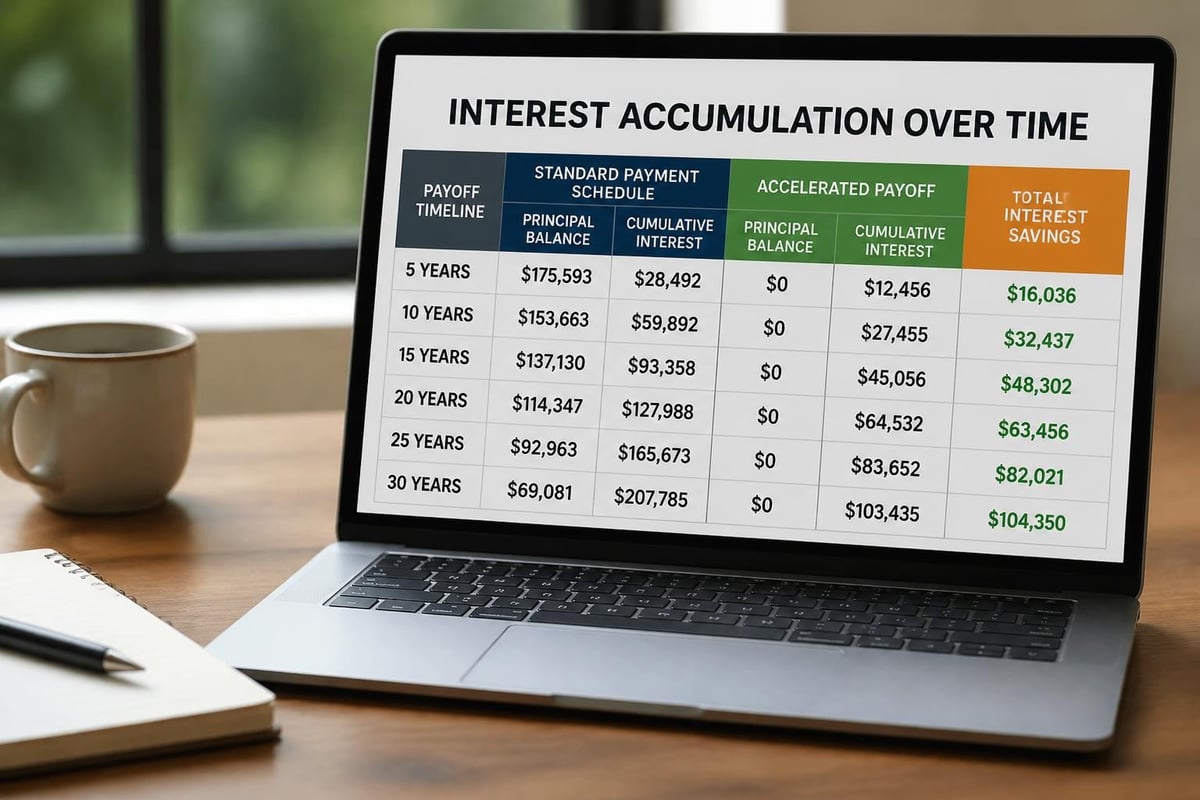
The mathematical advantage becomes clear when you examine the numbers. A personal loan of $10,000 at 9% APR over five years results in approximately $2,380 in total interest charges. Paying that same loan off two years early could save you nearly $950 in interest, assuming your lender applies extra payments correctly.
Evaluating Your Loan Terms Before Making Extra Payments
Before you accelerate your repayment schedule, carefully review your loan agreement for provisions that could affect your strategy. Some lenders include clauses that impact the financial benefits of loan payoff early.
Prepayment Penalties and Restrictions
Certain loan products include prepayment penalties designed to protect the lender's expected interest income. According to federal regulations on prepayment privileges, these penalties must be clearly disclosed in your loan documentation. Common penalty structures include:
- Percentage-based fees calculated on the remaining balance
- Fixed dollar amounts regardless of payoff timing
- Sliding scale penalties that decrease over time
- Interest guarantees requiring minimum interest payments
Contact your lender directly to verify whether prepayment penalties apply to your specific loan. Many consumer lending institutions, particularly those serving the Southeast region, offer loans without these restrictions to encourage responsible financial management.
| Loan Type | Typical Prepayment Penalty | Best Payoff Strategy |
|---|---|---|
| Personal Loans | Rarely included | Aggressive early payoff |
| Auto Loans | Sometimes included | Verify terms first |
| Student Loans | Generally not included | Pay highest interest first |
| Medical Loans | Usually not included | Extra principal payments |
Strategic Approaches to Accelerate Loan Repayment
Multiple proven strategies can help you achieve loan payoff early without dramatically disrupting your current budget or financial stability.
The Debt Avalanche Method
This approach prioritizes loans with the highest interest rates while maintaining minimum payments on other obligations. By targeting expensive debt first, you maximize interest savings across your entire debt portfolio.
Implementation steps:
- List all loans by interest rate (highest to lowest)
- Allocate extra payments to the top-priority loan
- Continue minimum payments on remaining loans
- Roll completed payments into the next highest-rate debt
The Debt Snowball Approach
Alternatively, some borrowers find greater motivation by paying off smaller balances first, regardless of interest rate. This psychological boost can maintain momentum throughout your repayment journey.
Biweekly Payment Plans
Switching from monthly to biweekly payments creates an extra full payment each year through calendar mathematics. Since there are 52 weeks annually, biweekly payments result in 26 half-payments (13 full payments) instead of 12 monthly installments.
This strategy works particularly well for borrowers paid on biweekly schedules, as it aligns debt payments with income receipt. Understanding how installment loan payoff works can help you implement this approach effectively.

Weighing the Benefits Against Alternative Financial Goals
While loan payoff early offers compelling advantages, responsible financial planning requires evaluating opportunity costs against other objectives.
Interest Savings Versus Investment Returns
The guaranteed return from early loan repayment equals your interest rate. If your personal loan carries a 9% APR, every extra dollar paid saves you 9% annually in avoided interest charges. Compare this against potential investment returns in your specific circumstances.
Consider these factors:
- Current market conditions and investment opportunities
- Your risk tolerance and investment timeline
- Tax implications of investment earnings
- Guaranteed savings versus variable returns
Emergency Fund Considerations
Financial advisors typically recommend maintaining three to six months of expenses in readily accessible savings before aggressively pursuing debt repayment. This emergency cushion prevents new debt accumulation when unexpected expenses arise.
If your emergency fund falls below recommended levels, consider balanced approach splitting extra money between savings and loan payoff early goals. A medical emergency or sudden job loss could force you to borrow at higher rates if you've depleted cash reserves paying down existing debt.
Credit Score Implications
Early loan payoff can temporarily affect your credit profile. Paying off installment loans ahead of schedule might reduce your credit mix diversity, though the impact typically remains minimal compared to other credit factors.
| Financial Priority | When to Prioritize | When to Delay |
|---|---|---|
| Emergency Fund | Fund below 3 months expenses | Fund fully established |
| High-Interest Debt | Rates above 10% APR | Rates below 5% APR |
| Retirement Savings | Employer match available | No employer match |
| Early Loan Payoff | High interest, no penalty | Low interest, has penalty |
Practical Implementation Steps for Louisiana, Mississippi, Tennessee, and Georgia Borrowers
Regional economic factors and local lending practices influence the optimal timing and approach for loan payoff early in the Southeast.
Understanding Regional Lending Practices
Consumer lending throughout the Gulf South typically features competitive interest rates and borrower-friendly terms. Most regional lenders structure personal loans for home improvements, medical expenses, and education without prepayment penalties, making them excellent candidates for early payoff strategies.
Creating a Realistic Acceleration Plan
Start by analyzing your current monthly budget to identify available funds for extra payments. Even modest additional amounts compound over time.
Budget analysis steps:
- Track all income and expenses for one month
- Identify discretionary spending that could be redirected
- Calculate realistic extra payment amounts
- Set up automatic transfers to avoid temptation
- Review and adjust quarterly based on results
Communicating With Your Lender
When you're ready to make extra payments, contact your loan servicer to ensure proper application. Specify that additional payments should apply directly to principal rather than future interest or advancing your due date.
Some lenders require written instructions for payment application. Document all communications and verify that extra payments reduce your principal balance as intended. Similar considerations apply to various loan types, including education financing and medical expense loans.
Refinancing as an Alternative to Simple Early Payoff
In certain circumstances, refinancing your existing loan can provide similar benefits to loan payoff early while maintaining flexibility.
When Refinancing Makes Sense
If interest rates have dropped since your original loan or your credit profile has improved significantly, refinancing might lower your rate while preserving your emergency fund. This approach reduces total interest costs without requiring large lump-sum payments.
Refinancing advantages include:
- Lower monthly payments that improve cash flow
- Reduced interest rates that decrease total cost
- Ability to adjust loan terms for faster payoff
- Potential to consolidate multiple obligations
Comparing Refinancing Versus Acceleration
Calculate the break-even point where refinancing costs equal the savings from a lower rate. Application fees, origination charges, and other costs must be recovered through interest savings to make refinancing worthwhile.
A loan with two years remaining might not benefit from refinancing if closing costs consume the potential savings. Conversely, a loan with substantial time remaining could realize significant benefits from even modest rate reductions.

Managing Multiple Loans Simultaneously
Many borrowers in Louisiana, Mississippi, Tennessee, and Georgia maintain several loan obligations simultaneously, requiring coordinated repayment strategies.
Prioritization Frameworks
When managing multiple loans, establish clear priorities based on interest rates, balances, and terms. Personal loans for home improvements might carry different rates than medical expense financing or educational loans.
Effective multi-loan management includes:
- Maintaining minimum payments on all obligations
- Directing extra funds toward highest-priority debt
- Tracking progress across all accounts
- Celebrating milestone achievements
- Adjusting strategy as circumstances change
Consolidation Considerations
Debt consolidation combines multiple loans into a single new obligation, potentially simplifying payments and reducing overall interest costs. This strategy works best when the new consolidated loan offers a lower weighted-average interest rate than your current obligations.
However, consolidation extends your repayment timeline unless you maintain higher payment amounts. Carefully evaluate whether simplified payments justify potentially paying more total interest over an extended period.
Tax Implications and Documentation
While most consumer loan interest isn't tax-deductible, proper documentation of loan payoff early activities supports your overall financial record-keeping.
Record Retention Best Practices
Maintain comprehensive records of all loan transactions, including:
- Original loan agreements and disclosures
- Payment confirmations and account statements
- Extra payment instructions and confirmations
- Final payoff statements and lien releases
- Correspondence with lenders regarding payment application
These documents prove useful for credit report disputes, refinancing applications, and general financial planning. Store digital copies securely with backups in multiple locations.
Potential Deductions for Specific Loan Types
While personal loans generally don't offer tax benefits, certain specialized loans might qualify for deductions. Home-related loans may offer tax advantages depending on how proceeds were used and your specific tax situation.
Consult a qualified tax professional to understand how your particular circumstances affect potential deductions and whether loan payoff early strategies impact your tax position.
Building Long-Term Financial Habits Beyond Debt Repayment
The discipline developed through successful loan payoff early creates foundations for lasting financial success.
Transitioning From Debt Payoff to Wealth Building
Once you've eliminated a loan obligation, redirect those payment amounts toward building assets rather than allowing lifestyle inflation to consume the freed cash flow. This habit leverages your existing budget structure while shifting from debt reduction to wealth accumulation.
Post-payoff financial priorities:
- Maximize retirement account contributions
- Build taxable investment portfolios
- Increase emergency fund reserves
- Save for major purchases without financing
- Consider real estate or business investments
Avoiding Future Debt Cycles
Having experienced the benefits of becoming debt-free, many borrowers commit to avoiding unnecessary future obligations. This doesn't mean never borrowing again, but rather approaching future financing decisions with greater intentionality.
Evaluate whether purchases truly require financing or if delayed gratification and saving might serve better. When borrowing becomes necessary for home improvements, medical expenses, or education, select loan terms and amounts that align with comfortable repayment timelines.
| Post-Payoff Priority | Timeline | Strategy |
|---|---|---|
| Emergency Fund Boost | Months 1-6 | Redirect loan payment amount |
| Retirement Catch-Up | Months 7-12 | Maximize tax-advantaged accounts |
| Investment Portfolio | Year 2+ | Build diversified holdings |
| Major Purchase Savings | Ongoing | Avoid new consumer debt |
Common Mistakes to Avoid During Early Payoff
Even well-intentioned borrowers can undermine their loan payoff early efforts through preventable errors.
Neglecting to Verify Payment Application
The most common mistake involves assuming extra payments automatically reduce principal. Some loan servicers apply overpayments to future interest or advance due dates without reducing principal balances. This practice maintains the original payoff timeline while creating the illusion of progress.
Always confirm that your lender applies extra payments according to your instructions. Request written confirmation and review monthly statements to verify proper application.
Depleting Emergency Reserves
Aggressive debt payoff that eliminates emergency savings often backfires when unexpected expenses arise. Medical emergencies, car repairs, or temporary income loss can force you to accumulate new debt at potentially higher rates if you've exhausted cash reserves.
Ignoring Employer Retirement Matching
If your employer offers retirement account matching contributions, prioritize capturing this free money before aggressively pursuing loan payoff early. A 100% match on retirement contributions represents a guaranteed return that typically exceeds interest savings from debt reduction.
Overlooking Prepayment Penalties
Failing to review loan terms before accelerating payments can result in unexpected fees that eliminate interest savings. Some auto loans include prepayment penalties that make early payoff financially disadvantageous despite apparent savings.
Behavioral Psychology and Debt Repayment Success
Understanding the psychological aspects of debt repayment increases your likelihood of successfully achieving loan payoff early goals.
Creating Visible Progress Markers
Human brains respond positively to visible progress indicators. Track your declining balance with charts, apps, or simple visual representations that make abstract numbers concrete. Many borrowers find that watching their principal decrease provides motivation during difficult months.
Effective tracking methods include:
- Debt payoff thermometers or progress charts
- Monthly balance graphs showing acceleration
- Milestone celebrations at 25%, 50%, 75% payoff
- Visual comparisons of interest paid versus saved
- Sharing progress with accountability partners
Managing Debt Fatigue
Extended repayment timelines can produce psychological exhaustion that undermines consistency. Combat debt fatigue by setting short-term achievable goals rather than focusing exclusively on final payoff.
Celebrate each thousand dollars of principal reduction or each month ahead of schedule you achieve. These incremental victories maintain momentum when the finish line seems distant.
Social Support Systems
Consider sharing your loan payoff early goals with trusted friends or family members who can provide encouragement and accountability. Online communities dedicated to debt reduction offer additional support networks where you can exchange strategies and celebrate progress with others pursuing similar objectives.
Adapting Your Strategy to Changing Circumstances
Life rarely proceeds according to plan, requiring flexible approaches to debt repayment that accommodate unexpected changes.
Handling Income Fluctuations
If your income varies seasonally or project-based, structure your acceleration strategy around your earning pattern. Commit to minimum payments during lean months while directing extra funds toward principal during high-earning periods.
This approach maintains consistency without creating financial stress during temporary income reductions. Self-employed individuals and commission-based earners particularly benefit from this flexible framework.
Adjusting for Major Life Events
Significant life changes like marriage, childbirth, relocation, or career transitions may require temporarily suspending aggressive loan payoff early efforts. Prioritize stability during transitions, then resume acceleration once circumstances stabilize.
Life events requiring strategy adjustment:
- Marriage and household combination
- Birth or adoption of children
- Major medical events or health changes
- Career transitions or job loss
- Relocation to different states or regions
- Educational pursuits requiring time and money
The key involves maintaining minimum payments while redirecting acceleration funds toward immediate priorities, then resuming extra payments when appropriate.
Resources and Tools for Louisiana, Mississippi, Tennessee, and Georgia Residents
Regional resources can support your loan payoff early journey with location-specific guidance and assistance.
Financial Education Programs
Many community organizations throughout the Southeast offer free financial literacy programs covering debt management, budgeting, and repayment strategies. These workshops provide personalized guidance adapted to regional economic conditions.
Digital Tools and Calculators
Online loan payoff calculators help you model different scenarios, comparing interest savings and timeline reductions based on various extra payment amounts. These tools transform abstract concepts into concrete numbers that inform decision-making.
Input your current loan balance, interest rate, remaining term, and proposed extra payment amount to see projected payoff dates and total interest savings. Experiment with different scenarios to identify the sweet spot between aggressive payoff and maintaining financial flexibility.
Professional Financial Guidance
For complex situations involving multiple loans, competing financial priorities, or substantial balances, consider consulting a fee-only financial planner familiar with Southeast lending markets. Professional guidance can optimize your overall financial strategy rather than focusing narrowly on single-loan payoff.
Achieving loan payoff early requires balancing mathematical optimization with practical reality, creating strategies that reduce interest costs while maintaining financial security and flexibility. Whether you're managing personal loans for home improvements, medical expenses, or educational costs, the principles of accelerated repayment remain consistent across loan types and circumstances. Standard Financial serves Louisiana, Mississippi, Tennessee, and Georgia with flexible financing solutions designed to support your financial goals, including refinancing options that can help you save on interest and achieve debt freedom faster. Contact us today to discuss how our consumer lending expertise can help you build a stronger financial future.







No comment yet, add your voice below!