

Moving into a new home or upgrading your living space can be exciting, but the cost of quality furniture often creates financial strain. Whether you're furnishing an entire house, replacing worn-out pieces, or upgrading to better quality items, the expense can quickly add up to thousands of dollars. Furniture loans provide a practical solution, allowing you to spread the cost over manageable monthly payments while enjoying your new furnishings immediately. These specialized financing options have become increasingly popular across Louisiana, Mississippi, Tennessee, and Georgia, where many families need flexible payment solutions to create comfortable living spaces without depleting their savings.
Understanding Furniture Loans and How They Work
Furniture loans are personal loans specifically designed to help consumers purchase home furnishings without paying the full amount upfront. These loans function similarly to other types of consumer financing, where a lender provides you with a lump sum to buy furniture, and you repay the amount plus interest over a predetermined period.
The application process is typically straightforward. You apply for a loan amount that covers your furniture needs, provide income verification and identification, and receive approval based on your creditworthiness. Once approved, you can use the funds to purchase furniture from any retailer you choose, giving you freedom to shop around for the best deals.
Types of Furniture Financing Available
Several financing options exist for purchasing furniture, each with distinct advantages and considerations. Personal loans from financial institutions offer fixed interest rates and predictable monthly payments, making budgeting easier. These loans provide flexibility in where you shop and typically come with better terms than retailer-specific financing.
Store financing programs, often available directly through furniture retailers, can offer promotional periods with zero percent interest. However, these deals frequently require excellent credit and may include deferred interest clauses that can be costly if not paid in full by the promotional period's end.
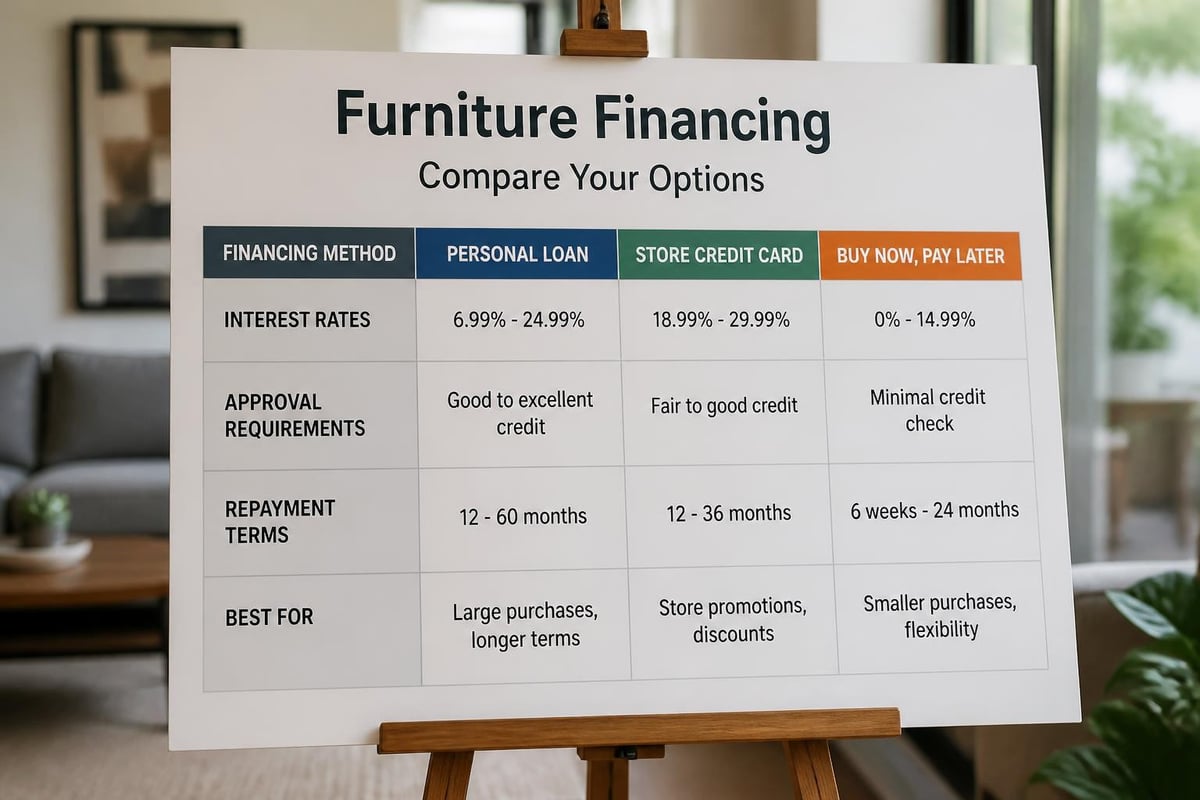
Credit cards represent another option, particularly those offering introductory zero percent APR periods. This approach works best for smaller purchases you can pay off quickly, but regular credit card rates can exceed twenty percent once promotional periods expire.
Buy now, pay later services have emerged as popular alternatives, splitting payments into smaller installments. While convenient, these programs may charge fees for missed payments and typically work better for smaller furniture purchases rather than entire room sets.
Benefits of Using Furniture Loans
Furniture loans offer immediate access to the furnishings you need without waiting months or years to save the full purchase price. This benefit is particularly valuable when moving into a new home, as living comfortably shouldn't require sleeping on the floor or eating at a folding table.
Key advantages include:
- Predictable monthly payments that simplify budgeting
- Preservation of emergency savings for unexpected expenses
- Ability to purchase quality furniture that lasts longer
- Fixed interest rates that won't change during the loan term
- Opportunity to build or improve credit through consistent payments
Quality furniture represents a worthwhile investment that can last for decades. By financing these purchases, you can afford better construction and materials rather than settling for cheaper options that need replacement within a few years. This approach often saves money in the long run, even when accounting for interest charges.
The credit-building aspect shouldn't be overlooked. Regular, on-time payments demonstrate financial responsibility to credit bureaus, potentially improving your credit score. This benefit can help you qualify for better rates on future loans, including mortgages and auto financing.
Qualifying for Furniture Loans with Various Credit Profiles
Your credit history significantly influences loan terms, but options exist for nearly every credit situation. Lenders evaluate several factors when considering applications, including credit score, income stability, employment history, and debt-to-income ratio.
Requirements and Documentation
Most lenders require basic documentation to process furniture loan applications. This typically includes proof of identity (driver's license or state ID), proof of income (recent pay stubs or tax returns), and banking information for loan disbursement.
| Credit Score Range | Typical Interest Rates | Approval Likelihood | Special Considerations |
|---|---|---|---|
| Excellent (720+) | 6% – 12% | Very High | Best rates and terms |
| Good (680-719) | 10% – 16% | High | Competitive options available |
| Fair (620-679) | 14% – 24% | Moderate | May need co-signer |
| Poor (<620) | 20% – 36% | Lower | Limited options, higher rates |
Income verification demonstrates your ability to repay the loan. Lenders want to ensure your monthly obligations, including the new furniture loan payment, don't exceed a certain percentage of your gross income. Most lenders prefer debt-to-income ratios below forty percent, though some may accept higher ratios with compensating factors.
Employment stability matters as well. Lenders prefer borrowers who have maintained consistent employment, as frequent job changes can signal financial instability. However, changing jobs within the same industry or for higher pay typically doesn't negatively impact applications.

Furniture Loans for Bad Credit Situations
Having less-than-perfect credit doesn't eliminate your furniture financing options. Many lenders specialize in working with borrowers who have experienced past credit challenges, recognizing that financial difficulties don't define future payment behavior. Understanding furniture financing for bad credit helps you navigate available options.
Secured loans provide one alternative for those with credit challenges. By offering collateral such as a vehicle or savings account, you reduce the lender's risk, often resulting in better interest rates and higher approval odds. The trade-off involves potential collateral loss if you default on payments.
Co-signers represent another path to approval. When someone with better credit co-signs your loan, their creditworthiness supplements your application, improving approval chances and potentially securing lower rates. However, co-signers assume equal responsibility for the debt, risking their own credit if payments aren't made as agreed.
Strategies for securing furniture loans with bad credit:
- Apply with lenders specializing in bad credit financing
- Offer a larger down payment to reduce loan amount
- Choose shorter loan terms to demonstrate commitment
- Provide additional income documentation showing payment capacity
- Consider a co-signer with stronger credit
Alternative financing through rent-to-own programs exists, though these typically cost significantly more over time. These programs require no credit check and approve nearly everyone, but the total amount paid often exceeds twice the furniture's retail value.
Comparing Loan Terms and Interest Rates
Interest rates on furniture loans vary widely based on creditworthiness, loan amount, and repayment term. Researching how furniture loans work helps you understand the factors affecting your total cost.
Rate factors include:
- Credit score and credit history
- Loan amount and term length
- Lender type (bank, credit union, online lender)
- Current market interest rates
- Secured versus unsecured loans
Shorter loan terms typically offer lower interest rates but higher monthly payments. A three-year loan might carry a twelve percent rate, while a five-year loan for the same amount could have a fifteen percent rate. The longer term reduces monthly payment burden but increases total interest paid over the life of the loan.
APR (Annual Percentage Rate) provides the most accurate cost comparison between lenders, as it includes interest plus fees. A loan advertising a low interest rate might carry high origination fees that make the true cost higher than a loan with a slightly higher rate but minimal fees.
Smart Shopping Strategies for Furniture Purchases
Maximizing value when buying furniture involves more than just securing favorable loan terms. Strategic shopping can reduce the amount you need to borrow, lowering your monthly payments and total interest paid.
Timing Your Purchase
Furniture retailers follow seasonal sales patterns. Major holidays like Presidents Day, Memorial Day, Labor Day, and Black Friday typically feature significant discounts. End-of-month shopping can also yield better prices, as salespeople work to meet quotas and may offer additional incentives.
Clearance events occur when retailers introduce new collections, deeply discounting floor models and discontinued styles. These pieces often show minimal wear and function perfectly, providing substantial savings for budget-conscious shoppers.
Negotiation remains possible at many furniture stores, particularly for large purchases. Sales staff often have authority to adjust prices, throw in free delivery, or waive setup fees. Asking politely about available discounts costs nothing and frequently results in unexpected savings.

| Shopping Period | Typical Discounts | Best Items to Buy |
|---|---|---|
| January | 20-40% | Holiday returns, winter collections |
| February (Presidents Day) | 30-50% | Mattresses, bedroom furniture |
| July (Independence Day) | 25-45% | Outdoor furniture, summer items |
| September (Labor Day) | 30-50% | All categories |
| November (Black Friday) | 30-60% | Doorbusters, limited quantities |
Managing Your Furniture Loan Responsibly
Once approved for furniture financing, responsible management ensures the loan benefits your financial situation rather than creating burden. Setting up automatic payments prevents missed due dates and potential late fees while demonstrating reliability to credit bureaus.
Budgeting accurately before committing to a loan amount prevents overextension. Calculate not just whether you can afford the monthly payment, but whether you can comfortably afford it while maintaining your emergency fund and meeting other financial obligations.
Payment Strategies That Save Money
Making extra payments when possible reduces total interest paid and shortens loan duration. Even small additional amounts applied to principal can save hundreds of dollars over the loan's life. Before implementing this strategy, confirm your lender doesn't charge prepayment penalties.
Refinancing becomes worthwhile if your credit improves significantly during the loan term or if market rates drop substantially. Refinancing to a lower rate reduces monthly payments or allows you to pay off the balance faster while saving on interest charges.
Avoiding additional debt while repaying furniture loans maintains financial stability. Taking on multiple loans simultaneously strains budgets and can damage credit scores if payments become difficult to manage. Focus on repaying current obligations before assuming new ones.
Regional Considerations for Southern States
Furniture financing in Louisiana, Mississippi, Tennessee, and Georgia involves specific regional considerations. These states feature diverse economic conditions, with urban areas like New Orleans, Memphis, Nashville, and Atlanta offering more competitive lending options than rural communities.
State regulations affect maximum interest rates and fees lenders can charge. Louisiana's usury laws, for example, cap interest rates on certain loan types, potentially limiting available options but protecting consumers from predatory lending. Understanding your state's consumer protection laws helps you recognize fair lending practices.
Local credit unions throughout the region often provide competitive furniture loan options with lower rates than national lenders. These member-owned institutions frequently consider factors beyond credit scores, looking at community ties, employment history, and personal circumstances when making lending decisions.
Regional lending landscape:
- Credit unions in Memphis and Nashville offering community-focused lending
- Mississippi Delta regions with fewer traditional banking options
- Louisiana parishes with specialized consumer protection regulations
- Georgia metro areas featuring competitive online and traditional lender presence
Alternative Uses for Furniture Loans
While primarily designed for furniture purchases, these loans can finance related home improvement projects that enhance comfort and functionality. Window treatments, area rugs, lighting fixtures, and decorative elements often qualify under furniture financing programs.
Home office setup has become increasingly important as remote work continues growing. Desks, ergonomic chairs, filing systems, and quality lighting represent worthy investments in productivity and health, all financeable through furniture loans.
Outdoor living spaces extend usable square footage and increase property value. Patio furniture, outdoor kitchens, fire pits, and shade structures create enjoyable environments for family gatherings and relaxation. Many lenders include outdoor furnishings in their furniture loan programs.
Moving-related expenses sometimes qualify when combined with furniture purchases. Some lenders offer relocation-specific financing that bundles furniture with moving costs, simplifying the process of establishing a new household.
Furniture loans provide practical financing solutions for creating comfortable, functional living spaces without depleting savings accounts. By comparing lenders, understanding terms, and shopping strategically, you can furnish your home affordably while building positive credit history. Standard Financial specializes in helping Louisiana, Mississippi, Tennessee, and Georgia residents access flexible financing options tailored to their unique situations, including those with past credit challenges. Contact Standard Financial today to explore furniture loan options and discover how we can help you create the home you deserve.







No comment yet, add your voice below!