

The holiday season brings joy, family gatherings, and the desire to create memorable experiences for loved ones. However, these celebrations often come with significant financial pressure. Christmas loans have emerged as a popular financing option for families who want to manage holiday expenses without depleting their savings or maxing out credit cards. Understanding how these loans work, their costs, and whether they're the right choice for your situation can help you navigate the festive season with confidence and avoid financial stress that extends into the new year.
Understanding Christmas Loans and How They Work
Christmas loans are personal loans specifically marketed for holiday expenses, though they function identically to standard personal loans. These unsecured loans provide borrowers with a lump sum of cash to cover gifts, decorations, travel, entertainment, and other seasonal costs.
The typical structure includes fixed monthly payments over a predetermined period, usually ranging from six to 24 months. Interest rates vary based on your creditworthiness, loan amount, and lender policies. According to NerdWallet’s analysis of Christmas loans, borrowers should carefully evaluate the total cost before committing to this type of financing.
Key Features of Holiday Financing
Most christmas loans share several common characteristics that distinguish them from other borrowing options:
- Fixed interest rates that remain constant throughout the repayment period
- Predetermined loan amounts typically ranging from $1,000 to $5,000
- Quick approval processes often completed within 24 to 48 hours
- No collateral requirements since these are unsecured personal loans
- Flexible use allowing funds for any holiday-related expense

Financial institutions may offer promotional rates during the fall months to attract borrowers planning ahead. Some credit unions and community banks create specialized holiday loan programs with competitive terms designed to help members manage seasonal expenses responsibly.
Eligibility Requirements and Application Process
Qualifying for christmas loans follows similar criteria to other personal loan products. Lenders evaluate multiple factors to determine your creditworthiness and ability to repay the borrowed funds.
Credit Score Considerations
Your credit score plays a significant role in both approval odds and the interest rate you'll receive. Here's how different credit tiers typically affect loan terms:
| Credit Score Range | Approval Likelihood | Typical APR Range | Monthly Payment (on $3,000) |
|---|---|---|---|
| 720+ (Excellent) | Very High | 6% – 12% | $258 – $267 |
| 680-719 (Good) | High | 12% – 18% | $267 – $276 |
| 640-679 (Fair) | Moderate | 18% – 25% | $276 – $287 |
| Below 640 (Poor) | Lower | 25% – 36% | $287 – $302 |
*Based on 12-month repayment term
Documentation and Application Steps
The application process for christmas loans generally requires several key documents and information:
- Personal identification including driver's license or state ID
- Proof of income through recent pay stubs, bank statements, or tax returns
- Employment verification showing stable work history
- Residence information confirming your current address
- Banking details for direct deposit and payment setup
Many lenders now offer completely digital applications, allowing you to complete the entire process online. This convenience makes christmas loans particularly attractive during the busy holiday season when time is limited.
Costs and Financial Implications
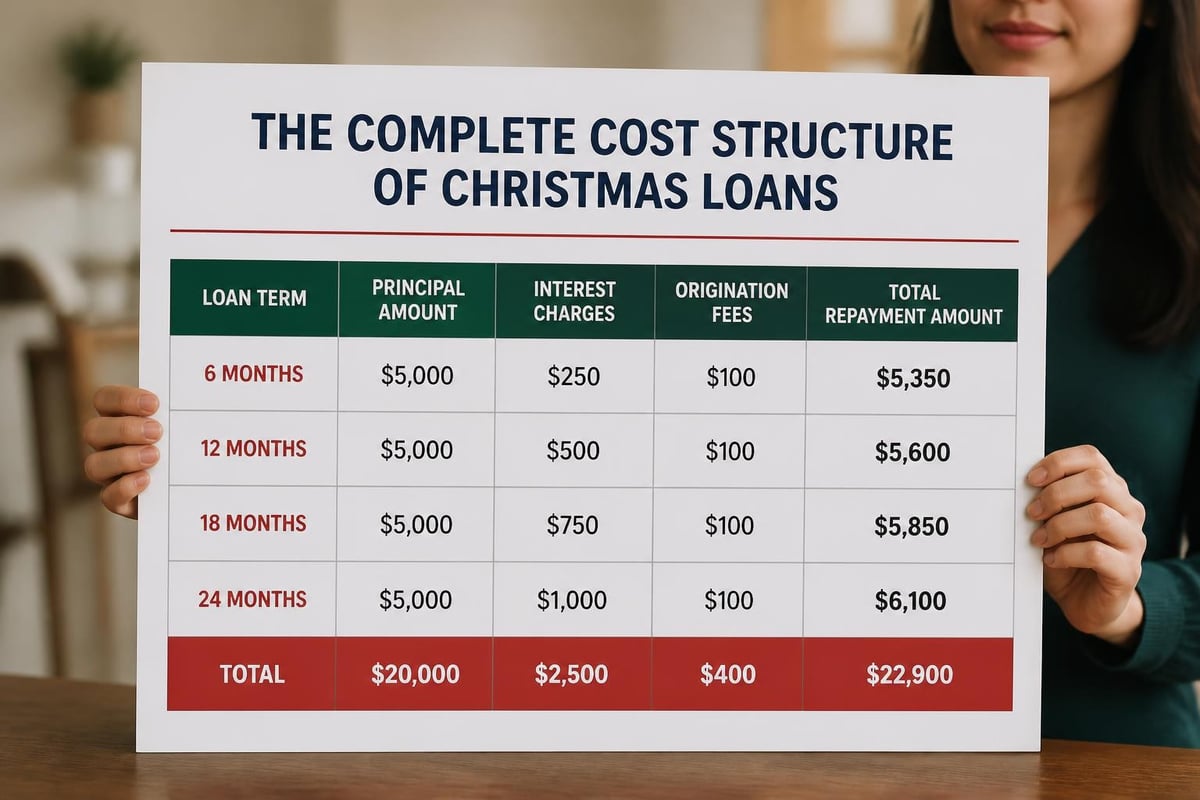
Before taking out christmas loans, understanding the true cost of borrowing is essential. The advertised interest rate only tells part of the story, as additional fees can significantly increase what you'll pay over time.
Breaking Down Total Loan Costs
Beyond the annual percentage rate (APR), several fees may apply:
- Origination fees ranging from 1% to 8% of the loan amount
- Late payment penalties if you miss scheduled payments
- Prepayment penalties charged by some lenders for early payoff
- Administrative fees for processing and maintaining the account
Finder’s comprehensive guide to holiday loans emphasizes comparing the total cost across multiple lenders rather than focusing solely on the interest rate. A loan with a slightly higher APR but no origination fee might actually cost less than one with a lower rate but substantial upfront charges.
Real-World Cost Examples
Consider a $3,000 christmas loan with these different scenarios:
Scenario A: 12% APR, 12-month term, 3% origination fee
- Monthly payment: $267
- Total origination fee: $90
- Total interest paid: $197
- Total cost: $287
Scenario B: 15% APR, 12-month term, no origination fee
- Monthly payment: $271
- Total origination fee: $0
- Total interest paid: $248
- Total cost: $248
This comparison demonstrates why evaluating all costs provides a clearer picture of affordability.
Alternatives to Traditional Christmas Loans
While christmas loans serve a purpose for some borrowers, several alternatives might better suit your financial situation and long-term goals.
Strategic Savings Approaches
Creating a dedicated holiday fund throughout the year eliminates the need for borrowing entirely. Starting in January, setting aside just $100 monthly provides $1,200 for December expenses without interest or fees.
Christmas Club Accounts offered by some financial institutions provide structured savings specifically designed for holiday spending. These accounts often feature:
- Automatic monthly transfers from checking accounts
- Competitive interest rates on deposits
- Scheduled disbursement in November or early December
- No withdrawal penalties since funds are released at the designated time
Credit Card Strategies
For those with good credit and disciplined repayment habits, strategic credit card use might offer advantages over christmas loans. MyBankTracker’s analysis of christmas loans points out potential dangers of both options, but credit cards provide unique benefits when used responsibly.
Balance transfer cards with 0% introductory APR periods allow interest-free financing for 12 to 21 months. This approach works best when you commit to paying off the balance before the promotional period ends.
Cash back rewards cards return 1% to 5% on purchases, effectively reducing your holiday spending. Combined with a payoff plan, this strategy can be more economical than fixed-rate christmas loans.
Making Informed Borrowing Decisions
If you determine that christmas loans are appropriate for your situation, several strategies can help you borrow responsibly and minimize financial impact.
Calculating the Right Loan Amount
Resist the temptation to borrow the maximum amount available. Instead, create a detailed holiday budget:
- List all anticipated expenses including gifts, food, decorations, and travel
- Identify which items are essential versus discretionary
- Determine what you can fund from current income or savings
- Calculate the minimum loan amount needed to cover the gap
Borrowing only what you truly need reduces interest charges and makes repayment more manageable throughout the following year.
Comparing Lender Options
The christmas loan market includes various types of financial institutions, each with distinct advantages:
| Lender Type | Typical Advantages | Typical Disadvantages |
|---|---|---|
| Credit Unions | Lower rates, flexible terms | Membership required |
| Online Lenders | Fast approval, convenience | Higher rates for some borrowers |
| Traditional Banks | Established relationships | Stricter requirements |
| Consumer Finance Companies | Flexible credit requirements | Higher interest rates |
Research at least three to five lenders before making a decision. Bills.com’s explanation of how Christmas loans work provides useful insights into qualifying for these products across different institution types.

Managing Repayment Successfully
Securing christmas loans represents just the beginning of your financial obligation. How you manage repayment determines whether this financing decision supports or hinders your long-term financial health.
Creating a Repayment Strategy
Before your first payment comes due, establish a system that ensures consistent, on-time payments:
- Set up automatic payments to eliminate the risk of missed due dates
- Align payment dates with your paycheck schedule for easier cash flow management
- Build a payment buffer by keeping one extra payment amount in savings
- Track remaining balance monthly to stay motivated and aware of progress
Avoiding Common Repayment Pitfalls
Several mistakes can transform manageable christmas loans into long-term financial burdens:
Making only minimum payments when you receive bonuses or tax refunds delays payoff and increases total interest. Applying extra funds toward principal accelerates debt elimination and saves money.
Ignoring budget adjustments after taking on new monthly obligations leads to cash flow problems. Review your spending in other categories to accommodate loan payments without financial strain.
Taking subsequent holiday loans before paying off previous ones creates a cycle of debt that becomes increasingly difficult to escape. Break this pattern by planning ahead for next year's expenses while still in repayment.
Special Considerations for Different Credit Profiles
Your credit history significantly influences both your access to christmas loans and the terms you'll receive. Understanding how lenders view different credit profiles helps set realistic expectations.
Options for Limited or Damaged Credit
Borrowers with credit challenges aren't automatically excluded from christmas loans, though they face different conditions. Consumer lending specialists who work with diverse credit backgrounds often provide solutions when traditional banks decline applications.
Co-signer arrangements allow someone with stronger credit to guarantee your loan, potentially securing better rates and higher approval odds. This person accepts legal responsibility if you default, so choose this option carefully and honor your commitment to protect both your finances and the relationship.
Secured loan alternatives require collateral such as a savings account or vehicle title. While these don't fit the traditional christmas loan model, they may offer lower rates for borrowers with credit issues.
Building Credit Through Holiday Loans
When managed properly, christmas loans can actually improve your credit profile. On-time payments reported to credit bureaus demonstrate responsible borrowing and contribute to positive payment history, which comprises 35% of your FICO score.
The credit mix component (10% of your score) also benefits from adding installment debt if your credit report primarily shows revolving accounts like credit cards. This diversification can boost your score over time, though it shouldn't be the primary reason for borrowing.
Timing Your Loan Application
Strategic timing can impact both your approval odds and the terms available for christmas loans. Understanding seasonal lending patterns helps you make informed decisions about when to apply.
Early Season Advantages
Applying for holiday financing in September or October often provides benefits compared to waiting until November or December:
- Lenders have more capacity and may process applications faster
- You avoid the rush of last-minute borrowers competing for funds
- More time exists to compare offers and negotiate terms
- Early access to funds allows you to take advantage of pre-Black Friday sales
Last-Minute Borrowing Considerations
If you're applying for christmas loans in late November or December, expect some challenges. Lender workloads increase significantly, potentially extending approval timelines. Some institutions may have already allocated their seasonal lending budgets, reducing available funds or tightening requirements.
Emergency holiday borrowing also increases the risk of hasty decisions. Time pressure can lead to accepting unfavorable terms or skipping important comparison shopping. If you find yourself in this situation, take extra care to read all loan documents and understand exactly what you're agreeing to before signing.
Long-Term Financial Planning Beyond Holiday Loans
While christmas loans address immediate seasonal needs, developing comprehensive financial strategies prevents the need for emergency holiday borrowing in future years.
Building an Emergency Fund
Financial experts typically recommend maintaining three to six months of living expenses in readily accessible savings. This cushion protects against unexpected costs throughout the year and can cover holiday expenses without resorting to debt.
Start small if you're currently living paycheck to paycheck. Even $25 weekly adds up to $1,300 annually-enough to significantly reduce or eliminate the need for christmas loans. Automate these transfers so saving becomes effortless and consistent.
Year-Round Budget Modifications
Incorporating seasonal expenses into your regular monthly budget smooths financial volatility and eliminates surprises. Divide your estimated annual holiday costs by 12 and set that amount aside each month in a dedicated savings account.
This approach transforms a large December burden into manageable monthly allocations. You'll enter the holiday season with funds already earmarked for celebrations, gifts, and special meals.
Managing holiday expenses requires balancing your desire to create meaningful celebrations with responsible financial decisions that protect your long-term stability. Christmas loans offer one solution for covering seasonal costs, but they work best as part of a broader financial strategy that includes budgeting, comparison shopping, and realistic repayment planning. Whether you're facing unexpected expenses or simply want to spread costs over time, understanding all your options helps you make choices aligned with your financial goals. Standard Financial specializes in flexible personal loan solutions for families throughout Louisiana, Mississippi, Tennessee, and Georgia, including those with past credit challenges who need reliable financing options for holiday expenses and beyond.







No comment yet, add your voice below!