

Purchasing land in Louisiana represents a significant investment opportunity, whether you're planning to build your dream home, start a farming operation, or acquire recreational property. However, securing financing for raw land differs substantially from obtaining a traditional mortgage. A land loan Louisiana buyers pursue typically comes with unique requirements, higher down payments, and specific terms that reflect the increased risk lenders face when financing undeveloped property. Understanding these financing options and how they work within Louisiana's diverse real estate landscape helps prospective buyers make informed decisions about their land purchases.
Understanding Land Loan Louisiana Options
Louisiana offers several distinct types of land loans, each designed for specific purposes and property types. The financing structure you'll need depends heavily on your intended use for the property and its current state of development.
Raw land loans finance completely undeveloped property without utilities, road access, or infrastructure. These loans carry the highest risk for lenders and typically require substantial down payments of 30-50%. Interest rates on raw land financing generally run 1-2 percentage points higher than conventional mortgages.
Unimproved land loans cover property with some basic infrastructure like road access or utility connections but no structures. These loans offer slightly better terms than raw land financing, with down payments around 20-30%.
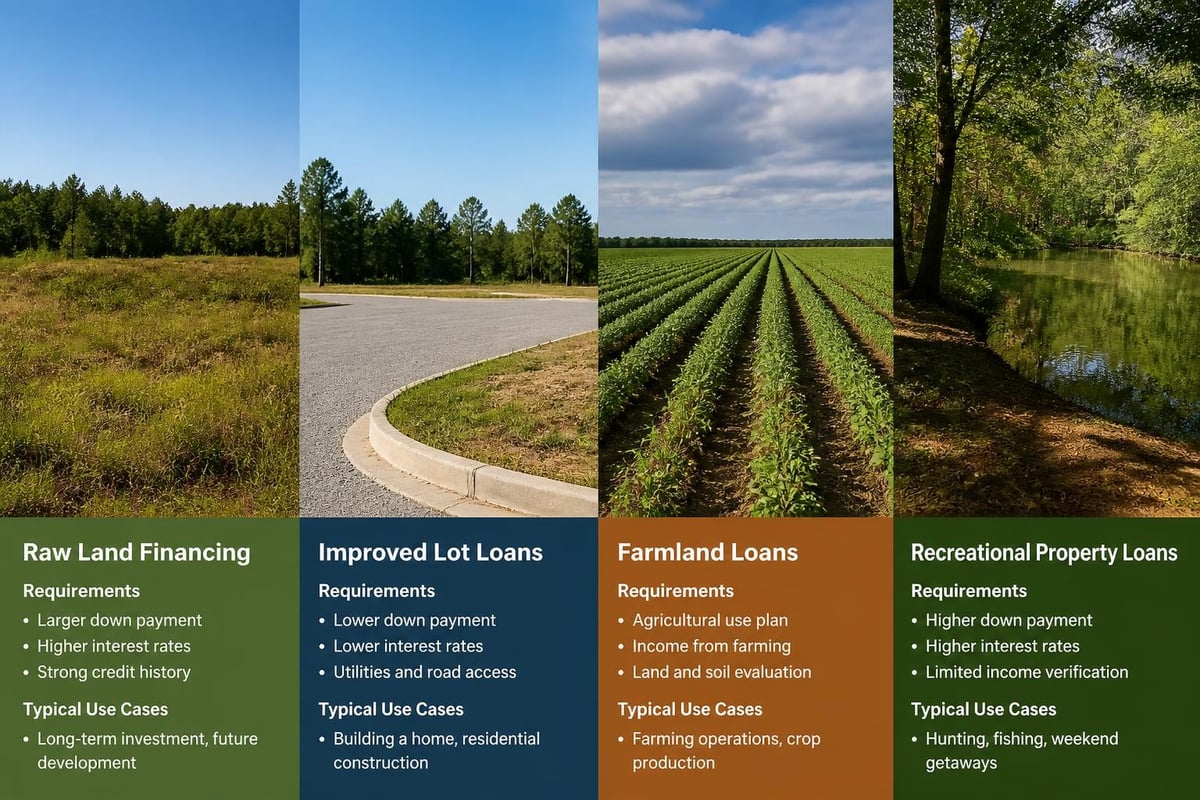
Residential lot loans finance subdivided lots ready for construction, offering the most favorable terms among land loan Louisiana options. Lenders view these as lower risk since the property has utilities, road access, and often sits in established neighborhoods.
Agricultural and Recreational Financing
Louisiana's strong agricultural heritage means specialized financing exists for farming operations. Louisiana Land Bank offers farmland loans specifically designed for both new and established farmers looking to purchase or improve agricultural land. These loans recognize the unique cash flow patterns of farming and offer terms reflecting agricultural cycles.
For outdoor enthusiasts, recreational land loans provide financing for hunting camps, fishing retreats, and properties used for outdoor activities. Louisiana Land Bank specializes in these rural financing arrangements, bringing over a century of experience to the state's recreational property market.
Key Requirements for Land Loan Approval
Securing a land loan Louisiana lenders offer requires meeting stricter qualification standards than traditional home mortgages. Lenders scrutinize applications carefully due to the higher default risk associated with land financing.
Credit score expectations typically start at 680-700 for most land loan programs. Some lenders may work with borrowers in the 640-660 range, but expect higher interest rates and larger down payments. Your credit history demonstrates your ability to manage debt responsibly, which becomes especially important when lenders can't rely on an existing structure as collateral.
Down payment requirements vary significantly by land type:
- Raw land: 30-50% down payment
- Unimproved land: 20-30% down payment
- Improved residential lots: 15-20% down payment
- Agricultural land: 25-35% down payment
Income verification follows standard lending practices but may require additional documentation. Self-employed borrowers or those with variable income need two years of tax returns, profit and loss statements, and bank statements. Lenders calculate debt-to-income ratios conservatively, typically requiring ratios below 43%.
| Loan Type | Minimum Credit Score | Typical Down Payment | Maximum Term |
|---|---|---|---|
| Raw Land | 700+ | 30-50% | 10-15 years |
| Unimproved Land | 680+ | 20-30% | 15 years |
| Residential Lot | 660+ | 15-20% | 15-20 years |
| Farmland | 680+ | 25-35% | 20-30 years |
Property Considerations in Louisiana
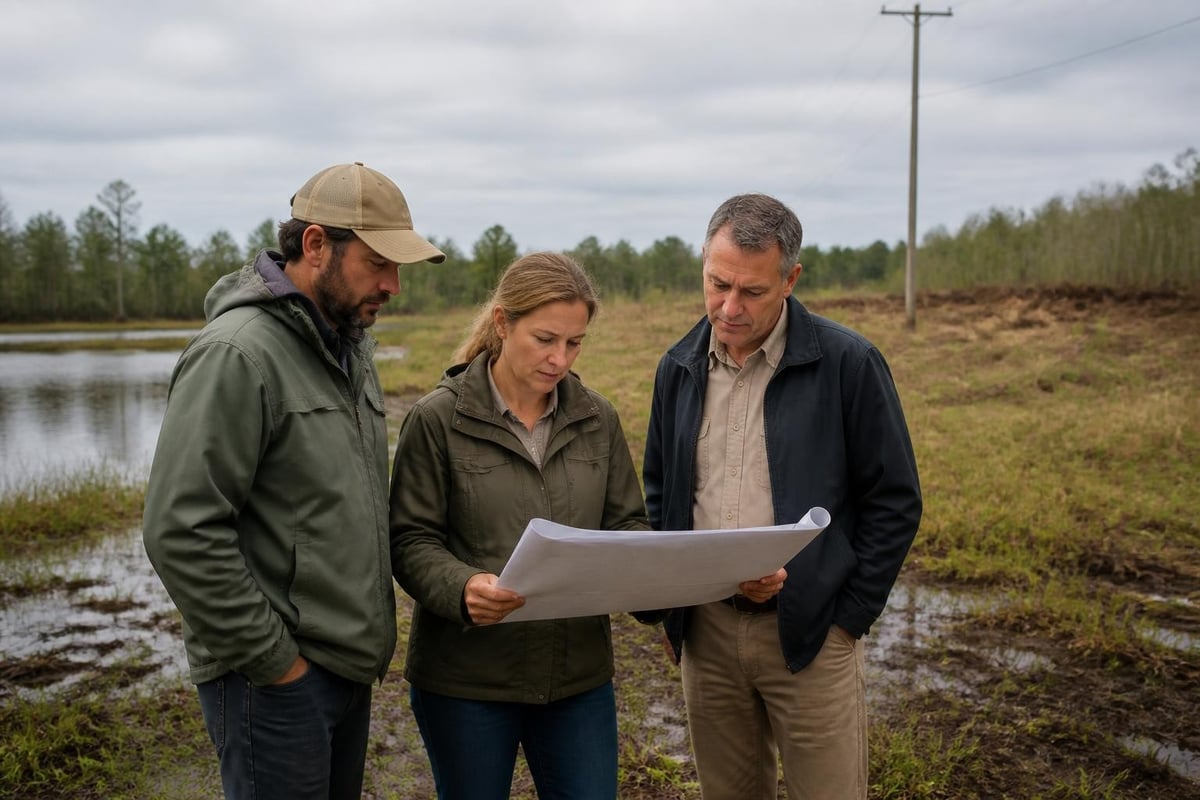
Louisiana's unique geography, climate, and regulatory environment create specific considerations for land buyers. The state's coastal areas, wetlands, and flood-prone regions require careful evaluation before purchasing.
Environmental and Zoning Factors
Flood zone designation significantly impacts both property value and insurance requirements. Properties in Special Flood Hazard Areas (SFHA) require flood insurance, adding to ownership costs. Before finalizing any land purchase, review FEMA flood maps and consider how flood risk affects long-term value.
Wetlands regulations through the U.S. Army Corps of Engineers and Louisiana Department of Environmental Quality may restrict development on certain properties. Wetlands determinations can limit where you can build and what activities you can conduct on the land.
Soil stability matters throughout Louisiana but especially in southern parishes. A recent study on seasonal vertical land motion in southern Louisiana reveals how aquifer dynamics affect subsidence, which can impact long-term property stability and development potential.
Zoning ordinances vary by parish and municipality. Verify the property's zoning classification matches your intended use, whether residential, agricultural, commercial, or recreational. Changing zoning classifications can be expensive and time-consuming, if possible at all.
Comparing Louisiana Lenders and Terms
The land loan Louisiana market includes banks, credit unions, and specialized rural lenders, each offering distinct advantages for different buyer profiles.
Community Banks and Building Associations
Rayne Building and Loan Association provides straightforward land loan terms without property insurance requirements during the loan period, which can reduce carrying costs. Their local market knowledge helps them evaluate Louisiana properties effectively.
Abbeville Building & Loan focuses on buyers planning to build their primary residence, offering competitive interest rates and personalized service. Their approach works well for buyers with clear construction timelines.
Patterson State Bank specializes in short-term land loans for both developed lots and raw land, understanding that many buyers plan to refinance into construction loans relatively quickly.
Credit Union Options
Credit unions often provide more flexible underwriting for members. Xplore Federal Credit Union offers fixed-rate land loans with terms up to 15 years and financing up to 80% loan-to-value for qualified borrowers.
Ascension Credit Union serves members financing immobilized mobile homes on owned land, offering terms up to 15 years for primary residences. This specialized financing addresses a common housing solution in rural Louisiana parishes.
Interest rate comparison (2026 average ranges):
- Raw land: 7.5-10.5%
- Improved lots: 6.5-8.5%
- Agricultural land: 6.0-8.0%
- Recreational land: 7.0-9.0%
Strategies for Securing Better Terms
Improving your loan terms requires strategic preparation and understanding what lenders value most in land loan Louisiana applications.
Increase your down payment beyond minimum requirements. Every additional percentage point reduces lender risk and often unlocks better interest rates. A 40% down payment instead of 30% might reduce your rate by 0.5-1.0 percentage points, saving thousands over the loan term.
Develop a detailed land use plan showing exactly how you'll use the property. Lenders view applications more favorably when buyers demonstrate clear, realistic plans. Include construction timelines, contractor estimates, or business plans for agricultural operations.
Improve your credit score before applying. Even small improvements can make significant differences in approval odds and rates. Pay down existing debts, correct credit report errors, and avoid new credit inquiries for six months before application.
Relationship Banking Benefits
Establishing banking relationships before seeking land financing creates advantages. Consider opening accounts and using services at the institution where you'll apply for your land loan Louisiana financing. Banks often offer rate discounts and more flexible terms for existing customers with strong account histories.
Compensating balances may improve loan terms. Some lenders reduce interest rates when borrowers maintain minimum deposit account balances throughout the loan term. Ask about these programs when comparing lenders.
Alternative Financing Approaches
Traditional land loans aren't the only path to property ownership in Louisiana. Several alternative strategies help buyers overcome high down payment requirements or credit challenges.
Seller financing occurs when property owners provide direct financing to buyers, eliminating traditional lenders. This arrangement works well when sellers own land free and clear and don't need immediate full payment. Terms are negotiable, potentially offering lower down payments and more flexible qualification standards.
Advantages include faster closing, reduced fees, and flexible terms. Disadvantages include higher interest rates (typically 8-12%), shorter terms (5-10 years with balloon payments), and limited legal protections compared to institutional lending.
Home equity financing allows homeowners to leverage existing property equity for land purchases. Home equity loans or lines of credit typically offer lower interest rates than land loans since your home serves as collateral. This approach works best for buyers with substantial equity and strong repayment capacity.
Personal loans from lenders like Standard Financial provide another option for smaller land purchases. While interest rates exceed secured land loans, approval is often faster and less dependent on the land itself. Personal loans work well for improved lots or smaller acreage purchases where loan amounts stay manageable.
Partnership and Investment Structures
Co-ownership arrangements split purchase costs among multiple buyers. Family members or friends can jointly purchase recreational or investment land, sharing both costs and benefits. Establish clear legal agreements defining ownership percentages, usage rights, and exit strategies.
Land contracts (also called contracts for deed) allow buyers to make payments directly to sellers while taking possession but not receiving title until full payment. Louisiana law governs these arrangements, requiring careful legal review to protect both parties' interests.
| Financing Method | Typical Rate | Down Payment | Best For |
|---|---|---|---|
| Traditional Land Loan | 6.5-10.5% | 20-50% | Most buyers with good credit |
| Seller Financing | 8-12% | 10-30% | Buyers with credit challenges |
| Home Equity Loan | 5.5-8.5% | N/A (equity required) | Homeowners with equity |
| Personal Loan | 8-15% | None | Smaller purchases |
Preparing Your Application
Strong applications increase approval odds and improve terms. Gathering documentation before applying streamlines the process and demonstrates organizational skills lenders appreciate.
Financial documentation requirements include:
- Two years of tax returns (personal and business if self-employed)
- Recent pay stubs covering 30-60 days
- Two months of bank statements for all accounts
- Investment account statements
- Retirement account documentation
- Documentation of other income sources
Property documentation must clearly establish boundaries, ownership, and characteristics:
- Recent survey showing exact boundaries
- Title search and title insurance
- Property tax records
- Environmental assessments if required
- Zoning verification letters
- Utility availability confirmation
- Access easement documentation if applicable

Working with Professionals
Land surveyors establish precise property boundaries and identify encroachments or easements. Louisiana's complex property history sometimes reveals unexpected boundary issues, making professional surveys essential.
Real estate attorneys review purchase agreements, title issues, and closing documents. Louisiana's unique civil law tradition (based on Napoleonic Code rather than English common law) creates specific legal considerations requiring specialized knowledge.
Environmental consultants assess properties for wetlands, endangered species habitats, or contamination issues. Their evaluations help avoid costly surprises after purchase.
Tax Implications and Benefits
Understanding tax treatment of land ownership helps buyers calculate true costs and potential benefits of land loan Louisiana financing.
Mortgage interest deduction applies to land loans when you plan to build a primary or secondary residence within 24 months. Keep detailed records proving construction intent to maximize this tax benefit. The deduction phases out at higher income levels under current tax law.
Property tax assessments vary significantly across Louisiana parishes. Agricultural land often qualifies for reduced assessment rates through use-value assessment programs. Contact parish assessors to understand qualification requirements and potential savings.
Capital gains considerations affect investment properties. Land held for investment receives long-term capital gains treatment after one year of ownership, with lower tax rates than ordinary income. Strategic timing of sales can minimize tax liability.
Timeline Expectations
Land purchases take longer than traditional home purchases due to additional due diligence requirements. Understanding typical timelines helps buyers plan accordingly.
Pre-approval process: 5-10 business days after submitting complete documentation. Lenders review credit, income, and assets to determine maximum loan amounts and likely terms.
Property evaluation: 2-4 weeks including survey, environmental assessment, and appraisal. Rural properties may take longer due to limited comparable sales data.
Underwriting and approval: 2-3 weeks once all documentation is complete. Complex situations involving wetlands, unusual access arrangements, or marginal credit require additional time.
Closing preparation: 1-2 weeks for title work, document preparation, and final verifications.
Total timeline from application to closing typically runs 6-10 weeks for straightforward transactions. Complex situations can extend to 12-16 weeks.
Securing a land loan Louisiana lenders offer requires careful preparation, understanding of unique property considerations, and realistic expectations about terms and requirements. Whether you're purchasing farmland, recreational property, or a residential lot, working with experienced local lenders who understand Louisiana's specific challenges provides significant advantages. Standard Financial serves Louisiana residents with flexible financing solutions tailored to individual circumstances, including personal loans that can support land purchases or bridge financing gaps. Our team understands the unique needs of Louisiana borrowers and works with clients across various credit profiles to find financing solutions that work. Contact Standard Financial today to discuss your land purchase financing options.






No comment yet, add your voice below!