

Waiting for your tax refund can feel like an eternity, especially when bills are piling up or unexpected expenses arise. Tax refund loans offer a solution by providing immediate access to your anticipated refund, typically within 24 to 48 hours of filing your return. These short-term financing options have evolved significantly over the past decade, with new regulations and competitive offerings reshaping how consumers access their tax money. Understanding the mechanics, costs, and alternatives to these loans can help you make an informed decision about whether they're the right choice for your financial situation.
What Are Tax Refund Loans and How Do They Work
Tax refund loans, also called refund advance loans, are short-term loans issued by financial institutions and tax preparation companies. The loan amount is based on your expected federal tax refund, and the lender gets repaid directly when the IRS deposits your actual refund.
The process begins when you file your taxes with a participating tax preparer or online tax software. After calculating your expected refund, you can apply for a loan against that amount. Most lenders offer a portion of your anticipated refund, typically ranging from a few hundred dollars to several thousand.
The Application and Approval Process
Getting approved for tax refund loans typically requires minimal documentation compared to traditional personal loans. You'll need to provide basic identification, your Social Security number, and agree to file your taxes electronically with direct deposit.
Lenders evaluate your expected refund amount rather than your credit score in most cases. This makes these loans accessible to people with poor credit or limited credit history. The entire application process often takes less than an hour, with funds available within one to two business days.

Most tax preparation companies partner with banks to offer these products. The tax preparer facilitates the loan, while a licensed bank actually issues the funds. This partnership structure helps maintain compliance with lending regulations while making the service convenient for consumers.
Costs and Fees Associated With Tax Refund Loans
Understanding the true cost of tax refund loans requires looking beyond advertised interest rates. While many major tax preparation companies now offer zero-interest refund advances, there are still indirect costs to consider.
Common fees include:
- Tax preparation fees (often higher when bundled with a loan)
- Administrative or processing charges
- Optional services like audit protection
- Expedited payment fees
Some providers advertise "free" tax refund loans, but require you to pay for their tax preparation services, which can range from $200 to $400 or more. When you factor in these required services, the effective cost of accessing your money early can be substantial.
| Loan Provider Type | Typical Loan Range | Average Fees | Processing Time |
|---|---|---|---|
| Major Tax Chains | $250 – $3,500 | $0 – $50 (plus prep fees) | 24-48 hours |
| Online Tax Software | $500 – $4,000 | $0 – $40 (plus software cost) | 1-3 days |
| Independent Preparers | $100 – $2,000 | Varies widely | 1-5 days |
Comparing Annual Percentage Rates
Even though many tax refund loans advertise 0% APR, the effective interest rate can be higher when accounting for bundled fees. A $50 fee on a $1,000 loan repaid in two weeks translates to a significant APR when annualized.
Before 2014, some refund anticipation loans charged triple-digit interest rates. Increased regulation and competition have improved the marketplace, but consumers should still carefully review all costs. Calculate the total amount you'll pay versus simply waiting for your regular refund to arrive.
Who Benefits Most From Tax Refund Loans
Tax refund loans serve specific financial situations better than others. Understanding whether you're a good candidate can save money and prevent unnecessary debt.
These loans may make sense if you:
- Face an immediate emergency expense that cannot wait
- Risk incurring late fees or penalties on essential bills
- Have exhausted other short-term borrowing options
- Expect a substantial refund of several thousand dollars
For families living paycheck to paycheck in Louisiana, Mississippi, Tennessee, and Georgia, an unexpected car repair or medical bill can create genuine hardship. In these scenarios, accessing your tax refund a few weeks early might prevent costlier consequences like utility disconnection or vehicle repossession.
Situations Where You Should Avoid These Loans
Not every financial situation justifies the cost and complexity of tax refund loans. Resist the temptation if you're simply eager to make discretionary purchases or want cash for non-essential expenses.
The IRS typically processes electronically filed returns with direct deposit within 21 days. If you can manage three weeks without the funds, you'll receive your full refund without any fees or complications. Many people overestimate how quickly they need the money.
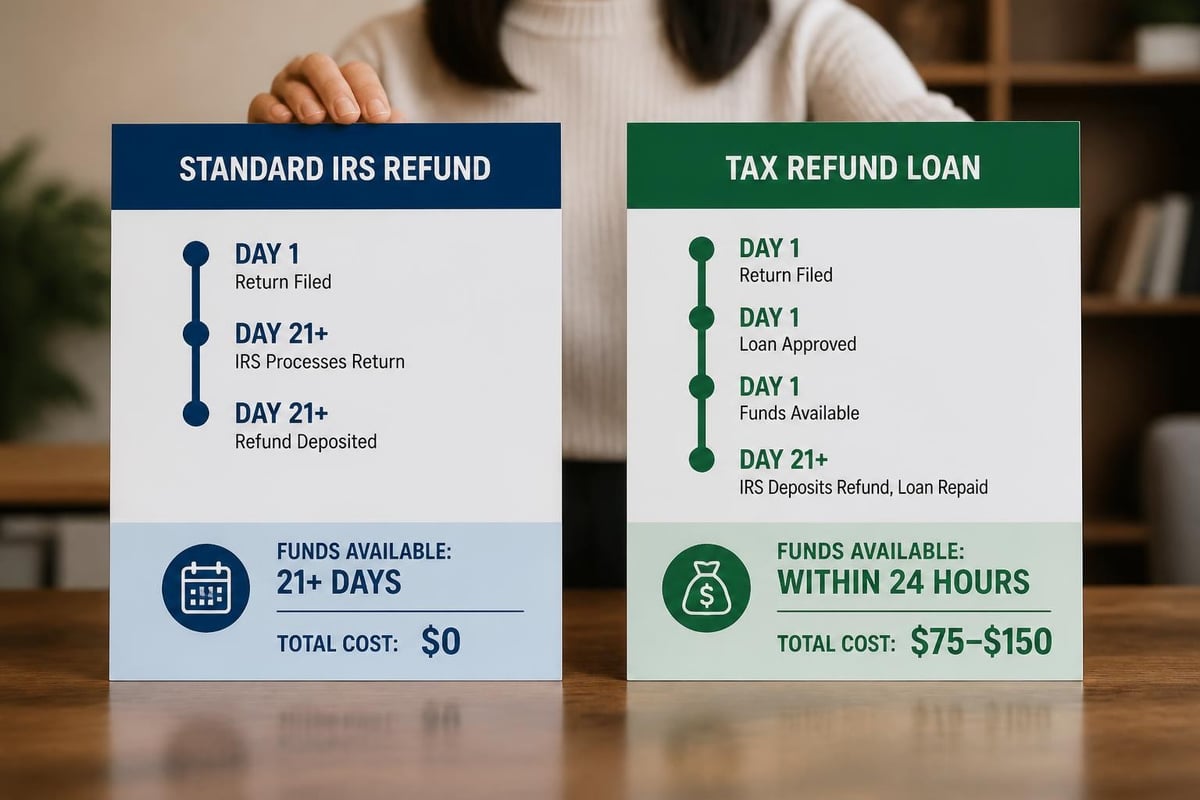
Consider whether friends or family might provide a short-term loan without interest. A small personal loan from your existing bank might offer better terms than a tax-related product, especially if you have good credit and an established banking relationship.
Smarter Alternatives to Tax Refund Loans
Several options provide faster access to cash without the fees associated with tax refund loans. Exploring these alternatives could save hundreds of dollars while still addressing your immediate financial needs.
Free Tax Filing and Direct Deposit
The IRS Free File program allows taxpayers earning less than $79,000 to file their federal returns at no cost using brand-name software. Combined with direct deposit, this approach gets your refund within three weeks without any fees.
Many community organizations and volunteer programs offer free tax preparation through the Volunteer Income Tax Assistance (VITA) program. These services help ensure you claim all eligible credits and deductions while avoiding unnecessary costs.
Personal Loans With Flexible Terms
Traditional personal loans from consumer lenders often provide more favorable terms than tax refund products, especially for borrowers with steady income. These loans offer longer repayment periods and transparent fee structures.
Advantages of personal loans include:
- Fixed monthly payments that fit your budget
- Longer repayment terms reducing payment amounts
- No requirement to wait for tax season
- Potential to borrow larger amounts if needed
- Opportunity to build positive credit history
Standard Financial specializes in helping consumers across Louisiana, Mississippi, Tennessee, and Georgia access flexible financing even with past credit challenges. Personal loans can address immediate needs while providing predictable repayment schedules extending beyond a few weeks.
Credit Card Cash Advances and Alternatives
Credit cards offer immediate liquidity, though cash advances typically carry high fees and interest rates. If you have available credit and can repay quickly, this might cost less than bundled tax preparation fees.
Consider asking your credit card issuer about temporary credit limit increases or promotional balance transfer offers. Some cards provide checks or transfers at lower rates than standard cash advances.
Tax Refund Loan Regulations and Consumer Protections
The tax refund loan industry operates under strict federal and state regulations designed to protect consumers from predatory lending practices. Understanding your rights helps ensure fair treatment.
The Truth in Lending Act requires lenders to disclose all terms clearly, including the APR, fees, and repayment conditions. Tax preparers must provide these disclosures before you sign any loan agreements. Read all documents carefully and ask questions about anything unclear.
| Consumer Protection | What It Means | How It Helps You |
|---|---|---|
| APR Disclosure | Total cost expressed as annual rate | Compare true cost across products |
| Fee Transparency | All charges listed separately | Identify hidden costs |
| Refund Transfer Option | Choose direct deposit without loan | Avoid unnecessary borrowing |
| 3-Day Rescission | Cancel within 3 days in some states | Exit if you change your mind |
State-Specific Regulations
Louisiana, Mississippi, Tennessee, and Georgia each maintain lending laws that affect tax refund products. Some states cap interest rates or limit fees on short-term loans, providing additional consumer protections.
The Consumer Financial Protection Bureau monitors the tax preparation and lending industries for unfair practices. If you experience problems with a tax refund loan provider, you can submit complaints to the CFPB for investigation.
Making the Right Decision for Your Financial Situation
Choosing whether to pursue tax refund loans requires honest assessment of your circumstances and alternatives. Create a simple decision framework to evaluate your options objectively.

Start by calculating exactly how much money you need and when you need it. If your tax refund is $2,000 but you only need $500 for an emergency, borrowing against the full refund makes little sense. Explore whether a smaller personal loan might better match your actual needs.
Questions to Ask Before Applying
Consider these critical factors:
- What is the total cost including all fees and required services?
- How much would waiting for my regular refund actually cost me?
- Do I have other borrowing options with better terms?
- Am I certain about my refund amount and timing?
- Could I reduce my tax withholding instead to increase my take-home pay?
The last point deserves special attention. If you consistently receive large refunds, you're essentially giving the government an interest-free loan throughout the year. Adjusting your W-4 withholding to keep more of each paycheck eliminates the refund wait entirely and provides better cash flow management.
How to Maximize Your Tax Refund Without Loans
Rather than borrowing against your expected refund, focus on maximizing the refund itself and receiving it as quickly as possible through the standard IRS process.
Claim all eligible tax credits including the Earned Income Tax Credit (EITC), Child Tax Credit, and education credits. Many taxpayers leave money on the table by overlooking deductions and credits they qualify for. Free tax assistance programs help identify these opportunities.
Filing Strategies for Fastest Processing
File electronically as early as possible in the tax season. The IRS begins accepting returns in late January, and early filers typically receive their refunds faster. Electronic filing with direct deposit is the fastest combination, usually delivering refunds within 21 days.
Avoid common errors that delay processing. Double-check Social Security numbers, ensure your math is accurate, and include all required forms and schedules. The IRS holds refunds with errors until you correct the issues, adding weeks to the wait time.
Track your refund status using the IRS "Where's My Refund?" tool, available 24 hours after e-filing. This provides transparency about your refund's progress and expected deposit date, reducing anxiety about when money will arrive.
Building Financial Resilience Beyond Tax Season
Tax refund loans often appeal to people facing persistent cash flow challenges that extend well beyond April. Addressing the underlying financial patterns creates long-term stability and reduces dependence on high-cost borrowing.
Emergency savings funds eliminate the need for most short-term loans. Even a small cushion of $500 to $1,000 can cover unexpected expenses without borrowing. Start by saving a small amount from each paycheck, gradually building your safety net.
Steps to improve financial flexibility:
- Create a realistic monthly budget tracking all income and expenses
- Identify areas to reduce spending and redirect to savings
- Adjust tax withholding to increase take-home pay
- Build relationships with local lenders offering favorable terms
- Explore income opportunities to supplement your primary job
Many people in Louisiana, Mississippi, Tennessee, and Georgia work with financial institutions that understand their communities and provide personalized service. These relationships prove valuable when genuine emergencies arise and you need access to affordable credit quickly.
Working With Reputable Lenders and Tax Preparers
The quality of your tax refund loan experience depends heavily on choosing the right provider. Established companies with transparent pricing and positive customer reviews offer better protection than unknown entities.
Research potential tax preparers and lenders before committing. Check their Better Business Bureau ratings, read customer testimonials, and verify their credentials. Legitimate preparers hold Preparer Tax Identification Numbers (PTINs) issued by the IRS.
Avoid businesses that guarantee specific refund amounts before reviewing your tax situation, promise unrealistically large refunds, or pressure you into unnecessary products and services. These red flags indicate potential fraud or predatory practices.
Tax refund loans provide quick access to your anticipated refund, but they come with costs that may outweigh the benefits of receiving your money a few weeks early. By understanding the true expenses, exploring alternatives, and addressing underlying financial challenges, you can make smarter decisions about managing your tax refund and overall finances. If you need flexible financing options with transparent terms and personalized service across Louisiana, Mississippi, Tennessee, and Georgia, Standard Financial offers solutions designed for your unique situation, even if you've faced credit challenges in the past.







No comment yet, add your voice below!