

When unexpected expenses arise or you need to finance a major purchase, working with an installment loans direct lender can simplify the borrowing process and potentially save you money. Unlike traditional lending models that involve brokers or intermediaries, direct lenders evaluate your application, make credit decisions, and fund your loan themselves. This approach offers transparency, faster processing times, and a clearer understanding of who holds your loan. For borrowers across the Southeast, particularly in states like Louisiana, Mississippi, Tennessee, and Georgia, understanding how direct lenders operate helps you make informed financial decisions.
What Makes an Installment Loans Direct Lender Different
An installment loans direct lender originates, underwrites, and services loans using its own capital and resources. This distinction matters because you work with one organization throughout the entire loan lifecycle.
Direct Lender vs. Broker Model
The lending landscape includes several player types, and knowing the difference protects your interests:
- Direct lenders fund loans from their own balance sheet and make all credit decisions
- Brokers connect borrowers to multiple lenders but don't fund loans themselves
- Lead generators collect applications and sell your information to lenders
- Marketplace platforms display offers from multiple lenders simultaneously
When you apply with a direct lender, your information stays within one organization. You negotiate terms with the same company that will service your loan. The FDIC provides consumer guidance explaining these distinctions and how different lending models affect borrowers.
How Direct Lenders Process Applications
Direct lenders control every step of the approval process. After you submit an application, underwriters at that same institution review your credit profile, income documentation, and debt-to-income ratio. They set the interest rate, loan amount, and repayment term based on their internal policies.
This centralized approach typically means faster decisions. Since no third party coordinates between you and the funding source, approvals often happen within hours rather than days.

Key Benefits of Choosing an Installment Loans Direct Lender
Working directly with the institution that funds your loan creates several advantages worth considering for your financial situation.
Transparency in Terms and Fees
Direct lenders display their own rates and fees without markup from intermediaries. You see the actual cost of borrowing upfront. When you receive a loan offer, those terms come from the organization extending credit, not a broker adding their commission.
Many direct lenders operating in states with strong consumer protection laws must comply with disclosure requirements that make comparison shopping easier. You can evaluate the total cost of your loan knowing that no hidden broker fees will appear later.
Streamlined Communication
Questions about your payment schedule? Need to discuss hardship options? With a direct lender, you contact the same organization that approved your loan. This continuity matters when life circumstances change and you need flexibility.
Benefits of single-point contact include:
- Consistent customer service representatives familiar with your account
- Faster resolution of payment issues or questions
- Direct access to decision-makers for loan modifications
- Clear accountability when problems arise
Potential Cost Savings
Removing the middleman can reduce costs. Brokers charge fees for connecting borrowers to lenders. Lead generators sell your information, sometimes to multiple companies. These costs eventually get passed to consumers through higher interest rates or origination fees.
Direct lenders may offer competitive rates because they don't split revenue with intermediaries. This advantage becomes particularly noticeable for borrowers with less-than-perfect credit who might otherwise pay premium prices through broker networks.
What to Look for in an Installment Loans Direct Lender
Not all direct lenders operate with the same standards or serve borrowers equally well. Evaluating specific characteristics helps you identify reputable institutions.
Licensing and Regulatory Compliance
Legitimate direct lenders hold proper state licenses for consumer lending. Each state where they operate requires specific authorizations. Before applying, verify that your chosen lender:
- Maintains current licenses in your state
- Complies with state-specific interest rate caps
- Follows federal lending regulations
- Belongs to industry associations with ethical standards
Research from the National Consumer Law Center examines state-level regulations and highlights significant variations in consumer protections across different jurisdictions.
Physical Presence and Local Service
Direct lenders with physical branch locations offer distinct advantages over online-only operations. Walk-in offices provide:
- Face-to-face consultations for complex financial situations
- Easier documentation submission and verification
- Local economic understanding affecting approval decisions
- Community ties that encourage responsible lending practices
For residents of Louisiana, Mississippi, Tennessee, and Georgia, regional lenders understand local employment patterns, seasonal income variations, and housing market dynamics that national online lenders might overlook.
Credit Flexibility and Special Programs
Quality direct lenders evaluate applications holistically rather than relying solely on credit scores. They consider:
- Employment stability and income trends
- Previous relationships with the institution
- Willingness to provide collateral or co-signers
- Documented efforts to improve financial health
Many direct lenders offer specialized programs for borrowers rebuilding credit after bankruptcy, medical debt, or other financial setbacks. These programs often include financial education components that help borrowers succeed long-term.
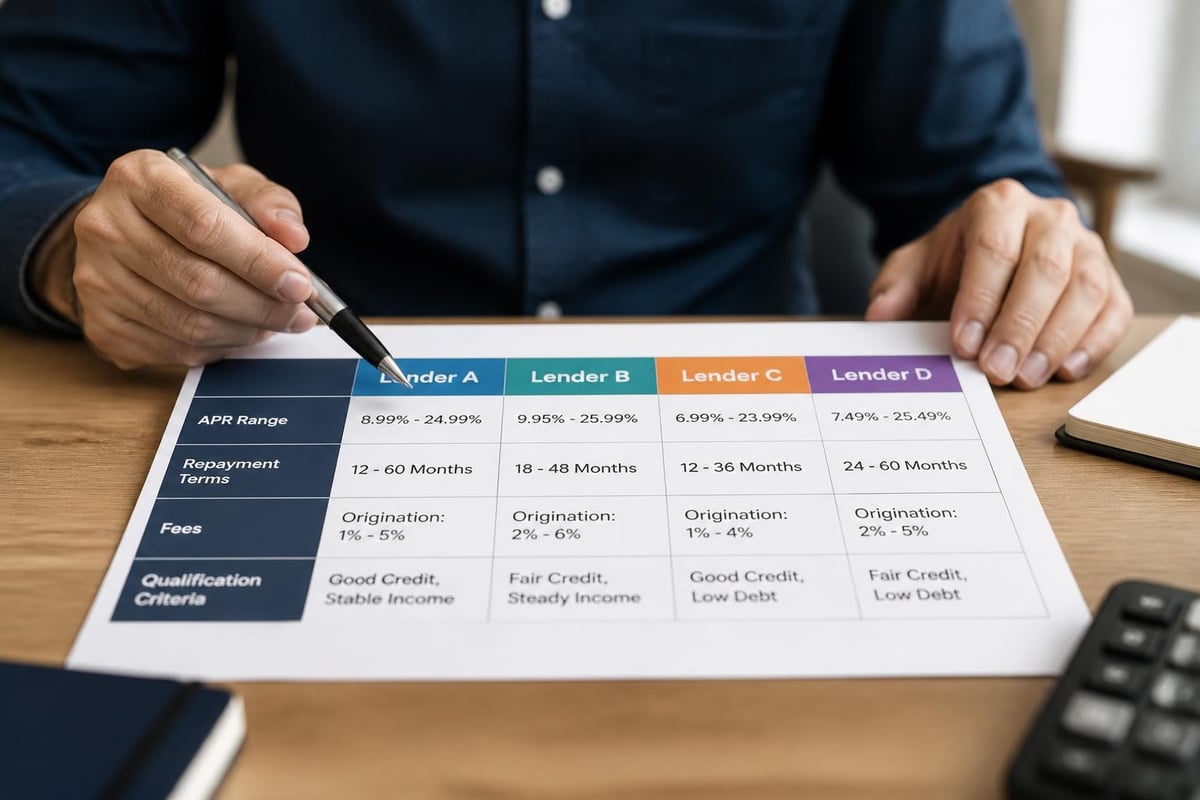
Understanding Installment Loan Terms and Structure
An installment loans direct lender structures products with fixed monthly payments over a predetermined period. This predictability helps with budgeting and financial planning.
Common Loan Amounts and Terms
| Loan Purpose | Typical Amount | Common Terms | Average APR Range |
|---|---|---|---|
| Home Improvement | $2,000–$15,000 | 12–60 months | 8%–36% |
| Medical Expenses | $1,000–$10,000 | 6–48 months | 10%–35% |
| Education Costs | $1,500–$8,000 | 12–36 months | 9%–32% |
| Debt Consolidation | $3,000–$20,000 | 24–60 months | 7%–34% |
These ranges vary based on creditworthiness, loan amount, and state regulations. Direct lenders in states with usury caps typically offer rates at the lower end of these ranges.
How Interest Accrues and Payments Apply
Most installment loans use simple interest calculated on the remaining principal balance. Each monthly payment includes both principal and interest, with the ratio shifting over time. Early payments consist primarily of interest, while later payments reduce principal more significantly.
Understanding this amortization schedule helps you evaluate prepayment options. Some direct lenders charge prepayment penalties, while others allow you to pay off loans early without fees, saving substantial interest.
Fixed vs. Variable Rate Products
The majority of consumer installment loans from direct lenders carry fixed interest rates. Your monthly payment remains constant throughout the loan term, simplifying budgeting. Variable-rate installment loans exist but are less common for smaller consumer loans.
Fixed rates protect borrowers when market interest rates rise but may cost more initially compared to variable products during low-rate environments.
The Application Process With Direct Lenders
Applying for an installment loan directly involves several standard steps, though specific requirements vary by lender and loan amount.
Documentation Requirements
Direct lenders verify information to assess default risk and comply with lending regulations. Expect to provide:
- Proof of identity: government-issued ID, Social Security number
- Income verification: recent pay stubs, tax returns, or bank statements
- Residence confirmation: utility bills, lease agreements, or mortgage statements
- Employment details: employer contact information, length of employment
- References: personal or professional contacts
Gathering these documents before applying speeds the approval process. Incomplete applications delay decisions and may result in denials that affect your credit score.
Credit Check Impact
When you apply with an installment loans direct lender, they typically perform a hard credit inquiry. This check appears on your credit report and may temporarily lower your score by a few points.
However, credit scoring models recognize rate shopping. Multiple inquiries for the same loan type within a 14-45 day window usually count as a single inquiry. This grace period lets you compare offers without excessive credit damage.
The Consumer Financial Protection Bureau explains how different installment products affect credit scores and what consumers should expect when applying for credit.
Approval Timeline and Funding Speed
Direct lenders often approve applications faster than indirect lending channels:
- Instant pre-qualification: Many lenders provide preliminary approval within minutes based on basic information
- Full underwriting: Complete review typically takes 1-3 business days
- Funding: Approved loans may fund within 24-48 hours via direct deposit
Emergency situations sometimes require same-day funding. Some direct lenders accommodate urgent needs, though rushed processing may involve higher fees.
Responsible Borrowing From Direct Lenders
Accessing credit through an installment loans direct lender carries responsibilities that extend beyond simply making monthly payments.
Assessing True Affordability
Before accepting a loan offer, calculate whether payments fit comfortably within your budget. Financial advisors suggest that total debt payments shouldn't exceed 36% of gross monthly income.
Consider these questions honestly:
- Can you make payments if your income temporarily decreases?
- Will this loan prevent you from building emergency savings?
- Are you borrowing for a necessary expense or discretionary purchase?
- Have you explored lower-cost alternatives like home equity loans or credit union products?
Direct lenders evaluate your debt-to-income ratio during underwriting, but you know your complete financial picture better than any credit report reveals.
Reading the Fine Print
Loan agreements contain critical information about fees, penalties, and lender rights. Pay special attention to:
Late payment penalties: Understand exactly what happens if you miss a due date
Prepayment terms: Confirm whether you can pay off the loan early without fees
Default consequences: Know what actions the lender can take if you default
Arbitration clauses: Some agreements require arbitration rather than court litigation
Reputable direct lenders explain these terms clearly and answer questions before you sign. If a lender rushes you or discourages reading the agreement, consider it a warning sign.
Building Long-Term Lender Relationships
Successfully repaying an installment loan establishes positive history with that direct lender. This relationship creates future opportunities:
- Lower interest rates on subsequent loans
- Higher borrowing limits based on proven repayment ability
- Faster approvals due to existing customer status
- Access to loyalty programs or rate discounts
Many borrowers maintain relationships with direct lenders for decades, refinancing existing loans at lower rates or accessing new credit for life's major expenses.

Special Considerations for Borrowers With Credit Challenges
Direct lenders often serve borrowers who don't qualify for prime-rate credit products. Understanding how these lenders evaluate applications helps you present your situation most favorably.
Alternative Underwriting Criteria
Beyond credit scores, direct lenders specializing in non-prime borrowers examine:
- Employment tenure: Steady job history demonstrates stability even if credit history shows past problems
- Bank account activity: Regular deposits and responsible account management indicate current financial health
- Rent payment history: Consistent housing payments may not appear on credit reports but show reliability
- Co-signers or collateral: Additional security reduces lender risk and may lower your interest rate
These alternative data points help lenders differentiate between borrowers experiencing temporary setbacks and those with ongoing financial mismanagement.
Rebuilding Credit Through Installment Loans
Successfully repaying an installment loan from a direct lender who reports to credit bureaus builds positive payment history. This factor constitutes 35% of your FICO score, making it the most influential component.
Federal Reserve research examining credit bureau data shows how small-dollar installment lending affects borrower credit profiles and financial outcomes over time.
To maximize credit-building benefits:
- Ensure your lender reports to all three major credit bureaus (Equifax, Experian, TransUnion)
- Set up automatic payments to guarantee on-time payment history
- Avoid applying for multiple credit products simultaneously
- Keep the loan open for its full term rather than paying off immediately
Avoiding Predatory Lending Practices
Some lenders market installment products to vulnerable borrowers with exploitative terms. Warning signs include:
- Annual percentage rates exceeding 36% without clear justification
- Pressure to borrow more than you need or can afford
- Mandatory add-on products like overpriced insurance
- Vague explanations of fees and charges
- Reluctance to provide written loan terms before signing
States vary significantly in their consumer protection standards. Some cap interest rates or restrict certain fees, while others allow much higher charges. Understanding your state's regulations helps you identify when lender terms exceed legal limits.
How Economic Factors Affect Direct Lender Rates
Interest rates on installment loans from direct lenders don't exist in isolation. They respond to broader economic conditions that affect borrowing costs across the financial system.
Federal Reserve Policy Impact
When the Federal Reserve raises or lowers its benchmark interest rate, direct lenders adjust their rates accordingly. Higher federal rates increase lenders' cost of capital, which they pass to borrowers through higher APRs on new loans.
Existing fixed-rate installment loans remain unaffected by rate changes, protecting borrowers from payment increases. This stability represents a key advantage of installment products compared to variable-rate credit cards.
Regional Market Conditions
Direct lenders operating in specific geographic areas adjust rates based on local economic factors:
| Factor | Effect on Rates |
|---|---|
| Low unemployment | May lower rates due to reduced default risk |
| Housing market strength | Often correlates with better loan performance |
| Industry concentration | Seasonal employment affects approval criteria |
| State regulation | Rate caps directly limit maximum APRs |
A direct lender with branches across Louisiana, Mississippi, Tennessee, and Georgia understands how Gulf Coast hurricane risk, tourism seasonality, and agricultural cycles affect borrowers' ability to repay loans.
Competition and Market Dynamics
Markets with numerous direct lenders competing for customers typically offer better rates and terms than areas with limited competition. Online lenders have increased competition nationwide, though regional lenders counter with personalized service and local market knowledge.
Shopping among multiple direct lenders remains the most effective way to secure favorable terms. Even small rate differences compound significantly over multi-year repayment periods.
Digital Innovation in Direct Lending
Technology has transformed how installment loans direct lenders operate, generally benefiting consumers through improved efficiency and accessibility.
Online Application Platforms
Modern direct lenders offer sophisticated online portals where borrowers can:
- Submit applications from any device 24/7
- Upload documentation via smartphone cameras
- Receive real-time application status updates
- Access digital loan agreements and disclosures
- Manage account settings and payment methods
These platforms supplement rather than replace personal service for lenders maintaining physical locations. Borrowers choose whether to apply online, in-branch, or by phone based on their preference and comfort level.
Automated Underwriting Systems
Artificial intelligence and machine learning help direct lenders make faster, more consistent credit decisions. Automated systems analyze thousands of data points to assess default probability and assign appropriate interest rates.
However, quality lenders maintain human oversight. Experienced underwriters review applications that automated systems flag, ensuring that unusual circumstances receive appropriate consideration rather than automatic denial.
Enhanced Security Measures
Direct lenders invest heavily in cybersecurity to protect borrower information. Look for lenders who implement:
- Multi-factor authentication for account access
- Encrypted data transmission and storage
- Regular security audits by independent firms
- Clear data privacy policies explaining information usage
- Prompt breach notification protocols
Your financial and personal information holds significant value. Reputable direct lenders treat data protection as a fundamental responsibility rather than an afterthought.
State-Specific Regulations Affecting Direct Lenders
Consumer lending laws vary dramatically across states, affecting what terms installment loans direct lenders can offer.
Interest Rate Caps and Usury Laws
Some states limit the maximum interest rate lenders can charge, while others have no caps or set them at levels that allow triple-digit APRs. These regulations directly impact loan accessibility and cost:
States with strict rate caps (typically 36% APR or lower):
- Force lenders to deny applications from higher-risk borrowers
- Result in lower average interest costs for approved applicants
- May reduce availability of small-dollar loans
States with high or no rate caps:
- Allow lenders to approve riskier applications at higher rates
- Create potential for predatory lending without proper oversight
- Provide more options for borrowers with poor credit
Louisiana, Mississippi, Tennessee, and Georgia each have distinct regulatory frameworks governing consumer installment lending. Understanding your state's specific protections helps you evaluate whether loan terms comply with legal requirements.
Licensing and Regulatory Oversight
Direct lenders must obtain licenses from state banking departments or financial regulators before offering loans. These agencies enforce compliance with:
- Disclosure requirements ensuring transparent communication of terms
- Fee limitations restricting certain charges
- Collection practice rules governing how lenders pursue delinquent accounts
- Record-keeping mandates protecting consumer rights
Checking whether your lender holds proper state licenses takes minutes and confirms you're working with a legitimate, regulated institution rather than an unlicensed operator.
Working with an installment loans direct lender offers transparency, streamlined service, and potentially better rates by eliminating intermediaries between you and your funding source. Understanding how direct lenders evaluate applications, structure loans, and comply with regulations empowers you to make informed borrowing decisions that support your financial goals. Whether you need funding for home improvements, medical expenses, education costs, or other important needs, Standard Financial provides flexible financing solutions across Louisiana, Mississippi, Tennessee, and Georgia, with personalized service and options for borrowers at all credit levels.





No comment yet, add your voice below!