

For millions of Americans, rent represents their largest monthly expense, yet these consistent payments often go unreported to credit bureaus. This oversight leaves many renters without the credit history they need to qualify for loans, mortgages, or even better rental opportunities. Fortunately, rent reporting to build credit has emerged as a powerful solution that transforms routine housing payments into documented proof of financial responsibility. This strategy helps individuals establish or strengthen their credit profiles by ensuring their rental payment history contributes to their overall creditworthiness.
Understanding How Rent Reporting Works
Rent reporting to build credit operates through specialized services that communicate your monthly rental payments to one or more of the three major credit bureaus: Equifax, Experian, and TransUnion. Unlike traditional credit accounts such as credit cards or auto loans, rental payments have historically been excluded from credit reports unless they went into collections.
The process begins when you or your landlord partners with a rent reporting service. These platforms collect verification of your rental payments and transmit that information to credit reporting agencies. Some services focus exclusively on positive payment history, while others may report both on-time and late payments.
Types of Rent Reporting Services
The market offers several distinct approaches to rent reporting. Tenant-initiated services allow renters to sign up independently and provide documentation of their rental history. These platforms typically charge monthly fees ranging from $5 to $20 and may include one-time setup costs for reporting past payment history.
Landlord-managed programs involve property management companies or individual landlords partnering with reporting services to automatically report tenant payments. These arrangements often require no action from tenants and may be offered as a standard feature or an opt-in benefit.
Third-party verification services offer hybrid models where tenants initiate the process but the service verifies payments directly with landlords or through bank account analysis. This approach provides additional credibility to the reported data.

The Impact on Credit Scores and Credit Files
Research demonstrates that rent reporting to build credit can produce measurable improvements in credit scores, particularly for individuals with thin or no credit files. According to the Urban Institute’s randomized controlled trial, participants who opted into rent reporting experienced significant increases in credit visibility and scores compared to control groups.
Credit Score Improvements by Consumer Segment
Different consumers experience varying degrees of benefit from rent reporting. The following table illustrates typical outcomes:
| Consumer Profile | Average Score Increase | Time to Impact | Primary Benefit |
|---|---|---|---|
| Credit Invisible (No File) | New credit file created | 1-2 months | Establishes credit identity |
| Thin File (1-4 accounts) | 35-60 points | 2-3 months | Adds payment history depth |
| Subprime (580-669) | 20-35 points | 3-6 months | Demonstrates recent responsibility |
| Prime (670+) | 5-15 points | 3-6 months | Adds account diversity |
The FICO scoring models have evolved to incorporate rental payment data more effectively in recent years. FICO Score 9 and later versions place greater weight on positive rental payment history while reducing the impact of medical collections. This change particularly benefits renters who have maintained consistent housing payments but lack traditional revolving credit accounts.
Which Credit Bureaus Receive Rent Data
Not all rent reporting services report to all three major credit bureaus. Most services report to at least one bureau, with Experian being the most common recipient of rental payment data. Understanding which bureaus will receive your information matters because lenders may pull reports from different bureaus depending on the loan type.
- Experian: Receives data from the broadest range of reporting services
- TransUnion: Partners with several major rent reporting platforms
- Equifax: Accepts rental data but from fewer reporting services overall
Choosing the Right Rent Reporting Service
Selecting an appropriate rent reporting to build credit service requires evaluating several key factors. The marketplace includes both established financial technology companies and newer entrants, each with distinct features and pricing structures.
Essential Features to Consider
Reporting coverage determines which credit bureaus will receive your rental payment information. Services that report to all three bureaus provide the most comprehensive coverage but typically charge higher fees. For consumers focused on specific lending goals, researching which bureau their target lenders use can help prioritize coverage.
Historical reporting allows you to add past rental payments to your credit file, potentially creating immediate positive impact. Some services include up to 24 months of historical data in their initial setup, while others only report future payments. This feature often comes with a one-time fee ranging from $25 to $100.
Payment methods affect convenience and automation. Services that connect directly to your bank account or accept manual payment confirmations offer flexibility for different rental arrangements. Landlord verification requirements vary, with some services requiring formal landlord participation while others work with bank statement verification.
Additional features may include credit monitoring, identity theft protection, or financial education resources. These bundled services can provide added value but may increase monthly costs.
Popular Rent Reporting Platforms Comparison
| Service Feature | Entry-Level Option | Mid-Tier Option | Comprehensive Option |
|---|---|---|---|
| Monthly Cost | $5-8 | $12-18 | $20-25 |
| Bureaus Covered | 1 bureau | 2 bureaus | 3 bureaus |
| Historical Reporting | 6 months | 12 months | 24 months |
| Setup Fee | $0-25 | $50-75 | $75-100 |
| Landlord Verification | Required | Optional | Not required |
Potential Drawbacks and Consumer Protections
While rent reporting to build credit offers significant benefits, consumers should understand potential risks and limitations. The National Consumer Law Center has identified several consumer protection concerns that warrant careful consideration.
Reporting Negative Information
Some rent reporting services report both positive and negative payment information. If you have late or missed rental payments, these could appear on your credit report and lower your score. This dual-edge nature means consumers with inconsistent payment histories should carefully evaluate whether rent reporting serves their interests.
The Consumer Financial Protection Bureau notes that while positive rent reporting can help build credit, late rental payments reported to credit bureaus carry the same negative weight as other late payments. Late payments can remain on credit reports for seven years from the original delinquency date.

Cost-Benefit Analysis
Monthly fees for rent reporting services accumulate over time. A service charging $15 monthly costs $180 annually. Consumers should weigh this expense against potential benefits such as qualifying for better loan terms, reduced security deposits, or improved credit card offers.
For individuals working to rebuild credit after past financial challenges, the investment in rent reporting to build credit may prove worthwhile if it accelerates access to more affordable lending products. However, those already maintaining good credit might find limited value in the marginal score improvements.
Maximizing Credit Building Beyond Rent Reporting
Rent reporting works most effectively as part of a comprehensive credit-building strategy. Combining rental payment reporting with other credit-building activities creates a more robust credit profile that demonstrates financial responsibility across multiple dimensions.
Complementary Credit-Building Strategies
Secured credit cards require a cash deposit that becomes your credit limit. These products report to credit bureaus just like traditional credit cards and allow you to build positive payment history while minimizing risk to lenders. Starting with a small secured card and making regular on-time payments creates a foundation for future unsecured credit.
Credit-builder loans are designed specifically for individuals looking to establish or rebuild credit. These loans hold the borrowed amount in a savings account while you make monthly payments. Once you complete all payments, you receive the funds and have built a positive payment history.
Authorized user status on a family member's or trusted friend's credit card account can add their positive payment history to your credit file. This strategy works best when the primary cardholder maintains low balances and consistent on-time payments.
Utility and phone bill reporting through services similar to rent reporting platforms can add additional positive payment history to your credit file. Some newer credit scoring models incorporate these alternative data sources.
Building Credit for Specific Financial Goals
Different financial objectives require varying credit score thresholds and credit profile characteristics. Understanding these requirements helps prioritize credit-building efforts:
- Personal loan qualification: Most lenders seek credit scores above 580, with better rates available above 670
- Auto financing: Subprime auto lenders may approve scores as low as 500, while prime rates require 700+
- Mortgage approval: FHA loans may accept scores around 580, conventional mortgages typically require 620 minimum
- Premium credit cards: Travel rewards and cashback cards generally require scores above 700
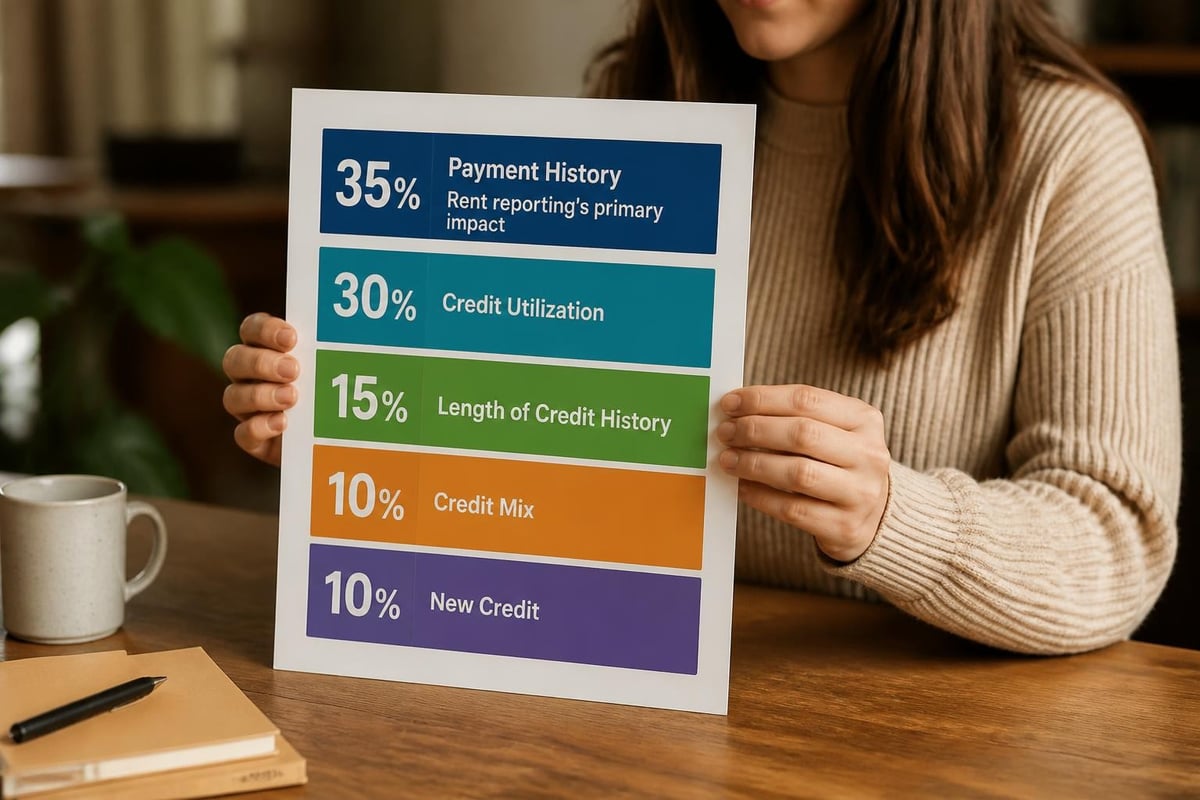
Rent reporting to build credit addresses the payment history component of credit scores, which represents 35% of your FICO score. Combining this with credit utilization management (30% of score), credit age (15%), credit mix (10%), and new credit inquiries (10%) creates the most effective approach.
State-Level Trends and Policy Developments
The adoption of rent reporting to build credit varies significantly by geography and demographic factors. Research from the Urban Institute tracking rent reporting trends from 2020 through 2024 reveals substantial growth in Southern states, including Louisiana, Mississippi, Tennessee, and Georgia.
Regional Adoption Patterns
Southern states have experienced particularly rapid growth in rent reporting services, driven by several factors:
- Higher percentages of cost-burdened renters seeking credit-building opportunities
- Younger demographic profiles with greater comfort using financial technology
- State-level initiatives promoting alternative credit data usage
- Growing awareness among property management companies
Property managers in urban markets increasingly offer rent reporting as a tenant amenity to attract renters and differentiate their properties. This trend particularly benefits renters in markets where Standard Financial operates, as improved credit access can facilitate transitions from renting to homeownership or enable access to personal loans for home improvements and other needs.
Consumer Protection Legislation
Several states have introduced legislation requiring landlords to offer opt-in rent reporting or mandating transparency about how rental payment data may be used. These regulations typically emphasize:
- Opt-in requirements: Tenants must affirmatively consent to rent reporting
- Positive-only reporting: Some proposals limit reporting to on-time payments only
- Dispute resolution: Clear processes for correcting erroneous rental payment information
- Fee limitations: Restrictions on charges landlords can pass to tenants for reporting services
Rent Reporting for Consumers with Past Credit Challenges
Individuals rebuilding after financial setbacks face unique considerations when evaluating rent reporting to build credit. This population includes consumers recovering from medical debt, bankruptcy, foreclosure, or periods of unemployment who now maintain stable housing and income but carry negative marks on their credit reports.
Strategic Timing Considerations
Adding positive rental payment history while older negative items age off credit reports can accelerate credit recovery. Negative items impact scores less as they age, and most fall off after seven years (ten years for Chapter 7 bankruptcy). Positive rent reporting provides fresh, favorable data that balances older derogatory marks.
The Federal Reserve’s research examining renters in credit data demonstrates that adding rental payment information particularly benefits consumers who have limited recent positive trade lines. This research confirms that payment data from the past 12-24 months carries significant weight in credit scoring models.
Creating Positive Payment Patterns
Consistency matters more than longevity in early credit rebuilding. Twelve consecutive months of on-time rent payments reported to credit bureaus demonstrates current responsible financial behavior, which lenders value when assessing creditworthiness.
Setting up automatic payments ensures you never miss due dates. Most rent reporting services integrate with automated payment systems, creating a seamless process that builds credit without requiring monthly manual intervention. This automation proves particularly valuable during busy periods or life transitions when financial tasks might otherwise slip through the cracks.
Working with Landlords on Rent Reporting
Successfully implementing rent reporting to build credit often requires cooperation from property owners or management companies. Understanding how to approach this conversation increases the likelihood of gaining necessary support.
Tenant-Initiated Requests
When your landlord doesn't currently participate in rent reporting, you can propose the idea by emphasizing mutual benefits. Property owners may appreciate that rent reporting can:
- Incentivize on-time payments from current tenants
- Serve as a marketing advantage when attracting new renters
- Reduce turnover by helping tenants improve creditworthiness and achieve homeownership goals
- Demonstrate property management's commitment to tenant financial wellness
Prepare for the conversation by researching services that minimize landlord burden. Platforms requiring minimal landlord involvement beyond initial verification face less resistance than those requiring monthly payment confirmations or administrative work.
Documentation Requirements
Most rent reporting services require proof of your rental arrangement and payment history. Gather these documents before initiating the process:
- Lease agreement: Current signed lease showing rental amount and terms
- Payment verification: Bank statements, canceled checks, or receipts demonstrating consistent payments
- Landlord contact information: Name, address, phone number for verification purposes
- Rental history: Addresses and dates for previous rentals if reporting historical data
Having comprehensive documentation ready streamlines the setup process and minimizes delays in beginning to build credit through rent reporting.
Measuring Your Rent Reporting Success
After enrolling in rent reporting to build credit, tracking your progress helps ensure the service delivers expected results and alerts you to any reporting errors that need correction.
Monitoring Your Credit Reports
Federal law entitles you to one free credit report annually from each major bureau through AnnualCreditReport.com. Stagger these requests throughout the year to maintain regular monitoring. Check specifically for:
- Accurate rental payment dates: Verify reported payments match your actual payment schedule
- Correct payment amounts: Confirm reported amounts align with your lease terms
- Proper account status: Ensure the account shows current and in good standing
- Complete reporting coverage: Check whether all three bureaus show your rental data if your service reports to multiple bureaus
Many rent reporting services include credit monitoring as a bundled feature. These tools provide alerts when your credit report changes, helping you stay informed about the impact of reported rental payments.
Realistic Timeline Expectations
Credit score improvements from rent reporting to build credit typically follow this general timeline:
- Month 1: Initial reporting appears on credit files
- Months 2-3: First score impacts become visible, particularly for thin-file consumers
- Months 3-6: Consistent positive payment history creates measurable score improvements
- Months 6-12: Full benefits materialize as payment history lengthens and demonstrates reliability
- Beyond 12 months: Ongoing positive reporting maintains and gradually improves scores
Remember that other credit factors continue influencing your score during this period. High credit card balances, new credit inquiries, or other negative items can offset gains from rent reporting.
Rent reporting to build credit represents a valuable tool for establishing creditworthiness, particularly for renters who maintain consistent housing payments but lack traditional credit accounts. By transforming your largest monthly expense into documented proof of financial responsibility, rent reporting can open doors to better lending opportunities and improved financial flexibility. Whether you're building credit for the first time or working to rebuild after past challenges, Standard Financial understands that everyone's financial journey is unique and offers flexible personal loan solutions across Louisiana, Mississippi, Tennessee, and Georgia designed to help you achieve your goals, even while building or rebuilding your credit.





No comment yet, add your voice below!