

Thinking about a personal loan in 2026? The right interest rate could save you thousands over the life of your loan.
Many borrowers overlook how personal loan fixed interest rates can affect long-term financial stability. Fixed rates offer predictability, but understanding how they work is essential before making a decision.
This guide will show you how personal loan fixed interest rates work, why they matter, and how they compare to variable rates. You will gain the knowledge needed to make smarter borrowing choices in 2026.
We will cover the basics of fixed interest rates, compare them to variable options, review 2026 market trends, provide steps for securing the best rate, and answer common questions from borrowers.
Understanding Fixed Interest Rates on Personal Loans
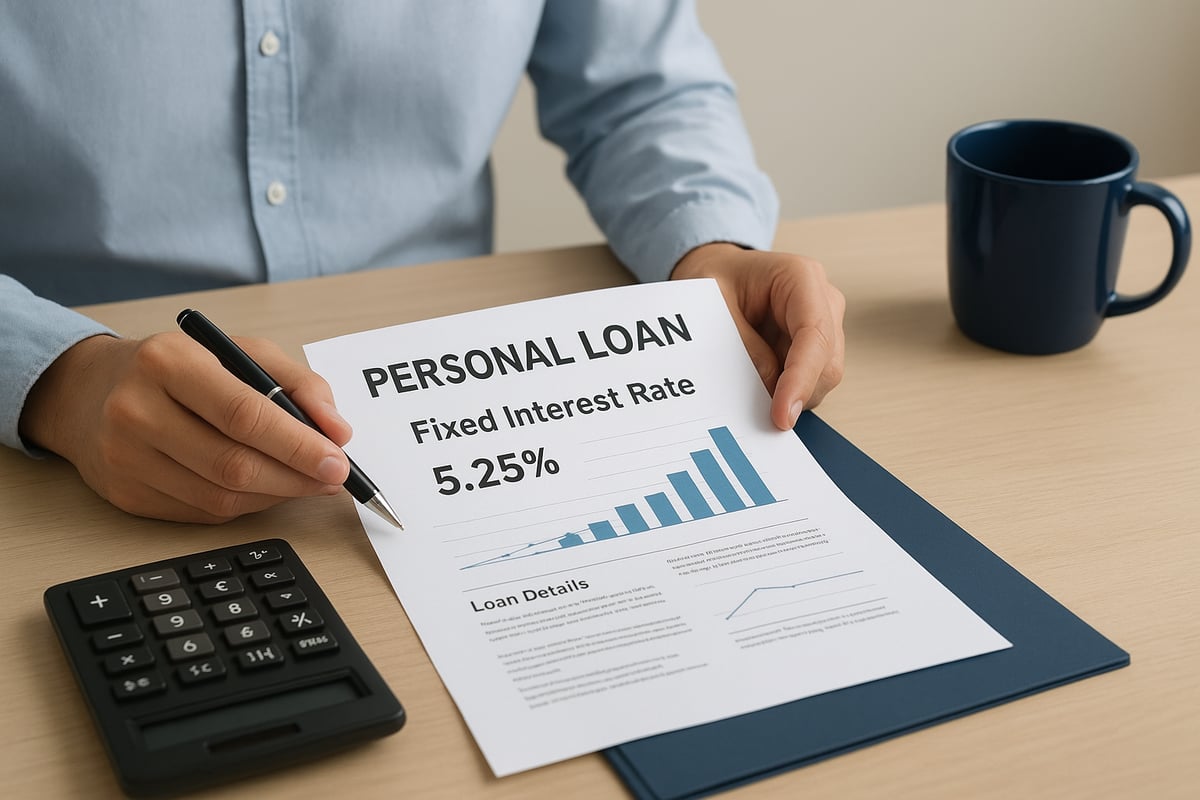
Fixed interest rates are a cornerstone of many borrowing decisions, especially when considering personal loan fixed interest rates. With these loans, your rate stays the same for the entire repayment period. Unlike variable rates, which fluctuate with the market, a fixed rate ensures your monthly payment never changes. Key loan terms include APR (annual percentage rate), principal (the amount borrowed), and term (the repayment period).
For example, if you borrow $10,000 at a 10% fixed rate over five years, your payments remain steady, making budgeting much simpler compared to variable-rate loans. According to Experian, 61% of personal loans in 2024 featured fixed rates, highlighting their popularity for predictability. Fixed rates are typically favored for their simplicity and transparency, as detailed in the Average Personal Loan Interest Rates for 2026.
What Are Fixed Interest Rates?
Personal loan fixed interest rates are set by lenders based on several factors. Your credit score plays a major role, as higher scores usually result in lower fixed rates. Lenders also consider the loan amount and term, with longer or larger loans sometimes attracting higher rates due to increased risk.
Economic benchmarks, such as Federal Reserve trends and overall market conditions, influence the rates lenders can offer. For instance, a borrower with an excellent credit score might qualify for a significantly lower fixed rate compared to someone with average or poor credit. Lender policies and current economic factors both determine your final rate.
How Fixed Rates Are Set by Lenders
Choosing personal loan fixed interest rates comes with clear advantages and a few drawbacks. The main benefit is payment predictability: your monthly bill never changes, regardless of market shifts. This protects you from sudden increases in interest costs if rates rise.
However, fixed rates can begin higher than introductory variable rates, meaning you might pay more at first. During periods of economic uncertainty, the stability of a fixed rate becomes especially valuable. In fact, a 2022 LendingTree study found that fixed-rate borrowers experienced 30% fewer payment shocks than those with variable rates. Fixed rates are ideal for anyone who prefers stability over risk.
Pros and Cons of Fixed Interest Rates
Borrowers use personal loan fixed interest rates for many reasons. The most common uses include:
- Debt consolidation
- Home improvement projects
- Medical expenses
- Education costs
For example, consolidating high-interest credit card debt into a fixed-rate loan can save money and simplify payments. Fixed rates are especially popular for one-time, large expenses where knowing the exact repayment amount is essential. According to a 2023 Bankrate survey, debt consolidation remains the top reason people take out personal loans with fixed rates.
Common Uses for Fixed-Rate Personal Loans
Personal loan fixed interest rates are best suited for individuals who need stability in their monthly payments. If you have a tight budget or face uncertain future income, fixed rates provide peace of mind.
Families planning for predictable monthly expenses, such as tuition or home repairs, often choose fixed-rate loans to avoid surprises. By locking in a consistent payment, you can better manage household finances and avoid the risk of fluctuating interest costs.
Fixed vs. Variable Interest Rates: Key Differences in 2026
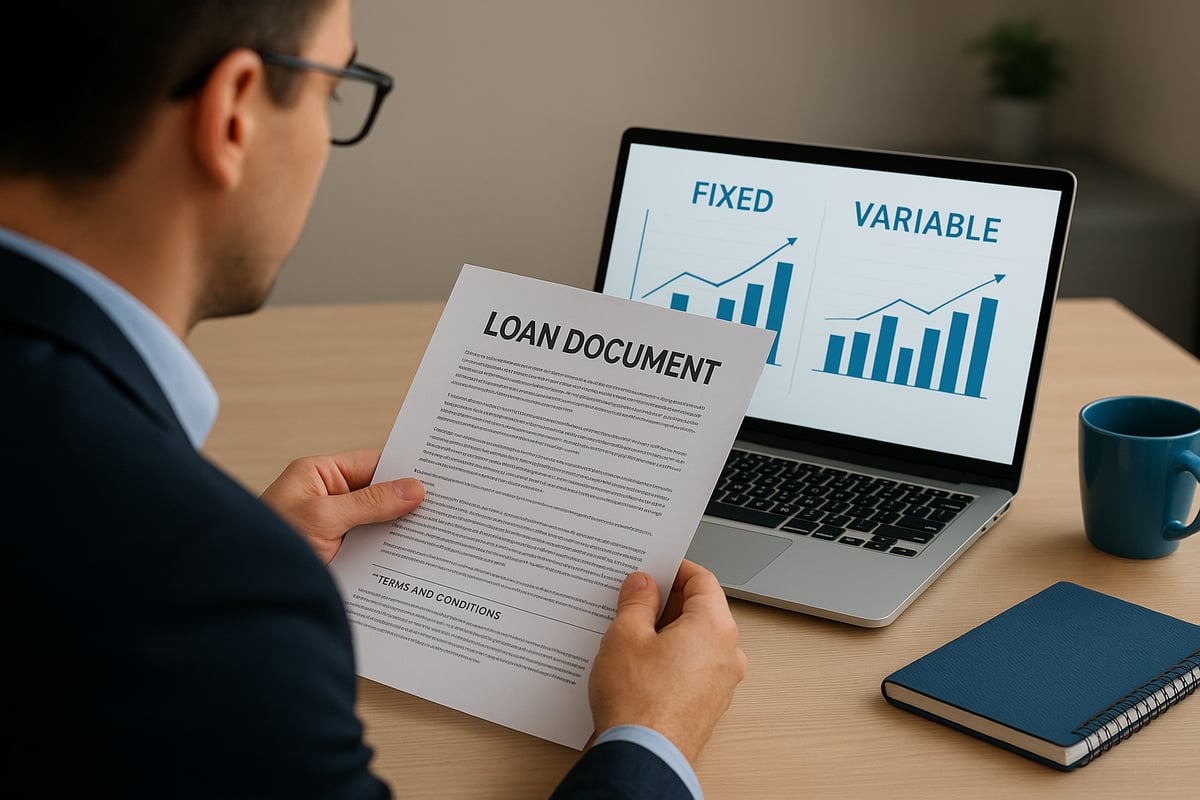
Choosing between fixed and variable rates is one of the most important decisions when exploring personal loan fixed interest rates. Understanding how these two rate types work in 2026 can help you find the best fit for your financial goals and risk comfort.
How Variable Interest Rates Work
Variable interest rates fluctuate over the life of your loan. Unlike personal loan fixed interest rates, variable rates are tied to benchmarks such as the Prime Rate or the Secured Overnight Financing Rate (SOFR), which replaced LIBOR. Lenders periodically adjust these rates based on changes in the index.
If you take a $10,000 loan with a variable rate, your payments may increase or decrease as the market shifts. This means your monthly costs are less predictable compared to personal loan fixed interest rates. For some, this flexibility brings potential savings, but it can also add uncertainty to your budget.
Pros and Cons of Variable Interest Rates
Variable rates offer lower initial payments, which can be appealing if you expect rates to stay steady or fall. Borrowers may save money early on, especially compared to some personal loan fixed interest rates. However, the risk is that rates can rise unexpectedly.
According to NerdWallet, 40% of variable-rate borrowers saw their rates increase in 2023, raising monthly payments. This unpredictability can create financial stress, especially if your income is fixed. While some borrowers benefit from market dips, others may end up paying more than if they had chosen personal loan fixed interest rates.
When to Choose Fixed vs. Variable Rates
Deciding between fixed and variable rates depends on your risk tolerance and financial situation. If you value certainty, personal loan fixed interest rates are ideal, as they keep payments stable regardless of market trends. This is particularly helpful during periods of economic volatility.
In a rising rate environment, locking in a fixed rate can shield you from future rate hikes. If rates are expected to drop or remain low, a variable rate might offer savings. Always consider your income stability and long-term goals before making a choice about personal loan fixed interest rates.
Cost Comparison: Fixed vs. Variable in Recent Years
Examining recent data highlights the differences in total loan costs. In 2024, average personal loan fixed interest rates stood at 10.5%, while variable rates averaged 9.2%. Over a five-year term, the total amount you pay can vary greatly.
| Year | Avg Fixed Rate | Avg Variable Rate |
|---|---|---|
| 2022 | 9.8% | 8.9% |
| 2023 | 10.1% | 9.0% |
| 2024 | 10.5% | 9.2% |
| 2025 | 11.2% | 9.8% |
For a deeper dive into current rate statistics and market trends, you can visit Current Interest Rate Statistics In 2025.
Choosing personal loan fixed interest rates offers predictability, but variable rates may save money if market conditions are favorable. Evaluate both your risk comfort and the potential for rate changes before committing.
2026 Market Outlook for Fixed and Variable Rates
Looking ahead, experts predict that interest rates may continue to rise in 2026 due to inflation and Federal Reserve policy. This could make personal loan fixed interest rates more attractive, as borrowers seek to lock in current rates before further increases.
Factors such as inflation, economic growth, and central bank actions will shape the rate environment. If uncertainty persists, demand for personal loan fixed interest rates is likely to grow. Staying informed about these trends can help you make the best borrowing decision for your needs.
What Affects Personal Loan Fixed Interest Rates in 2026?
Understanding what drives personal loan fixed interest rates in 2026 is essential for any borrower aiming to secure the best terms. Lenders consider a range of factors, from your credit profile to broader economic trends, all of which can impact the rate you receive.
Credit Score and Borrower Profile
Your credit score is one of the most significant factors influencing personal loan fixed interest rates. Lenders evaluate your entire credit history, including on-time payments, outstanding debts, and the length of your credit record. A higher credit score, such as 720 or above, often allows borrowers to access rates 2 to 4% lower than those with subprime scores.
For instance, Experian reported that in 2024, the average fixed rate for prime borrowers was 9.3%. Lenders also assess your income and debt-to-income ratio to determine your ability to repay. Maintaining a strong credit profile positions you for the most favorable personal loan fixed interest rates.
Loan Amount, Term, and Purpose
The size of your loan and the repayment period directly affect personal loan fixed interest rates. Larger loans or longer repayment terms typically carry higher rates, reflecting increased risk for the lender. Conversely, choosing a shorter term often results in a lower fixed rate, though monthly payments may be higher.
The intended purpose of the loan also matters. Loans for debt consolidation or home improvement may be viewed as less risky compared to loans for discretionary spending. By carefully selecting your loan amount and term, you can influence the personal loan fixed interest rates offered to you.
Lender Type and Loan Product
The type of lender you choose plays a crucial role in determining personal loan fixed interest rates. Traditional banks, credit unions, online lenders, and fintech companies each have distinct approval criteria and rate structures. For example, credit unions are known to offer average fixed rates 1.5% lower than banks, according to CUNA in 2023.
Online lenders may provide faster approvals but sometimes at the expense of higher interest rates. To better understand how lender policies can affect your rate, you can learn more about Standard Financial’s lending and compare offerings from different institutions.
Macroeconomic Factors in 2026
Broader economic trends are another key influence on personal loan fixed interest rates. The Federal Reserve's monetary policy, inflation rates, and the overall economic outlook all play a part. If inflation rises or the Fed increases base rates, lenders usually adjust their fixed rates upward to maintain profitability.
In 2026, borrowers should pay close attention to inflation forecasts and interest rate policy shifts, as these factors could impact the rates available for personal loans. Staying informed about market trends will help you anticipate changes in personal loan fixed interest rates.
Regional and Regulatory Influences
Where you live can also shape the fixed interest rates you are offered. State laws may cap maximum interest rates, providing consumer protections. Additionally, regions with more competition among lenders, such as some Southern states, often see lower average rates. Local economic conditions, including unemployment and cost of living, further influence rates and approval criteria.
How to Secure the Best Fixed Interest Rate: Step-by-Step Guide
Securing the best personal loan fixed interest rates requires careful planning, attention to detail, and a strategic approach. By following these six steps, you can maximize your chances of getting the lowest possible rate and save significantly over the life of your loan. Let’s break down the process so you can approach your 2026 loan application with confidence.
Step 1: Check and Improve Your Credit
Your credit profile has a direct impact on the personal loan fixed interest rates you are offered. Start by obtaining your credit reports from all three major bureaus. Review them for errors or outdated information that could be lowering your score. Address any discrepancies and pay down high balances to improve your credit utilization ratio.
Even a modest boost in your score can lead to substantial savings. For example, increasing your score from 650 to 700 could lower your fixed rate by 2% or more. Lenders view higher scores as less risky, which translates into better rates for you.
Maintaining a strong payment history and minimizing new credit inquiries are also effective strategies. Investing time in improving your credit before applying will put you in a stronger position to secure the most competitive personal loan fixed interest rates.
Step 2: Compare Lenders and Offers
Shopping around is crucial when seeking the best personal loan fixed interest rates. Request quotes from a variety of lenders, including banks, credit unions, and reputable online platforms. Many lenders offer prequalification tools that let you see estimated rates without affecting your credit score.
Create a comparison table to organize the details:
| Lender Type | APR Offered | Origination Fee | Approval Speed |
|---|---|---|---|
| Bank | 10.2% | 2% | 3-5 days |
| Credit Union | 9.3% | 1% | 2-4 days |
| Online Lender | 11.0% | 3% | Same day |
Comparing at least three offers could save you over $500 throughout your loan term. Focus on the total cost, not just the advertised rate, to ensure you are selecting the most favorable personal loan fixed interest rates available.
Step 3: Choose the Right Loan Term and Amount
Selecting the appropriate loan term and amount is a balancing act that affects your personal loan fixed interest rates. Shorter terms generally come with lower rates, but result in higher monthly payments. Longer terms may seem affordable, but can lead to higher total interest costs.
Assess your monthly budget to determine what payment fits comfortably. For example, a three-year fixed-rate loan will usually have a higher payment but a lower rate than a five-year option. Only borrow what you need to avoid unnecessary interest charges.
Use online calculators or budgeting apps to model different scenarios. By tailoring the term and amount to your financial situation, you can optimize your chances of securing the best personal loan fixed interest rates and avoid overextending your finances.
Step 4: Consider Loan Fees and Total Cost
Interest rates are only part of the equation when evaluating personal loan fixed interest rates. Lenders may charge origination fees, prepayment penalties, and other costs that impact your overall loan expense. Always review the annual percentage rate (APR), which reflects both the interest rate and fees.
For instance, a $10,000 loan with a 5% origination fee adds $500 to your total cost. Some lenders offer lower rates but higher fees, so it is essential to examine the complete picture. Avoid surprises by reading the fine print and asking questions about any unclear charges.
Calculating the all-in cost ensures you are truly getting the best deal. Prioritizing transparency and understanding every fee will help you choose the most cost-effective personal loan fixed interest rates for your needs.
Step 5: Lock in Your Fixed Rate
Timing can be everything when it comes to personal loan fixed interest rates. Once you have found a favorable offer, ask the lender about a rate lock agreement. This guarantees your fixed rate for a specified period, shielding you from potential market fluctuations before your loan closes.
Consider the broader economic environment as you time your application. If experts predict a Federal Reserve rate increase in the coming weeks, locking in your rate now can help you avoid higher costs later. Rate locks are especially valuable in volatile markets, providing peace of mind and budgeting certainty.
Always confirm how long your rate lock lasts and whether fees apply. Locking in at the right moment is a proactive step toward securing the most stable and attractive personal loan fixed interest rates.
Step 6: Complete Application and Documentation
The final step in securing personal loan fixed interest rates is submitting a complete and accurate application. Gather all necessary documentation, such as government ID, proof of income, and employment verification. Many lenders now offer digital platforms, allowing for faster approval compared to traditional in-person processes.
Double-check your application for accuracy to prevent delays. For those ready to move forward, the personal loan application process provides a clear guide to ensure everything is in order.
By following these steps and being thorough with your paperwork, you will streamline the process and put yourself in the best position to obtain the most competitive personal loan fixed interest rates available.
Common Questions About Fixed-Rate Personal Loans
Borrowers often have questions about personal loan fixed interest rates before making a commitment. Below, we address some of the most common concerns to help you make informed financial decisions in 2026.
Are Fixed-Rate Loans Always the Best Choice?
Choosing between fixed and variable interest rates depends on your financial situation and goals. While personal loan fixed interest rates provide stability, they are not always the optimal choice for every borrower. In some cases, a variable rate may be better if you plan to repay your loan quickly during a period of stable or declining rates.
For example, if you are confident that interest rates will remain low, a variable rate could lead to lower total costs. However, fixed rates are generally preferred by those who prioritize predictable monthly payments. To stay updated on strategies and trends, explore personal finance tips and updates.
Can You Refinance a Fixed-Rate Personal Loan?
Yes, refinancing is possible if you want to secure a lower rate or change your loan terms. If your credit score improves or market rates drop, refinancing your personal loan fixed interest rates can lead to significant savings. For instance, moving from a 12 percent to an 8 percent fixed rate after improving your credit can reduce your overall interest expense.
According to recent findings, the average borrower who refinanced saved about $1,200 over the life of their loan. Keep in mind that refinancing may involve fees, so compare offers carefully before proceeding.
How Are Fixed Rates Affected by Economic Changes?
Personal loan fixed interest rates are influenced by broader economic factors such as inflation and Federal Reserve policy. When inflation rises or the Fed increases benchmark rates, lenders often respond by raising fixed rates for new loans.
For example, between 2022 and 2025, borrowers saw fixed rates climb as a result of persistent inflation and market volatility. The benefit of fixed rates is that they shield you from sudden payment increases, even if rates rise after you take out your loan. For more on market trends, see Personal Loan Statistics for 2025.
What Happens if You Pay Off a Fixed-Rate Loan Early?
Paying off a fixed-rate personal loan ahead of schedule can save you money on interest. However, some lenders charge prepayment penalties, which can reduce or even negate your savings. For example, if you repay a $10,000 loan two years early, you might save hundreds in interest, but only if your lender does not impose a penalty.
A 2023 survey found that 35 percent of lenders charged prepayment penalties, so review your loan agreement carefully. Understanding all terms helps you maximize the benefits of personal loan fixed interest rates.
How Do Fixed Rates Differ Between Personal Loan Types?
There are key differences in personal loan fixed interest rates based on whether the loan is secured or unsecured. Secured loans, which require collateral such as a vehicle or savings account, often offer lower fixed rates because the lender faces less risk.
Unsecured loans, on the other hand, typically have higher rates since approval is based solely on your creditworthiness. Knowing the distinctions between loan types can help you select the best option for your financial situation.
Personal Loan Fixed Interest Rates: Trends and Predictions for 2026
Understanding where personal loan fixed interest rates are headed in 2026 is crucial for borrowers aiming to secure the best possible deal. As market conditions shift, it is important to stay informed about recent trends, expert forecasts, and the key factors that may affect your loan options in the coming year.
Recent Trends in Fixed-Rate Personal Loans
Over the past several years, personal loan fixed interest rates have experienced notable movement in response to changing economic conditions. From 2022 to 2025, average fixed rates gradually increased, reflecting broader inflation trends and Federal Reserve policy adjustments.
| Year | Avg. Fixed Rate (%) |
|---|---|
| 2022 | 9.8 |
| 2023 | 10.4 |
| 2024 | 10.9 |
| 2025 | 11.2 |
This steady rise in personal loan fixed interest rates highlights the impact of macroeconomic factors and the importance of timing your borrowing decisions.
Expert Predictions for 2026
Looking ahead, analysts expect a period of continued rate volatility, with some forecasts calling for stabilization and others suggesting further increases. According to Are lower loan interest rates coming in 2026? Here’s what experts expect., many experts believe rates could remain elevated if inflation persists, while others anticipate a potential dip if economic pressures ease.
Most projections place average personal loan fixed interest rates in the 10 to 12 percent range for 2026. Borrowers should closely monitor economic reports and forecasts to make informed decisions.
Factors Likely to Influence 2026 Rates
Several elements will play a role in shaping personal loan fixed interest rates next year. Federal Reserve policy remains a primary driver, especially as officials respond to inflation, unemployment, and GDP growth.
Additional factors include consumer demand for loans, shifts in the credit market, and changes in lender competition. If inflation cools, there may be opportunities for lower rates, but ongoing volatility could keep rates higher than historical averages.
How Borrowers Can Prepare for 2026
To navigate the evolving landscape of personal loan fixed interest rates, preparation is key. Start by monitoring economic trends and rate forecasts. Consider building your credit profile in advance, as higher credit scores often lead to more favorable rates.
Applying for a loan before anticipated rate hikes can help lock in lower costs. Evaluate your budget and loan needs carefully, and compare offers from multiple lenders to secure the best terms.
Regional and Demographic Rate Differences
Personal loan fixed interest rates can also vary based on geography and borrower demographics. For example, Southern states often offer lower average rates due to increased lender competition. Additionally, younger borrowers may see different rate offers compared to older applicants, influenced by credit history and income stability.
Staying aware of these differences can help you identify the most competitive options in your area and for your profile.
As you consider your options for personal loans in 2026, understanding how fixed interest rates work can make a real difference in your financial planning. We’ve explored why predictability matters, how market trends may affect your choices, and what steps you can take to secure the best rate—even if you’ve faced credit challenges in the past. If you’re ready to take the next step toward financial flexibility for home improvements, medical needs, or education, you don’t have to navigate it alone. You can Apply For A Loan Today and let Standard Financial help you move forward with confidence.





2 Comments
[…] to better understand how fixed rates work for a consumer credit loan, review this helpful guide on Personal loan fixed interest rates. Comparing rates is vital, as even a small difference can add up over the life of the […]
[…] can add up over the life of your loan. For a detailed look at current fixed rates, visit the Personal loan fixed interest rates […]