

Missing a loan payment can feel overwhelming, but understanding the consequences helps you take control of the situation before it escalates. Whether you're facing a temporary financial setback or struggling with ongoing budget challenges, knowing what happens if you miss a loan payment allows you to respond strategically and minimize long-term damage to your finances and creditworthiness.
The Immediate Consequences of a Missed Payment
When you miss a loan payment, the clock starts ticking immediately. Most lenders provide a grace period before reporting the missed payment to credit bureaus, but the consequences begin accumulating from day one.
Late Fees and Penalty Charges
The first financial impact you'll encounter is a late fee. These charges typically range from $25 to $50 for personal loans, though the exact amount depends on your loan agreement and state regulations. In Louisiana, Mississippi, Tennessee, and Georgia, consumer protection laws cap late fees, but they still represent an additional financial burden on top of your existing payment obligations.
Beyond the initial late fee, you may face:
- Increased interest rates on variable-rate loans
- Penalty APR that can significantly raise your borrowing costs
- Daily accruing interest on the unpaid balance
- Administrative fees for payment processing attempts

Credit Score Impact Timeline
Your credit score doesn't drop immediately when you miss a payment. Understanding the consequences of loan delinquency reveals a specific timeline that determines when and how severely your credit suffers.
| Days Late | Credit Bureau Reporting | Credit Score Impact |
|---|---|---|
| 1-29 days | Generally not reported | No direct impact (late fees only) |
| 30 days | Reported to all three bureaus | 60-110 point drop possible |
| 60 days | Updated delinquency status | Additional 20-30 point drop |
| 90 days | Serious delinquency | Further decline, harder to reverse |
Most lenders wait until a payment is 30 days overdue before reporting to Experian, Equifax, and TransUnion. This grace period gives borrowers crucial time to catch up and avoid credit damage. However, once reported, the late payment remains on your credit report for seven years, though its impact diminishes over time.
What Happens Between 30 and 90 Days
The period between 30 and 90 days represents a critical window where the situation can either improve or deteriorate significantly. What happens if you miss a loan payment during this timeframe determines whether you'll face minor setbacks or major financial consequences.
Accelerating Collection Efforts
Once your account reaches 30 days past due, lenders escalate their collection activities:
- Increased communication frequency through phone calls, emails, and letters
- Account status updates that may restrict future borrowing
- Internal collection department assignment instead of regular servicing
- Documentation preparation for potential legal action
These efforts aren't designed to harass borrowers. Lenders genuinely want to help you get back on track, as loan defaults cost them money too. However, the intensity and frequency of contact will increase as the delinquency period extends.
Compounding Financial Pressure
The longer you wait to address a missed payment, the more difficult recovery becomes. Interest continues accumulating on the unpaid balance, and additional late fees may apply for subsequent missed payments. A single missed $300 payment can balloon into a $500+ obligation within 60 days when accounting for fees, interest, and penalties.
For home improvement loans, medical expense financing, or education loans, this compounding effect can quickly overwhelm your budget. Missing a personal loan payment creates a snowball effect that becomes harder to manage with each passing week.
The 90-Day Threshold and Default Risk
Reaching 90 days past due represents a critical turning point in what happens if you miss a loan payment. At this stage, lenders typically classify your account as seriously delinquent, triggering more severe consequences.
Default Declaration and Acceleration Clauses
Many loan agreements contain acceleration clauses that allow lenders to demand immediate payment of the entire loan balance once you reach a certain delinquency threshold, usually 90 to 120 days. This means a missed $250 monthly payment could suddenly become a $10,000 demand for the full remaining balance.
Default status also triggers:
- Account closure and termination of any remaining credit availability
- Third-party collection agency assignment
- Legal action preparation including potential lawsuits
- Asset seizure rights for secured loans (vehicles, equipment, property)
- Wage garnishment proceedings in applicable jurisdictions
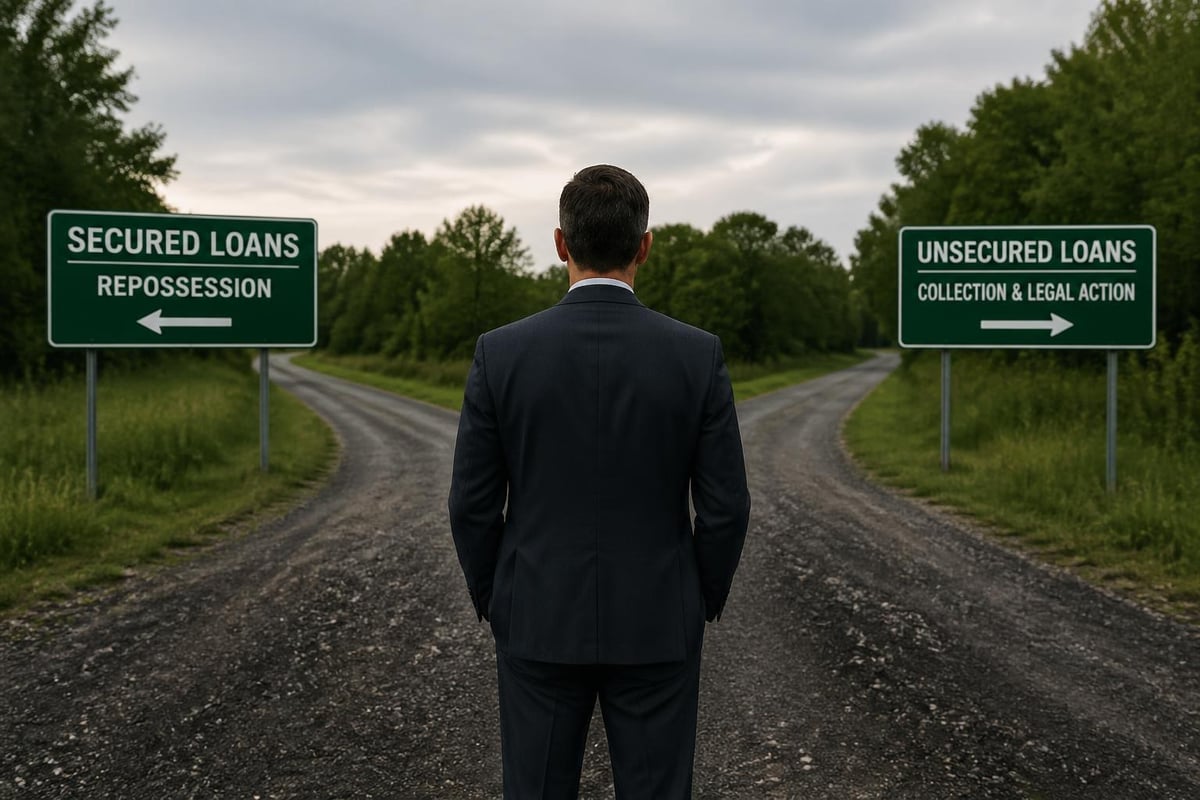
Secured vs. Unsecured Loan Differences
The type of loan significantly impacts what happens if you miss a loan payment beyond 90 days.
Secured Loans (auto loans, secured personal loans):
- Lenders can repossess the collateral without court approval in many states
- You lose both the asset and remain liable for any deficiency balance
- Repossession severely damages credit and creates additional fees
Unsecured Loans (most personal loans, medical financing):
- Lenders must pursue legal remedies to collect
- Collection agencies become more aggressive
- Potential lawsuits and court judgments
Long-Term Financial Ramifications
The consequences of missed payments extend far beyond immediate fees and credit score drops. Understanding these long-term impacts helps you appreciate why addressing delinquency quickly matters so much.
Credit Report Damage Duration
A missed payment reported to credit bureaus remains visible for seven years from the original delinquency date. This extended timeline affects your ability to:
- Qualify for new loans or credit cards
- Secure favorable interest rates on approved applications
- Rent apartments or homes (many landlords check credit)
- Obtain certain employment positions (jobs requiring financial responsibility)
- Purchase insurance at standard rates (credit-based insurance scoring)
The consequences of not repaying a loan extend into virtually every aspect of your financial life, making recovery from serious delinquency a multi-year process.
Future Borrowing Challenges
Even after catching up on missed payments, lenders view your credit history when evaluating new applications. Recent delinquencies carry more weight than older ones, but the pattern of payment behavior matters significantly.
Borrowers who have missed loan payments may encounter:
- Higher interest rates reflecting increased risk (sometimes 5-10% higher APR)
- Larger down payment requirements for secured loans
- Shorter loan terms with higher monthly payments
- Denial from prime lenders forcing reliance on subprime options
- Cosigner requirements even for modest loan amounts
Special Considerations for Different Loan Types
What happens if you miss a loan payment varies somewhat depending on the specific type of financing you received.
Student Loan Delinquency
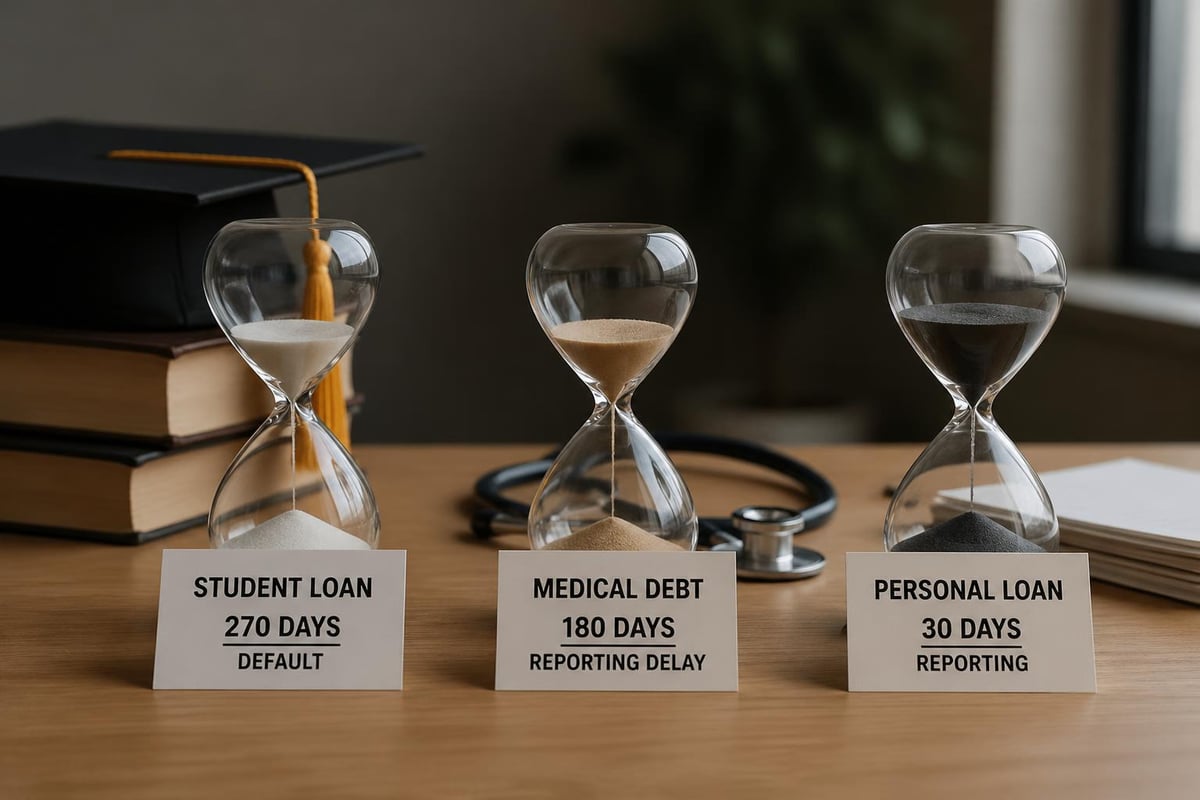
Student loans offer more rehabilitation options than other consumer debt. Missing a student loan payment triggers a specific sequence of events, including eligibility for income-driven repayment plans, deferment, or forbearance. Federal student loans don't enter default status until 270 days of delinquency, providing a longer window for resolution.
Medical and Healthcare Financing
Medical loans and healthcare financing often receive special consideration from credit bureaus. Recent changes require a 180-day waiting period before medical debt appears on credit reports, giving patients more time to address billing issues or arrange payment plans. However, this doesn't eliminate late fees or collection efforts during that window.
Home Improvement and Personal Loans
Standard personal loans for home improvements, debt consolidation, or other purposes follow the traditional 30-60-90 day delinquency progression. These loans typically lack the special provisions available for student loans, making proactive communication with your lender essential.
Proactive Steps to Minimize Damage
When you realize you'll miss or have already missed a loan payment, immediate action significantly improves your outcome.
Contact Your Lender Immediately
The single most important step is contacting your lender before the payment due date if possible. Lenders appreciate proactive communication and often offer solutions such as:
- Payment plan modifications spreading the missed amount over future payments
- Temporary forbearance allowing you to skip one or two payments
- Loan refinancing to reduce monthly payment amounts
- Extension agreements adding missed payments to the end of the loan term
- Hardship programs designed for borrowers facing specific challenges
Financial institutions throughout Louisiana, Mississippi, Tennessee, and Georgia maintain hardship programs specifically designed to help borrowers navigate temporary setbacks. These programs work best when you initiate contact rather than waiting for collection calls.
Document Your Financial Situation
When discussing options with your lender, prepare documentation showing:
- Current income sources and amounts
- Essential monthly expenses (housing, utilities, food)
- Other debt obligations and their payment status
- Reason for financial hardship (job loss, medical emergency, unexpected expense)
- Proposed resolution timeline showing when you can resume payments
This information helps lenders evaluate appropriate assistance options and demonstrates your commitment to resolving the delinquency.
Explore Alternative Solutions
Beyond working directly with your lender, consider these strategies:
Debt consolidation can simplify multiple payments into one manageable amount, though it requires acceptable credit. Side income generation through temporary work, selling unused items, or freelancing provides immediate cash for catching up. Budget restructuring identifies non-essential expenses that can be temporarily eliminated to free up funds for loan payments.
For borrowers with past credit issues, understanding what happens if you miss a loan payment becomes even more critical, as you have less margin for error than those with pristine credit histories.
Legal Protections and Rights
Borrowers maintain specific rights even when facing loan delinquency. Understanding these protections helps you navigate collection efforts and avoid predatory practices.
Fair Debt Collection Practices Act (FDCPA)
Federal law restricts how collection agencies can contact you regarding delinquent debts. Collections representatives cannot:
- Call before 8 AM or after 9 PM in your time zone
- Contact you at work after you've requested they stop
- Use threatening, abusive, or harassing language
- Misrepresent the amount owed or legal consequences
- Discuss your debt with third parties (except credit bureaus and attorneys)
These protections apply to third-party collectors but not to original lenders collecting their own debts.
State-Specific Regulations
Louisiana, Mississippi, Tennessee, and Georgia each maintain additional consumer protection laws governing lending practices, collection activities, and legal remedies. These state laws may provide:
| State | Key Protection | Benefit to Borrowers |
|---|---|---|
| Louisiana | Limited wage garnishment | Maximum 25% of disposable income |
| Mississippi | Strict licensing requirements | Regulated collection practices |
| Tennessee | Interest rate caps on certain loans | Protection from excessive rates |
| Georgia | Industrial Loan Act provisions | Structured repayment options |
Familiarizing yourself with your state's specific protections helps you recognize when collection efforts cross legal boundaries.
Recovery and Rehabilitation Strategies
Even after missing payments, you can rebuild your credit and financial standing through consistent effort and strategic planning.
Catching Up on Missed Payments
The fastest way to minimize damage from what happens if you miss a loan payment is bringing the account current as quickly as possible. Prioritize loan payments that:
- Report to credit bureaus (typically all installment loans)
- Carry the highest interest rates or penalties
- Secure essential assets (vehicles needed for work)
- Face imminent legal action or default
Once current, maintain perfect payment history going forward. Payment history represents 35% of your credit score, so consistent on-time payments gradually offset the negative impact of past delinquencies.
Negotiating Goodwill Adjustments
After bringing accounts current and maintaining good standing for several months, consider requesting a goodwill adjustment from your lender. This involves writing a letter explaining the circumstances that led to the missed payment and requesting removal of the negative mark from your credit report.
Success rates vary, but lenders occasionally grant these requests for borrowers who:
- Have otherwise excellent payment history
- Experienced a one-time emergency (medical crisis, natural disaster)
- Have maintained the account in good standing since the incident
- Demonstrate financial stability and responsibility
Building Positive Credit History
Counterbalance negative marks by building positive payment history across multiple accounts. Getting finances back on track requires consistent effort over months and years, but the impact compounds positively over time.
Strategies include:
- Making all payments at least one week before due dates
- Setting up automatic payments for fixed loan amounts
- Keeping credit utilization below 30% on revolving accounts
- Maintaining older credit accounts to extend average account age
- Diversifying credit mix with responsible management
Financial Planning to Prevent Future Missed Payments
The best strategy for managing what happens if you miss a loan payment is preventing missed payments altogether through robust financial planning.
Emergency Fund Development
Financial experts recommend maintaining 3-6 months of expenses in an easily accessible emergency fund. This cushion allows you to continue meeting loan obligations during temporary income disruptions or unexpected expenses.
For households just starting to build emergency savings, even $500-$1,000 provides protection against minor crises that might otherwise trigger missed payments. Build this fund by:
- Automating monthly transfers to a separate savings account
- Directing windfalls (tax refunds, bonuses) toward savings
- Reducing discretionary spending temporarily to accelerate savings
- Banking salary increases rather than expanding lifestyle
Budget Management Systems
Implementing a zero-based budget ensures every dollar has a designated purpose, reducing the likelihood of shortfalls when loan payments arrive. Track all income and expenses monthly, identifying patterns and opportunities for optimization.
Modern budgeting apps and tools make this process easier than traditional spreadsheets, though any consistent system works. The key is awareness and intentionality about money flow through your household.
Strategic Borrowing Practices
Before taking new loans, calculate the true affordability considering:
- Total monthly debt obligations including the new payment
- Debt-to-income ratio (should remain below 36% for financial health)
- Impact of potential income disruptions on payment ability
- Opportunity cost of monthly payment amounts
- Total interest paid over the loan lifetime
Borrowing only what you genuinely need and can comfortably repay prevents the circumstances that lead to missed payments. Lenders offering flexible financing options can structure payments around your budget constraints, but you must accurately communicate your financial capacity during the application process.
Understanding what happens if you miss a loan payment empowers you to take immediate action and minimize long-term consequences. Whether you're facing a one-time setback or ongoing financial challenges, proactive communication and strategic planning make the difference between temporary difficulties and lasting credit damage. Standard Financial specializes in working with borrowers across Louisiana, Mississippi, Tennessee, and Georgia, offering flexible refinancing options and personalized payment plans designed to keep you on track, even if you've experienced past credit issues. Contact Standard Financial today to explore solutions tailored to your unique financial situation.







No comment yet, add your voice below!