

Managing multiple high-interest debts can feel overwhelming, especially when minimum payments barely make a dent in your principal balance. Balance transfer loans offer a strategic solution for consumers looking to consolidate debt and potentially save thousands in interest charges. Understanding how these financial tools work, their benefits, and their limitations can help you make informed decisions about your debt management strategy. Whether you're juggling credit card balances, medical bills, or other consumer debts, exploring balance transfer options might be the key to regaining financial control.
What Are Balance Transfer Loans and How Do They Work
Balance transfer loans function as a debt consolidation tool that allows you to move existing debts from one or multiple accounts into a new loan or credit product. The primary objective is to secure a lower interest rate, which reduces the total cost of borrowing and accelerates debt repayment.
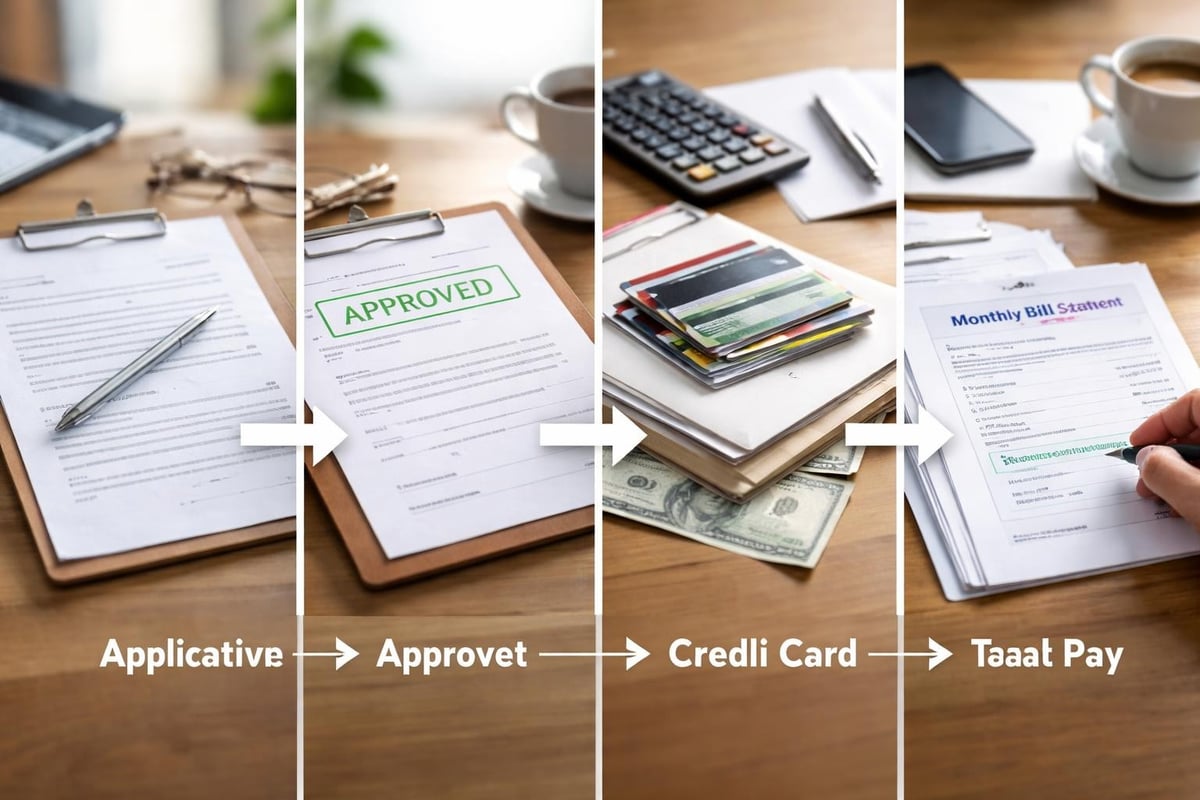
When you initiate a balance transfer, you're essentially using a new financial product to pay off existing debts. The new loan provider pays your creditors directly, and you then owe the balance to the new lender. This process involves specific eligibility requirements and considerations that vary by institution and product type.
Types of Balance Transfer Products
Balance Transfer Credit Cards offer promotional periods with 0% APR for a specified timeframe, typically 12 to 21 months. These cards are ideal for consumers who can pay off their debt within the promotional period.
Personal Loans for Debt Consolidation provide fixed interest rates and structured repayment terms. These loans offer predictability with set monthly payments over a defined period, usually ranging from two to seven years.
Home Equity Lines of Credit leverage your home's equity to secure lower interest rates. However, these products put your property at risk if you default on payments.
| Product Type | Typical Interest Rate | Repayment Period | Best For |
|---|---|---|---|
| Balance Transfer Card | 0% intro (then 15-25%) | 12-21 months promo | Short-term payoff plans |
| Personal Loan | 6-36% fixed | 2-7 years | Structured repayment |
| HELOC | 4-12% variable | 10-20 years | Large debt amounts |
Benefits of Using Balance Transfer Loans
The most compelling advantage of balance transfer loans is the potential for significant interest savings. Moving high-interest credit card debt charging 20% or more to a product with single-digit interest can save hundreds or thousands of dollars over the repayment period.
Simplified debt management represents another major benefit. Instead of tracking multiple payment due dates, interest rates, and minimum payments across various accounts, you consolidate everything into one monthly payment. This streamlined approach reduces the risk of missed payments and late fees.
Financial and Credit Advantages
- Lower overall interest costs reduce the total amount you'll repay
- Improved cash flow through potentially lower monthly payments
- Better credit utilization ratio when transferring credit card balances
- Enhanced credit score potential with consistent, on-time payments
- Fixed repayment timeline that provides clarity on when you'll be debt-free
Balance transfer loans can also provide psychological relief. The stress of managing multiple creditors diminishes when you focus on a single account. This mental clarity often helps borrowers stay committed to their debt repayment strategy.
For residents across Louisiana, Mississippi, Tennessee, and Georgia facing multiple high-interest debts, balance transfer loans offer a pathway to financial stability without the crushing burden of compounding interest charges.
Understanding Eligibility and Qualification Requirements
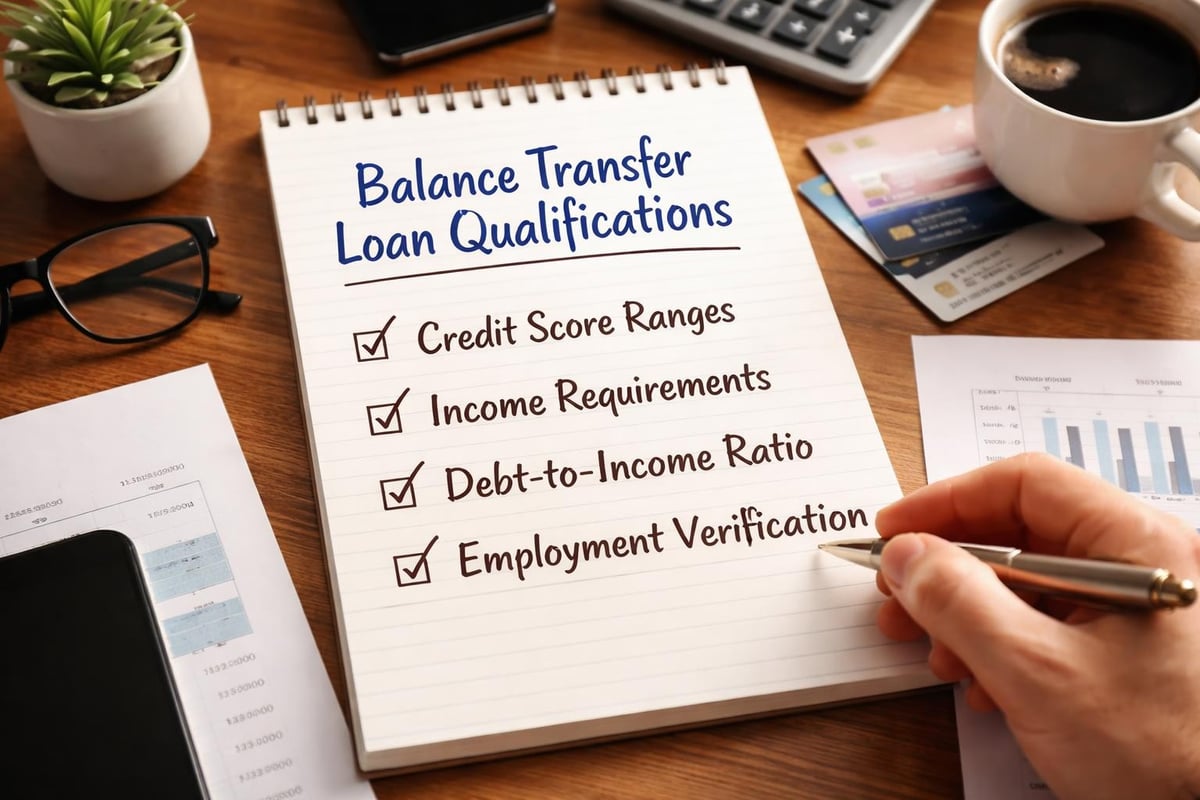
Lenders evaluate several factors when determining eligibility for balance transfer loans. Your credit score plays a central role in both approval and the interest rate you'll receive. Generally, lenders prefer applicants with credit scores above 650, though some institutions work with borrowers who have experienced past credit challenges.
Income verification ensures you have sufficient cash flow to manage the new payment. Lenders typically want to see stable employment and a debt-to-income ratio below 43%. This ratio compares your monthly debt obligations to your gross monthly income.
Key Qualification Criteria
Credit History extends beyond your numerical score. Lenders review your payment history, looking for patterns of on-time payments and responsible credit management. Recent bankruptcies, foreclosures, or significant delinquencies may impact approval.
Debt Amount affects eligibility because lenders set minimum and maximum transfer limits. Most balance transfer products require at least $500 in debt, while upper limits can reach $50,000 or more depending on the product and your qualifications.
Employment Status demonstrates financial stability. Lenders prefer applicants with consistent employment history, though self-employed individuals and those with variable income can qualify with proper documentation.
The application process typically requires personal identification, proof of income through pay stubs or tax returns, and details about the debts you wish to consolidate. Some lenders also request information about your monthly expenses to better understand your complete financial picture.
Balance Transfer Loans vs. Balance Transfer Credit Cards
Understanding the distinction between these two options is crucial for selecting the right debt consolidation strategy. While both serve similar purposes, they function differently and suit different financial situations.
Balance transfer credit cards excel for consumers who can aggressively pay down debt during the promotional period. The 0% introductory APR offers maximum savings potential, but only if you eliminate the balance before the promotional rate expires. Understanding which option better suits your circumstances depends on your repayment timeline and financial discipline.
Personal loans for balance transfers provide structure through fixed monthly payments and defined repayment terms. There's no surprise interest rate spike after a promotional period ends. The predictability helps with budgeting and long-term financial planning.
| Factor | Balance Transfer Card | Personal Loan |
|---|---|---|
| Interest Rate | 0% intro, then high variable | Fixed rate throughout term |
| Repayment Flexibility | Minimum payment required | Fixed monthly payment |
| Transfer Fees | 3-5% of transferred amount | Typically none or origination fee |
| Credit Impact | Affects credit utilization | Adds installment account |
| Best Scenario | Can pay off in 12-21 months | Need 2+ years to repay |
When to Choose Each Option
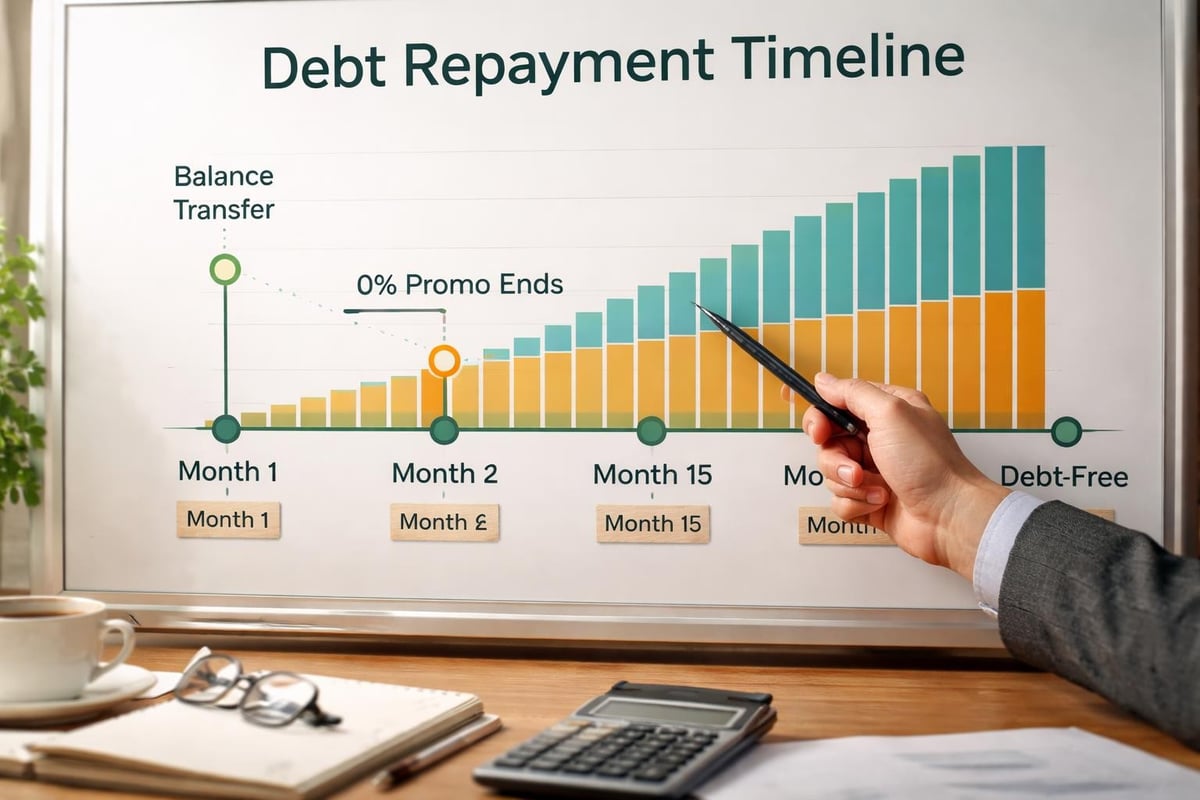
Select a balance transfer credit card when you have a clear plan to eliminate debt within the promotional period. Calculate your required monthly payment by dividing your total debt by the number of promotional months. If this amount fits comfortably in your budget, this option maximizes savings.
Choose a personal loan when you need more time to repay or want payment certainty. The fixed structure prevents the shock of jumping to a high variable rate after a promotional period ends. Personal loans also work better for consolidating various types of debts beyond just credit cards.
Common Mistakes to Avoid with Balance Transfer Loans
Even with the best intentions, borrowers sometimes make costly errors when using balance transfer loans. Awareness of these common pitfalls helps you maximize benefits and avoid unexpected costs.
The most frequent mistake is continuing to use old credit cards after transferring balances. This behavior defeats the purpose of consolidation and often leads to deeper debt. Close accounts or store cards securely to resist temptation during your payoff period.
Critical Errors to Prevent
- Ignoring balance transfer fees that can add 3-5% to your total debt
- Missing payment deadlines which can eliminate promotional rates
- Transferring more than you can reasonably repay within the optimal timeframe
- Failing to read terms and conditions regarding rate changes and fees
- Not having a concrete repayment plan before initiating the transfer
Underestimating the time needed to pay off transferred balances creates problems when promotional periods expire. Calculate realistic monthly payments before committing to ensure you can meet aggressive payoff goals.
Another critical error involves neglecting to check which types of debts qualify for transfer. Not all debt types are eligible for balance transfers, and attempting to transfer non-qualifying debts delays your consolidation efforts.
Some borrowers also overlook how balance transfers can temporarily impact credit scores. The hard inquiry from applying and the new account can cause short-term score dips, though responsible management typically improves scores over time.
Calculating the True Cost of Balance Transfer Loans
Understanding the complete financial picture requires looking beyond promotional rates and advertised benefits. Several costs factor into the true expense of balance transfer loans.
Transfer fees typically range from 3% to 5% of the transferred amount. On a $10,000 balance, a 3% fee adds $300 to your debt immediately. While this might seem expensive, compare it against months or years of high interest charges to determine if the transfer makes financial sense.
Cost Breakdown Analysis
Upfront Fees include balance transfer fees and potentially origination fees on personal loans. These one-time charges should be factored into your total cost calculations.
Interest Charges vary based on the product type and your repayment speed. With balance transfer cards, you'll pay interest on any remaining balance after the promotional period. Personal loans charge interest from day one but at a fixed, predictable rate.
Opportunity Costs represent what you could have done with the money spent on fees. However, this should be weighed against the alternative cost of maintaining high-interest debt.
| Scenario | Original Debt | Transfer Fee | Interest Saved | Net Benefit |
|---|---|---|---|---|
| 0% Card (paid in 18 months) | $10,000 | $300 | $3,000 | $2,700 |
| Personal Loan at 10% (5 years) | $10,000 | $0 | $2,500 | $2,500 |
| No Transfer (20% APR) | $10,000 | $0 | $0 | -$6,000+ |
This analysis demonstrates how even with fees, balance transfer loans typically provide substantial savings compared to maintaining high-interest debt.
Strategic Debt Repayment with Balance Transfer Loans
Success with balance transfer loans requires more than simply moving debt from one account to another. Developing a comprehensive repayment strategy maximizes your financial benefits and ensures you reach debt freedom efficiently.
Start by creating a realistic budget that accommodates your new payment while covering essential living expenses. Your balance transfer payment should be the highest responsible amount you can afford, not merely the minimum required.
Optimizing Your Repayment Strategy
Automate payments to ensure you never miss a due date. Late payments can trigger penalty APRs and eliminate promotional rates on balance transfer cards. Set up automatic payments for at least the minimum amount, then make additional manual payments when possible.
Pay more than the minimum whenever your budget allows. Even small additional payments significantly reduce your principal balance and total interest costs over time. Consider directing any windfalls, such as tax refunds or bonuses, toward debt elimination.
Track your progress monthly to maintain motivation and adjust your strategy as needed. Watching your balance decrease reinforces positive financial behaviors and helps you stay committed to your goals.
Avoid new debt during your repayment period. New charges undermine your consolidation efforts and extend the time needed to achieve debt freedom. Commit to living within your means while focusing on elimination.
For borrowers in the Southeast facing unexpected expenses or income disruptions, maintaining flexibility in your repayment plan helps you adapt to changing circumstances while staying on track toward your debt-free goal.
Special Considerations for Different Financial Situations
Your unique circumstances influence which balance transfer approach works best. Several factors specific to your situation deserve careful consideration.
For Borrowers with Credit Challenges
Consumers with past credit issues may find traditional balance transfer cards difficult to obtain. However, alternative options exist through lenders who specialize in working with diverse credit profiles. Personal loans for debt consolidation often have more flexible qualification criteria than premium credit cards.
Building or rebuilding credit becomes an important secondary benefit of successfully managing a balance transfer loan. Consistent on-time payments demonstrate creditworthiness and gradually improve your credit profile.
For High-Debt Borrowers
Those carrying substantial debt may need to combine strategies. Perhaps transfer the maximum allowed to a 0% promotional card while consolidating remaining balances into a personal loan. This hybrid approach captures the benefits of both products.
Consider loan amounts carefully. Borrowing more than necessary to pay off existing debts might provide temporary cash relief but extends your time in debt and increases total interest costs.
For Self-Employed or Variable Income Earners
Fluctuating income requires extra caution with balance transfer loans. Ensure your minimum payment fits comfortably within your lowest expected monthly income. Building a payment buffer fund provides security during lean months.
Documentation requirements may be more extensive for self-employed applicants. Prepare tax returns, profit and loss statements, and bank statements to verify income when applying.
Alternatives to Balance Transfer Loans
While balance transfer loans serve many borrowers well, they're not the only debt management solution. Understanding alternatives ensures you select the most appropriate strategy for your situation.
Debt management plans through credit counseling agencies negotiate with creditors on your behalf. These programs often reduce interest rates and waive fees without requiring new credit applications.
Debt settlement involves negotiating to pay less than the full balance owed. This approach severely damages credit and should be considered only in dire circumstances when bankruptcy seems imminent.
Increasing income or reducing expenses to accelerate debt payoff without consolidation works for some borrowers. This approach avoids fees and credit inquiries while building discipline.
Strategic payment methods like the debt avalanche (highest interest first) or debt snowball (smallest balance first) help prioritize multiple debts without consolidation.
Comparing balance transfers against personal loans reveals that sometimes the simplest approach of focused repayment without consolidation proves most effective, particularly for smaller debt amounts.
Preparing Your Balance Transfer Application
Proper preparation increases your approval odds and potentially qualifies you for better terms. Taking time to organize documentation and optimize your financial profile before applying pays dividends.
Review your credit reports from all three bureaus at least 30 days before applying. Dispute any errors that could negatively impact your score. Small score improvements can mean better interest rates or higher approval amounts.
Calculate your debt-to-income ratio honestly. If it exceeds 40%, consider paying down some debt or increasing income before applying. Lenders view lower ratios more favorably.
Application Documentation Checklist
- Government-issued photo identification (driver's license or passport)
- Proof of income (recent pay stubs, W-2 forms, or tax returns)
- Employment verification (employer contact information or employment letter)
- Account statements for debts you wish to consolidate
- Proof of residence (utility bill or lease agreement)
Gather this documentation before starting applications to streamline the process. Having everything ready demonstrates organization and seriousness to potential lenders.
Shop around but limit applications within a focused timeframe. Multiple credit inquiries for the same purpose within 14-45 days typically count as a single inquiry for credit scoring purposes. This allows rate comparison without excessive score damage.
Research lenders who specialize in serving borrowers with profiles similar to yours. Some institutions focus on prime borrowers, while others maintain flexible criteria for those with credit challenges or unique financial situations.
Balance transfer loans provide a powerful tool for managing and eliminating high-interest debt when used strategically and responsibly. By understanding the mechanics, costs, and best practices, you can make informed decisions that align with your financial goals and circumstances. If you're ready to explore debt consolidation options tailored to your situation, Standard Financial offers flexible personal loan solutions across Louisiana, Mississippi, Tennessee, and Georgia, with experienced professionals ready to help you find the right path toward financial freedom, regardless of your credit history.






No comment yet, add your voice below!