

Planning a wedding in 2026 brings excitement and joy, but the financial reality can be overwhelming. With average wedding costs ranging from $20,000 to $35,000 across the Southeast, many couples find themselves needing additional financing to create their dream celebration. Wedding loans provide a structured financial solution that allows couples to manage their big day expenses without depleting their savings or compromising on their vision. Understanding how these loans work, when they make sense, and how to use them responsibly can transform your wedding planning experience from stressful to manageable.
Understanding Wedding Loans and How They Work
Wedding loans are personal loans specifically used to cover wedding-related expenses. Unlike credit cards with variable interest rates, these loans offer fixed monthly payments over a predetermined term, typically ranging from two to seven years. The structure provides predictability in budgeting, which is essential when managing the dozens of vendor payments and deposits required for modern weddings.
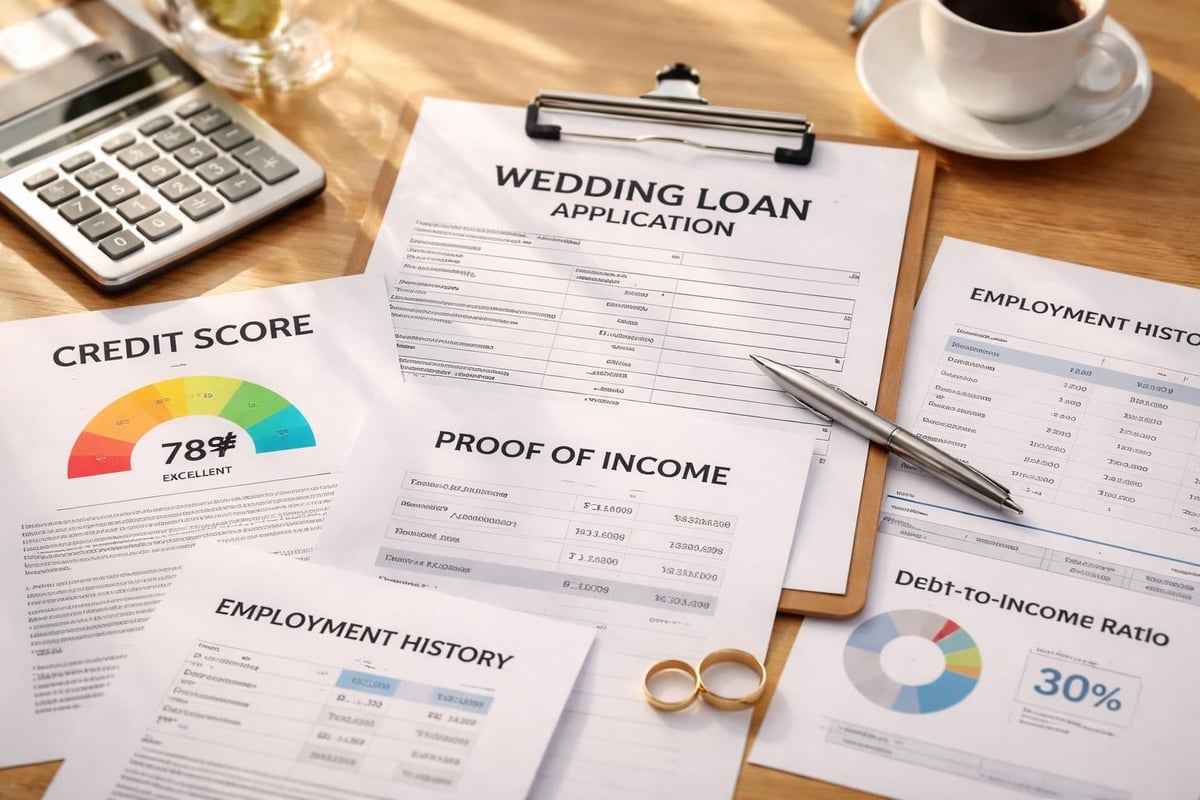
Most wedding loans are unsecured, meaning you don't need to put up collateral like your home or car. Lenders evaluate your creditworthiness based on factors including your credit score, income stability, debt-to-income ratio, and employment history. This makes them accessible to couples who may not own property but have steady income and reasonable credit profiles.
Loan Amounts and Terms
Borrowers can typically access amounts ranging from $2,000 to $50,000, though most couples in the Southeast borrow between $5,000 and $20,000 to supplement their existing wedding savings. The flexibility in loan amounts means you can finance exactly what you need without over-borrowing.
Common term lengths include:
- 24 months for smaller amounts under $5,000
- 36-48 months for mid-range loans between $5,000-$15,000
- 60-84 months for larger amounts exceeding $15,000
Interest rates vary considerably based on your credit profile, generally ranging from 6% to 36% APR. Couples with excellent credit scores above 720 often qualify for rates in the single digits, while those with fair credit may see rates in the teens or higher.
When Wedding Loans Make Financial Sense
Not every couple needs financing for their wedding, but certain circumstances make wedding loans a practical choice. The key is understanding when borrowing enhances your financial position rather than creating unnecessary burden.
Consider wedding loans when you've saved a substantial down payment but need additional funds to secure preferred vendors. Many sought-after venues, photographers, and caterers in Louisiana, Mississippi, Tennessee, and Georgia book 12-18 months in advance and require significant deposits. A loan can help you lock in these vendors before your savings reach the full amount needed.
Strategic Borrowing Scenarios
Timing advantages represent another valid reason. If your ideal wedding date falls before you've accumulated complete savings, a loan prevents postponing your celebration by months or years. The cost of waiting might include venue price increases, vendor unavailability, or personal circumstances that make delaying less desirable.
Avoiding credit card debt often motivates couples to choose wedding loans. While credit cards offer convenience, their variable interest rates typically exceed personal loan rates. A $15,000 balance on a credit card at 22% APR costs significantly more over time than a personal loan at 12% APR with fixed payments.
| Financing Method | Average APR | Payment Structure | Total Cost (3-year term on $15,000) |
|---|---|---|---|
| Wedding Loan | 12% | Fixed monthly | $16,920 |
| Credit Card | 22% | Minimum payments | $21,450+ |
| Savings Only | 0% | Upfront | $15,000 |
Preserving your emergency fund matters tremendously. Financial experts recommend maintaining 3-6 months of living expenses in savings. If paying for your wedding entirely from savings would deplete this safety net, a wedding loan allows you to maintain financial security while celebrating your union.
Calculating Your Wedding Budget and Loan Needs
Creating a realistic budget forms the foundation of responsible wedding financing. Start by listing every expected expense, from major categories like venue and catering to smaller items like invitations and favors. Research average costs in your specific region, as prices in metropolitan areas like Memphis or New Orleans differ from smaller communities.
Breaking Down Major Expense Categories
Wedding expenses generally fall into predictable categories with fairly standard percentage allocations. Understanding these proportions helps you estimate total costs and identify where financing might be most needed.
Typical budget breakdown:
- Venue and catering (45-50% of total budget)
- Photography and videography (10-15%)
- Music and entertainment (8-10%)
- Flowers and decorations (8-10%)
- Attire and beauty (8-10%)
- Invitations and stationery (2-3%)
- Miscellaneous and contingency (5-10%)
Once you've determined your total desired budget, subtract your current savings and any contributions from family members. The remaining gap represents your potential loan need. However, don't automatically borrow the full difference. Consider whether reducing certain categories might decrease or eliminate financing requirements.
Calculate what monthly payment fits comfortably in your budget. A common guideline suggests keeping your total debt payments below 36% of gross monthly income. If you're already carrying student loans, car payments, or other obligations, factor these into your assessment.

Finding the Right Lender for Your Wedding Loan
Shopping around for wedding loans saves money and ensures you get terms that match your financial situation. Different lenders specialize in various borrower profiles, so understanding your credit standing helps target appropriate options.
Traditional banks often provide the lowest rates for borrowers with excellent credit and existing banking relationships. They typically require more documentation and have longer approval processes, but the rates can be worth the wait. Credit unions frequently offer competitive rates and may be more flexible with members who have fair credit scores.
Evaluating Lender Options
Regional lenders with physical branches in Louisiana, Mississippi, Tennessee, and Georgia offer distinct advantages. The ability to meet loan officers face-to-face, discuss your specific situation, and receive personalized guidance makes complex financial decisions less daunting. These lenders often consider factors beyond credit scores, including employment stability and local community ties.
Online lenders provide convenience and speed, often delivering approval decisions within hours and funding within days. While you sacrifice personal interaction, the streamlined process appeals to couples comfortable with digital transactions.
Key factors to compare across lenders:
- Annual percentage rate (APR)
- Origination fees or closing costs
- Prepayment penalties
- Minimum and maximum loan amounts
- Term length flexibility
- Time to funding
- Customer service availability
Request quotes from at least three different lenders before making your decision. Pay attention to the APR rather than just the interest rate, as APR includes fees and provides a true cost comparison. Some lenders advertise attractive interest rates but charge significant origination fees that increase total costs.
Application Process and Approval Requirements
Applying for wedding loans involves straightforward steps, though preparation improves your chances of approval and favorable terms. Most lenders follow similar procedures whether you apply online or in person at a branch office.
Documentation You'll Need
Gather essential documents before starting your application to expedite the process. Lenders verify information to assess your ability to repay, so having everything ready demonstrates organization and reliability.
Required documentation typically includes:
- Government-issued photo identification
- Proof of income (recent pay stubs, W-2 forms, or tax returns for self-employed individuals)
- Bank statements from the past 2-3 months
- Current employer contact information
- Rental or mortgage payment history
- List of existing debts and monthly obligations
The lender reviews your credit report to assess payment history, current debts, and overall credit management. They calculate your debt-to-income ratio by dividing total monthly debt payments by gross monthly income. Ratios below 36% generally receive favorable consideration, while higher ratios may require additional documentation or result in higher interest rates.
Approval timelines vary by lender and application completeness. Some online lenders provide instant pre-qualification, followed by full approval within 24-48 hours once you submit documentation. Traditional banks and regional lenders might take 3-7 business days to process applications and verify information. Plan accordingly if you need funds by specific vendor deposit deadlines.
Smart Strategies for Managing Wedding Debt
Borrowing responsibly extends beyond securing favorable loan terms. How you manage the debt after your wedding determines whether it becomes a minor financial blip or a long-term burden that strains your newlywed budget.
Create a dedicated repayment plan before you even receive the loan proceeds. Calculate exactly how the monthly payment fits into your household budget, accounting for other expenses like rent, utilities, groceries, and existing debt obligations. Consider whether both partners will contribute equally or if one will handle the full payment.
Accelerating Repayment
Paying more than the minimum monthly amount significantly reduces total interest paid and shortens your loan term. Even modest additional payments create substantial savings. For example, on a $10,000 loan at 12% APR over four years, adding just $50 to your monthly payment saves approximately $500 in interest and shortens the term by eight months.
Ways to accelerate repayment:
- Direct wedding gifts toward the loan balance
- Apply tax refunds to principal reduction
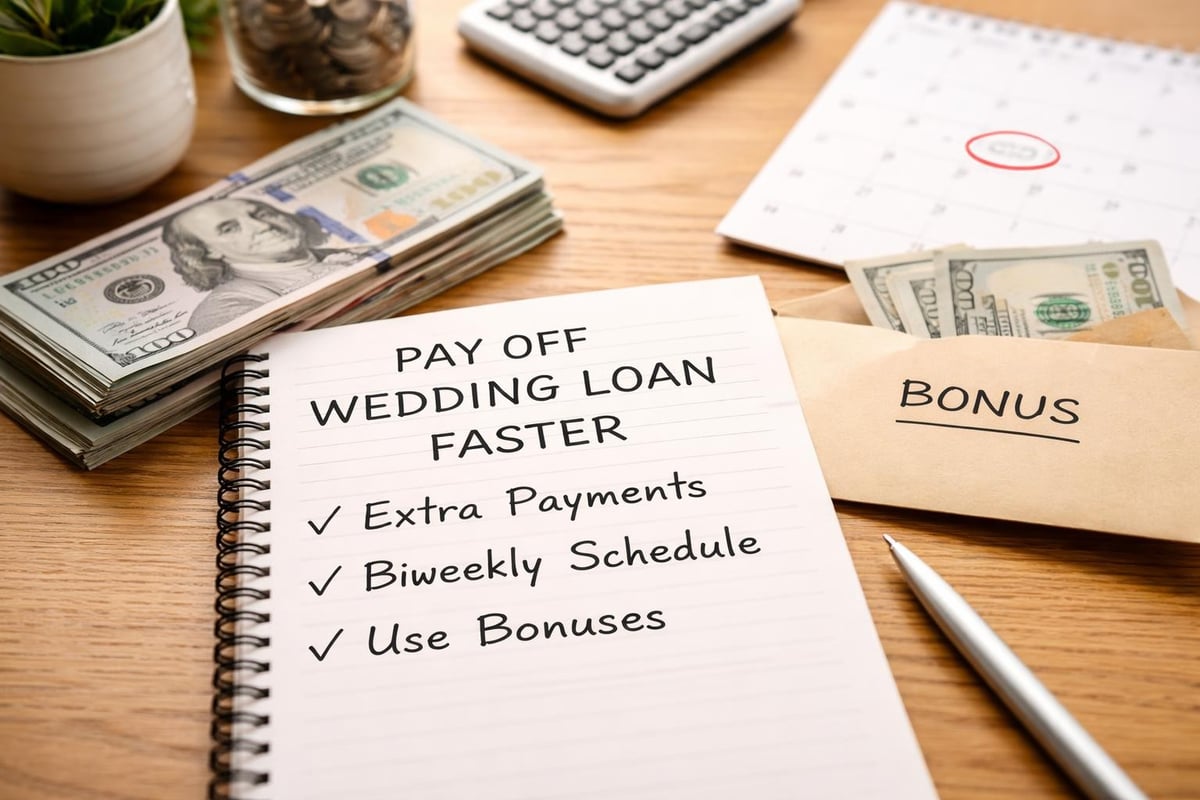
- Use annual bonuses or work incentives for extra payments
- Round up monthly payments to the nearest hundred
- Make bi-weekly half-payments instead of monthly full payments
Before making extra payments, verify your lender doesn't charge prepayment penalties. Most modern wedding loans lack these fees, but reviewing your loan agreement prevents surprises. Specify that additional payments should apply to principal rather than future interest to maximize impact.
Monitor your loan balance regularly through your lender's online portal or monthly statements. Seeing the principal decrease provides motivation and helps you track progress toward becoming debt-free. Some couples celebrate milestones like paying off 25% or 50% of the balance.
Alternatives to Traditional Wedding Loans
While wedding loans serve many couples effectively, exploring alternatives ensures you choose the best financing solution for your unique circumstances. Some options provide lower costs or greater flexibility depending on your situation.
Home equity loans or lines of credit offer lower interest rates for homeowners because they're secured by property. Rates typically range from 5-9% APR, significantly below unsecured personal loans. However, using your home as collateral carries risk, and closing costs may offset interest savings on smaller amounts.
Other Financing Options
0% APR credit cards provide interest-free financing if you can repay the balance within the promotional period, usually 12-21 months. This works well for couples with strong credit who can commit to aggressive repayment. The risk lies in carrying balances beyond the promotional period when rates jump to 20-30% APR.
Family loans present opportunities and challenges. Borrowing from parents or relatives might mean lower or zero interest, but mixing family relationships with money creates potential complications. If you pursue this route, treat it professionally with written agreements specifying amounts, terms, and repayment schedules.
| Alternative | Typical APR | Pros | Cons |
|---|---|---|---|
| Home Equity | 5-9% | Low rates, larger amounts | Uses home as collateral, closing costs |
| 0% Credit Card | 0-25% | No interest if paid during promo | High rates after promo, requires strong credit |
| Family Loan | 0-5% | Flexible terms, low/no interest | Potential relationship strain |
| Wedding Loan | 6-36% | Unsecured, predictable payments | Higher rates than secured options |
Crowdfunding platforms allow couples to invite wedding guests to contribute toward specific expenses in lieu of traditional gifts. While not technically financing, this approach reduces the amount you need to borrow. Some couples successfully fund honeymoons, photography, or other specific elements through these platforms.
Protecting Your Credit While Planning Your Wedding
Your credit score significantly impacts loan approval odds and interest rates, making credit health crucial during wedding planning. Understanding how wedding-related financial activities affect your credit helps you navigate this period without damaging your score.
Multiple loan applications within a short period can temporarily lower your credit score through hard inquiries. However, credit scoring models recognize rate shopping and typically count multiple applications for the same loan type within 14-45 days as a single inquiry. Complete your comparison shopping within this window to minimize impact.
Maintaining Credit Health
Keep existing credit cards active and maintain low balances relative to credit limits. Credit utilization ratio accounts for 30% of your credit score calculation. Experts recommend keeping utilization below 30% on each card and ideally below 10%. If you need to charge wedding deposits to cards, pay balances down quickly or consider requesting credit limit increases to improve ratios.
Never miss payments on existing obligations during wedding planning. Payment history represents 35% of your credit score, making it the single most important factor. Set up automatic payments for minimum amounts to ensure on-time payment, even if you're busy with wedding preparations.
Avoid opening multiple new credit accounts simultaneously. Each new account slightly lowers your average account age and adds hard inquiries. If you need store credit cards for registry purposes, open them strategically rather than accepting every offer.
Review your credit reports from all three bureaus before applying for wedding loans. Dispute any errors you find, as inaccuracies can artificially lower your score and result in higher interest rates or denial. You're entitled to free reports annually through AnnualCreditReport.com.
Making Wedding Loans Work for Your Relationship
Financial stress ranks among the top challenges for newlyweds, making transparent communication about wedding loans essential. How you approach borrowing and repayment together sets patterns for future financial decisions as a married couple.
Discuss loan decisions openly with your partner before applying. Share your complete financial pictures, including credit scores, existing debts, income, and savings. Many couples discover they have different comfort levels with debt or varying perspectives on wedding spending priorities. Working through these differences before borrowing prevents conflict later.
Create shared financial goals that extend beyond the wedding day. Determine whether you'll prioritize aggressive loan repayment or balance it with other objectives like saving for a home down payment, building emergency funds, or contributing to retirement accounts. Your wedding loan repayment strategy should align with your broader financial plans.
Building Financial Partnership
Consider which partner's name appears on the loan application. If one person has significantly better credit, applying individually might secure better rates. However, both partners should feel equally responsible for repayment regardless of whose name is on the paperwork.
Questions to discuss together:
- What's our maximum comfortable monthly payment?
- How will we split repayment responsibility?
- What wedding elements matter most to us?
- Are we willing to cut other expenses to accelerate repayment?
- How does this loan fit our 5-year financial plan?
Schedule regular money conversations, perhaps monthly, to review your loan balance and overall finances. These check-ins prevent surprises and maintain accountability. Many couples find that managing wedding debt together strengthens their financial communication skills for the decades ahead.
Some partners prefer keeping finances completely separate, while others merge everything. Wedding loans work with either approach, but clarity prevents misunderstandings. Decide whether you'll maintain separate accounts and each contribute proportionally, create a joint account for the loan payment, or use one person's account with transfers from the other.
Planning your dream wedding shouldn't mean sacrificing your financial future or settling for a celebration that doesn't reflect your vision. Wedding loans provide a practical bridge between your savings and your goals when used strategically and managed responsibly. If you're exploring financing options for your upcoming wedding in Louisiana, Mississippi, Tennessee, or Georgia, Standard Financial offers flexible personal loans with terms designed to fit your budget, even if you've faced credit challenges in the past. Visit a branch near you to discuss how we can help make your special day everything you've imagined.







No comment yet, add your voice below!