

Your credit report serves as a financial report card that lenders use to evaluate your creditworthiness. Negative items on this report can significantly impact your ability to secure loans, rent apartments, or even land certain jobs. Understanding how to remove negative items from credit report legally and effectively is crucial for anyone looking to improve their financial standing. Whether you're dealing with late payments, collections, or more serious marks, there are legitimate strategies you can use to clean up your credit history and move toward better financial opportunities.
Understanding What Appears on Your Credit Report
Your credit report contains detailed information about your financial behavior, including payment history, outstanding debts, and public records. Negative items can range from minor infractions to major financial setbacks.
Common negative marks include:
- Late payments (30, 60, 90, or 120+ days past due)
- Collection accounts from unpaid debts
- Charge-offs when creditors write off unpaid balances
- Bankruptcies (Chapter 7 or Chapter 13)
- Foreclosures from defaulted mortgages
- Repossessions of vehicles or other financed property
- Tax liens and civil judgments
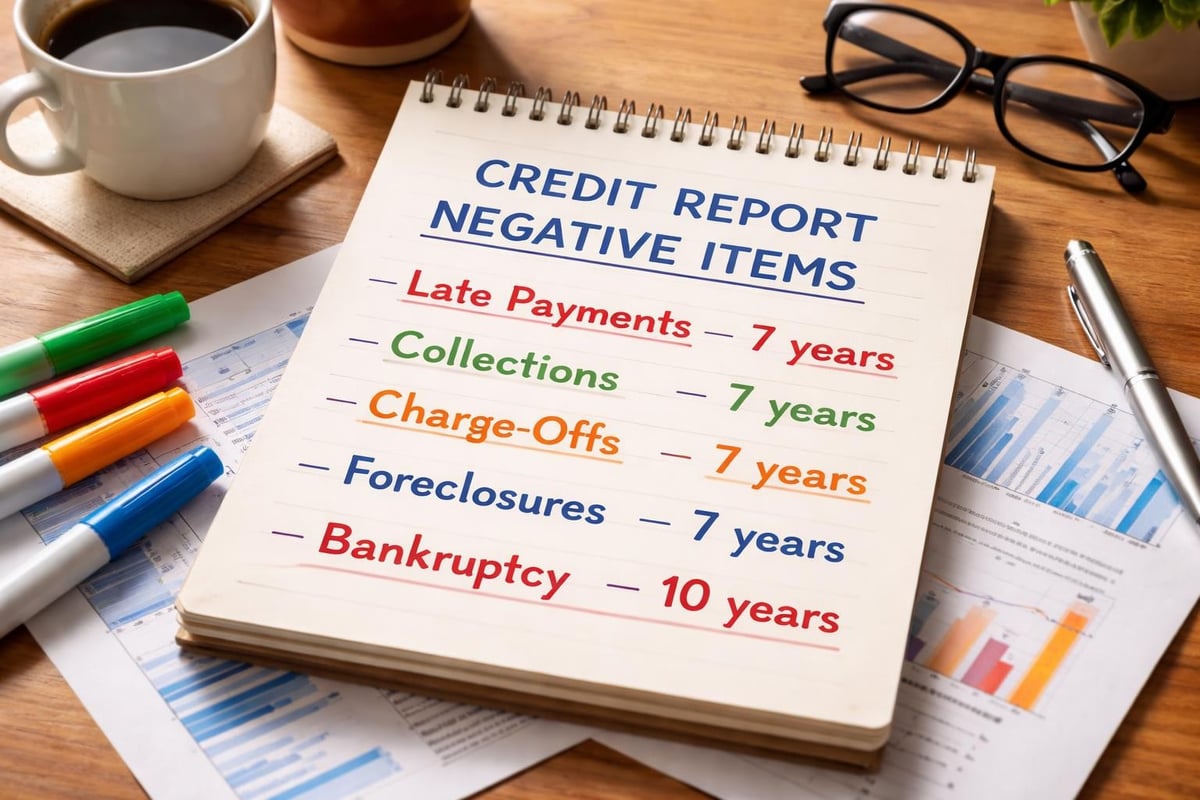
Each type of negative item carries different weight and remains on your report for varying periods. Most negative information stays on your credit report for seven years, while bankruptcies can linger for up to ten years. Understanding these timelines helps you develop realistic expectations when learning how to remove negative items from credit report.
Obtaining and Reviewing Your Credit Reports
Before you can address negative items, you need to know exactly what appears on your credit reports. The three major credit bureaus-Equifax, Experian, and TransUnion-each maintain separate reports, and information can vary between them.
Accessing Your Free Reports
Federal law entitles you to one free credit report annually from each bureau through AnnualCreditReport.com. You can request all three simultaneously or space them throughout the year to monitor changes regularly.
Review each report carefully for:
- Personal information accuracy (name, address, Social Security number)
- Account details and payment histories
- Outstanding balances and credit limits
- Public records and collection accounts
- Hard inquiries from credit applications
Document every error, outdated item, or questionable entry you discover. Create a spreadsheet tracking each negative item, including the creditor name, account number, date of delinquency, and which bureaus are reporting it. This organized approach streamlines the dispute process and helps you monitor progress.
Disputing Inaccurate Information
The Fair Credit Reporting Act (FCRA) gives you the right to dispute any information you believe is inaccurate, incomplete, or unverifiable. Disputing credit report errors is often the most straightforward method for how to remove negative items from credit report when those items contain mistakes.
Filing Disputes with Credit Bureaus
Each credit bureau provides multiple dispute channels:
- Online portals offer the fastest processing (usually 30 days)
- Phone disputes allow immediate documentation but lack paper trails
- Mail disputes provide certified delivery confirmation and detailed documentation
| Dispute Method | Processing Time | Best For | Documentation Level |
|---|---|---|---|
| Online | 30 days | Simple errors | Moderate |
| Phone | 30-45 days | Urgent matters | Low |
| Certified Mail | 30-45 days | Complex disputes | High |
When filing disputes, be specific about what's wrong and include supporting documentation. Generic claims like "this isn't mine" are less effective than detailed explanations with evidence. The Consumer Financial Protection Bureau emphasizes that while you can dispute inaccuracies, accurate negative information generally cannot be removed before its scheduled expiration.
Common Disputable Errors
Focus your disputes on legitimate inaccuracies:
- Accounts that don't belong to you (possible identity theft)
- Incorrect payment statuses or dates
- Duplicate accounts listed multiple times
- Outdated information past reporting limits
- Incorrect balances or credit limits
- Closed accounts showing as open
After receiving your dispute, bureaus must investigate with the creditor within 30 days. If they can't verify the information, they must remove it from your report.
Negotiating Directly with Creditors
Sometimes working directly with the original creditor or collection agency proves more effective than disputing with credit bureaus. This approach requires tact, documentation, and understanding of your negotiating position.
Pay-for-Delete Agreements
A pay-for-delete arrangement involves paying a debt in exchange for the creditor removing the negative item from your credit report. While not all creditors participate in these agreements, collection agencies may be more willing to negotiate.
Steps for successful negotiations:
- Contact the creditor or collector in writing first
- Reference the specific account number and debt amount
- Propose a settlement amount (often 30-50% of the balance)
- Request written confirmation of the pay-for-delete agreement
- Never make payments until you have the agreement in writing
- Keep all correspondence and payment records
Document every conversation, including the date, time, representative's name, and what was discussed. Send follow-up letters confirming verbal agreements to create a paper trail.

Validating Collection Accounts
The Fair Debt Collection Practices Act (FDCPA) requires collection agencies to validate debts when requested. Debt validation serves as a powerful tool when learning how to remove negative items from credit report, particularly for collection accounts.
Requesting Debt Validation
Within 30 days of a collector's first contact, send a debt validation letter requesting:
- The original creditor's name and account number
- Documentation proving you owe the debt
- Itemization of the current balance and any added fees
- Proof the collection agency has the right to collect
If collectors cannot provide adequate validation, they must cease collection activities and potentially remove the account from your credit report. Even outside the 30-day window, you can request verification, though collectors aren't legally required to cease collection efforts during verification.
Goodwill Adjustments for Accurate Negative Items
When negative items are accurate but resulted from temporary hardship, a goodwill letter might help. This approach works best for customers with otherwise strong payment histories who experienced isolated incidents.
Crafting Effective Goodwill Letters
Your letter should:
- Acknowledge the late payment or other negative item
- Explain the circumstances that caused the problem (medical emergency, job loss, natural disaster)
- Emphasize your previously excellent payment history
- Request removal as a one-time courtesy
- Highlight your current financial stability
Send goodwill letters to the original creditor's customer service department or executive office. While creditors aren't obligated to honor these requests, many appreciate loyal customers and may remove isolated negative marks.
Understanding What Cannot Be Removed
Legitimate negative information that's accurately reported generally cannot be removed before its scheduled expiration. According to the CFPB, attempting to remove accurate information through fraudulent means violates federal law.
Accurate items that must remain:
- Bankruptcies (7-10 years)
- Foreclosures (7 years)
- Collections (7 years from first delinquency)
- Late payments (7 years)
- Charge-offs (7 years)
Understanding these limitations helps you focus energy on legitimate strategies rather than wasting time on impossible removals. Instead, concentrate on building positive credit history to offset older negative items.
Working with Credit Repair Companies
Professional credit repair services understand the nuances of how to remove negative items from credit report and can handle the time-consuming dispute process. However, consumers should approach these companies carefully.
Evaluating Credit Repair Services
CBS News outlines various methods credit repair professionals use, but emphasizes the importance of choosing reputable companies. Legitimate services cannot do anything you couldn't do yourself, but they offer expertise and save time.
Red flags to avoid:
- Guarantees of specific score increases
- Requests for payment before services are rendered
- Suggestions to dispute accurate information
- Advice to create a new credit identity
- Lack of written contracts or service agreements
Reputable companies should clearly explain their process, provide written contracts, and comply with the Credit Repair Organizations Act (CROA). They charge reasonable fees for legitimate services like organizing disputes and monitoring your credit reports.
Building Positive Credit History
While addressing negative items, simultaneously build positive credit history to improve your overall credit profile. Bankrate discusses strategies for improving credit scores beyond just removing negative items.
Effective Credit-Building Strategies
| Strategy | Timeline | Impact Level | Best For |
|---|---|---|---|
| Secured Credit Card | 3-6 months | Moderate | Rebuilding credit |
| Authorized User Status | 1-3 months | Moderate | Quick boost |
| Credit-Builder Loan | 6-12 months | High | Demonstrating payment ability |
| Timely Bill Payments | Ongoing | High | Long-term improvement |
Maintain credit utilization below 30% of available limits, preferably under 10%. Pay all bills on time, as payment history comprises 35% of your FICO score. Consider setting up automatic payments to ensure you never miss due dates.

Monitoring Your Progress
After initiating disputes or negotiations, consistent monitoring ensures creditors and bureaus follow through on agreements. American Express provides guidance on tracking dispute progress and verifying removals.
Tracking Changes
Check your credit reports 30-45 days after filing disputes to verify updates. If negative items weren't removed or updated correctly, follow up with additional documentation or escalate the dispute.
Create a monitoring system:
- Set calendar reminders for dispute deadlines
- Screenshot or save dispute confirmation numbers
- Maintain a file of all correspondence and agreements
- Use credit monitoring services for real-time alerts
- Review reports from all three bureaus quarterly
When items are successfully removed, verify the deletion appears across all three credit bureaus. Sometimes one bureau updates while others don't, requiring separate follow-up.
Addressing Identity Theft-Related Items
Negative items resulting from identity theft require immediate action and special procedures. The Federal Trade Commission provides specific steps for victims.
Responding to Fraudulent Accounts
If you discover accounts opened fraudulently:
- File a police report documenting the identity theft
- Submit an identity theft report to IdentityTheft.gov
- Place fraud alerts with all three credit bureaus
- Consider freezing your credit to prevent new fraudulent accounts
- Dispute fraudulent accounts with creditors and bureaus
- Close compromised accounts immediately
Identity theft victims have stronger protections under the FCRA. Bureaus must block fraudulent information from appearing on your report once you provide an identity theft report and supporting documentation.
Understanding Credit Score Impact
Removing negative items from your credit report can significantly improve your credit scores, but the impact varies depending on your overall credit profile. Nasdaq discusses how removing negative items affects credit scores differently for each individual.
Factors Affecting Score Improvement
Recent negative items hurt more than older ones. A collection from six months ago damages your score more severely than one from six years ago. Successfully removing recent negative marks typically yields more dramatic score improvements.
The number of other negative items matters too. Removing one late payment when you have multiple collections provides less improvement than removing your only negative mark from an otherwise clean report. Your credit mix, utilization, and length of credit history also influence how much removing negative items helps your overall score.
Preventing Future Negative Items
Learning how to remove negative items from credit report is valuable, but preventing new ones is equally important. Develop financial habits that protect your credit long-term.
Proactive Credit Protection
Set up automatic minimum payments for all credit accounts to prevent missed payments. Create calendar alerts for due dates as backup reminders. Maintain an emergency fund covering 3-6 months of expenses to weather financial hardships without missing payments.
Essential prevention strategies:
- Review credit reports annually for early error detection
- Monitor accounts regularly for unauthorized charges
- Keep credit utilization consistently below 30%
- Avoid opening multiple new accounts simultaneously
- Communicate with creditors immediately if facing payment difficulties
Many creditors offer hardship programs for customers experiencing temporary financial setbacks. Contacting them before missing payments often leads to modified payment arrangements that don't damage your credit.
Timeline Expectations for Credit Improvement
Understanding realistic timelines helps manage expectations when working to improve your credit. While some changes happen quickly, comprehensive credit repair typically requires several months.
Typical timeframes:
- Dispute investigations: 30-45 days per dispute
- Score impact from removals: 30-60 days after bureau updates
- New positive tradelines: 1-3 months to appear
- Overall credit improvement: 6-12 months of consistent effort
InCharge Debt Solutions provides insights into realistic timelines and what constitutes negative items on credit reports. Patience and persistence are essential virtues throughout this process.
Special Considerations for Specific Negative Items
Different types of negative items require tailored approaches when determining how to remove negative items from credit report effectively.
Late Payments
Late payments under 30 days typically don't appear on credit reports. Once reported, they remain for seven years but impact your score less over time. Focus on building a strong recent payment history to offset older late payments.
Charge-Offs
Charge-offs indicate creditors wrote off your debt as uncollectible. Paying charged-off accounts doesn't remove them but updates the status to "paid charge-off," which looks marginally better to lenders. Negotiate pay-for-delete agreements before making payments.
Collections
Collection accounts often have validation issues. Request debt validation before paying, as collectors sometimes lack proper documentation. Statute of limitations varies by state but typically ranges from 3-6 years for most debts. Understanding your state's laws helps inform negotiation strategies.
Removing negative items from your credit report requires knowledge, patience, and consistent effort, but the financial benefits of improved credit are substantial. By systematically disputing errors, negotiating with creditors, and building positive payment history, you can significantly improve your creditworthiness over time. Whether you're looking to secure better interest rates on future loans or simply want to improve your financial standing, Standard Financial understands that past credit challenges don't define your future potential. With flexible financing options designed for clients working to rebuild their credit, Standard Financial offers personal loans and refinancing solutions across Louisiana, Mississippi, Tennessee, and Georgia to help you achieve your financial goals.







No comment yet, add your voice below!