

Filing for bankruptcy represents a significant financial decision that can provide relief from overwhelming debt, but it also raises important questions about long-term credit implications. For consumers considering this option or recovering from a past filing, understanding how long does bankruptcy stay on credit reports is essential for planning future financial goals, whether securing a personal loan, refinancing existing debt, or obtaining financing for major life expenses.
Understanding Bankruptcy's Impact on Credit Reports
Bankruptcy filings become public record and are reported to the three major credit bureaus: Equifax, Experian, and TransUnion. The duration of this reporting depends primarily on which chapter of bankruptcy you file. The Consumer Financial Protection Bureau confirms that Chapter 7 bankruptcies remain on your credit report for 10 years from the filing date, while Chapter 13 bankruptcies stay for seven years.
These timelines are established under the Fair Credit Reporting Act (FCRA), which governs how long negative information can remain on consumer credit files. The law sets maximum reporting periods to balance creditor interests with consumer opportunities for financial recovery.
Chapter 7 Bankruptcy Timeline
Chapter 7, often called "liquidation bankruptcy," typically discharges most unsecured debts within three to six months. However, the credit reporting impact extends much longer. The 10-year reporting period begins from the filing date, not the discharge date, which is an important distinction for consumers tracking their credit recovery timeline.
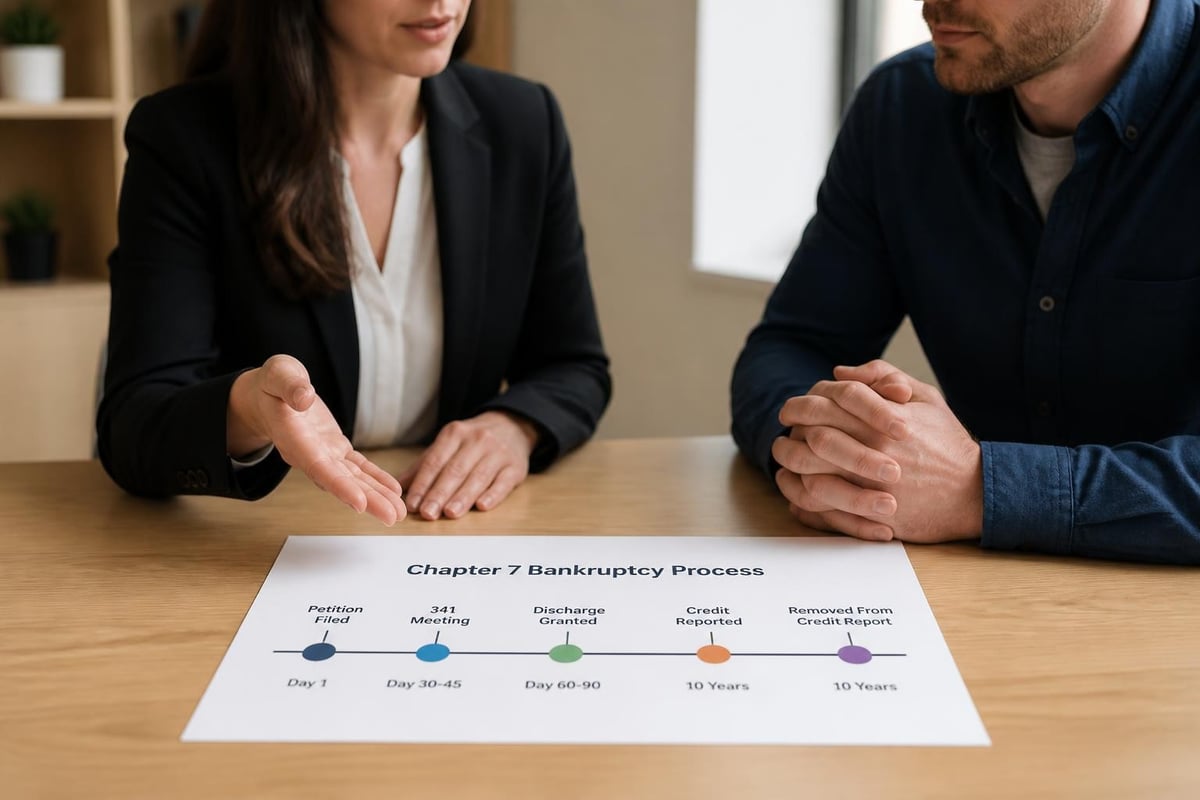
During this decade, the bankruptcy notation appears in the public records section of your credit report. Individual accounts included in the bankruptcy may show as "included in bankruptcy" or "discharged through bankruptcy" until they reach their own seven-year reporting limit from the date of delinquency.
Chapter 13 Bankruptcy Duration
Chapter 13 bankruptcy involves a repayment plan lasting three to five years, after which remaining eligible debts are discharged. Because this chapter demonstrates a commitment to repaying creditors, how long does bankruptcy stay on credit differs from Chapter 7. According to Experian, Chapter 13 bankruptcies are removed after seven years from the filing date.
The shorter reporting period reflects the rehabilitative nature of Chapter 13. Consumers who successfully complete their payment plans often find it easier to rebuild credit during and after the bankruptcy period compared to Chapter 7 filers.
| Bankruptcy Type | Reporting Period | Typical Discharge Time | Debt Treatment |
|---|---|---|---|
| Chapter 7 | 10 years | 3-6 months | Most debts eliminated |
| Chapter 13 | 7 years | 3-5 years | Partial repayment plan |
How Bankruptcy Affects Individual Account Reporting
Beyond the bankruptcy notation itself, individual accounts included in your filing have their own reporting timelines. Most negative account information, including late payments and charge-offs, can remain on your credit report for seven years from the original delinquency date.
When an account is included in bankruptcy, it typically shows both the account's payment history and its inclusion in bankruptcy proceedings. The account will be removed from your report after seven years, even if the bankruptcy notation remains visible for a Chapter 7 filing.
Pre-Bankruptcy Delinquencies
Accounts that were already delinquent before filing bankruptcy follow standard negative information timelines. The Federal Trade Commission outlines how information furnishers must report dates of delinquency accurately. The seven-year clock starts from the date you first fell behind, not from the bankruptcy filing date.
This creates a scenario where some accounts may actually disappear from your credit report before the bankruptcy itself, particularly if you struggled with debts for months or years before filing.
Credit Score Impact Throughout the Bankruptcy Period
Understanding how long does bankruptcy stay on credit is only part of the picture. The severity of the credit score impact typically diminishes over time as the bankruptcy ages and you establish positive payment history.
Initial Impact:
- Credit scores can drop 130 to 200 points or more
- The decrease depends on your score before filing
- Higher credit scores typically experience larger point drops
- Lower scores may see smaller absolute decreases
Recovery Timeline:
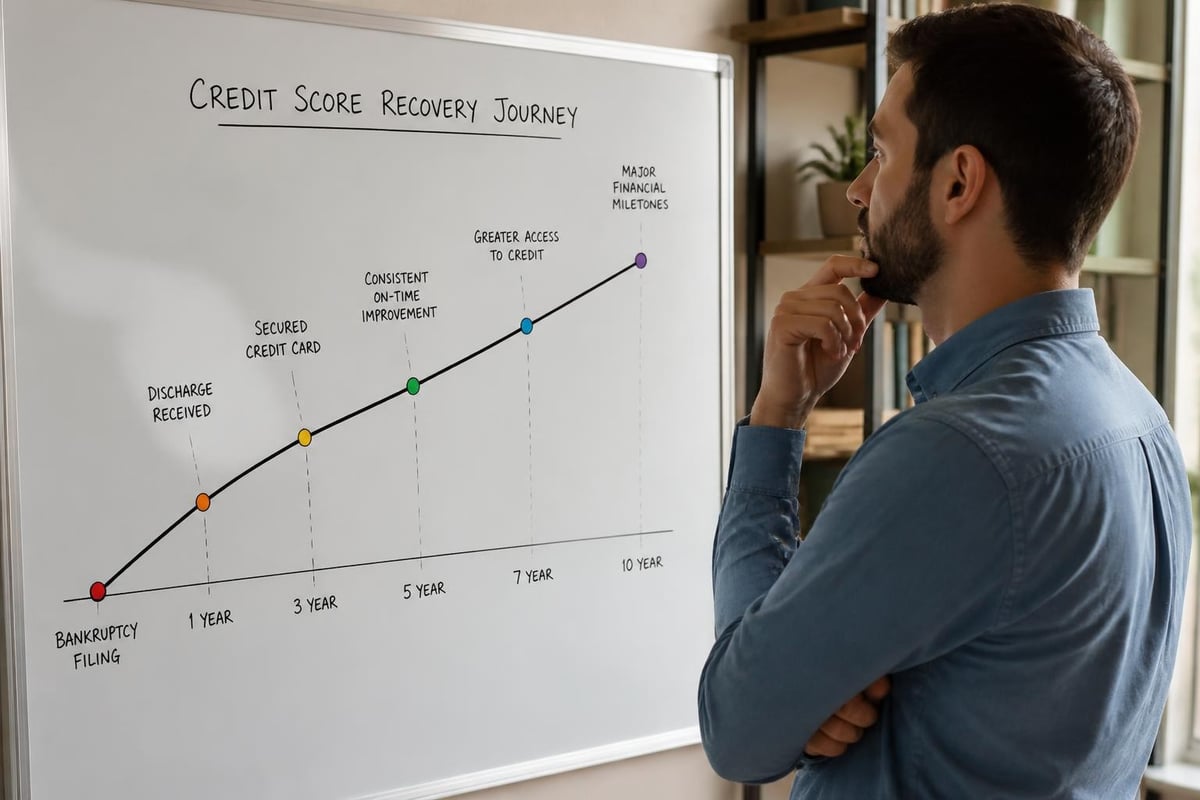
- First 1-2 years: Most severe impact period
- Years 2-4: Gradual improvement with positive credit activity
- Years 4-7: Significant recovery possible with responsible credit management
- Years 7-10 (Chapter 7): Continued improvement as bankruptcy ages
FICO’s credit education resources emphasize that while bankruptcy is a serious negative factor, its impact on your score lessens over time, especially as you add positive payment history and keep credit utilization low.
Lending Opportunities During and After Bankruptcy
For consumers in Louisiana, Mississippi, Tennessee, and Georgia who have filed bankruptcy, understanding available financing options is crucial for moving forward financially. The presence of bankruptcy on your credit report doesn't automatically disqualify you from all lending opportunities.
Immediate Post-Bankruptcy Period (0-2 Years)
During this period, traditional lending options may be limited, but specialized lenders focus on helping consumers rebuild credit:
- Secured credit cards requiring deposits
- Credit-builder loans designed for rebuilding
- Small personal loans from consumer-focused lenders
- Financing for essential needs like medical expenses or home repairs
Many lenders recognize that bankruptcy represents a fresh financial start rather than a permanent disqualification. Consumer lending institutions that specialize in working with clients who have past credit issues evaluate the full financial picture, including income stability, current debt obligations, and demonstrated responsible financial behavior post-bankruptcy.
Mid-Recovery Period (2-5 Years)
As the bankruptcy ages and positive credit history accumulates, more opportunities emerge:
- Competitive interest rates become accessible on certain loan products
- Refinancing options may allow you to improve terms on existing obligations
- Higher loan amounts become available for home improvements, education, or other major expenses
- Conventional mortgage qualification becomes possible (typically 2-4 years post-discharge with rebuilding efforts)
Later Recovery Period (5+ Years)
By the time how long does bankruptcy stay on credit approaches its end date, many consumers have successfully rebuilt their credit profiles. The bankruptcy, while still visible on Chapter 7 filings, carries significantly less weight in lending decisions when accompanied by years of positive payment history.
Strategies for Rebuilding Credit After Bankruptcy
Active credit rebuilding accelerates your financial recovery and helps minimize the long-term impact of bankruptcy on your borrowing ability.
Establish New Credit Responsibly
Opening new credit accounts demonstrates your ability to manage credit post-bankruptcy. Start with one or two accounts and manage them perfectly:
- Pay all bills on time, every time
- Keep credit utilization below 30% of available limits
- Avoid applying for multiple accounts simultaneously
- Monitor your credit reports regularly for accuracy
Diversify Your Credit Mix
Credit scoring models favor a mix of credit types. Over time, consider establishing:
- Revolving credit (credit cards)
- Installment loans (personal loans, auto loans)
- Retail accounts (if beneficial and manageable)
The National Foundation for Credit Counseling provides resources and counseling to help consumers navigate post-bankruptcy credit rebuilding with sustainable strategies.
Address Credit Report Errors
Bankruptcy-related reporting must be accurate. Review your credit reports from all three bureaus to ensure:
- The bankruptcy filing date is correct
- Account statuses accurately reflect discharge
- No duplicate bankruptcy entries appear
- Accounts not included in bankruptcy aren't incorrectly marked
If you find errors, dispute them directly with the credit bureaus. The FDIC’s consumer resources explain your rights to accurate reporting and the dispute process.
Legal Timelines and Automatic Removal
How long does bankruptcy stay on credit is governed by federal law, and removal is typically automatic. Credit bureaus maintain systems to delete bankruptcy information once the reporting period expires. However, consumers should verify removal:
Verification Steps:
- Request free credit reports 30 days after the expiration date
- Check all three bureaus (Equifax, Experian, TransUnion)
- Confirm complete removal of the bankruptcy notation
- Dispute any bankruptcy information appearing past legal limits

The U.S. Courts bankruptcy statistics show hundreds of thousands of Americans file bankruptcy annually, making it a common financial tool for fresh starts. Understanding the credit reporting timeline helps consumers plan their financial recovery strategically.
Regional Considerations for Southern States
Consumers in Louisiana, Mississippi, Tennessee, and Georgia face unique economic conditions that influence post-bankruptcy financial planning. These states have varying:
- Average income levels affecting loan qualification
- Housing market conditions impacting home equity opportunities
- State-specific exemptions during bankruptcy proceedings
- Regional lending markets with different risk appetites
Working with lenders familiar with regional economic factors and committed to serving communities throughout these states can provide advantages during credit recovery. Local lenders often better understand the challenges facing consumers in their service areas and can structure financing solutions accordingly.
Bankruptcy Alternatives and Prevention
Before filing bankruptcy, consumers should explore alternatives that may have less severe credit implications. Credit counseling agencies can help evaluate options such as:
| Alternative | Credit Impact | Timeline | Best For |
|---|---|---|---|
| Debt Management Plan | Moderate | 3-5 years | Unsecured debt consolidation |
| Debt Settlement | Significant | 2-4 years | Negotiating reduced balances |
| Credit Counseling | Minimal | Ongoing | Budget management |
| Hardship Programs | Varies | 6-24 months | Temporary financial setbacks |
These alternatives avoid the question of how long does bankruptcy stay on credit entirely while still addressing debt problems. However, for many consumers facing severe financial hardship, bankruptcy remains the most effective path to a fresh start.
Special Circumstances and Exceptions
Certain situations create exceptions to standard bankruptcy reporting timelines:
Early Removal Possibilities:
- Bankruptcy dismissed (never discharged) may be removed earlier
- Successfully disputed inaccurate bankruptcy information
- Credit bureau errors corrected through investigation
Extended Reporting:
- Credit applications exceeding $150,000 may allow longer reporting
- Insurance underwriting and employment screening have different rules
- Some background checks may reveal bankruptcies beyond standard reporting periods
Understanding these nuances helps consumers manage expectations and plan appropriately for major financial decisions throughout the recovery period.
Moving Forward After Bankruptcy
The knowledge of how long does bankruptcy stay on credit empowers consumers to create realistic timelines for achieving financial goals. Whether planning for homeownership, education financing, vehicle purchases, or business ventures, understanding the credit impact timeline allows for strategic planning.
Successful post-bankruptcy financial management requires:
- Consistent payment history on all current obligations
- Gradual credit limit increases on existing accounts
- Savings accumulation for emergency expenses
- Professional guidance when needed for major financial decisions
- Patience during the credit rebuilding process
Many consumers find that within 2-3 years of bankruptcy discharge, they've rebuilt sufficient credit to access competitive financing for important life needs. The key is maintaining the financial discipline that prevents falling into similar debt problems again.
Understanding how long bankruptcy stays on credit reports-10 years for Chapter 7 and seven years for Chapter 13-helps you plan your financial recovery with realistic expectations. While bankruptcy significantly impacts credit initially, the effect diminishes over time as you rebuild through responsible financial management. If you're recovering from bankruptcy or facing credit challenges in Louisiana, Mississippi, Tennessee, or Georgia, Standard Financial offers flexible personal loans and refinancing options designed to help clients move forward, even with past credit issues. Visit one of our branch offices to discuss financing solutions for home improvements, medical expenses, education, or other important needs.





No comment yet, add your voice below!