

Finding financial assistance when you have poor credit or limited credit history can feel overwhelming. Traditional banks and credit unions often reject applications based solely on credit scores, leaving many consumers searching for alternatives. A no credit check direct lender provides loan products without performing the hard credit inquiries that typically determine approval, offering opportunities for borrowers who face challenges with conventional financing. Understanding how these lenders operate, what benefits they provide, and potential drawbacks helps you make informed financial decisions that align with your circumstances.
Understanding No Credit Check Direct Lenders
A no credit check direct lender operates as a financial institution that evaluates loan applications without conducting traditional credit bureau checks. Unlike banks that rely heavily on FICO scores, these lenders assess your ability to repay through alternative methods.
How Direct Lenders Differ from Traditional Banks
Direct lenders provide funds directly to borrowers without intermediaries like brokers or aggregators. This streamlined approach means you work with one company throughout the entire loan process, from application to repayment. When you apply through a no credit check direct lender, your information stays within that single institution, reducing the number of entities accessing your financial data.
Key differences include:
- Faster decision-making processes without multiple approval layers
- Direct communication with the funding source
- Simplified application procedures
- More flexible qualification criteria
- Personalized customer service from one dedicated team

Alternative Verification Methods
Without traditional credit checks, these lenders utilize different assessment tools to evaluate borrower reliability. Income verification becomes the primary factor, with lenders requesting pay stubs, bank statements, or tax returns to confirm steady earnings. Employment history demonstrates stability, while checking account activity reveals spending patterns and financial management habits.
Many lenders also consider your debt-to-income ratio, calculating monthly obligations against gross income. This metric provides insight into whether you can comfortably manage additional debt. Some institutions examine utility payment histories or rental records, which traditional credit reports might not fully capture.
Types of Loans Available Without Credit Checks
No credit check direct lenders offer various loan products designed for different financial needs and repayment capabilities. Understanding these options helps you select the most appropriate solution for your situation.
Short-Term Personal Loans
These loans typically range from a few hundred to several thousand dollars, with repayment periods spanning weeks to months. Borrowers often use short-term loans for unexpected expenses like car repairs, medical bills, or emergency home maintenance. The application process moves quickly, sometimes providing funds within one business day.
Interest rates on short-term products tend to run higher than traditional loans, reflecting the increased risk lenders assume without credit verification. However, the convenience and accessibility make them valuable for urgent financial needs when traditional options aren't available.
Installment Loans with Flexible Terms
Installment loans from a no credit check direct lender structure repayment over several months or years through regular scheduled payments. This predictability helps borrowers budget effectively and manage cash flow. Loan amounts generally exceed short-term options, supporting larger expenses like home improvements, medical procedures, or educational costs.
| Loan Feature | Short-Term Loans | Installment Loans |
|---|---|---|
| Typical Amount | $100 – $2,000 | $1,000 – $15,000 |
| Repayment Period | 2 weeks – 3 months | 6 months – 5 years |
| Payment Structure | Single payment or few payments | Monthly installments |
| Best Used For | Emergency expenses | Planned major purchases |
| Approval Speed | Same day – 24 hours | 1 – 3 business days |
Specialized Financing for Specific Needs
Some direct lenders specialize in particular loan categories, offering products tailored to home renovations, medical expenses, or educational pursuits. These targeted loans may feature terms aligned with the expense type. For instance, medical financing might offer extended repayment periods recognizing that healthcare costs can be substantial and unexpected.
Educational loans without credit checks help individuals pursue career advancement or skills training without traditional student loan requirements. Home improvement financing supports property upgrades that increase value or address urgent repair needs.
Benefits of Choosing No Credit Check Options
Working with a no credit check direct lender provides distinct advantages, particularly for individuals facing credit challenges or seeking quick financial solutions.
Accessibility for Various Credit Situations
Past financial difficulties don't automatically disqualify you from obtaining needed funds. Whether you've experienced bankruptcy, foreclosure, late payments, or simply lack established credit history, no credit check lenders evaluate your current financial capacity rather than past mistakes. This inclusive approach serves:
- Young adults building credit for the first time
- Individuals recovering from financial setbacks
- Self-employed workers with irregular income patterns
- Recent immigrants without U.S. credit history
- People who've experienced medical or divorce-related financial hardships
Faster Application and Funding Process
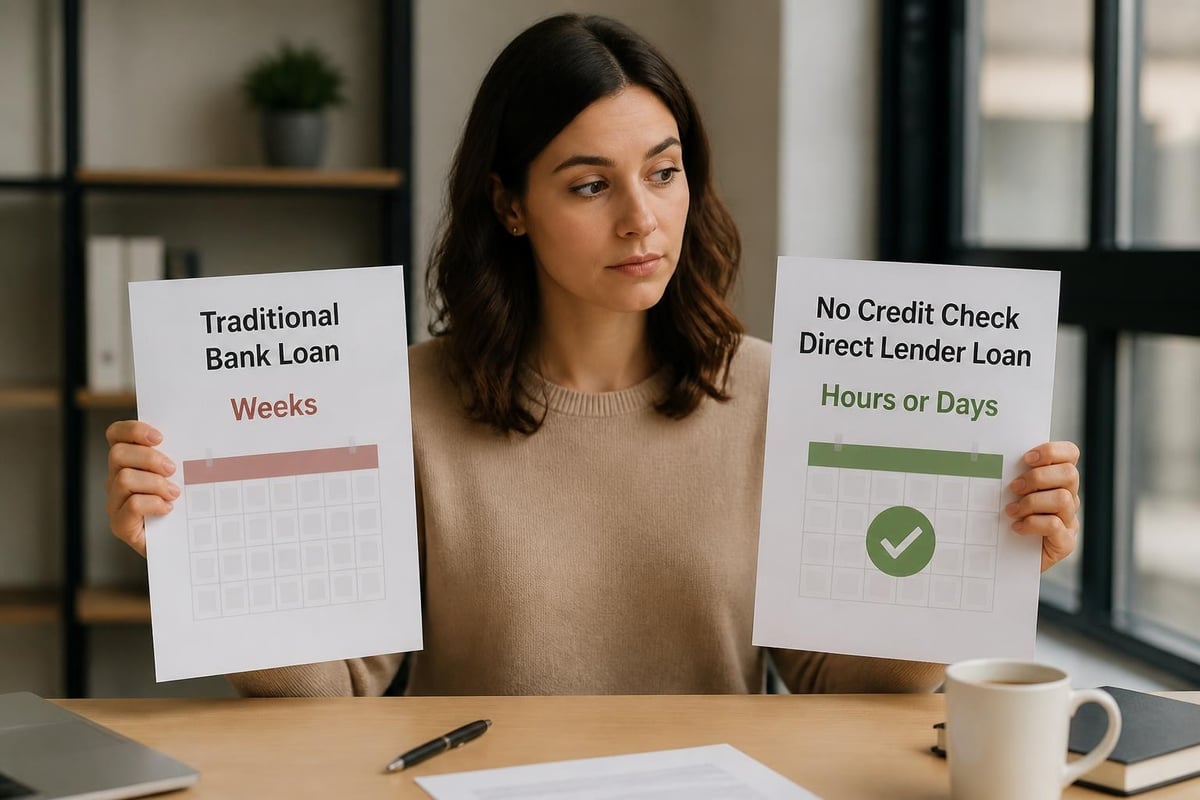
Traditional loan applications require extensive documentation and multiple review stages, often taking days or weeks for decisions. No credit check direct lenders streamline this process significantly. Online applications take minutes to complete, decisions arrive within hours, and approved funds can reach your account by the next business day.
This speed proves crucial during emergencies when timing impacts outcomes. Whether addressing a broken HVAC system in summer heat or covering an unexpected medical deductible, rapid access to funds reduces stress and prevents situations from worsening.
Building Positive Payment History
Successfully repaying a loan demonstrates financial responsibility. While the initial application doesn't involve credit checks, many lenders report payment activity to credit bureaus. Consistent on-time payments can gradually improve your credit profile, creating opportunities for better financing terms in the future.
This pathway serves as a practical credit-building tool when traditional options remain unavailable. Each completed payment adds positive data to your credit history, potentially opening doors that were previously closed.
Important Considerations and Potential Drawbacks
While no credit check loans provide valuable access to funding, understanding potential challenges helps you borrow responsibly and avoid financial pitfalls.
Higher Interest Rates and Fees
Lenders accepting higher risk typically charge elevated interest rates to offset potential losses. A no credit check direct lender faces greater uncertainty about borrower repayment, reflected in loan pricing. Comparing annual percentage rates (APRs) across multiple lenders helps identify competitive offers, though rates will generally exceed those available to borrowers with excellent credit.
Cost factors to evaluate:
- Annual percentage rate (APR) showing total borrowing cost
- Origination fees charged at loan disbursement
- Late payment penalties if you miss due dates
- Prepayment fees for early loan payoff (though many lenders don't charge these)
- Processing or application fees
Loan Amount Limitations
Without credit verification, lenders may cap loan amounts below what traditional banks offer. First-time borrowers especially might qualify for smaller sums until establishing a repayment track record. While this protects both parties from overextension, it means you might need to adjust plans or seek supplemental funding sources for larger projects.
Building a positive relationship with your lender through successful repayment can increase future borrowing capacity. Many institutions raise credit limits or offer larger loans to returning customers who've demonstrated reliability.
Responsible Borrowing Practices
The accessibility of no credit check loans requires disciplined financial management. Before applying, honestly assess your repayment capacity by reviewing monthly income against existing obligations. Borrowing beyond your means creates a cycle of debt that compounds financial struggles rather than resolving them.
Create a detailed budget showing how loan payments fit within your monthly cash flow. Consider unexpected expenses or income fluctuations that might affect payment ability. If projections show tight margins, explore smaller loan amounts or longer repayment terms that reduce individual payment sizes.
Finding Reputable No Credit Check Direct Lenders
Not all lenders operate with equal integrity or customer focus. Identifying trustworthy institutions protects you from predatory practices and ensures fair treatment throughout the loan relationship.
Verification Steps Before Applying
Legitimate lenders maintain transparent operations with clear contact information, physical business addresses, and proper licensing in states where they operate. State banking departments regulate consumer lenders, requiring licenses that demonstrate compliance with lending laws. Verify a no credit check direct lender holds appropriate credentials by checking your state's financial regulatory website.
Research company reputation through customer reviews, Better Business Bureau ratings, and consumer complaint databases. While some negative feedback exists for virtually any business, patterns of unresolved complaints or allegations of deceptive practices signal red flags worth heeding.
| Verification Factor | What to Look For | Where to Check |
|---|---|---|
| State License | Current, valid license number | State banking department website |
| Physical Address | Legitimate business location | Company website, Google Maps |
| Customer Reviews | Overall rating, response to complaints | BBB, Trustpilot, Google Reviews |
| Contact Information | Multiple contact methods | Company website |
| Transparent Terms | Clear disclosure of rates, fees | Loan agreement, website |
Questions to Ask Before Committing
Direct communication with lenders reveals important details about their products and practices. Don't hesitate to ask about total repayment amounts, payment schedules, grace periods, and consequences of missed payments. Understanding the complete financial obligation prevents surprises later.
Inquire about flexibility for financial hardships. Reputable lenders often work with struggling borrowers through payment plans or temporary modifications rather than immediately pursuing aggressive collection actions. This willingness to collaborate during difficulties demonstrates customer-focused values.

Application Process and Documentation Requirements
Applying for a loan without credit checks involves straightforward steps, though gathering necessary documentation beforehand expedites the process.
Typical Application Steps
Most no credit check direct lenders offer online applications accessible 24/7 from any device with internet access. The digital form requests personal information including name, address, Social Security number, date of birth, and contact details. Employment information covers your employer's name, position, hire date, and income.
After submitting the application, lenders verify provided information through various databases and contact methods. You might receive a phone call confirming employment or requesting additional documentation. Once verification completes, the lender presents a loan offer detailing amount, interest rate, fees, and repayment terms.
Documents Commonly Requested
While avoiding credit checks, lenders still require proof of identity, income, and banking information. Government-issued photo identification like a driver's license or passport confirms your identity. Recent pay stubs or bank statements showing regular deposits verify income. A voided check or bank account details facilitate electronic fund transfers for both disbursement and repayment.
Standard documentation includes:
- Valid government-issued ID (driver's license, state ID, passport)
- Proof of income (pay stubs, bank statements, tax returns)
- Bank account information for electronic transfers
- Proof of residence (utility bill, lease agreement)
- Contact information including phone numbers and email
- Employment verification (employer contact information)
Self-employed individuals or those with non-traditional income might need additional documentation like business bank statements or tax returns showing income history. Having these materials ready when applying accelerates the approval process.
Managing Your Loan Successfully
Securing financing represents just the beginning. Successful loan management protects your financial health and builds opportunities for future borrowing.
Setting Up Payment Systems
Automatic payments from your bank account ensure you never miss due dates, avoiding late fees and potential credit reporting of delinquencies. Most lenders offer this option during the application process or through online account management. Schedule withdrawals shortly after paydays when funds are most available.
If your income arrives irregularly, manual payments provide more control over timing. Set calendar reminders several days before due dates, allowing time to transfer funds if necessary. Paying early when possible reduces interest accumulation on some loan structures.
Communication During Financial Difficulties
Unexpected job loss, medical emergencies, or other financial shocks can threaten your ability to make scheduled payments. Contact your no credit check direct lender immediately when facing payment difficulties rather than simply missing due dates. Many institutions offer hardship programs, temporary payment reductions, or schedule adjustments for borrowers experiencing genuine difficulties.
Proactive communication demonstrates good faith and willingness to meet obligations despite challenges. Lenders generally prefer working with cooperative borrowers over pursuing collection actions, making early contact beneficial for both parties.
Planning for Future Financial Needs
As you repay your current loan, consider how this experience informs future borrowing decisions. Track your budget to identify areas where spending reductions might prevent future loan needs. Build emergency savings even if starting with small amounts, creating a buffer against unexpected expenses.
Many borrowers find that successfully repaying a loan from a no credit check direct lender improves their creditworthiness over time. This progress may open access to traditional financing with lower rates and better terms, reducing reliance on alternative lending products for future needs.
Regional Considerations for Southern Borrowers
Residents of Louisiana, Mississippi, Tennessee, and Georgia face unique economic conditions and regulatory environments affecting lending options. Understanding these regional factors helps you navigate the borrowing landscape effectively.
State-Specific Lending Regulations
Each state maintains its own lending laws governing interest rate caps, fee limitations, and licensing requirements. Louisiana, for example, regulates small loan lenders differently than Mississippi, affecting available loan amounts and cost structures. Familiarizing yourself with your state's consumer protection laws ensures you understand your rights and lender obligations.
State banking departments provide resources explaining lending regulations and listing licensed lenders operating legally within state borders. These regulatory bodies also handle consumer complaints when lenders violate established rules.
Local Economic Factors
Southern states experience varying economic conditions affecting employment stability and income levels. Understanding your local job market and economic trends helps you assess loan repayment capacity realistically. Industries dominant in your area, seasonal employment patterns, and regional cost of living all influence financial planning.
Working with lenders familiar with regional conditions can provide advantages. Local or regional institutions understand area-specific challenges and opportunities, potentially offering more relevant product structures or flexible terms reflecting local economic realities.
Making Informed Borrowing Decisions
Choosing to work with a no credit check direct lender requires careful evaluation of your financial situation, needs, and alternatives. This decision shouldn't be made hastily or without understanding all implications.
Assessing True Financial Need
Before applying, determine whether borrowing truly represents the best solution for your situation. Could adjusting spending, negotiating payment plans with creditors, or accessing community assistance programs address your needs without incurring debt? While loans provide immediate access to funds, they create future obligations that impact long-term financial flexibility.
If borrowing proves necessary, calculate the minimum amount required rather than requesting the maximum available. Smaller loans mean lower total costs and faster debt freedom, even if this means scaling back plans slightly.
Comparing Multiple Lenders
Never accept the first loan offer without shopping around. Request quotes from several lenders, comparing APRs, fees, repayment terms, and total costs. Even small rate differences significantly impact total repayment amounts over loan terms. Create a comparison spreadsheet tracking key factors across lenders to identify the most favorable terms.
Pay attention to less obvious factors like customer service quality, online account management tools, payment flexibility, and reputation. The cheapest loan isn't always the best choice if the lender provides poor service or engages in questionable practices.
Understanding Total Cost of Borrowing
Focus on the total amount you'll repay rather than just monthly payment sizes or loan amounts. A $5,000 loan might require repaying $6,500 or more depending on interest rates and term lengths. Calculate this total cost and determine whether the purchase or expense justifies that amount.
This perspective helps prevent borrowing for wants disguised as needs. While financing home repairs or medical care often proves necessary, using loans for discretionary purchases rarely makes financial sense given the additional costs involved.
Finding financing solutions when traditional banks say no doesn't mean accepting unfair terms or predatory practices. Understanding how a no credit check direct lender operates, what to expect, and how to borrow responsibly empowers you to make decisions supporting your financial wellbeing. Whether you're managing an unexpected expense, funding important home improvements, or addressing medical needs, Standard Financial provides flexible lending solutions across Louisiana, Mississippi, Tennessee, and Georgia, working with clients regardless of past credit challenges to find financing that fits their unique circumstances.







No comment yet, add your voice below!