

Louisiana's construction industry continues to expand in 2026, driven by infrastructure investments, industrial projects, and post-storm rebuilding initiatives. Whether you're exploring entry-level positions or seeking to advance in specialized trades, construction jobs in Louisiana offer competitive wages, diverse career paths, and opportunities across every region of the state. This comprehensive guide examines the current job market, salary expectations, required certifications, and practical steps to launch or advance your construction career while managing the financial demands of training and relocation.
Louisiana's Construction Job Market in 2026
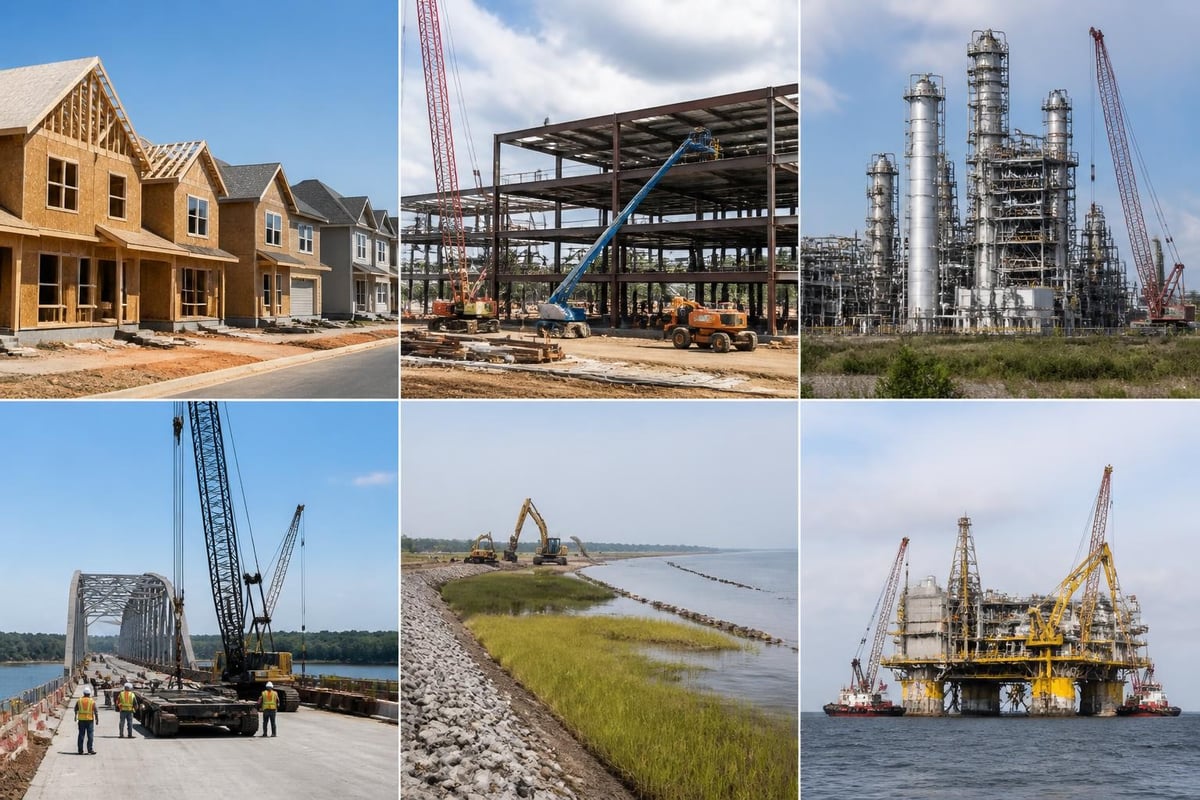
The Pelican State's construction sector employs more than 140,000 workers across residential, commercial, industrial, and infrastructure projects. Major metropolitan areas like Baton Rouge, New Orleans, Shreveport, and Lafayette anchor demand, while coastal restoration projects and petrochemical expansions create specialized opportunities in smaller communities.
According to the Louisiana Workforce Development Report, construction occupations rank among the fastest-growing job categories statewide, with projections indicating sustained demand through 2030. The state's strategic location along the Mississippi River and Gulf Coast positions it as a hub for energy, manufacturing, and logistics infrastructure.
High-Demand Construction Roles
Construction jobs in Louisiana span dozens of specializations, each with distinct skill requirements and earning potential:
- Heavy equipment operators command premium wages operating cranes, bulldozers, and excavators on large-scale projects
- Electricians remain in high demand for both new construction and maintenance work across industrial complexes
- Welders find opportunities in fabrication shops, petrochemical plants, and pipeline projects
- HVAC technicians benefit from Louisiana's climate, which creates year-round demand for installation and repair services
- Concrete finishers and carpenters support the foundation of residential and commercial development
- Project managers and estimators transition from field roles into higher-paying administrative positions
The diversity of construction jobs in Louisiana allows workers to build careers matching their physical abilities, technical interests, and long-term goals.
Salary Expectations Across Construction Trades
Compensation varies significantly based on experience, certification level, and project type. Entry-level laborers typically earn between $14 and $18 per hour, while journeyman tradespeople command $25 to $40 per hour. Specialized roles and supervisory positions can exceed $60,000 annually.
| Position | Entry-Level Hourly | Experienced Hourly | Annual Salary Range |
|---|---|---|---|
| Construction Laborer | $14-16 | $18-22 | $29,000-$46,000 |
| Carpenter | $16-19 | $24-32 | $33,000-$67,000 |
| Electrician | $18-22 | $28-38 | $37,000-$79,000 |
| Plumber | $17-21 | $26-36 | $35,000-$75,000 |
| Heavy Equipment Operator | $19-24 | $30-42 | $40,000-$87,000 |
| Welder | $18-22 | $27-40 | $37,000-$83,000 |
| Project Manager | N/A | $35-55 | $73,000-$114,000 |
Overtime opportunities significantly boost take-home pay, particularly during peak construction seasons from March through November. Many construction jobs in Louisiana include benefits packages covering health insurance, retirement contributions, and tool allowances.
Geographic Pay Variations
Metropolitan statistical areas generally offer higher base wages but also higher living costs. Baton Rouge and New Orleans construction markets typically pay 8-15% above state averages, while specialized industrial work in Lake Charles and Geismar can command even higher premiums. Rural areas may offer lower hourly rates but often provide housing allowances or per diem payments for traveling workers.
Training and Certification Requirements
Most construction jobs in Louisiana require some combination of formal training, on-the-job experience, and professional certification. The pathway you choose depends on your current skill level, financial resources, and career timeline.
Apprenticeship Programs
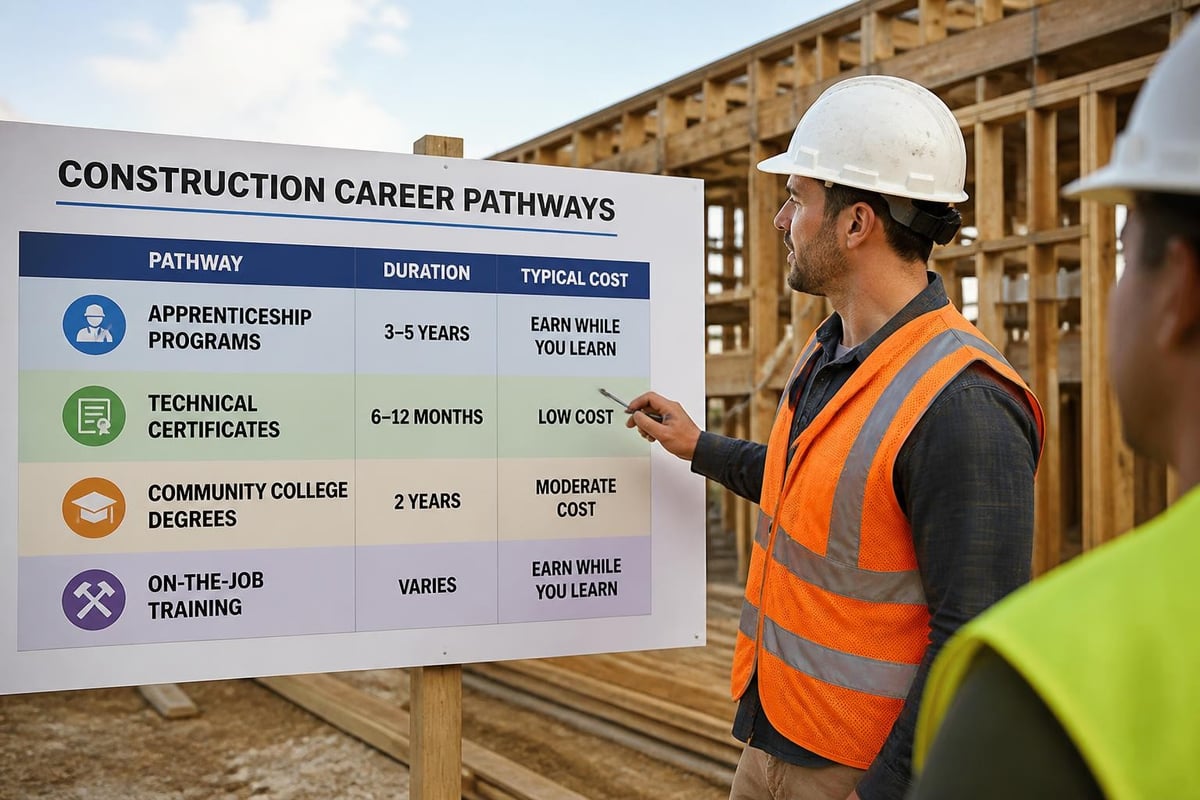
Registered apprenticeships combine classroom instruction with paid on-the-job training, allowing you to earn while you learn. The Louisiana Department of Education maintains a comprehensive list of BESE-approved programs covering electrical work, plumbing, carpentry, and other trades.
Most apprenticeships require:
- High school diploma or equivalent
- Valid driver's license
- Drug screening and background check
- Physical ability to perform trade-specific tasks
- Commitment to 3-5 years of combined training
Apprentices typically start at 50-60% of journeyman wages and receive incremental raises as they complete training milestones. This structure makes apprenticeships financially accessible compared to traditional education models.
Technical Schools and Community Colleges
Louisiana's technical college system offers accelerated certificate programs in welding, HVAC, electrical technology, and heavy equipment operation. Programs range from 6 months to 2 years and cost between $3,000 and $12,000 depending on the institution and program length.
Fletcher Technical Community College, Nunez Community College, and Capital Area Technical College maintain strong industry partnerships that facilitate job placement after graduation. Many employers reimburse tuition costs or offer hiring bonuses for graduates with specific credentials.
Industry Certifications
Professional credentials verify your skills to potential employers and often translate directly into higher pay. NCCER credentials are widely recognized across construction jobs in Louisiana, particularly for core curriculum completion and craft-specific certifications.
Additional valuable certifications include:
- OSHA 10 and OSHA 30 safety training
- National Center for Construction Education and Research (NCCER) craft certifications
- American Welding Society (AWS) welder certification
- EPA Section 608 certification for HVAC technicians
- Commercial Driver's License (CDL) for equipment operators
- Louisiana State Licensing Board credentials for electricians and plumbers
Certification costs typically range from $100 to $1,500 depending on the credential and required testing.
Overcoming Workforce Challenges
Despite strong demand, the construction industry faces persistent workforce challenges that create both obstacles and opportunities for job seekers. National workforce shortages continue to delay projects, which increases competition for qualified workers and drives up compensation.
Addressing the Skills Gap
Many employers struggle to find candidates with both technical competence and soft skills like reliability, communication, and problem-solving. Demonstrating consistent attendance, willingness to learn, and professional demeanor can differentiate you in a competitive market.
Pre-apprenticeship programs like those offered through the Urban League of Louisiana provide foundational skills and work-readiness training that prepare candidates for formal apprenticeships. These programs often include support services like transportation assistance and interview coaching.
Physical Demands and Safety
Construction work requires physical stamina, tolerance for outdoor conditions, and adherence to safety protocols. Louisiana's heat and humidity create additional challenges during summer months. Successful construction workers invest in appropriate gear, maintain physical fitness, and prioritize safety practices that prevent injuries.
The industry has made significant progress reducing injury rates through improved training and equipment. However, construction jobs in Louisiana still carry higher injury risk than office-based occupations, making comprehensive health insurance and disability coverage essential considerations.
Finding and Securing Construction Employment
The job search process for construction positions differs from traditional white-collar hiring. Many opportunities are never formally advertised, and personal networks often drive hiring decisions.
Effective Job Search Strategies
- Visit project sites directly and ask superintendents about openings or upcoming needs
- Register with specialized staffing agencies that place construction workers
- Attend career fairs hosted by technical colleges and workforce development organizations
- Join trade associations that provide networking and job board access
- Monitor LED project announcements through Louisiana Economic Development reports to identify future opportunities
Union halls maintain out-of-work lists and dispatch systems that match members to projects. Non-union workers should develop relationships with multiple contractors to maintain steady employment between projects.
Application and Interview Preparation
Construction employers prioritize demonstrated skills over polished resumes. Prepare to:
- Provide detailed work history including specific projects, supervisors, and skills used
- Present certifications, licenses, and training documentation
- Pass drug screening and background checks
- Demonstrate tool ownership for certain trades
- Discuss availability for overtime, travel, and varying shift schedules
Many construction jobs in Louisiana require transportation to job sites that lack public transit access. Reliable personal transportation often serves as an informal hiring requirement.

Financial Considerations for Construction Workers
Construction careers offer strong earning potential but also create unique financial challenges. Irregular work schedules, seasonal slowdowns, and project-based employment can complicate budgeting and financial planning.
Managing Training Costs
Education and certification expenses represent significant investments in your career. A comprehensive welding program might cost $8,000, while electrician apprenticeship tools and supplies can exceed $3,000. Personal loans for education and training allow you to begin earning sooner rather than delaying career advancement while saving incrementally.
Many construction workers finance:
- Tuition and fees for technical programs or certification courses
- Professional tools required for trade-specific work
- Transportation including vehicle down payments or repairs
- Relocation costs when pursuing opportunities in different regions
- Living expenses during training periods with reduced income
| Expense Category | Typical Cost Range | Financing Options |
|---|---|---|
| Technical school tuition | $3,000-$12,000 | Personal loans, federal aid, workforce grants |
| Apprenticeship tools | $1,500-$5,000 | Personal loans, employer reimbursement |
| Professional certifications | $100-$1,500 | Personal loans, employer sponsorship |
| Vehicle down payment | $2,000-$5,000 | Auto loans, personal loans |
| Relocation expenses | $1,000-$3,000 | Personal loans, employer advances |
Building Financial Stability
Successful construction workers develop strategies to manage income variability:
- Maintain emergency funds covering 2-3 months of expenses
- Diversify skills to access multiple job types during slow periods
- Budget based on conservative income estimates
- Maximize retirement contributions during high-earning periods
- Secure comprehensive health insurance to protect against medical debt
Construction jobs in Louisiana provide solid middle-class incomes, but financial discipline ensures long-term stability despite industry cyclicality.
Career Advancement Opportunities
The construction industry rewards skill development, reliability, and leadership potential. Most successful construction professionals begin in labor positions and advance through progressive responsibility.
Typical Career Progression
Entry-level workers who demonstrate competence and initiative often advance to:
Helper → Apprentice → Journeyman → Lead/Foreman → Superintendent → Project Manager
This progression typically spans 8-15 years and can increase earning potential by 200-300%. Supervisory roles emphasize planning, communication, and problem-solving over physical labor, extending career longevity.
Specialization and Diversification
Many construction professionals develop expertise in niche areas that command premium compensation:
- Industrial maintenance welding for petrochemical facilities
- Historic restoration carpentry in New Orleans' French Quarter
- Marine construction along Louisiana's extensive coastline
- Underground utility installation for municipal infrastructure
- Commercial refrigeration systems serving food processing and cold storage
Specialized construction jobs in Louisiana often provide steadier employment and reduced seasonality compared to general residential work.
Entrepreneurship Opportunities
Experienced tradespeople frequently establish contracting businesses, leveraging technical skills into business ownership. Louisiana's relatively straightforward licensing requirements and robust construction market support small contractors serving residential and light commercial sectors.
Business ownership requires additional capital for licensing, insurance, bonding, equipment, and working capital. However, successful contractors can achieve six-figure incomes while controlling their schedules and project selection.
Regional Construction Markets Across Louisiana
Understanding regional variations helps target your job search and relocation decisions. Each Louisiana market offers distinct opportunities, challenges, and specializations.
Southeast Louisiana (New Orleans Metro)
The New Orleans region leads the state in construction employment, driven by commercial development, tourism infrastructure, coastal restoration, and ongoing recovery projects. The area's unique architecture supports specialized trades including masonry, ironwork, and historic preservation.
Competition for positions runs higher than in other regions, but wage premiums and project diversity attract workers statewide. Flood risk and insurance costs represent significant considerations for workers relocating to southeast Louisiana.
Capital Region (Baton Rouge)
Baton Rouge's petrochemical corridor creates sustained demand for industrial construction and maintenance workers. Turnaround season (planned facility shutdowns for maintenance) generates intense short-term demand for welders, pipefitters, and laborers willing to work extended hours.
The area offers strong employment stability with major employers including ExxonMobil, BASF, and Shell maintaining permanent facilities requiring ongoing construction support.
Southwest Louisiana (Lake Charles)
Lake Charles experienced tremendous construction growth following 2020 hurricane damage and continues to rebuild while pursuing industrial expansion. The region faces persistent workforce shortages, creating opportunities for workers willing to relocate or travel.
Construction jobs in Louisiana's southwest corner often include per diem allowances and housing assistance to attract out-of-area workers. The market emphasizes heavy industrial construction and storm-resistant building techniques.
North Louisiana (Shreveport-Bossier)
North Louisiana's construction market focuses on commercial development, healthcare facilities, and infrastructure maintenance. The region offers lower living costs than southern Louisiana, allowing construction wages to provide greater purchasing power.
Regional specializations include medical facility construction, gaming and entertainment infrastructure, and military installation support at Barksheier Air Force Base.
Navigating Licensing and Regulatory Requirements
Louisiana maintains specific licensing requirements for certain construction trades. Understanding these regulations prevents legal complications and ensures you can work on all project types.
State Licensing Boards
The Louisiana State Licensing Board for Contractors regulates:
- Residential building contractors (projects under $75,000)
- Commercial contractors (projects exceeding $75,000)
- Specialty contractors in electrical, plumbing, HVAC, and other trades
Each license category requires combinations of:
- Documented work experience (typically 2-4 years)
- Passing scores on trade and business law examinations
- Financial solvency verification
- Insurance and bonding coverage
- Annual renewal and continuing education
Individual tradespeople working under licensed contractors generally don't require personal licenses, though many pursue credentials to increase employability and prepare for eventual independence.
Municipal Requirements
Local jurisdictions may impose additional permitting, inspection, and contractor registration requirements beyond state regulations. New Orleans, Baton Rouge, and other municipalities maintain separate registration systems that contractors must navigate.
Workers should verify that employers maintain appropriate licenses and insurance coverage, as unlicensed operations can result in project shutdowns, unpaid wages, and legal liability.
Industry Trends Shaping Future Opportunities
Several emerging trends will influence construction jobs in Louisiana throughout the remainder of this decade and beyond.
Technology Integration
Construction increasingly incorporates technology including:
- Building Information Modeling (BIM) for project planning and coordination
- Drones for site surveying and progress monitoring
- GPS-guided equipment reducing manual grading and layout work
- Prefabrication reducing field labor while increasing factory production
- Project management software streamlining scheduling and communication
Workers who develop digital literacy alongside traditional trade skills position themselves for advancement and higher compensation.
Sustainability and Energy Efficiency
Louisiana's construction industry increasingly emphasizes energy efficiency, sustainable materials, and resilience against storm damage and flooding. Green building certifications like LEED create demand for workers trained in specialized techniques and materials.
Solar installation, energy-efficient HVAC systems, and stormwater management represent growing specializations within construction jobs in Louisiana.
Infrastructure Investment
Federal infrastructure legislation and state bond programs fund bridge replacement, road improvement, water system upgrades, and coastal protection projects. These initiatives create sustained demand for heavy civil construction workers including equipment operators, laborers, and concrete specialists.
Public sector projects typically require certified payroll compliance, ensuring workers receive prevailing wages that often exceed private sector rates.
Construction jobs in Louisiana provide accessible entry points into middle-class careers with clear advancement pathways and strong earning potential across every region of the state. Whether you're beginning an apprenticeship, upgrading certifications, or relocating for better opportunities, managing the upfront costs of career development requires strategic financial planning. Standard Financial understands the unique needs of construction workers and offers flexible personal loan options for training, tools, transportation, and other career-related expenses, even for clients rebuilding their credit. Take the next step in your construction career with financing that works around your schedule and budget.







No comment yet, add your voice below!