

A credit score of 550 places you in the "very poor" credit range, which presents significant challenges when seeking financing. However, a loan 550 credit score situation is not an impossible barrier. Understanding what this score means, which lenders work with borrowers in your position, and how to strategically improve your credit can open doors to the financing you need while setting you on a path toward better financial health. In 2026's lending environment, specialized lenders and flexible programs make it possible to secure funding even with credit challenges, though you'll need to approach the process with realistic expectations and informed strategy.
What a 550 Credit Score Really Means
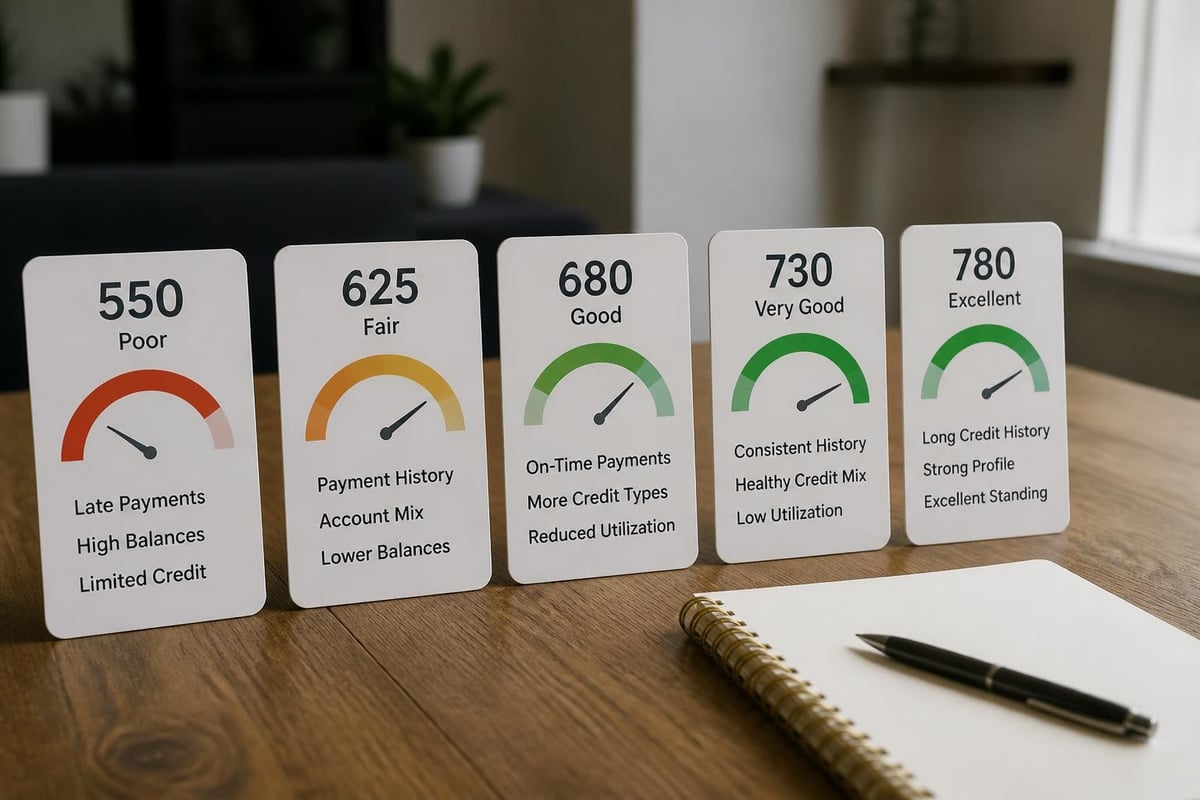
A 550 credit score falls well below the national average of approximately 715 and places you in the bottom tier of credit score ranges defined by FICO. This score signals to lenders that past credit behavior includes significant negative marks such as late payments, collections, charge-offs, or potentially even bankruptcy.
How Lenders View Your Score
When you apply for a loan 550 credit score lenders immediately classify you as a high-risk borrower. This designation affects every aspect of the lending decision:
- Approval odds decrease significantly across traditional banks and credit unions
- Interest rates increase substantially, often reaching maximum allowable rates
- Loan amounts may be capped at lower limits regardless of income
- Additional requirements emerge, such as collateral, co-signers, or higher down payments
- Shorter repayment terms become more common to reduce lender exposure
According to the Federal Trade Commission’s guidance on credit scores, lenders use your score to predict the likelihood you'll repay borrowed money. A 550 score suggests roughly a 50% or higher probability of serious delinquency within the next two years, making traditional approval difficult.

Common Causes Behind a 550 Score
Understanding what created your current situation helps you avoid repeating past mistakes:
- Multiple late payments (30, 60, or 90+ days past due)
- Accounts sent to collections for unpaid debts
- Charge-offs where creditors wrote off your debt as uncollectible
- High credit utilization using most or all of your available credit
- Recent bankruptcy (Chapter 7 or Chapter 13)
- Foreclosure or repossession on previous loans
- Limited credit history combined with a few negative items
Each of these factors remains on your credit report for different durations, with most negative items persisting for seven years and bankruptcies for up to ten years.
Loan Options Available With a 550 Credit Score
Despite the challenges, several legitimate loan 550 credit score options exist in 2026. The key is understanding which products you qualify for and their respective trade-offs.
Personal Loans for Bad Credit
Personal loans represent one of the most flexible options for borrowers with a 550 score. These unsecured loans typically range from $1,000 to $10,000 for borrowers in your credit tier, though amounts vary by lender and income verification.
Key characteristics of personal loans at this credit level:
- Interest rates typically range from 25% to 36% APR
- Loan terms usually span 12 to 60 months
- Monthly payments remain fixed throughout the term
- No collateral required, though rates reflect the higher risk
- Origination fees often apply (1% to 8% of loan amount)
Experian notes that borrowers with 550 scores should focus on lenders specializing in bad credit lending rather than traditional banks, which rarely approve applications below 600.
Secured Loans and Credit Builder Products
Secured loans require collateral, which dramatically improves your approval odds for a loan 550 credit score situation. By pledging an asset, you reduce the lender's risk and often receive better terms.
| Loan Type | Collateral Required | Typical APR Range | Loan Amount | Term Length |
|---|---|---|---|---|
| Auto Title Loan | Vehicle title | 25% – 36%+ | Up to 50% of car value | 12-36 months |
| Secured Personal Loan | Savings account or CD | 18% – 28% | Up to collateral value | 12-60 months |
| Passbook Loan | Bank savings | 3% – 8% above savings rate | Up to account balance | 12-36 months |
| Credit Builder Loan | None (funds held) | 6% – 16% | $300 – $3,000 | 6-24 months |
Credit builder loans work differently: the lender holds your borrowed amount in a secured account while you make payments. Once you've paid in full, you receive the funds plus any interest earned, and you've established positive payment history.
Auto Loans for Deep Subprime Borrowers
Vehicle financing remains accessible even with a 550 score, though you'll face higher costs and stricter terms. The Consumer Financial Protection Bureau’s analysis of auto loan borrower risk profiles shows that deep subprime borrowers (scores below 580) still access financing, primarily through specialized lenders and dealer networks.
What to expect with auto financing:
- Interest rates often exceed 20% APR for used vehicles
- Down payment requirements typically start at 10-20%
- Loan-to-value ratios may be capped at 100-110%
- GPS tracking devices increasingly common on financed vehicles
- Co-signer requirements frequent for amounts above $15,000
The CFPB warns about “buy here, pay here” dealerships that advertise "no credit check" financing. While these dealers may approve your application, they often charge excessive rates, include unfavorable terms, and may not report payments to credit bureaus (eliminating the credit-building benefit).

Mortgage Possibilities With FHA Loans
Homeownership may seem out of reach with a 550 credit score, but FHA loans offer a potential path. According to HUD’s Single Family Housing Policy Handbook, the FHA technically allows credit scores as low as 500, though with significant restrictions.
FHA loan requirements by credit score tier:
| Credit Score | Minimum Down Payment | Additional Requirements |
|---|---|---|
| 580 and above | 3.5% | Standard documentation |
| 500-579 | 10% | Manual underwriting, compensating factors required |
| Below 500 | Not eligible | Must rebuild credit first |
At 550, you fall into the middle tier requiring 10% down and manual underwriting. The latest FHA origination trends show that only 3-5% of FHA loans go to borrowers below 580, indicating that while possible, approval requires exceptional compensating factors such as substantial income, minimal debt, or significant cash reserves.
Strategies to Improve Loan Terms at 550
Even if you need financing immediately, taking strategic steps can improve the terms you receive on a loan 550 credit score application.
Consider a Co-Signer or Co-Borrower
Adding someone with strong credit to your application transforms lender perception entirely. A co-signer with a 700+ score can:
- Unlock approval at lenders who would otherwise decline your solo application
- Reduce interest rates by 5-10 percentage points or more
- Increase maximum loan amounts available to you
- Eliminate or reduce down payment requirements
- Remove needs for collateral on some loan types
Critical co-signer considerations: Your co-signer becomes equally responsible for the debt. Any missed payment damages both credit reports, and the relationship can suffer if financial problems emerge. Choose co-signers wisely and treat the obligation with utmost seriousness.
Offer Collateral When Possible
Converting an unsecured loan request into a secured loan dramatically changes lender risk calculations. Consider what assets you can pledge:
- Vehicles – even older cars with clear titles
- Savings accounts or certificates of deposit
- Valuable personal property (jewelry, electronics, tools)
- Real estate equity if you own property
- Retirement accounts through specialized loan programs (use cautiously)
The value and liquidity of your collateral directly impacts available loan amounts and rates. A newer vehicle worth $15,000 as collateral will secure better terms than miscellaneous personal items worth the same amount.
Demonstrate Income Stability and Capacity
When your credit score can't speak positively for you, let your income tell the story. Lenders evaluating a loan 550 credit score application place heavy weight on:
- Employment tenure: Two years with the same employer signals stability
- Income documentation: Provide pay stubs, tax returns, and bank statements proactively
- Debt-to-income ratio: Keep total debt payments below 43% of gross monthly income
- Rental history: Twelve consecutive months of on-time rent payments
- Cash reserves: Showing 3-6 months of expenses in savings demonstrates financial cushion
Some lenders use alternative data points including utility payment history, rent reporting services, and income verification beyond traditional employment. Ask potential lenders what documentation strengthens your specific application.
Building Credit While Managing Current Needs
Securing a loan 550 credit score today should be part of a larger strategy to improve your credit position for tomorrow.
How Installment Loans Build Credit
Every loan you successfully repay creates positive credit history. Installment loans (fixed monthly payments over set terms) offer particularly strong credit-building potential:
- Payment history comprises 35% of your FICO score
- Credit mix accounts for 10% (installment loans diversify credit types)
- Account age contributes to 15% (longer histories help)
- Amounts owed make up 30% (paying down balances improves utilization)
Make every payment on or before the due date, as even one 30-day late payment can drop a 550 score by an additional 60-80 points. Set up automatic payments to eliminate the risk of forgetfulness.
Complementary Credit Rebuilding Steps
While managing your loan 550 credit score borrowing, simultaneously work on these credit improvement tactics:
Immediate actions (0-3 months):
- Dispute any errors on your credit reports with all three bureaus
- Become an authorized user on a family member's excellent-standing card
- Pay down credit card balances below 30% of limits (ideally below 10%)
- Stop applying for new credit to avoid additional hard inquiries
Short-term strategies (3-12 months):
- Open a secured credit card and use it for small recurring charges
- Set up automatic payments for all existing obligations
- Contact creditors about goodwill adjustments for past late payments
- Consider debt consolidation if managing multiple high-rate debts
Long-term rebuilding (12+ months):
- Establish diverse credit types (credit card, installment loan, retail account)
- Maintain accounts in good standing as they age
- Keep credit utilization consistently low across all revolving accounts
- Build emergency savings to avoid future credit dependence
Understanding the Real Cost of High-Interest Borrowing
Interest rates on loan 550 credit score products significantly increase total borrowing costs. Understanding these numbers helps you make informed decisions and prioritize repayment.
Example cost comparison for a $5,000 personal loan:
| APR | Monthly Payment (36 months) | Total Interest Paid | Total Repaid |
|---|---|---|---|
| 10% | $161 | $810 | $5,810 |
| 20% | $186 | $1,689 | $6,689 |
| 30% | $212 | $2,646 | $7,646 |
| 36% | $228 | $3,224 | $8,224 |
At 36% APR, you pay nearly $1.65 for every dollar borrowed. This reality makes paying down high-rate debt your top financial priority after covering essential living expenses. Even small additional payments toward principal dramatically reduce total interest costs and shorten repayment timelines.
Avoiding Predatory Lending Traps
Desperation for financing makes borrowers with a 550 score vulnerable to predatory lenders. Research from the Brookings Institution on credit scoring and access shows how credit-challenged consumers disproportionately encounter harmful lending practices.
Red Flags to Watch For
Protect yourself by recognizing these warning signs:
- Guaranteed approval claims – legitimate lenders always review applications
- Pressure to decide immediately – reputable lenders allow time for consideration
- Requests for upfront fees before approval or funding
- Vague or missing APR disclosure – federal law requires clear rate disclosure
- Balloon payment structures with large final payments
- Mandatory arbitration clauses that eliminate your right to sue
- Auto-renewal provisions that roll loans over at additional cost
Payday loans deserve special caution. While legally operating in many states, these short-term loans typically carry effective APRs exceeding 400% and create debt cycles where borrowers take new loans to pay previous ones. The Federal Reserve’s 2026 Financial Stability Report notes continued concerns about high-cost small-dollar lending's impact on vulnerable households.
Legitimate Alternatives to High-Cost Borrowing
Before accepting unfavorable loan 550 credit score terms, explore these options:
- Credit union loans – Many credit unions offer payday alternative loans (PALs) with capped APRs
- Employer advances – Some employers provide paycheck advances without interest
- Community assistance programs – Local nonprofits may offer emergency grants or low-cost loans
- Payment plans – Negotiate directly with medical providers, utilities, or other creditors
- Family loans – If relationships allow, family members may offer better terms with formal agreements
Each alternative carries its own considerations, but all typically provide more favorable terms than predatory lenders targeting credit-challenged borrowers.
Regional Lending Considerations in the South
Borrowers in Louisiana, Mississippi, Tennessee, and Georgia face unique lending landscapes shaped by state regulations and regional economic conditions.
State-by-State Lending Regulations
Different states impose varying restrictions on interest rates, fees, and lending practices:
Louisiana: Caps small loan rates at 36% APR for amounts under $3,500, offering stronger consumer protections than many states.
Mississippi: Allows higher rates on small loans, with fewer caps on consumer lending, making careful lender selection critical.
Tennessee: Regulates installment lenders separately from payday lenders, with varying rate caps by loan size and type.
Georgia: Prohibits traditional payday lending but allows title loans, creating a market focused on secured products.
Understanding your state's specific protections helps you evaluate whether loan offers comply with legal requirements and represent fair market terms.
Local Lender Advantages
Working with regional lenders who maintain physical branch locations offers several benefits for loan 550 credit score borrowers:
- Face-to-face consultations to discuss your specific situation
- Relationship-based underwriting that considers factors beyond credit scores
- Local economic knowledge that informs flexible approval decisions
- Ongoing support throughout the loan term and beyond
- Community reputation that incentivizes fair treatment
- Accessibility for questions, payment adjustments, or refinancing discussions
Branch-based lenders also typically offer broader product ranges than online-only competitors, allowing you to establish relationships that grow with your improving credit profile.
Managing Your Loan Successfully
Once approved for a loan 550 credit score, your focus shifts to successful management that protects your finances and builds credit.
Payment Strategies That Work
Successful loan management starts with reliable payment systems:
Set up automatic payments from your checking account for at least the minimum due. Schedule them for 2-3 days after your regular payday to ensure funds availability.
Create a dedicated loan payment account separate from daily spending money. Transfer each paycheck's loan portion immediately to reduce temptation to spend those funds elsewhere.
Pay more than the minimum whenever possible. Even $25-50 extra monthly reduces principal faster, saves significant interest, and shortens your repayment timeline.
Align payment dates with your income schedule. If you're paid bi-weekly, ask about bi-weekly payment options that reduce interest accrual.
When Financial Difficulties Arise
Life happens. Job loss, medical emergencies, or unexpected expenses can threaten your ability to make payments. Contact your lender immediately when you anticipate payment difficulty.
Many lenders offer hardship programs including:
- Temporary payment reduction or deferment
- Extended repayment terms to lower monthly amounts
- Skipped payment options (interest typically still accrues)
- Refinancing into more manageable terms
Proactive communication prevents default, protects your credit from additional damage, and often results in workable solutions. Ignoring the problem guarantees worse outcomes including late fees, accelerated default, collections activity, and potential legal action.
Successfully navigating a loan 550 credit score situation requires understanding your realistic options, choosing lenders carefully, and treating approved financing as both a solution and an opportunity to rebuild credit. While the journey from poor credit to good credit takes time and discipline, every on-time payment moves you closer to better terms and expanded financial opportunities. Standard Financial specializes in helping borrowers throughout Louisiana, Mississippi, Tennessee, and Georgia access flexible financing solutions even with past credit challenges, offering personalized guidance and loan products designed for rebuilding while meeting today's financial needs. Reach out to discuss how our experience with credit-challenged borrowers can help you secure funding and start your credit improvement journey.





No comment yet, add your voice below!