

Building financial security starts with one fundamental question: how big should an emergency fund be? For families across Louisiana, Mississippi, Tennessee, and Georgia, establishing this safety net can mean the difference between weathering a financial storm and falling into debt. An emergency fund serves as your first line of defense against unexpected expenses, from medical bills to car repairs to sudden job loss. Understanding the right size for your personal situation requires examining your income stability, monthly expenses, and unique risk factors. This comprehensive guide will help you determine the optimal emergency fund size and create a realistic plan to reach your savings goal.
Understanding Emergency Fund Basics
An emergency fund represents liquid savings set aside specifically for unexpected financial needs. Unlike investments or retirement accounts, this money must remain easily accessible when crisis strikes.
The traditional advice suggests saving three to six months of expenses, but this one-size-fits-all approach doesn't account for individual circumstances. Your ideal emergency fund size depends on factors including job security, income variability, health status, and family size.
Key characteristics of effective emergency funds include:
- Immediate accessibility without penalties
- Separation from everyday checking accounts
- Protection from market volatility
- Dedicated exclusively for true emergencies
Research from the Federal Reserve’s Survey of Household Economics and Decisionmaking reveals that nearly 40 percent of Americans would struggle to cover a $400 emergency expense using cash or savings. This statistic underscores why understanding how big should an emergency fund be matters for your financial wellness.

Calculating Your Target Emergency Fund Size
Determining how big should an emergency fund be starts with understanding your essential monthly expenses. These represent non-negotiable costs you must cover regardless of income changes.
Essential Expenses to Include
Your calculation should encompass all necessary living costs. Housing payments (rent or mortgage), utilities, groceries, insurance premiums, minimum debt payments, transportation, and basic healthcare all qualify as essential expenses.
Exclude discretionary spending like entertainment subscriptions, dining out, hobby expenses, and luxury purchases. During a genuine emergency, you would eliminate these costs first.
The Three to Six Month Standard
The Consumer Financial Protection Bureau recommends starting with this baseline range, but your personal target should reflect your employment situation and household complexity.
| Employment Type | Recommended Months | Reasoning |
|---|---|---|
| Dual stable income | 3-4 months | Two income sources provide built-in redundancy |
| Single income household | 4-6 months | Loss of sole income creates immediate crisis |
| Self-employed/commission | 6-12 months | Income volatility requires larger buffer |
| Seasonal work | 6-9 months | Predictable income gaps demand higher savings |
For example, if your essential monthly expenses total $3,200, and you work in a stable dual-income household, your target emergency fund would range from $9,600 to $12,800. A self-employed consultant with the same expenses should aim for $19,200 to $38,400.
Adjusting for Personal Risk Factors
Beyond employment type, several factors should influence how big should an emergency fund be for your situation.
Increase your target if you:
- Own a home requiring maintenance and repairs
- Have older vehicles needing frequent service
- Face chronic health conditions with ongoing costs
- Support dependents or aging parents
- Work in volatile industries prone to layoffs
- Live in areas with higher natural disaster risk
You might maintain a smaller fund if you:
- Rent with landlord-covered maintenance
- Have comprehensive insurance coverage
- Enjoy excellent job security with strong demand
- Have access to zero-interest credit options
- Can rely on family financial support
Where to Keep Your Emergency Fund
Choosing the right location for your emergency savings balances accessibility with modest growth. According to Fidelity’s guidance, the primary criteria include liquidity, safety, and separation from daily spending.
High-Yield Savings Accounts
These accounts offer the ideal combination for most savers. You earn competitive interest rates while maintaining immediate access to funds without penalties or market risk.
Current high-yield savings accounts typically offer 4-5 percent annual percentage yields, substantially more than traditional savings accounts paying 0.01-0.10 percent. On a $10,000 emergency fund, this difference means earning $400-$500 annually versus just $1-$10.
Money Market Accounts
Money market accounts function similarly to high-yield savings but may require higher minimum balances. They often include check-writing privileges, though you should avoid using your emergency fund for routine expenses.
What to Avoid
Do not keep emergency funds in:
- Stock market investments subject to volatility
- Retirement accounts with withdrawal penalties
- Certificates of deposit with early withdrawal fees
- Checking accounts used for daily transactions
- Long-term bonds or illiquid assets
The cost of accessing frozen funds during emergencies far outweighs potential returns. Keep emergency savings separate and immediately available.

Building Your Emergency Fund Step by Step
Understanding how big should an emergency fund be matters little without a realistic plan to reach that target. Most households cannot immediately save three to six months of expenses, making a phased approach essential.
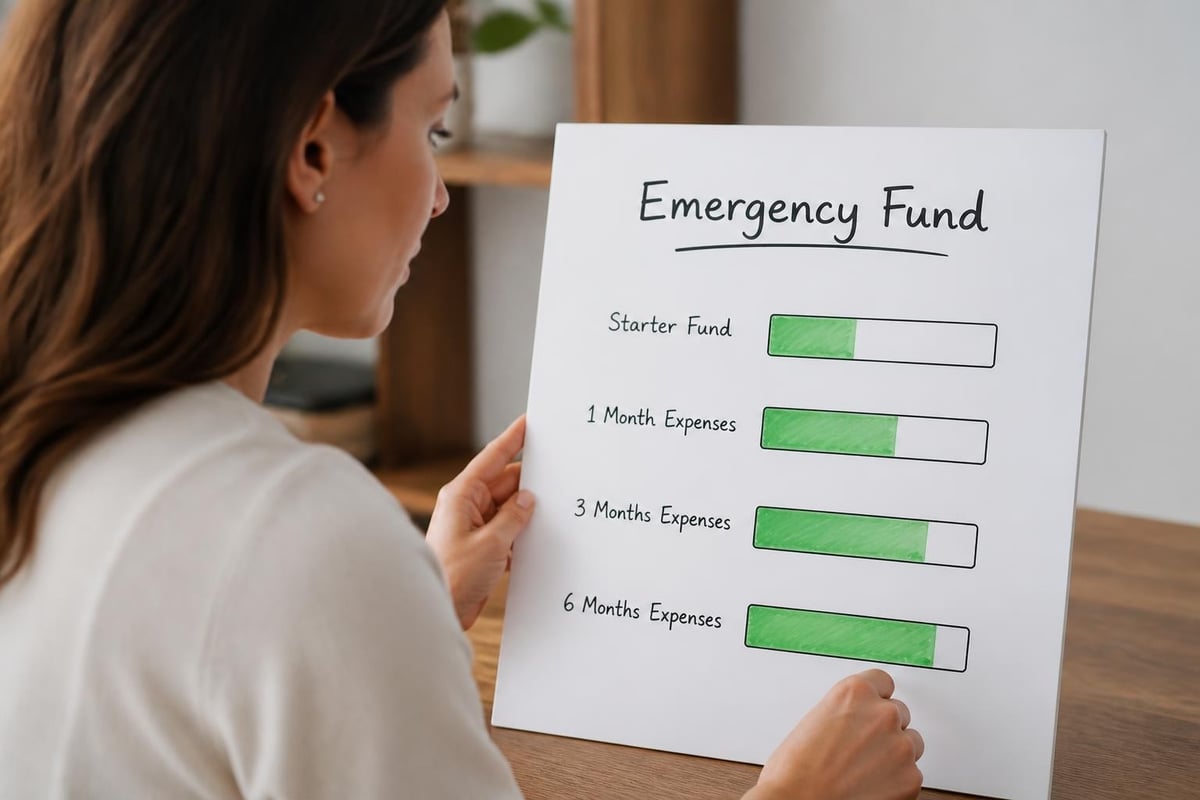
Start with a Starter Fund
Financial experts recommend initially targeting $1,000 to $2,000 as your first milestone. This starter emergency fund covers many common unexpected expenses like minor car repairs, urgent home fixes, or small medical bills.
Achieving this initial goal builds momentum and confidence while providing immediate protection against the most frequent financial disruptions.
Automate Your Savings
The most successful savers treat emergency fund contributions like non-negotiable bills. Setting up automatic transfers from checking to savings on payday removes willpower from the equation.
- Calculate your monthly savings capacity based on income and expenses
- Schedule automatic transfers immediately after payday
- Start with a manageable amount, even if just $50-$100 monthly
- Increase contributions whenever you receive raises or eliminate debts
- Redirect windfalls like tax refunds or bonuses directly to savings
Boost Your Fund with Extra Income
Accelerate your progress by channeling additional earnings toward your emergency fund goal.
Consider these income-boosting strategies:
- Sell unused items around your home
- Take on temporary freelance or gig work
- Negotiate a raise or pursue promotional opportunities
- Rent out spare rooms or parking spaces
- Apply cash-back rewards directly to savings
When Employment Status Affects Fund Size
Your job situation significantly influences how big should an emergency fund be. Different employment types carry distinct risks requiring tailored emergency savings strategies.
Employees in Stable Industries
Teachers, healthcare workers, government employees, and similar positions typically enjoy greater job security. These workers can often maintain emergency funds at the lower end of the range, around three to four months of expenses.
However, stability doesn't eliminate all risks. Even secure employees face potential medical emergencies, home repairs, or family crises requiring financial resources.
Commission-Based and Variable Income
Sales professionals, real estate agents, and others with fluctuating income should build larger emergency funds approaching six to nine months of expenses. Income volatility means you might experience several slow months consecutively.
Base your calculation on essential expenses, not average income months. During high-earning periods, aggressively fund your emergency savings to prepare for inevitable downturns.
Self-Employment and Entrepreneurship
Business owners face the highest income uncertainty and should maintain the most substantial emergency funds. Without employer benefits like unemployment insurance or severance packages, self-employed individuals need six to twelve months of expenses saved.
Additionally, self-employed workers should consider maintaining a separate business emergency fund covering operational expenses during revenue gaps.
Contract and Gig Workers
The growing gig economy presents unique challenges for emergency planning. Workers in this category should treat emergency savings as critical business infrastructure, targeting six to nine months of expenses.
Research from the Urban Institute demonstrates that households with even modest liquid savings experience significantly less financial hardship during income disruptions.
Special Circumstances That Change Your Target
Beyond employment, several life situations alter how big should an emergency fund be for your household.
Health Considerations
Chronic health conditions, disabilities, or high-deductible insurance plans warrant larger emergency funds. Medical expenses represent one of the most common and expensive emergencies Americans face.
If you have a $5,000 health insurance deductible, factor this into your emergency fund calculation. Add this amount to your standard three to six months of expenses to ensure adequate coverage.
| Health Situation | Emergency Fund Adjustment |
|---|---|
| Excellent health, low deductible | Standard 3-6 months |
| Chronic condition, regular costs | Add 25-50% to base target |
| High-deductible plan ($3,000+) | Add full deductible amount |
| Family with children | Add $2,000-$5,000 buffer |
Homeownership Responsibilities
Homeowners shoulder maintenance and repair costs that renters avoid. HVAC systems fail, roofs leak, and appliances break, often requiring thousands in immediate repairs.
Property owners should add an additional one to two months of expenses to their emergency fund or maintain a separate home repair fund of $5,000 to $10,000.
Supporting Dependents
Parents, caregivers for aging relatives, and others supporting dependents need larger emergency cushions. A single adult might navigate a financial emergency alone, but families face multiplied risks and costs.
Consider that job loss, illness, or other emergencies affecting you also impact those depending on your income. Increase your target by 20-30 percent when supporting multiple people.
Maintaining and Using Your Emergency Fund
Building your emergency fund represents just half the challenge. Knowing when to use it and how to replenish after withdrawals ensures ongoing financial protection.
Defining True Emergencies
Not every unexpected expense qualifies as an emergency. According to guidance from Vanguard’s research on emergency savings, genuine emergencies involve sudden, necessary, and urgent expenses that threaten your financial stability or wellbeing.
Use your emergency fund for:
- Unexpected medical or dental expenses
- Essential car or home repairs
- Job loss or significant income reduction
- Emergency travel for family crisis
- Urgent pet medical care
- Essential appliance replacement
Do not tap emergency savings for:
- Planned purchases or known upcoming expenses
- Non-essential wants disguised as needs
- Investment opportunities or "deals"
- Routine bills you forgot to budget
- Vacations or entertainment
Replenishing After Withdrawals
When you need to access your emergency fund, immediately create a replenishment plan. Redirect any discretionary spending toward rebuilding your savings until you restore your full target amount.
Treat replenishment with the same priority as your original savings effort. Pause other financial goals temporarily if necessary to reestablish your financial safety net.
Regular Reviews and Adjustments
Your emergency fund target isn't static. Review and adjust how big should an emergency fund be annually or whenever major life changes occur.
Reassess your target when you:
- Change jobs or experience income shifts
- Move to a new home or location
- Add family members or dependents
- Acquire major assets like homes or vehicles
- Face new health diagnoses or conditions
- Pay off significant debts
Emergency Funds Versus Other Financial Goals
Many people struggle to balance emergency savings with competing financial priorities like debt repayment, retirement contributions, or saving for major purchases.
The Priority Framework
Personal finance experts generally recommend this priority sequence:
- Build a $1,000-$2,000 starter emergency fund
- Pay off high-interest debt (credit cards above 15% APR)
- Complete your full emergency fund target
- Maximize employer retirement match contributions
- Pay off moderate-interest debt
- Save for medium-term goals
- Invest for long-term wealth building
This framework ensures you have basic protection before tackling other objectives, preventing emergency-driven debt while making steady financial progress.
Working Multiple Goals Simultaneously
Once you've established your starter fund and eliminated high-interest debt, you can often pursue multiple goals concurrently using a percentage-based approach.
For example, direct 50 percent of available savings toward your emergency fund, 30 percent toward retirement, and 20 percent toward other goals. Adjust percentages based on how close you are to completing your emergency fund target.
When to Pause Emergency Fund Building
In certain situations, temporarily pausing emergency fund contributions makes strategic sense. If you receive an employer retirement match, contribute enough to capture the full match even before completing your emergency fund. This represents an immediate 50-100 percent return that outweighs emergency fund benefits.
Similarly, if you carry debt with interest rates exceeding 20 percent, aggressively paying this down after establishing your starter fund often makes mathematical sense.
Professional Guidance on Emergency Fund Planning
Financial planning professionals use sophisticated approaches to determine how big should an emergency fund be for their clients. The CFP Board provides guidance suggesting certified financial planners typically recommend three to six months of nondiscretionary expenses as a baseline, then customize based on individual circumstances.
Professional Assessment Factors
Certified financial planners evaluate numerous variables when recommending emergency fund targets, including income sources and stability, fixed versus variable expenses, insurance coverage and deductibles, access to credit at favorable terms, family structure and dependent care, career trajectory and marketability, and overall risk tolerance.
This comprehensive analysis often reveals that the right emergency fund size differs significantly from general rules of thumb.
The Role of Credit Access
While emergency funds should form your primary safety net, professionals also consider your access to low-cost credit as a secondary backstop. If you maintain excellent credit and could access a home equity line of credit or zero-percent promotional credit card offers in true emergencies, you might maintain a slightly smaller cash emergency fund.
However, this strategy carries risks. Credit access can disappear precisely when you need it most, such as during widespread economic downturns or personal financial setbacks that damage your credit score.
Regional Considerations for Emergency Planning
For residents across Louisiana, Mississippi, Tennessee, and Georgia, regional factors influence how big should an emergency fund be beyond standard calculations.
Natural Disaster Preparedness
The Southeast faces elevated risks from hurricanes, flooding, tornadoes, and severe storms. These events can create simultaneous housing damage, vehicle damage, and income disruption when businesses close.
Homeowners in disaster-prone areas should consider increasing emergency fund targets by 15-25 percent or maintaining separate disaster preparedness savings. Even renters may need emergency housing funds if their residence becomes uninhabitable.
Cost of Living Variations
Emergency fund targets naturally scale with local cost of living. Essential expenses in Nashville or Atlanta urban areas typically exceed those in smaller Mississippi or Louisiana communities, requiring larger absolute dollar amounts despite the same "months of expenses" target.
Calculate your emergency fund based on your actual local expenses rather than national averages to ensure adequate protection.
Economic and Employment Factors
Regional economic conditions affect both income stability and emergency fund priorities. Areas with concentrated industries face elevated risks during sector-specific downturns, warranting larger emergency cushions.
Diversified metropolitan economies generally offer more alternative employment opportunities during job loss, while rural areas might require longer job searches, suggesting extended emergency fund coverage.
Building an emergency fund sized appropriately for your unique circumstances creates the foundation for lasting financial security. Whether your target is three months or twelve months of expenses, starting today and consistently contributing brings you closer to protection against life's inevitable surprises. If you're currently managing unexpected expenses or need flexible financing while building your emergency fund, Standard Financial offers personal loan solutions across Louisiana, Mississippi, Tennessee, and Georgia, including options for clients working to improve their credit and establish stronger financial foundations.




No comment yet, add your voice below!