

Managing multiple debts can feel overwhelming, especially when you're juggling different interest rates, payment schedules, and balances. A debt payoff calculator provides the clarity and strategic direction you need to tackle your financial obligations systematically. These powerful financial tools help you visualize your path to becoming debt-free while identifying opportunities to save money on interest charges and reduce the time it takes to eliminate your balances completely.
Understanding How Debt Payoff Calculators Work
A debt payoff calculator takes your current financial snapshot and transforms it into an actionable repayment strategy. By inputting basic information about your debts, you receive detailed projections showing exactly when you'll achieve financial freedom.
The essential data points include your current balance, annual percentage rate (APR), minimum monthly payment, and any additional funds you can allocate toward debt reduction. The calculator processes these variables through mathematical formulas that account for compound interest and payment allocation.
Key benefits of using these calculators include:
- Accurate timeline projections for complete debt elimination
- Total interest calculations showing what you'll pay over the loan's life
- Comparison tools for evaluating different repayment strategies
- Motivation through visual progress tracking
- Identification of the most cost-effective payment approach
The technology behind these tools has advanced significantly in recent years. Modern calculators can handle multiple debts simultaneously, compare various payment scenarios, and even adjust for changing interest rates or income fluctuations.
Data Requirements for Accurate Calculations
Gathering the right information ensures your debt payoff calculator provides reliable projections. You'll need documentation for each debt account, including credit cards, personal loans, auto loans, and any other outstanding balances.
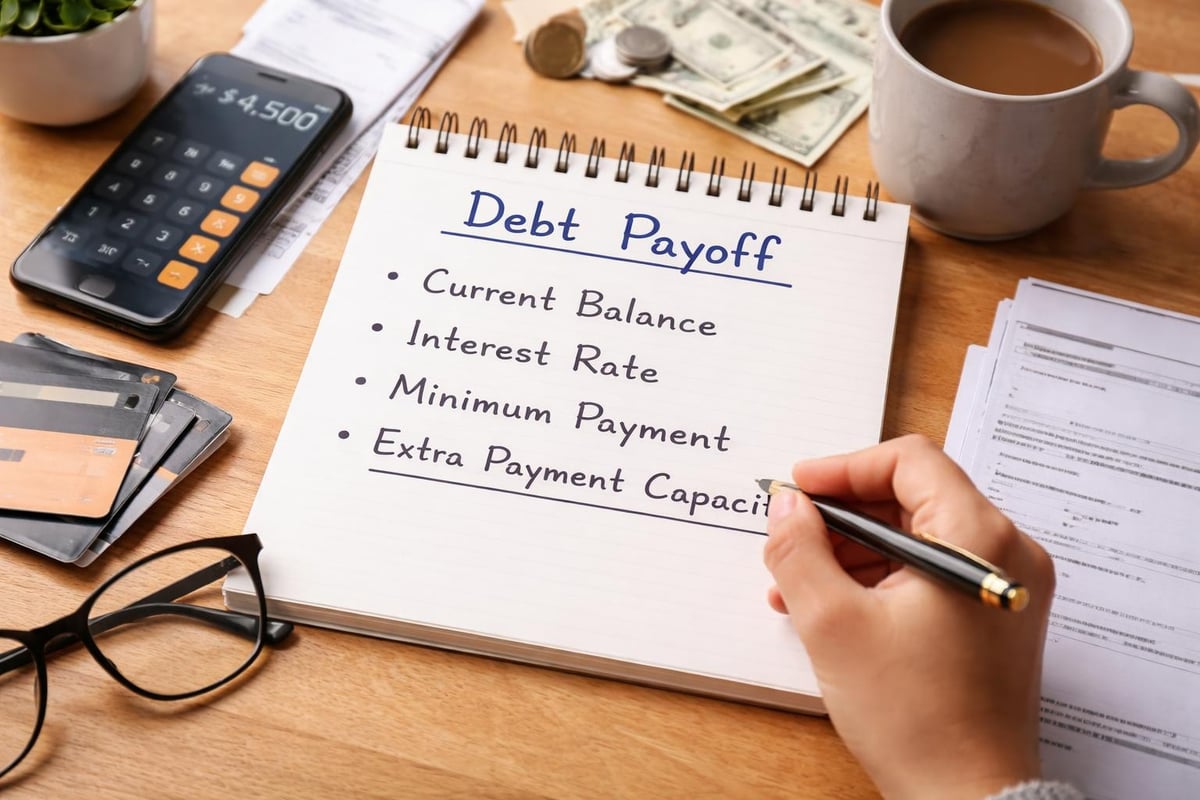
| Information Needed | Where to Find It | Why It Matters |
|---|---|---|
| Current Balance | Monthly statement | Determines starting point |
| Interest Rate (APR) | Loan agreement or statement | Calculates interest charges |
| Minimum Payment | Monthly statement | Establishes baseline obligation |
| Extra Payment Amount | Personal budget | Accelerates payoff timeline |
| Payment Due Date | Monthly statement | Helps organize payment schedule |
Popular Debt Repayment Strategies
Different repayment methods offer distinct advantages depending on your financial situation and psychological preferences. A debt payoff calculator helps you evaluate which approach aligns best with your goals.
The Debt Avalanche Method
This mathematically optimal strategy focuses on eliminating high-interest debts first while maintaining minimum payments on other accounts. You direct all extra payment capacity toward the debt with the highest APR, regardless of balance size.
The avalanche method minimizes total interest paid over time. For example, if you have a credit card charging 22% APR and a personal loan at 9% APR, you'd prioritize the credit card even if the loan balance is larger.
Fire-Calc provides comparison tools that demonstrate how avalanche and snowball strategies impact your total interest payments, helping you make informed decisions based on actual numbers rather than assumptions.
The Debt Snowball Method
This psychologically-driven approach targets the smallest balance first, creating quick wins that build momentum. After eliminating the smallest debt, you roll that payment into the next smallest balance, creating a growing "snowball" effect.
Many people find greater success with the snowball method because early victories provide motivation to continue. The snowball debt elimination strategy helps maintain positive momentum even when the mathematical savings are slightly less than the avalanche approach.
The Debt Consolidation Strategy
Consolidation combines multiple debts into a single loan, often with a lower interest rate. This approach simplifies your financial life by reducing multiple payments to one monthly obligation.
Standard Financial specializes in consolidation solutions for residents across Louisiana, Mississippi, Tennessee, and Georgia. Their refinancing options can potentially reduce your interest burden while creating a more manageable payment structure.
Maximizing the Value of Your Debt Payoff Calculator
Simply running numbers through a calculator isn't enough to achieve financial freedom. Strategic implementation and regular monitoring transform calculations into concrete results.
Steps to effectively use your debt payoff calculator:
- Gather complete information for all outstanding debts
- Input accurate data including current balances and interest rates
- Test multiple scenarios with different extra payment amounts
- Compare avalanche and snowball strategies
- Set realistic timelines based on your budget constraints
- Review and adjust quarterly as circumstances change
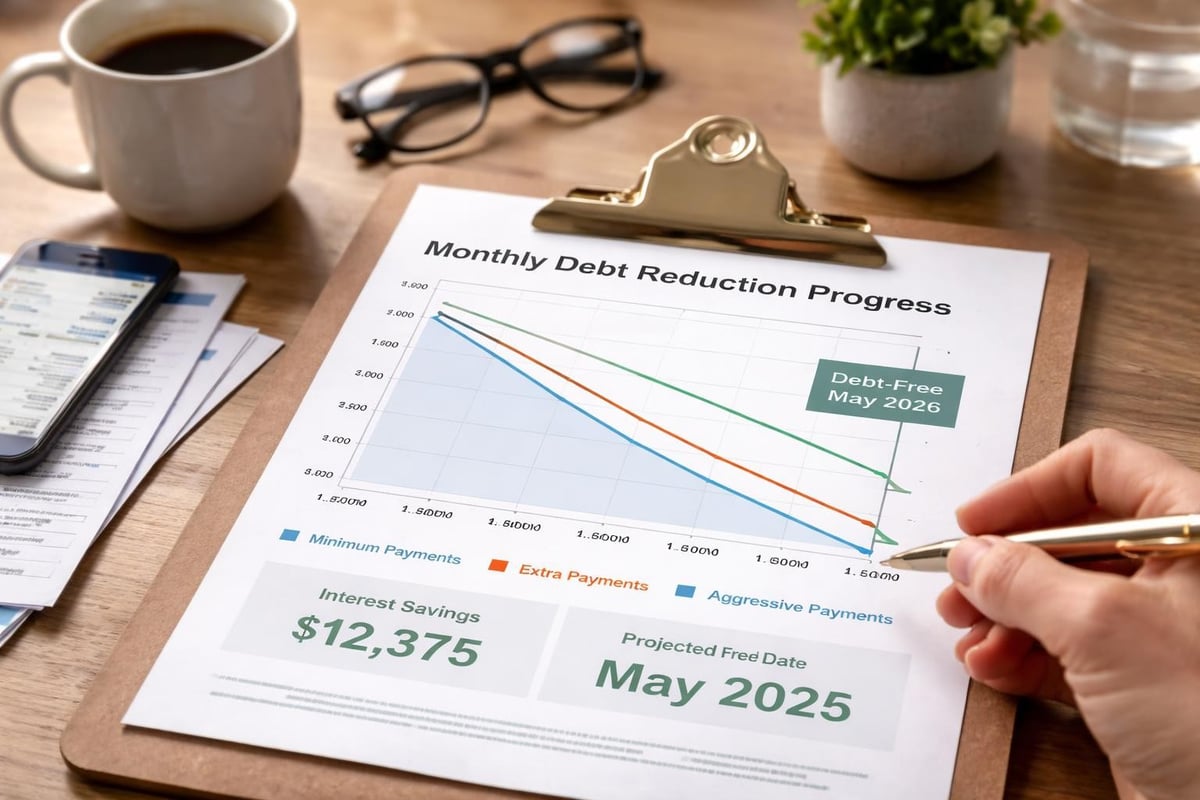
The calculation process reveals opportunities you might otherwise miss. You may discover that an extra $100 per month could reduce your debt-free date by eighteen months or save thousands in interest charges.
Creating a Sustainable Payment Plan
Your debt payoff calculator shows what's mathematically possible, but sustainability depends on creating a budget you can maintain long-term. Aggressive payment plans that strain your finances often fail when unexpected expenses arise.
Consider building a small emergency fund alongside your debt repayment efforts. This financial cushion prevents setbacks when your car needs repairs or medical bills appear unexpectedly.
Advanced Calculator Features and Tools
Modern debt payoff calculators offer sophisticated features that go beyond basic timeline projections. Understanding these capabilities helps you extract maximum value from available tools.
Extra Payment Impact Analysis
One of the most powerful features shows how additional payments affect your payoff timeline. Even modest increases can produce dramatic results when applied consistently.
For instance, adding just $50 monthly to a $5,000 credit card debt at 18% APR might reduce your payoff time from 5 years to 3.5 years while saving hundreds in interest. Tools like those available at DebtClarityTools help visualize these impacts clearly.
Multiple Debt Comparison
When managing several obligations simultaneously, comparison features become invaluable. You can see exactly how different payment allocation strategies affect your overall financial picture.
| Strategy Type | Total Interest Paid | Debt-Free Date | Psychological Benefit |
|---|---|---|---|
| Avalanche Method | Lowest | Variable | Maximized savings |
| Snowball Method | Moderate | Variable | Quick wins |
| Equal Distribution | Highest | Longest | Simple approach |
| Hybrid Approach | Moderate | Moderate | Balanced benefits |
Goal Date Planning
Some calculators work backward from your target debt-free date. If you're planning a major purchase like a home in three years, you can determine the exact monthly payment needed to clear existing debts by that deadline.
MortgageCalculator.org offers tools that help you compute the monthly payments required to meet specific debt payoff goals, making timeline-based planning more accessible.
Common Mistakes to Avoid
Even with powerful calculation tools, certain missteps can derail your debt elimination journey. Awareness of these pitfalls helps you maintain progress toward financial freedom.
Underestimating Interest Rate Impact
Many people focus exclusively on balance amounts while overlooking how interest rates affect total cost. A $3,000 balance at 24% APR costs significantly more over time than a $5,000 balance at 8% APR.
Your debt payoff calculator reveals these hidden costs. The difference between paying minimum amounts and adding extra payments becomes starkly clear when you see total interest projections.
Ignoring New Debt Accumulation
Calculating your payoff timeline while continuing to add new debt creates a futile cycle. Successful debt elimination requires stopping the inflow while accelerating the outflow.
Commit to avoiding new debt during your payoff journey. If circumstances require borrowing, evaluate whether refinancing existing obligations might provide better overall terms.
Setting Unrealistic Timelines
Overly ambitious goals often lead to frustration and abandonment. Your debt payoff calculator should guide realistic planning based on actual income and necessary expenses.
Standard Financial works with clients facing various financial circumstances, including those rebuilding credit. Their flexible financing options accommodate real-world budget constraints while helping customers progress toward financial stability.
Special Considerations for Different Debt Types
Not all debts function identically in payoff calculations. Understanding these distinctions helps you apply calculator insights more effectively.
Credit Card Debt
Variable interest rates on credit cards mean your calculations may shift over time. Many cards also feature promotional rates that eventually expire, suddenly increasing your monthly interest charges.
Input conservative estimates for credit card debt. If you're currently enjoying a 0% promotional rate, use the standard APR that will apply after the promotional period ends.
Personal Loans
Fixed-rate personal loans provide predictable payment schedules, making them straightforward to calculate. The consistent interest rate and defined term length create reliable projections.
When using a comprehensive debt payoff calculator like Empower’s tool, personal loans typically show the most accurate long-term projections because the variables remain constant throughout the repayment period.

Student Loans and Medical Debt
These specialized debt categories may offer unique repayment programs or hardship accommodations. Before committing to an aggressive payoff strategy, investigate whether income-driven repayment plans or forgiveness programs apply to your situation.
Regional Considerations for Southern States
Residents of Louisiana, Mississippi, Tennessee, and Georgia face specific financial landscapes that affect debt management strategies. State-level factors influence both the types of debt common in these regions and the resources available for repayment.
Economic Factors in the Southeast
Cost of living variations across these states create different debt burdens and repayment capacities. Urban areas like Atlanta or Nashville often feature higher incomes but also increased living expenses compared to rural communities.
Your debt payoff calculator should reflect your actual take-home income after accounting for regional tax rates and living costs. What works in Memphis may require adjustment for implementation in Baton Rouge.
Access to Financial Resources
Standard Financial's presence across multiple Southern states provides localized expertise for regional borrowers. Their understanding of state-specific lending regulations and economic conditions helps clients navigate debt challenges more effectively.
Branch offices throughout these states offer personalized consultations that complement online calculator tools, combining technology with human expertise.
Monitoring Progress and Adjusting Your Plan
Creating an initial debt payoff plan represents just the beginning. Regular monitoring and strategic adjustments ensure continued progress toward your financial goals.
Monthly review checklist:
- Verify all payments posted correctly
- Check for interest rate changes
- Assess whether extra payment amounts remain feasible
- Celebrate milestone achievements
- Adjust projections based on income changes
- Identify opportunities to accelerate payoff
Life circumstances change, and your debt repayment strategy should adapt accordingly. A salary increase might allow higher monthly payments, while unexpected expenses could temporarily require minimum-only payments.
When to Recalculate
Run updated projections quarterly or whenever significant financial changes occur. Job transitions, major purchases, or windfall income all warrant fresh calculations to optimize your strategy.
The debt management tools from APFSC allow easy recalculation as your situation evolves, helping maintain accurate timelines throughout your debt elimination journey.
Tracking Psychological Benefits
Beyond the mathematical benefits, debt reduction provides significant emotional relief. Watching balances decrease and debt-free dates approach creates positive momentum that reinforces continued effort.
Many people report reduced stress, improved sleep quality, and better overall wellbeing as their debt burden lightens. These psychological benefits often prove as valuable as the financial savings.
Integrating Debt Payoff with Broader Financial Planning
Your debt elimination strategy shouldn't exist in isolation. Effective financial management requires balancing debt reduction with other important goals like retirement savings, emergency funds, and quality of life maintenance.
The Savings Debate
Financial experts disagree about whether to prioritize debt payoff or retirement contributions. High-interest debt typically deserves priority, while low-interest obligations may warrant slower payoff alongside retirement investing.
If your employer offers matching retirement contributions, claim that free money even while paying down debt. The guaranteed return from employer matching typically exceeds the cost of carrying moderate-interest debt.
Building Emergency Reserves
Aggressive debt payoff becomes counterproductive if it leaves you vulnerable to emergency expenses. A modest emergency fund of $1,000 to $2,000 prevents derailing your progress when unexpected costs arise.
Once you establish this foundation, you can confidently direct maximum resources toward debt elimination knowing you have cushion for surprises.
Quality of Life Considerations
Extreme frugality often leads to burnout and plan abandonment. Your debt payoff calculator helps identify sustainable payment amounts that allow progress without creating misery.
Budget for modest entertainment and social activities. The psychological benefit of maintaining life enjoyment often outweighs the marginal financial benefit of extreme deprivation.
Technology and Automation Advantages
Modern financial technology enables automated approaches that reduce the mental burden of debt management while ensuring consistent progress.
Automatic Payment Systems
Setting up automatic payments eliminates the risk of missed due dates and late fees. Many lenders offer small interest rate reductions for enrolling in automatic payment programs.
Schedule these withdrawals shortly after each paycheck arrives, ensuring funds are available when payments process.
Mobile App Integration
Many financial institutions now offer apps that sync with debt payoff calculators, providing real-time progress tracking. You can monitor balances, view upcoming payments, and adjust strategies from your smartphone.
Alert Systems
Configure alerts for payment confirmations, low balance warnings, and milestone achievements. These notifications keep debt elimination top-of-mind without requiring constant manual checking.
A debt payoff calculator transforms the overwhelming challenge of multiple financial obligations into a clear, actionable roadmap toward financial freedom. By understanding your current position, comparing strategic approaches, and monitoring progress consistently, you can eliminate debt more quickly while saving substantial amounts on interest charges. Standard Financial helps residents throughout Louisiana, Mississippi, Tennessee, and Georgia achieve their debt management goals through flexible financing solutions and personalized guidance. Whether you're looking to consolidate existing obligations, refinance at better rates, or explore repayment options despite past credit challenges, Standard Financial offers the expertise and regional presence to support your journey toward lasting financial stability.






No comment yet, add your voice below!