

Understanding how variable interest rates work can save you thousands of dollars over the life of a loan or cost you more than you anticipated. These rates fluctuate based on market conditions, creating both opportunities and challenges for borrowers across the Southeast. Whether you're considering a personal loan for home improvements, medical expenses, or education financing, knowing when variable rates make sense is critical to making informed financial decisions in 2026.
What Variable Interest Rates Mean for Your Loan
Variable interest rates, also known as floating or adjustable rates, change periodically based on an underlying benchmark or index. Unlike fixed rates that remain constant throughout your loan term, these rates move up or down in response to broader economic conditions. When the benchmark rate increases, your interest rate climbs, and when it decreases, your rate falls accordingly.
The mechanism behind variable interest rates involves two primary components: the index and the margin. The index represents a publicly available benchmark rate that reflects current market conditions, while the margin is the additional percentage points the lender adds to create your actual interest rate. Together, these elements determine what you'll pay at any given adjustment period.
How Rate Adjustments Actually Work
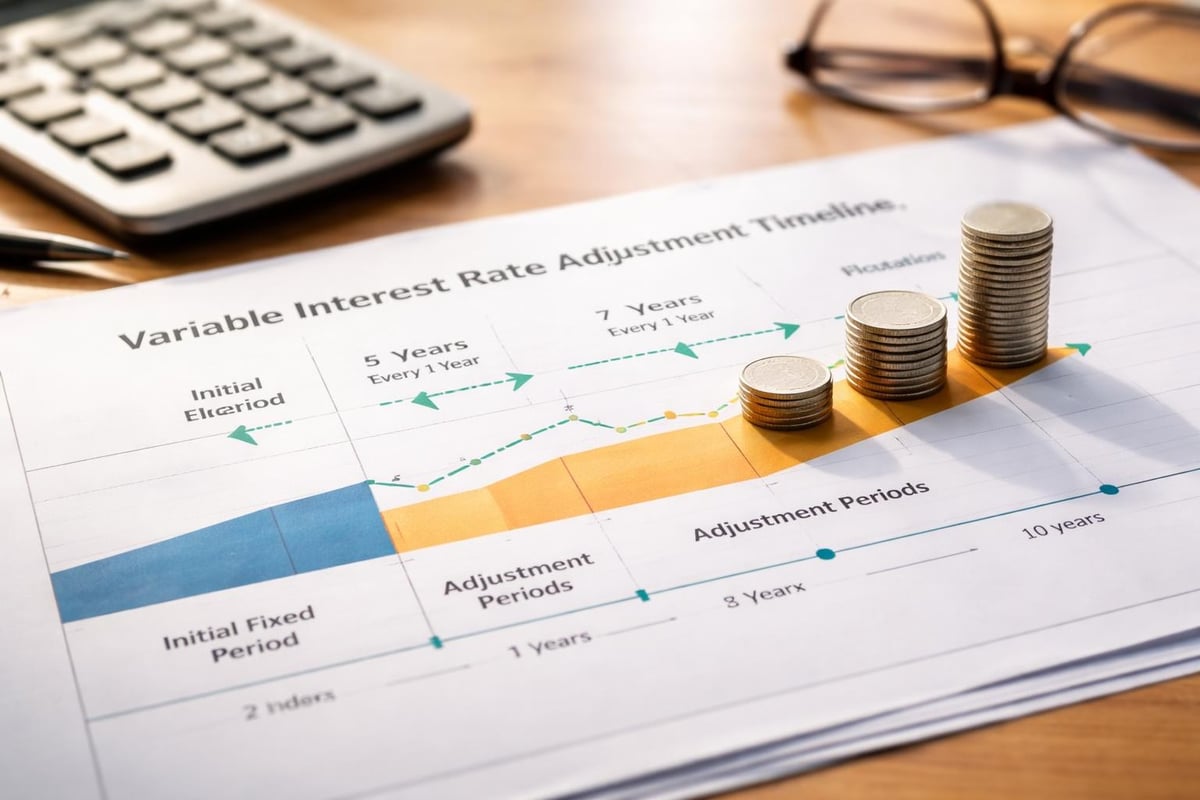
Most variable interest rate products follow a structured adjustment schedule. Your loan agreement specifies exactly when rates can change, which might be monthly, quarterly, semi-annually, or annually. Between adjustment dates, your rate remains fixed, providing short-term predictability even within a variable structure.
Federal regulations governing variable interest rates for guaranteed loans establish guidelines for frequency and maximum allowable rates, offering consumer protections. These rules help ensure transparency and prevent excessive rate fluctuations that could burden borrowers unfairly.
Key adjustment features include:
- Initial rate period before first adjustment
- Adjustment frequency after initial period
- Rate caps limiting how much rates can increase
- Floor rates establishing minimum interest levels
- Notice requirements before rate changes take effect
The adjustment process itself is straightforward. At each adjustment date, your lender calculates the new rate by adding their margin to the current index value. If this new rate differs from your current rate and falls within the allowed range under your rate caps, your payment adjusts accordingly for the next period.
Common Benchmarks and Reference Rates
Understanding which index your variable interest rate follows is essential for predicting future changes. Different benchmarks respond to various economic factors, and knowing what drives your index helps you anticipate potential rate movements. The reference rates used in financial contracts have evolved significantly, especially following the phase-out of LIBOR in recent years.
Primary Index Options in 2026
| Index Type | Update Frequency | Typical Use | Volatility Level |
|---|---|---|---|
| Prime Rate | As market changes | Personal loans, credit cards | Moderate |
| SOFR | Daily | Mortgages, business loans | Low to moderate |
| Treasury Rates | Daily | Various consumer products | Low |
| COFI | Monthly | Home equity products | Low |
The Secured Overnight Financing Rate (SOFR) has become the dominant benchmark since replacing LIBOR. This floating interest rate reflects the cost of borrowing cash overnight collateralized by Treasury securities, making it more stable and transparent than its predecessor. Many consumer lending products now tie their variable interest rates to SOFR or related derivatives.
The Prime Rate remains popular for personal loans and represents the rate banks charge their most creditworthy customers. When the Federal Reserve adjusts its target rate, the Prime Rate typically follows within days, making it responsive to monetary policy changes. This direct connection to Federal Reserve actions means borrowers can anticipate movements by following economic news and policy announcements.
Regional banks and credit unions in Louisiana, Mississippi, Tennessee, and Georgia often prefer using the Prime Rate for personal loan products because of its simplicity and widespread recognition. Borrowers find it easier to track Prime Rate changes through major financial news outlets compared to more technical indices.
Advantages of Choosing Variable Rates
Variable interest rates offer compelling benefits that make them attractive for specific borrowing situations. When market conditions favor declining rates or when you plan to repay quickly, these products can deliver substantial savings compared to fixed-rate alternatives.
Lower Initial Costs
The most immediate advantage is typically a lower starting rate. Lenders price variable interest rates below comparable fixed rates to compensate for the uncertainty borrowers accept. This initial discount, often ranging from 0.5% to 2% below fixed rates, can significantly reduce your early payments and overall interest costs if rates remain stable or decline.
For someone borrowing $15,000 for medical expenses, starting with a rate of 8% instead of 10% saves approximately $30 monthly on a five-year loan. If rates stay favorable, those savings compound over time, potentially totaling hundreds or thousands of dollars.
Financial flexibility benefits:
- Lower monthly payments initially
- More disposable income for other needs
- Opportunity to pay down principal faster
- Potential to benefit from falling interest rate environments
- Better cash flow management in early loan periods
Variable interest rates particularly benefit borrowers who plan aggressive repayment strategies. If you intend to pay off your home improvement loan within two or three years, you'll benefit from the lower initial rate without exposure to many adjustment periods where rates might increase.
Market Opportunities
When economic conditions lead to declining interest rates, variable rate borrowers automatically benefit without refinancing. Fixed-rate borrowers must go through the refinancing process, paying fees and meeting new qualification requirements to capture lower rates. Variable rate holders simply enjoy the adjustment when their rate resets.
The disclosure requirements for variable interest rates ensure lenders provide clear information about how these adjustments work, protecting consumers while allowing them to capitalize on favorable market movements.

Risks and Considerations to Evaluate
While variable interest rates offer advantages, they carry inherent risks that every borrower must understand before committing. The uncertainty of future payments creates budgeting challenges and potential financial stress if rates rise substantially.
Payment Uncertainty
The fundamental challenge with variable rates is unpredictability. Your monthly payment can increase at any adjustment period, potentially straining your budget if you haven't planned for higher costs. This uncertainty makes long-term financial planning more difficult compared to fixed-rate products.
Consider a borrower with a $20,000 education loan at an initial variable rate of 7%. If the rate increases to 11% over several adjustment periods, their monthly payment on a seven-year term could jump from approximately $311 to $361, a $50 increase that persists for the remaining loan term.
Rate Caps Provide Limited Protection
Most variable interest rate products include caps limiting how much rates can increase, but these protections have boundaries. Periodic caps restrict increases at each adjustment, while lifetime caps set maximum rates over the entire loan term.
| Cap Type | Protection Offered | Typical Range |
|---|---|---|
| Initial Cap | Limits first adjustment | 2-5 percentage points |
| Periodic Cap | Limits subsequent adjustments | 1-2 percentage points per period |
| Lifetime Cap | Maximum rate ever | 5-6 points above start rate |
Even with these safeguards, rates can reach levels that significantly impact affordability. A lifetime cap of 6 percentage points above your starting rate means an initial 7% rate could potentially reach 13% over time. Understanding these limits and calculating worst-case scenarios helps you determine whether you can afford maximum potential payments.
Risk mitigation strategies include:
- Calculate payments at maximum possible rate
- Maintain emergency savings for payment increases
- Monitor index movements and economic indicators
- Consider refinancing to fixed rate if conditions warrant
- Make extra principal payments during low-rate periods
When Variable Rates Make Strategic Sense
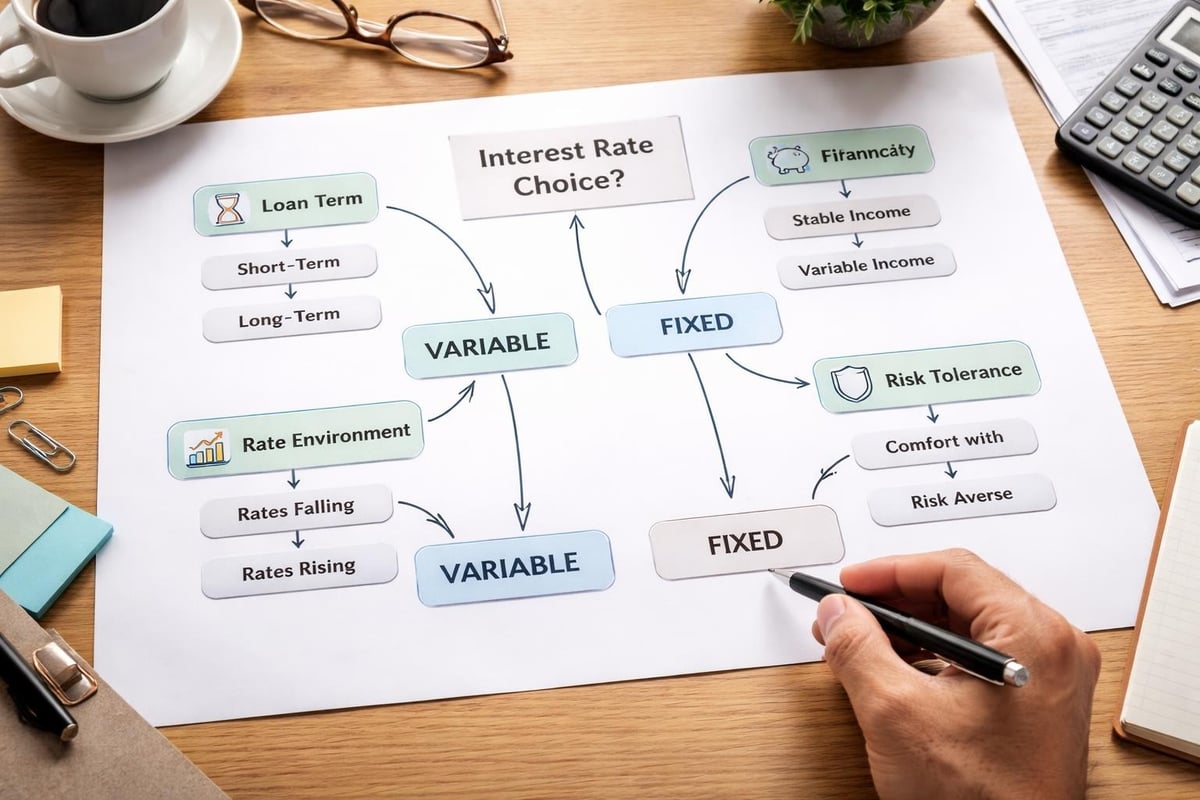
Choosing between variable and fixed interest rates requires careful analysis of your financial situation, risk tolerance, and loan purpose. Neither option is universally superior; the right choice depends on your specific circumstances and market conditions.
Ideal Borrower Profiles
Variable interest rates work best for borrowers with certain characteristics and goals. If you match these profiles, the potential savings outweigh the risks associated with rate fluctuations.
Short-term borrowers benefit most from variable rates because they face fewer adjustment periods and maximize the initial rate discount. Someone planning to repay a $10,000 personal loan within two years captures the lower starting rate without exposure to many rate increases, even in rising rate environments.
Strong candidates for variable rates:
- Borrowers planning accelerated repayment
- Those expecting income increases
- People with substantial financial reserves
- Individuals comfortable with calculated risks
- Borrowers in declining rate environments
Financial professionals often recommend variable rates when market indicators suggest stable or declining interest rate trends. In 2026, monitoring Federal Reserve policy statements, inflation data, and economic growth projections helps predict likely rate directions over the coming months and years.
Product-Specific Considerations
Different loan types present varying suitability for variable interest rates. Personal loans for home improvements might warrant different analysis than medical expense financing or education loans, depending on repayment timelines and cash flow patterns.
Home improvement loans often involve shorter repayment periods compared to mortgages, making variable rates attractive if you plan to sell or refinance within several years. The adjustable-rate mortgage concept applies similarly to personal loan products, offering initial savings for borrowers with exit strategies.
Medical expense financing frequently requires immediate funds with uncertain repayment timelines. Variable rates provide lower initial payments when cash flow is tightest, though borrowers must plan for potential increases as they recover financially. This aligns well with situations where income disruption is temporary.
Rate Monitoring and Management Strategies
Successfully managing a variable interest rate loan requires active engagement rather than passive observation. Implementing systematic monitoring and response strategies helps you maximize benefits while minimizing risks throughout your loan term.
Tracking Your Index
Understanding your loan's specific index and following its movements gives you advance notice of likely rate adjustments. Most indices are publicly available and updated regularly, allowing you to anticipate changes before they affect your payments.
For Prime Rate-based loans, follow Federal Reserve announcements and major bank rate changes. SOFR-based products require monitoring Treasury market data and derivative rates. Setting up alerts through financial news services or your lender ensures you receive timely information about benchmark movements.
Effective monitoring practices:
- Review index values monthly
- Calculate projected payments at new rates
- Adjust budgets before rate changes take effect
- Document all rate adjustments for tax purposes
- Compare current rates against refinancing options
Federal regulations regarding variable interest rate provisions require lenders to provide notice before rate adjustments, giving you time to prepare for payment changes. Use this advance warning to adjust spending, increase payments before rates rise, or evaluate refinancing alternatives.
Refinancing Decision Points
Knowing when to refinance from a variable to fixed rate (or vice versa) is crucial for optimizing your borrowing costs. Market conditions change, and what made sense initially may not remain optimal throughout your loan term.
Consider refinancing to a fixed rate when your variable rate approaches or exceeds current fixed rate offerings, especially if economic indicators suggest further increases. The mortgage rate variability seen in residential lending applies similarly to personal loan markets, creating opportunities to lock in favorable terms.
Conversely, refinancing from fixed to variable rates makes sense when market rates have dropped significantly below your locked rate and you can afford potential future increases. This strategic flexibility allows you to adapt your financing to changing circumstances and market conditions.
Regulatory Protections and Consumer Rights
Federal and state regulations provide important protections for borrowers with variable interest rates, ensuring transparency and preventing unfair lending practices. Understanding these rights helps you make informed decisions and recognize when lenders comply with required standards.
The Consumer Financial Protection Bureau enforces disclosure requirements that mandate clear explanations of how variable rates work, including worst-case scenarios, adjustment frequency, and index specifications. These disclosures must be provided before you commit to the loan, giving you opportunity to compare options and understand obligations.
State regulations vary by location, with Louisiana, Mississippi, Tennessee, and Georgia each maintaining consumer protection standards for lending practices. These rules often specify allowable indices, maximum rate caps, and notification requirements that supplement federal protections.
Understanding Your Loan Agreement
Your loan contract contains critical details about how your variable interest rate functions. Reading and understanding these terms before signing prevents surprises and helps you plan effectively.
Essential contract elements to review:
- Specific index used for rate calculations
- Margin added to index rate
- Adjustment frequency and timing
- All applicable rate caps and floors
- Prepayment rights and penalties
- Conversion options to fixed rates
Many variable interest rate agreements include conversion clauses allowing you to switch to a fixed rate under specified conditions. Understanding these provisions gives you flexibility to adapt your loan structure as circumstances change without going through a complete refinancing process.
Comparing Variable Rates Across Lenders
Not all variable interest rate products are created equal, and comparison shopping reveals significant differences in terms, margins, and protections. Evaluating multiple offers helps you identify the most favorable structure for your needs.
Key Comparison Factors
Beyond the initial interest rate, several factors determine the true cost and risk of variable rate loans. Focusing solely on starting rates overlooks important elements that affect long-term affordability and flexibility.
| Factor | Why It Matters | Questions to Ask |
|---|---|---|
| Margin | Affects all future rates | How does margin compare to competitors? |
| Rate Caps | Limits maximum costs | What are periodic and lifetime caps? |
| Index | Determines volatility | Which benchmark is used? |
| Adjustment Frequency | Impacts payment stability | How often do rates change? |
| Conversion Options | Provides flexibility | Can I switch to fixed rate? |
Lenders with lower margins offer better long-term value even if their initial rates match competitors, because every future adjustment will be proportionally lower. A 0.5% difference in margin compounds significantly over a five or seven-year loan term.
Regional Market Considerations
Consumer lending markets in the Southeast exhibit unique characteristics that affect variable interest rate offerings. Local and regional lenders often provide more competitive terms than national institutions because they understand area-specific economic conditions and borrower needs.
Community-focused lenders in Louisiana, Mississippi, Tennessee, and Georgia frequently offer personalized service and flexibility in structuring variable rate products. This includes accommodation for borrowers with past credit issues who demonstrate current financial stability and repayment capacity.
Working with lenders who maintain physical branch offices in your area provides access to face-to-face consultations where you can discuss variable rate options, ask questions, and receive guidance tailored to your situation. This personal interaction often reveals opportunities and protections not apparent in online applications.
Making Your Final Decision
Choosing whether variable interest rates suit your borrowing needs requires honest assessment of your financial situation, goals, and comfort with uncertainty. Neither option is inherently better; the right choice aligns with your specific circumstances.
Start by calculating your budget's flexibility. Determine the maximum payment increase you could absorb without financial hardship, then compare this against the loan's lifetime cap. If worst-case payments would strain your finances unacceptably, fixed rates provide necessary security regardless of potential savings from variable rates.
Decision-making checklist:
- Calculate payments at maximum possible rate
- Assess likelihood of early repayment
- Evaluate current and projected rate environments
- Compare total costs across scenarios
- Consider personal risk tolerance
- Review all available rate cap protections
- Confirm understanding of adjustment mechanics
- Verify lender reputation and service quality
Consider your loan timeline carefully. Variable rates shine for short-term borrowing where you'll repay before many adjustments occur, while longer terms increase exposure to rate volatility. A three-year loan carries less risk than a seven-year commitment, even with identical rate structures.
Your income stability also factors significantly into this decision. Borrowers with predictable, growing income can better absorb potential rate increases than those with variable or uncertain earnings. If your employment situation might change or you work in cyclical industries, the predictability of fixed rates offers valuable peace of mind.
Variable interest rates offer both opportunities for savings and risks of increased costs, making them powerful tools when used strategically for the right borrowing situations. Understanding how these rates work, when they make sense, and how to manage them effectively empowers you to make financing decisions that support your financial goals. If you're considering a personal loan for home improvements, medical expenses, education, or other needs, Standard Financial offers flexible financing options with transparent terms across Louisiana, Mississippi, Tennessee, and Georgia. Our experienced lending professionals can help you evaluate whether variable or fixed rates best serve your situation and guide you toward financing solutions that fit your budget and timeline.





No comment yet, add your voice below!