

Managing multiple debts can feel overwhelming, especially when you're juggling various payment dates, interest rates, and minimum payments each month. Debt consolidation offers a strategic approach to simplify your financial life by combining multiple debts into a single loan with one monthly payment. This financial tool has helped countless Americans regain control of their finances, reduce stress, and create a clearer path toward becoming debt-free. Whether you're dealing with credit card balances, medical bills, or personal loans, understanding how consolidation works and whether it's right for your situation is essential for making informed financial decisions.
Understanding Debt Consolidation Fundamentals
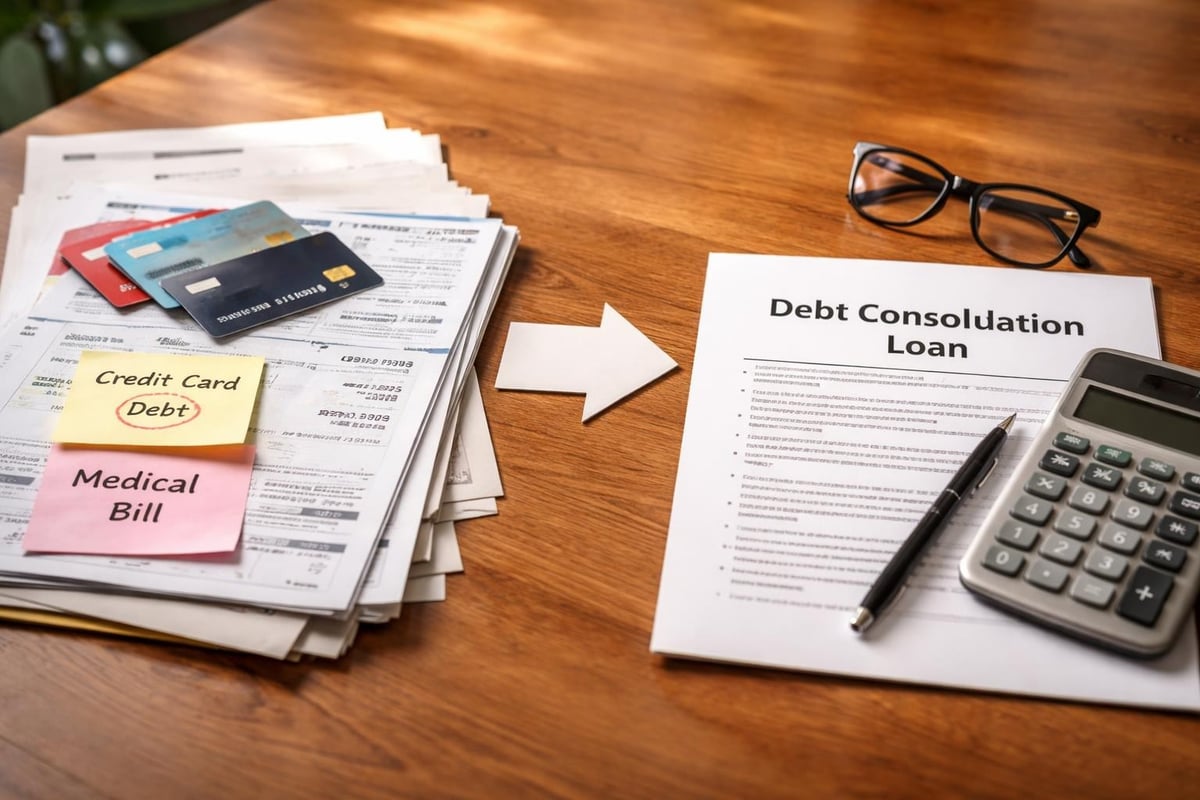
Debt consolidation is a financial strategy that combines multiple debts into one new loan, ideally with better terms than your existing obligations. Instead of managing several payments with varying interest rates and due dates, you make a single monthly payment to one lender. The Consumer Financial Protection Bureau explains that this approach can simplify your financial management and potentially save money on interest charges.
The process typically involves taking out a new loan for the total amount of your existing debts. You then use this loan to pay off your current creditors, leaving you with just one debt to manage. This single payment often comes with a fixed interest rate and a set repayment term, making it easier to budget and plan for the future.
Types of Debt Consolidation Options
Several methods exist for consolidating debt, each with distinct characteristics and requirements:
Personal Loans for Consolidation
- Unsecured loans with fixed interest rates
- Repayment terms typically ranging from 2 to 7 years
- Monthly payments remain consistent throughout the loan term
- No collateral required for approval
Balance Transfer Credit Cards
- Promotional 0% APR periods for qualified applicants
- Transfer existing credit card balances to new card
- Requires excellent credit for best offers
- Must pay off balance before promotional period ends
Home Equity Loans or Lines of Credit
- Uses your home as collateral
- Generally offers lower interest rates
- Longer repayment periods available
- Risk of foreclosure if payments are missed
Debt Management Plans
- Arranged through credit counseling agencies
- Negotiated lower interest rates with creditors
- Single monthly payment to agency
- May impact credit report notations
Benefits of Consolidating Your Debts
The advantages of debt consolidation extend beyond simple convenience. When executed properly, this strategy can transform your financial situation and provide meaningful relief from debt-related stress.
| Benefit | Description | Impact |
|---|---|---|
| Simplified Payments | One payment instead of multiple | Reduces missed payments and late fees |
| Lower Interest Rates | Potentially reduced overall APR | Saves money over loan term |
| Fixed Payment Schedule | Predictable monthly amount | Easier budgeting and planning |
| Credit Score Improvement | On-time payments and lower utilization | Gradual credit score increase |
| Defined Payoff Date | Clear end date for debt freedom | Improved financial goal setting |
Many borrowers find that consolidation provides psychological benefits as well. The mental burden of tracking multiple accounts, due dates, and payment amounts can be exhausting. Consolidating into a single payment creates clarity and reduces the cognitive load associated with debt management.
Financial Savings Potential
The interest rate reduction possible through consolidation can result in substantial savings. For instance, if you have $15,000 in credit card debt at an average 22% APR, you might be paying approximately $3,300 annually just in interest charges. By consolidating to a personal loan at 10% APR, you could reduce your annual interest to $1,500, saving $1,800 per year.
Bankrate provides detailed comparisons showing how different consolidation approaches impact total repayment amounts and timelines.
Determining If Debt Consolidation Is Right for You
Not every financial situation benefits from consolidation. Evaluating your circumstances honestly will help you make the best decision for your future. Several factors should influence whether you pursue this strategy.
Your current debt-to-income ratio plays a significant role in approval odds and loan terms. Lenders typically prefer ratios below 43%, though some may work with higher ratios depending on other factors. Additionally, your credit score significantly impacts the interest rates you'll qualify for, making it essential to understand where you stand before applying.
Key Qualifying Factors
- Steady income source: Lenders need assurance of repayment ability
- Manageable debt load: Total debt should be consolidatable within reasonable terms
- Credit history: While not perfect credit, a history of responsibility helps
- Commitment to change: Willingness to avoid accumulating new debt
Consider whether you've addressed the root causes of your debt. If overspending habits or lack of budgeting led to your current situation, consolidation alone won't solve the problem. Without behavioral changes, you risk accumulating new debt on top of your consolidation loan.

The Application and Approval Process
Understanding what to expect during the consolidation loan process helps you prepare and increases your chances of approval. The journey from application to funding typically follows a predictable path.
Step-by-Step Application Process
- Assess your total debt: Calculate exactly how much you owe across all accounts
- Check your credit report: Review for accuracy and understand your credit standing
- Research lenders: Compare rates, terms, and fees from multiple sources
- Gather documentation: Prepare income verification, identification, and debt statements
- Submit applications: Apply to 2-3 lenders within a short timeframe to minimize credit impact
- Review offers: Compare APRs, terms, fees, and monthly payment amounts
- Accept best offer: Choose the loan that provides the most favorable overall terms
- Use funds to pay creditors: Ensure all existing debts are fully paid off
- Begin new payment schedule: Set up automatic payments to avoid missing due dates
Most lenders provide decisions within 24 to 48 hours for personal loans. Funding typically occurs within one week of approval, though some lenders offer same-day or next-day funding for qualified applicants.
Documents Typically Required
- Government-issued photo identification
- Proof of income (pay stubs, tax returns, bank statements)
- Proof of residence (utility bill, lease agreement)
- List of debts to be consolidated
- Social Security number for credit check
Comparing Interest Rates and Terms
The interest rate you secure directly impacts your monthly payment and total repayment amount. Credit Karma notes that rates can vary significantly based on creditworthiness, with excellent credit borrowers potentially qualifying for rates as low as 6-8%, while those with fair credit might see rates of 18-25%.
Term length represents another critical decision point. Shorter terms mean higher monthly payments but less interest paid over time. Longer terms reduce monthly obligations but increase total interest costs.
| Loan Amount | 3-Year Term (12% APR) | 5-Year Term (12% APR) | 7-Year Term (12% APR) |
|---|---|---|---|
| $10,000 | $332/month ($1,952 interest) | $222/month ($3,346 interest) | $169/month ($4,212 interest) |
| $20,000 | $664/month ($3,904 interest) | $445/month ($6,692 interest) | $339/month ($8,424 interest) |
| $30,000 | $997/month ($5,856 interest) | $667/month ($10,038 interest) | $508/month ($12,636 interest) |
These calculations demonstrate how term selection impacts your financial commitment. While longer terms offer payment flexibility, they significantly increase total costs.
Potential Drawbacks to Consider
While debt consolidation offers numerous advantages, it's not without potential downsides. Being aware of these challenges helps you make an informed decision and avoid common pitfalls.
Upfront costs can include origination fees, balance transfer fees, or closing costs for home equity products. These fees typically range from 1% to 5% of the loan amount, adding to your overall debt burden. Some lenders charge prepayment penalties if you pay off the loan early, limiting your flexibility.
Extended repayment periods might reduce monthly payments but can trap you in debt longer than necessary. What started as $15,000 in credit card debt could cost $20,000 or more after years of loan payments, depending on your terms.
Risks of Secured Consolidation Loans
Using collateral like your home or vehicle adds risk to the consolidation process. While secured loans often offer lower interest rates, defaulting could result in losing your property. This makes secured consolidation a higher-stakes decision requiring careful consideration.
Experian outlines how consolidation affects credit scores, noting that applying for new credit creates a hard inquiry and opening a new account can temporarily lower your score before the positive effects of consistent payments take hold.
Alternatives to Traditional Debt Consolidation
If consolidation doesn't fit your situation, several alternative strategies can help manage and reduce debt effectively.
The debt snowball method involves paying off your smallest debts first while maintaining minimum payments on larger obligations. This approach provides psychological wins and momentum as you eliminate accounts one by one. Conversely, the debt avalanche method prioritizes debts with the highest interest rates, mathematically saving more money over time.
Credit counseling services offer professional guidance and can negotiate with creditors on your behalf. These nonprofit organizations often provide free or low-cost services, including budgeting assistance and financial education. Some credit counselors can establish debt management plans that consolidate payments without requiring a new loan.
Debt settlement represents a more aggressive approach where you or a company negotiate to pay less than you owe. While this can reduce total debt, it severely damages credit scores and may have tax implications, as forgiven debt is often considered taxable income.

Making the Most of Your Consolidation Loan
Once you've consolidated your debts, your success depends on maintaining disciplined financial habits. Many borrowers make the mistake of viewing consolidation as a solution rather than a tool, leading them to accumulate new debt on recently cleared credit cards.
Best Practices After Consolidation
- Close paid-off credit cards strategically: Keep your oldest accounts open for credit history, but consider closing newer cards that tempt overspending
- Create a realistic budget: Track income and expenses to ensure loan payments fit comfortably
- Build an emergency fund: Start small, aiming for $500 to $1,000 initially
- Automate loan payments: Set up automatic transfers to avoid late payments
- Monitor your credit: Regular checks help you track improvement and catch errors
- Avoid new debt: Resist using credit cards unless you can pay the full balance monthly
- Consider extra payments: When possible, apply additional funds to loan principal
The consolidation loan provides breathing room and structure, but lasting financial health requires addressing the behaviors and circumstances that led to debt accumulation. Take advantage of this fresh start to build better money management skills.
Working with Lenders in the Southeast
For residents of Louisiana, Mississippi, Tennessee, and Georgia, local lending options often provide personalized service and understanding of regional economic conditions. Regional lenders may offer more flexibility for borrowers with past credit challenges, recognizing that credit reports don't tell the complete story of your financial responsibility.
The Motley Fool’s analysis of consolidation lenders emphasizes the importance of comparing multiple options and reading the fine print before committing to any loan agreement. Look for lenders who clearly explain terms, fees, and expectations without pressure tactics or hidden charges.
When evaluating lenders, consider factors beyond just interest rates. Customer service quality, payment flexibility, financial hardship programs, and local accessibility all contribute to a positive borrowing experience. The best lender for your situation offers competitive terms while treating you with respect and providing support throughout the repayment journey.
Impact on Your Credit Score
Understanding how debt consolidation affects your credit helps set realistic expectations. Initially, your score may drop slightly due to the hard credit inquiry and new account opening. However, most borrowers see improvements within six to twelve months as they establish a positive payment history.
Several factors influence the credit impact:
Credit utilization improves dramatically when you pay off revolving credit accounts like credit cards. Moving debt from credit cards (which affect utilization) to an installment loan (which doesn't) can boost your score significantly. If you had $8,000 in credit card debt across $10,000 in total credit limits, your utilization was 80%. After consolidation, that drops to 0%, potentially increasing your score by 50-100 points.
Payment history represents 35% of your credit score. Making consistent, on-time payments on your consolidation loan builds positive history and demonstrates reliability to future lenders. Even one missed payment can significantly damage your progress, making automated payments essential.
Credit mix diversity positively influences scores. If you only had credit card debt previously, adding an installment loan creates variety in your credit profile, which scoring models view favorably.
Taking control of multiple debts through consolidation can simplify your financial life and create a clear path toward debt freedom. Success requires choosing the right consolidation approach, securing favorable terms, and committing to improved financial habits moving forward. Whether you're dealing with credit card debt, medical bills, or other financial obligations, Standard Financial offers flexible financing solutions tailored to your unique situation. With branch offices across Louisiana, Mississippi, Tennessee, and Georgia, their experienced team works with clients at all credit levels to find consolidation options that fit your budget and goals. Visit Standard Financial today to explore how they can help you simplify your debt and build a stronger financial future.






No comment yet, add your voice below!