

Homeownership represents one of the largest financial commitments most Americans will make in their lifetime. As market conditions shift and personal circumstances evolve, many homeowners discover opportunities to improve their financial position through strategic refinancing. Understanding the mechanics, benefits, and potential pitfalls of this process empowers homeowners to make informed decisions that align with their long-term financial goals. Whether you're seeking lower monthly payments, better interest rates, or access to home equity, refinancing offers multiple pathways to optimize your mortgage terms.
Understanding Mortgage Refinancing Fundamentals
Mortgage refinancing involves replacing your existing home loan with a new one, typically featuring different terms, interest rates, or loan structures. This financial strategy allows homeowners to adapt their mortgage to current market conditions or changing personal needs.
The refinancing process mirrors the original mortgage application in many ways. Lenders evaluate your creditworthiness, income stability, employment history, and home value before approving a new loan. Your property undergoes a fresh appraisal to determine its current market value, which directly impacts the loan-to-value ratio and available refinancing options.
Core Refinancing Types
Rate-and-term refinancing represents the most common approach. This option modifies your interest rate, loan duration, or both while maintaining your existing loan balance. Homeowners typically pursue this strategy when interest rates drop significantly below their current mortgage rate.
Cash-out refinancing allows you to tap into accumulated home equity by borrowing more than your current mortgage balance. The difference gets distributed as cash, which many homeowners use for home improvements, medical expenses, education costs, or debt consolidation.
Cash-in refinancing works inversely, where you make a substantial payment toward your principal to reduce the loan balance. This approach helps homeowners eliminate private mortgage insurance requirements or secure more favorable interest rates by improving their loan-to-value ratio.

Strategic Timing for Refinancing Decisions
Determining the optimal moment to refinance requires careful analysis of multiple financial factors. Market conditions, personal circumstances, and long-term housing plans all influence whether refinancing makes financial sense.
Interest rate movements serve as the primary catalyst for refinancing activity. According to guidance on when to refinance, a rate reduction of at least 0.75% typically justifies the closing costs and administrative expenses associated with obtaining a new loan. However, smaller rate differences may still prove beneficial depending on your loan size and intended timeline in the home.
Calculating Your Break-Even Point
The break-even point represents the timeline required for monthly savings to offset upfront refinancing costs. This calculation provides crucial insight into whether refinancing aligns with your housing plans.
| Refinancing Cost Component | Typical Range |
|---|---|
| Application fees | $300 – $500 |
| Origination charges | 0.5% – 1% of loan amount |
| Appraisal costs | $400 – $600 |
| Title search and insurance | $700 – $1,200 |
| Credit report fees | $25 – $50 |
Total closing costs typically range between 2% and 5% of the loan amount. If refinancing generates $200 in monthly savings but requires $6,000 in closing costs, you'll need 30 months to break even. Homeowners planning to relocate before reaching this threshold should reconsider refinancing.
Market Condition Considerations
Volatile economic conditions create both opportunities and challenges for refinancing decisions. The Federal Reserve’s comprehensive refinancing guide offers valuable tools for understanding how economic factors influence mortgage rates and refinancing options.
Economic uncertainty can trigger rapid rate fluctuations. Homeowners monitoring refinancing opportunities should track multiple indicators:
- Federal Reserve policy announcements and interest rate decisions
- Treasury yield movements, particularly 10-year bonds
- Inflation trends and consumer price index reports
- Employment statistics and wage growth patterns
- Housing market inventory and price appreciation
Qualification Requirements and Credit Considerations
Lenders impose specific requirements that homeowners must satisfy before approving refinancing applications. These standards have evolved significantly since the 2008 financial crisis, with enhanced scrutiny on borrower qualifications.
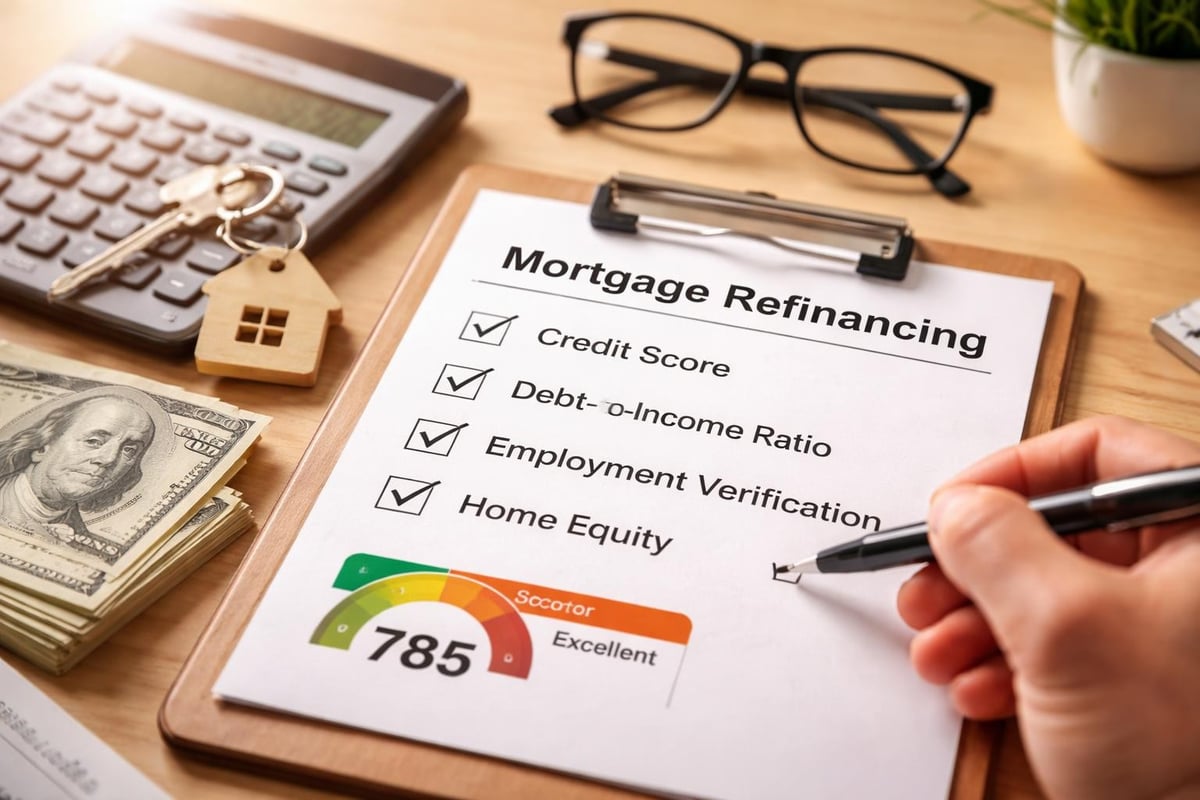
Credit score thresholds vary by lender and loan type. Conventional refinancing typically requires minimum scores between 620 and 680, though higher scores unlock more competitive rates. Government-backed programs like FHA refinancing may accept scores as low as 580, making refinancing accessible to borrowers with past credit challenges.
Income and Employment Verification
Lenders examine income stability through multiple documentation requirements:
- Two years of tax returns demonstrating consistent earnings
- Recent pay stubs covering the most recent 30-day period
- W-2 forms from the previous two years
- Bank statements showing adequate reserves (typically 2-6 months of payments)
- Employment verification confirming current job status
Self-employed borrowers face additional documentation requirements, including profit and loss statements, business tax returns, and potentially certified financial statements prepared by accountants.
Debt-to-Income Ratio Standards
Your debt-to-income (DTI) ratio compares monthly debt obligations to gross monthly income. Most lenders prefer DTI ratios below 43%, though some conventional loans accept ratios up to 50% with compensating factors like substantial cash reserves or excellent credit scores.
Avoiding Common Refinancing Mistakes
Homeowners frequently encounter preventable setbacks during the refinancing process. Learning from common mistakes made during refinancing helps avoid unnecessary costs and complications.
Focusing exclusively on interest rates represents a critical error. While securing a lower rate matters, total borrowing costs depend on numerous factors including loan term, closing costs, and prepayment penalties. A slightly higher rate with minimal closing costs may ultimately cost less than a rock-bottom rate with excessive fees.
The Loan Term Extension Trap
Refinancing into a new 30-year mortgage when you've already paid down 10 years extends your repayment timeline significantly. This decision reduces monthly payments but dramatically increases total interest paid over the loan's lifetime.
Consider refinancing into a shorter term when possible. If you've maintained a 30-year mortgage for seven years, refinancing into a 20-year or 23-year loan maintains your original payoff timeline while potentially securing lower rates and reducing total interest costs.
Shopping Multiple Lenders
Many homeowners accept the first refinancing offer they receive, potentially leaving thousands of dollars on the table. Rate quotes and fee structures vary substantially between lenders, making comparison shopping essential.
Obtain loan estimates from at least three to five lenders. These standardized documents facilitate direct comparisons of:
- Annual percentage rates (APR) reflecting total borrowing costs
- Monthly principal and interest payments
- Closing cost breakdowns itemizing all fees
- Prepayment penalty clauses or restrictions
- Rate lock periods and extension policies
Important guidelines from what to watch for when refinancing emphasize the value of understanding each cost component before committing to a lender.
Specific Refinancing Scenarios and Solutions
Different financial situations call for tailored refinancing approaches. Understanding how refinancing addresses specific challenges helps homeowners select appropriate strategies.
Eliminating Private Mortgage Insurance
Borrowers who purchased homes with down payments below 20% typically pay private mortgage insurance (PMI). This additional monthly expense protects lenders against default risk but provides no benefit to homeowners.
Once your loan-to-value ratio drops below 80% through principal payments and property appreciation, refinancing eliminates PMI requirements. For a $250,000 home with a $200,000 mortgage balance and $150 monthly PMI, removing this expense saves $1,800 annually.
Consolidating High-Interest Debt
Cash-out refinancing offers opportunities to consolidate expensive debts like credit cards, personal loans, or medical bills into your mortgage at significantly lower interest rates. This strategy works particularly well for homeowners carrying substantial high-interest balances.
| Debt Type | Typical Interest Rate | Monthly Payment on $20,000 |
|---|---|---|
| Credit cards | 18% – 24% | $400 – $500 |
| Personal loans | 10% – 15% | $350 – $425 |
| Medical bills | 8% – 12% | $325 – $375 |
| Mortgage refinance | 6% – 7% | $275 – $300 |
However, converting unsecured debt into mortgage debt requires careful consideration. Failing to make payments on credit cards damages your credit score, but defaulting on your mortgage risks foreclosure.
Adjustable-Rate to Fixed-Rate Conversions
Homeowners with adjustable-rate mortgages (ARMs) face payment uncertainty when rate adjustment periods arrive. Converting to fixed-rate financing locks in predictable payments for the remaining loan term, providing valuable budgeting stability.
This strategy proves particularly valuable when initial ARM periods expire and market rates have risen substantially. The payment shock from ARM adjustments can strain household budgets, making fixed-rate refinancing a prudent risk management decision.

Documentation and Application Process
Successful refinancing requires thorough preparation and organization. Gathering necessary documentation before starting applications accelerates the process and prevents delays.
Essential Document Checklist
Complete your refinancing application efficiently by assembling these materials:
- Identification documents: Government-issued photo ID and Social Security card
- Property information: Current mortgage statement, homeowners insurance policy, and property tax records
- Income verification: Recent pay stubs, W-2 forms, and tax returns for the previous two years
- Asset documentation: Bank statements, investment account statements, and retirement account balances
- Debt information: Credit card statements, auto loan details, and other outstanding obligations
Self-employed applicants should add business tax returns, profit and loss statements, and balance sheets covering the most recent two years.
Timeline Expectations
The refinancing process typically requires 30 to 45 days from application to closing, though timeframes vary based on lender efficiency, appraisal scheduling, and documentation completeness.
Week 1-2: Application submission, initial document review, and credit report analysis. Lenders issue loan estimates outlining proposed terms and estimated costs.
Week 2-3: Property appraisal scheduling and completion. The appraiser inspects your home and prepares a valuation report supporting the requested loan amount.
Week 3-4: Underwriting review where loan processors verify income, assets, employment, and credit information. Additional documentation requests commonly arise during this phase.
Week 4-6: Final approval, closing document preparation, and settlement scheduling. Title companies conduct searches ensuring clear property ownership and prepare insurance policies.
Special Considerations for Regional Markets
Homeowners in Louisiana, Mississippi, Tennessee, and Georgia encounter unique market dynamics influencing refinancing decisions. Regional economic conditions, property value trends, and local lending competition affect available options and optimal strategies.
Southern housing markets experienced substantial appreciation during recent years, creating significant equity positions for many homeowners. This equity growth expands cash-out refinancing opportunities and improves qualification prospects by strengthening loan-to-value ratios.
Natural Disaster and Insurance Implications
Properties in hurricane-prone coastal regions face elevated insurance requirements affecting refinancing calculations. Lenders mandate adequate hazard insurance and often require flood coverage for properties in designated flood zones.
Rising insurance premiums in Gulf Coast areas impact affordability analyses during refinancing underwriting. Homeowners should factor anticipated insurance cost increases into break-even calculations and long-term savings projections.
Property Tax Considerations
Property tax structures vary significantly across Southeastern states. Louisiana's homestead exemption reduces assessed values for owner-occupied properties, while Tennessee eliminated state income taxes but maintains higher property tax rates in many counties.
Refinancing sometimes triggers property tax reassessments, particularly in jurisdictions with infrequent valuation cycles. Understanding local assessment practices prevents unexpected tax increases that could offset refinancing savings.
Managing Refinancing Costs and Fees
Controlling expenses during refinancing maximizes financial benefits. Several strategies reduce upfront costs without sacrificing favorable loan terms.
No-closing-cost refinancing allows homeowners to avoid immediate out-of-pocket expenses by incorporating fees into the loan balance or accepting slightly higher interest rates. This approach benefits borrowers with limited cash reserves or shorter home ownership timelines.
Fee Negotiation Opportunities
Certain refinancing charges are negotiable, while others remain fixed. Understanding which fees offer flexibility helps reduce total costs:
- Negotiable: Origination fees, application charges, rate lock extension fees, and processing costs
- Generally fixed: Appraisal fees, credit report charges, title insurance, and government recording fees
Request detailed explanations for any fees appearing excessive or unclear. Reputable lenders provide transparent cost breakdowns and willingly discuss fee structures.
Lender Credit Options
Some lenders offer credits offsetting closing costs in exchange for accepting higher interest rates. This arrangement works well for homeowners planning shorter ownership periods or expecting to refinance again when rates decline further.
Calculate whether lender credits make financial sense by comparing total interest costs over your expected ownership timeline against upfront savings from reduced closing costs.
Credit Improvement Strategies Before Refinancing
Homeowners with past credit challenges can take specific actions improving approval odds and securing better rates. Strategic credit management before applying yields substantial benefits.
Pay down credit card balances below 30% of available limits. Credit utilization ratios significantly impact scores, and reducing balances often produces rapid score improvements within 30 to 60 days.
Review credit reports from all three bureaus (Experian, Equifax, and TransUnion) for errors or inaccuracies. Dispute any incorrect information through formal processes that legally require bureaus to investigate and correct mistakes within 30 days.
Strategic Timing for Credit Applications
Avoid new credit applications in the six months preceding refinancing. Hard inquiries from credit cards, auto loans, or other financing reduce scores temporarily and raise concerns during underwriting reviews about debt accumulation.
Maintain consistent payment histories on all obligations. Even one missed payment within the previous 12 months can substantially impact approval decisions and available interest rates.
Understanding mortgage refinancing mechanics and implementing strategic approaches positions homeowners for significant long-term savings. Success requires careful timing, thorough comparison shopping, realistic break-even analysis, and attention to qualification requirements that maximize approval prospects while securing optimal terms. Whether you're seeking lower payments, accessing home equity for important expenses, or optimizing loan terms, Standard Financial provides flexible refinancing solutions across Louisiana, Mississippi, Tennessee, and Georgia, with specialized expertise helping clients achieve their financial goals even when past credit challenges exist.







No comment yet, add your voice below!