

As we approach 2026, understanding secured personal loan interest rates is more important than ever for borrowers facing changing economic conditions. The right knowledge can help you save thousands over the life of your loan.
By comparing and securing the best rate, you can take advantage of new regulatory and market shifts. Use this guide to make confident and informed decisions.
Inside, you will find a full overview of secured personal loan interest rates for 2026, including how rates are determined, what influences them, and proven strategies to secure the lowest rates. Let’s get started.
Understanding Secured Personal Loans and Their Interest Rates
Secured personal loan interest rates are a crucial factor for anyone considering borrowing in 2026. To make informed decisions, it is essential to first understand what secured personal loans are, how they differ from unsecured loans, and how interest rates are determined. This section provides an in-depth look at these topics, helping readers grasp the fundamentals before diving deeper into the world of secured personal loan interest rates.

What Are Secured Personal Loans?
A secured personal loan is a type of loan that requires the borrower to pledge an asset as collateral. This collateral could be a vehicle, a savings account, or real estate property. If the borrower fails to repay the loan, the lender can claim the collateral to recover the outstanding balance. This structure directly influences secured personal loan interest rates, as the presence of collateral reduces the lender’s risk.
Common types of collateral include:
- Automobiles
- Savings or certificate of deposit accounts
- Home equity or property
- Jewelry or valuable assets
Secured loans differ from unsecured loans in a few important ways. Unsecured loans do not require collateral, making them riskier for lenders and typically resulting in higher interest rates. The table below highlights key differences:
| Feature | Secured Personal Loan | Unsecured Personal Loan |
|---|---|---|
| Requires Collateral | Yes | No |
| Typical Interest Rates | Lower | Higher |
| Approval Chances | Higher (with collateral) | Based on creditworthiness |
| Risk to Borrower | Loss of collateral possible | Credit score impact only |
For borrowers, the main benefit of a secured personal loan is access to lower secured personal loan interest rates and potentially larger loan amounts. Lenders benefit from reduced risk since they have a claim on the collateral.
Typical use cases for secured personal loans include home renovations, debt consolidation, and major purchases that require significant funds. The collateral’s value and type often influence the loan approval process, as lenders assess the asset’s ability to cover the loan if needed. Regulatory oversight ensures fair lending practices and protects both parties during the transaction.
To explore more about the different collateral options and secured loan products, you can visit Understanding secured loan options.
How Interest Rates Work on Secured Loans
Secured personal loan interest rates can be fixed or variable. Fixed rates remain the same throughout the loan term, providing predictable monthly payments, while variable rates may change based on market conditions, potentially affecting your long-term costs.
Collateral plays a significant role in determining secured personal loan interest rates. By reducing the lender’s risk, collateral allows lenders to offer lower rates compared to unsecured loans. In recent years, secured personal loan interest rates have generally ranged from 6 percent to 18 percent, depending on factors like credit score, collateral type, and lender policies.
Interest is typically calculated over the life of the loan using an amortization schedule. This means a portion of each payment goes toward interest and the rest toward the principal. As the loan progresses, interest costs decrease, and more of your payment reduces the principal balance.
It is important to consider early repayment options and potential prepayment penalties. Some lenders charge a fee if you pay off your loan ahead of schedule, which can impact the total interest paid. Reviewing these terms is key to understanding the true cost of your secured personal loan interest rates.
Borrowers should also be aware of how these rates can vary by lender, loan amount, and repayment term. Comparing offers and carefully reading the fine print ensures you get the most favorable terms for your situation.
Key Factors Influencing Secured Personal Loan Interest Rates in 2026
Understanding what shapes secured personal loan interest rates is essential for anyone looking to borrow in 2026. Each factor can significantly impact the rate you receive, affecting both monthly payments and the total cost of your loan.

Credit Score and Borrower Profile
Your credit score remains the cornerstone of how lenders determine secured personal loan interest rates. Borrowers with excellent credit, typically a FICO score above 700, are more likely to qualify for the lowest rates offered in the market.
Lenders also assess your employment history, income stability, and debt-to-income ratio. A steady job and consistent income signal reliability, while a low debt-to-income ratio shows you can manage new payments. For example, a borrower with a 760 credit score, stable job, and minimal debt may secure a rate several percentage points lower than someone with a lower score or inconsistent employment.
To dive deeper into how your profile and collateral affect loan approval and rates, review this guide on factors affecting loan approval.
Prime borrowers not only get lower secured personal loan interest rates but also have more negotiating power. Subprime borrowers, by contrast, may face higher rates or stricter collateral requirements.
Collateral Value and Type
The asset you offer as collateral directly influences secured personal loan interest rates. Lenders evaluate the type and appraised value of your collateral, such as vehicles, savings accounts, or property.
Higher-value or appreciating assets, like real estate, typically result in better rates because they reduce lender risk. In contrast, assets that depreciate quickly, such as vehicles, might not secure the lowest rates.
Loan-to-value (LTV) ratio is another key metric. Lenders usually prefer an LTV below 80 percent, meaning your collateral is worth significantly more than the loan amount. The lower the LTV, the more favorable your secured personal loan interest rates will be.
| Collateral Type | Typical LTV Requirement | Rate Impact |
|---|---|---|
| Property | Up to 80% | Lower rates |
| Vehicle | 70% or less | Moderate rates |
| Savings Account | Up to 95% | Lowest rates |
Loan Amount and Term
Both the size and length of your loan shape the secured personal loan interest rates you are offered. Larger loans may be considered riskier, prompting lenders to adjust rates accordingly. However, sometimes higher loan amounts secured by strong collateral can yield more competitive rates.
Shorter loan terms usually come with lower interest rates but higher monthly payments. Longer terms can reduce monthly costs but increase the total interest paid over time.
Consider this example:
| Loan Amount | Term | Interest Rate | Total Interest Paid |
|---|---|---|---|
| $10,000 | 3 years | 8% | $1,282 |
| $10,000 | 5 years | 8% | $2,166 |
Choosing the right balance ensures you get the most favorable secured personal loan interest rates for your needs.
Lender Type and Market Competition
Where you apply for your loan matters. Banks, credit unions, and online lenders each set secured personal loan interest rates based on their own risk models and market strategies.
Credit unions often offer lower rates to members, while online lenders may provide quick approval and flexible terms. Local lenders sometimes tailor rates to community needs, whereas national banks use broader market data.
Fintech and peer-to-peer platforms have increased competition, often resulting in better rates and more transparent fees. Comparing offers across various lender types is crucial for finding the best secured personal loan interest rates.
Economic and Regulatory Factors in 2026
Economic conditions and regulations play a pivotal role in shaping secured personal loan interest rates each year. In 2026, projected Federal Reserve actions, such as rate adjustments, will directly influence the prime rates lenders use as benchmarks.
Expected inflation trends may also push borrowing costs higher or lower. New or updated regulations can impact underwriting standards, disclosure requirements, and the overall cost of lending.
Staying informed about these external influences helps borrowers anticipate shifts in secured personal loan interest rates and plan accordingly.
Secured Personal Loan Interest Rate Trends and Predictions for 2026
Understanding secured personal loan interest rates in 2026 means looking at past trends, expert forecasts, and the evolving lending landscape. Both borrowers and lenders face a rapidly changing environment, making it essential to stay informed about how these rates move and what factors are at play.
Historical Context and Recent Trends
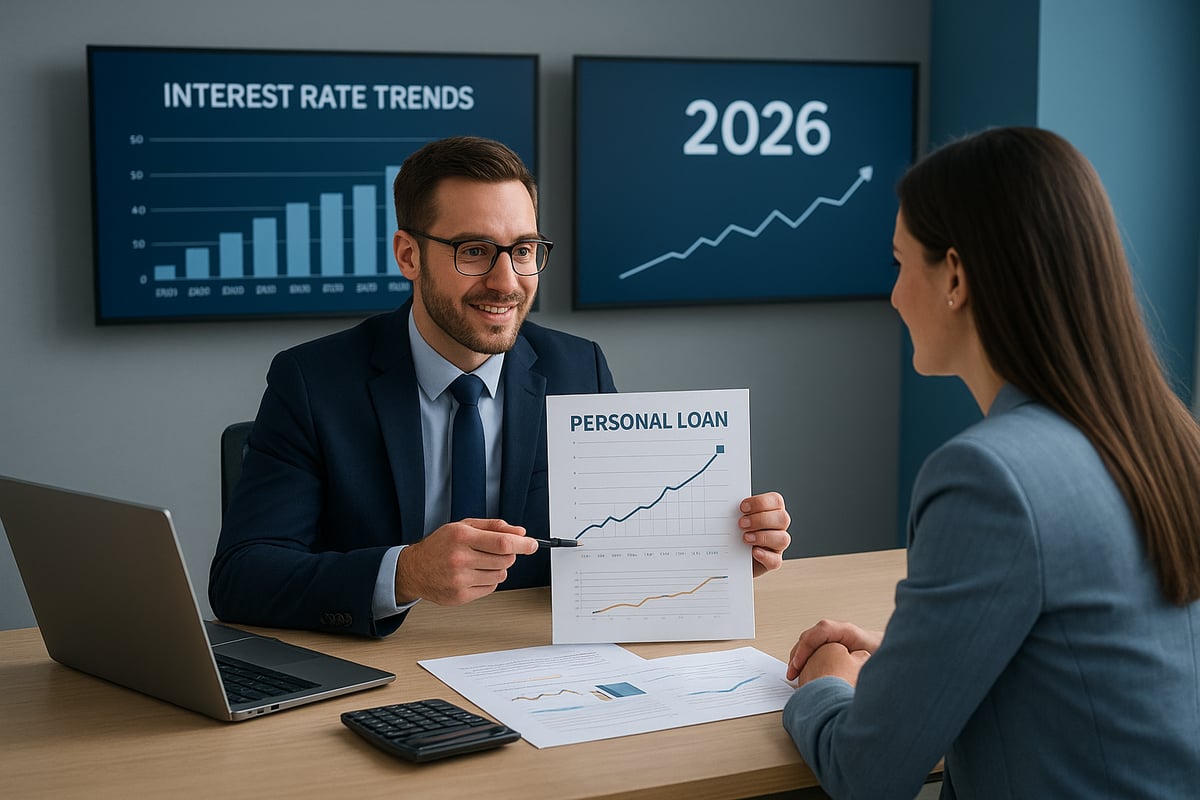
From 2022 to 2025, secured personal loan interest rates fluctuated as the economic climate shifted. Early in this period, rates rose quickly due to inflation and monetary tightening. Lenders became more cautious, especially after the pandemic recovery, leading to stricter requirements for collateral and borrower creditworthiness.
A comparison of average secured personal loan interest rates over these years shows a gradual increase, then modest stabilization:
| Year | Average Secured Rate (%) |
|---|---|
| 2022 | 6.5 |
| 2023 | 8.0 |
| 2024 | 9.2 |
| 2025 | 7.5 – 12.0 |
Borrowers with strong credit and valuable collateral continued to access the lower end of these ranges. Meanwhile, subprime borrowers faced higher costs. Lenders also began offering more flexible terms, responding to increased competition and digital innovation. This context is vital for anyone tracking secured personal loan interest rates in 2026, as it sets the stage for future developments.
2026 Market Forecasts
Looking ahead, experts anticipate that secured personal loan interest rates will remain sensitive to macroeconomic policy shifts. The Federal Reserve's actions on the prime rate and ongoing inflation concerns are expected to play major roles. Many analysts predict moderate decreases in rates if inflation cools and economic growth stabilizes.
According to the Personal loan interest rate forecast for 2026, average rates could settle between 7.0% and 10% for borrowers with strong profiles. Those with lower credit scores or less valuable collateral may still see rates above 12%. Regulatory changes and increased competition among lenders are likely to provide more options for rate shopping and negotiation. These shifts mean that secured personal loan interest rates could become more favorable for borrowers who prepare carefully.
Regional and Lender-Specific Variations
Secured personal loan interest rates are not uniform across the country. Regional economic conditions, such as employment rates and local inflation, influence what lenders can offer. For example, borrowers in the Southern U.S. may find slightly lower rates compared to those in the Northeast, reflecting differences in cost of living and market demand.
Lender type is another significant factor. National banks often provide more standardized rates, while local credit unions and online lenders may offer promotional rates or flexible terms. Peer-to-peer platforms sometimes undercut traditional lenders by leveraging technology and lower overhead costs. By comparing offers from different types of institutions, consumers can maximize their chances of finding the most competitive secured personal loan interest rates for their needs.
New Products and Innovations
Innovation is rapidly changing how secured personal loan interest rates are set and delivered. Digital collateral verification now streamlines the approval process, allowing lenders to assess risk more accurately and quickly. Some fintech companies use machine learning to evaluate borrower profiles, leading to personalized rates and faster decisions.
Emerging products include secured loans backed by digital assets or alternative forms of collateral, expanding access for a wider range of borrowers. Technology is also facilitating real-time rate comparisons, empowering consumers to make more informed choices. As these innovations mature, secured personal loan interest rates may become more transparent and competitive, benefiting borrowers who stay informed and leverage new tools.
How to Compare and Secure the Best Secured Personal Loan Rates
Navigating the world of secured personal loan interest rates can be overwhelming, especially with so many lenders and products available in 2026. To ensure you find the lowest rate and best terms, it’s essential to follow a systematic approach. The following steps will help you compare options, make informed decisions, and secure the most favorable deal.
Step 1: Assess Your Credit and Financial Profile
Before applying, take a close look at your credit score and overall financial situation. Lenders rely on this information to determine your secured personal loan interest rates, so knowing where you stand is critical.
Start by checking your credit report for errors and paying down outstanding debts if possible. Even a 50-point increase in your credit score can dramatically lower secured personal loan interest rates, potentially saving you hundreds or thousands over the life of your loan.
Gather essential documents:
- Recent pay stubs or proof of income
- Employment verification
- Collateral details with documentation
A strong debt-to-income ratio and stable employment history make you a more attractive borrower. Improving these factors increases your chances of qualifying for the best secured personal loan interest rates.
Step 2: Research and Shortlist Lenders
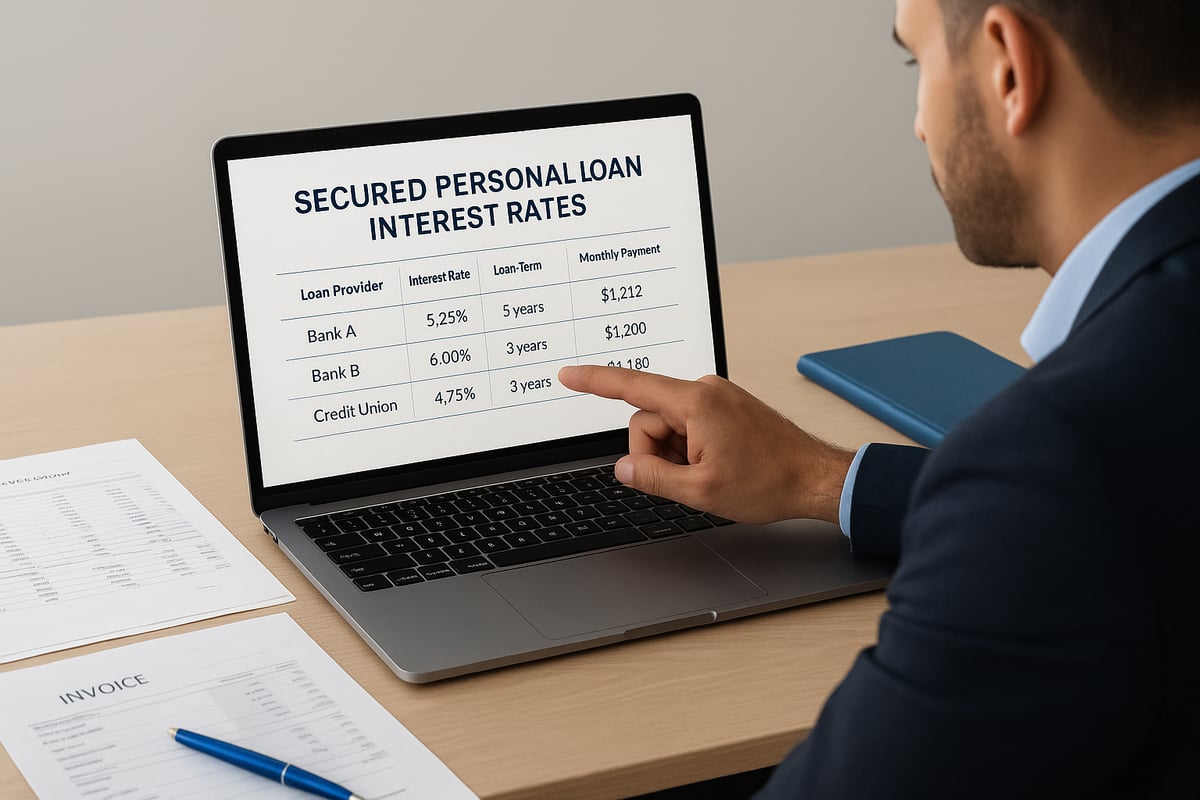
Once you understand your profile, begin researching lenders. Compare banks, credit unions, and online lenders, as each may offer different secured personal loan interest rates and terms.
Consider using Comparing personal loan rates to quickly identify rate differences and lender reputations. Look for:
- Transparent fee structures
- Favorable customer reviews
- Loan comparison tools and calculators
Create a shortlist of lenders that consistently offer competitive secured personal loan interest rates and provide clear information about their products.
Step 3: Evaluate Loan Offers and Terms
When you receive loan offers, review each one carefully. Focus on the annual percentage rate (APR), which includes both the interest rate and any additional fees. Remember, two loans with similar interest rates might have different total costs due to hidden fees or prepayment penalties.
Key terms to evaluate:
- APR vs interest rate
- Origination and administrative fees
- Prepayment and late payment penalties
- Repayment flexibility
For example, you might receive two offers with the same interest rate, but one has a higher origination fee, making it more expensive overall. Understanding these details ensures you select the most cost-effective secured personal loan interest rates.
Step 4: Negotiate and Lock In Rates
After narrowing your choices, don’t hesitate to negotiate. Many lenders are willing to match or beat competitors’ offers, especially if you have strong credit or valuable collateral.
Tips for negotiation:
- Present competing offers as leverage
- Ask about rate discounts for automatic payments or loyalty
- Clarify how long a rate lock lasts and any conditions
Lock in your secured personal loan interest rates when you find a favorable offer, especially if market rates are expected to rise soon. A rate lock protects you from potential increases during the application process.
Step 5: Finalize Application and Collateral Process
The final step is completing your application and providing collateral documentation. This process typically includes credit checks, collateral appraisal, and signing loan agreements.
For a detailed breakdown, see the Application process for secured loans, which outlines each step from submission to funding.
Prepare to:
- Submit financial and collateral documents
- Schedule collateral inspections or appraisals
- Review and sign final loan agreements
Most borrowers receive funding within days of approval, provided all collateral and documentation meet the lender’s requirements. Completing these steps carefully ensures you lock in the best secured personal loan interest rates available.
Frequently Asked Questions About Secured Personal Loan Interest Rates
Borrowers often have important questions about secured personal loan interest rates, especially with changing economic conditions in 2026. Below are clear answers to some of the most frequently asked questions, helping you navigate the lending landscape with confidence.
What is considered a good interest rate for a secured personal loan in 2026?
A good interest rate for secured personal loan interest rates in 2026 is expected to range from 7 percent to 12 percent for borrowers with strong credit profiles and valuable collateral. Rates may vary based on economic trends and lender competition, so it is always wise to compare multiple offers to secure the most favorable terms.
How much lower are secured loan rates compared to unsecured?
Secured personal loan interest rates are typically 2 to 5 percentage points lower than unsecured loan rates. This difference is due to the collateral provided, which reduces the lender's risk. For example, if unsecured rates average 11 percent to 18 percent, secured rates may fall between 7 percent and 13 percent, depending on your creditworthiness and collateral.
| Loan Type | Typical Interest Rate (2026) |
|---|---|
| Secured Personal Loan | 7% – 12% |
| Unsecured Personal Loan | 11% – 18% |
What happens if I default on a secured personal loan?
When you default on a secured personal loan, the lender can seize the asset you used as collateral. This may include your vehicle, savings, or property. Defaulting can also negatively impact your credit score and make future borrowing more difficult, so it is essential to understand the risks before agreeing to the loan terms.
Can I refinance a secured personal loan for a lower rate?
Yes, refinancing is possible if you have improved your credit score, increased your income, or if market rates have dropped. By refinancing, you may be able to secure a lower interest rate or better terms. It is important to review the new loan’s fees and check for prepayment penalties on your original loan. For more on what impacts your ability to refinance, see Factors affecting personal loan interest rates.
Are there penalties for early repayment?
Some secured personal loan interest rates come with prepayment penalties if you pay off the loan early. These fees compensate the lender for lost interest income. Always review your loan agreement for any prepayment clauses, and ask your lender to clarify if penalties apply before signing.
How does the type of collateral affect my rate?
The value and type of collateral have a direct effect on secured personal loan interest rates. High-value, stable assets like real estate or savings accounts often result in lower rates, while depreciating assets such as vehicles may lead to higher rates. Lenders consider how easily they can recover value from your collateral if you default.
How often do interest rates change, and can my rate increase after I take out a loan?
If you select a fixed-rate secured personal loan, your interest rate will remain the same throughout the loan term. However, variable-rate loans can change periodically, often tied to benchmarks like the prime rate. Economic changes, such as anticipated Federal Reserve rate cut expectations in 2026, may influence future rate adjustments. Always check whether your loan is fixed or variable before agreeing to the terms.
What are the risks of using my car or home as collateral?
Using valuable assets as collateral for secured personal loan interest rates can help you qualify for better terms, but it also means you risk losing those assets if you default. Carefully consider your ability to repay and have a plan in place to avoid financial hardship.
Understanding these key questions about secured personal loan interest rates will empower you to make informed borrowing decisions and secure the best possible deal for your needs.
Now that you have a clearer understanding of how secured personal loan interest rates work and what to expect in 2026, you are in a strong position to make informed decisions for your financial future. Whether you are considering a loan for home improvements, education, or unexpected expenses, taking the time to compare rates and understand your options can save you money and stress down the line. If you are ready to take the next step and put this knowledge to work, you can Apply Today.





No comment yet, add your voice below!