

The world of unsecured consumer lending is changing rapidly as we move toward 2026. New technology, shifting regulations, and evolving borrower needs are transforming how both consumers and lenders approach borrowing.
This guide offers a clear look at unsecured consumer lending, giving you expert insights into current trends, key risks, and essential best practices. Whether you are planning to borrow or lend, staying informed is crucial.
Are you prepared for the next wave of innovation and regulation? Discover how to make smart, confident decisions in this dynamic market by using the insights shared in this comprehensive resource.
Understanding Unsecured Consumer Lending
Unsecured consumer lending is a major force in today’s financial ecosystem, offering flexible access to credit without requiring collateral. As we move toward 2026, understanding how these loans work, who they serve, and the evolving market landscape is essential for informed financial decisions.

Defining Unsecured Consumer Lending
Unsecured consumer lending refers to loans that do not require the borrower to pledge any asset as collateral. This means approval is based on the applicant’s creditworthiness rather than property or savings. Common products include personal loans, credit cards, and lines of credit. Unlike secured loans, where your car or home might back the debt, unsecured loans rely on your promise to repay.
Typical borrowers span a wide range, from individuals seeking funds for emergency expenses to those consolidating debt or financing major purchases. The appeal of unsecured consumer lending lies in its accessibility and versatility. In recent years, this market has seen rapid growth as more consumers seek out fast, flexible financial solutions.
How Unsecured Lending Works
The process of obtaining unsecured consumer lending begins with an application that assesses your credit score, income, and debt-to-income ratio. Lenders use these factors to determine your eligibility and set terms. Documentation usually includes identification, proof of income, and sometimes employment verification.
Loan amounts and repayment terms vary based on the lender and your qualifications. Interest rates are typically higher than those for secured loans, reflecting the increased risk to the lender. For example, a standard personal loan might offer $5,000 to $50,000, repayable in fixed monthly installments over one to five years. Understanding how unsecured consumer lending is structured helps borrowers make informed choices and avoid surprises.
Benefits and Drawbacks for Borrowers
Unsecured consumer lending offers several advantages. Funds are often available quickly, and no collateral means you are not risking your assets if you default. Flexible terms make these loans attractive for a variety of needs, from medical expenses to home improvement.
However, higher interest rates are a common drawback, as lenders compensate for greater risk. There is also a risk of overborrowing, which can lead to debt cycles and financial stress. Responsible use of unsecured consumer lending can help build your credit score, but missed payments may have negative consequences. Balancing these pros and cons is crucial for healthy financial management.
Market Size and Recent Trends
The unsecured consumer lending market has expanded significantly in the United States, with outstanding balances and loan originations reaching new highs. Economic cycles influence demand: during downturns, borrowers may seek credit to bridge income gaps, while lenders tighten standards.
According to recent data, 2025 saw record issuance of asset-backed securities tied to unsecured consumer loan portfolios, highlighting robust investor interest and ongoing growth. For more detailed insights, see Unsecured consumer loan ABS issuance sets records in 2025. Demographics are shifting, with younger borrowers and underserved populations gaining greater access to credit. These trends signal a dynamic future for unsecured consumer lending.
The 2026 Unsecured Lending Landscape: Key Trends and Innovations
As we approach 2026, the landscape of unsecured consumer lending is undergoing a profound transformation. New technologies, evolving regulations, and changing borrower profiles are reshaping how lenders and consumers interact. Staying informed about these key trends is essential for anyone navigating unsecured consumer lending in the coming years.

Fintech Disruption and Digital Lending
Fintech innovation is at the heart of the next wave in unsecured consumer lending. Online lending platforms and mobile-first applications have made it easier than ever for consumers to access credit quickly, with decisions sometimes delivered in minutes. Automation now powers much of the underwriting and loan servicing process, reducing manual intervention and streamlining approvals.
Artificial intelligence and machine learning are revolutionizing risk assessment, enabling lenders to better predict default risks and detect fraud in real time. This is particularly beneficial for borrowers with limited credit history, as alternative data sources can open doors to credit that were previously closed. Many fintechs are targeting low-to-moderate income borrowers, offering more inclusive lending options and tailored products.
For a deeper dive into how technology is reshaping the industry, explore these 10 Fintech Trends Reshaping Consumer Lending in 2026. These trends highlight innovations like real-time payroll connectivity, embedded finance, and advanced credit scoring.
The impact on unsecured consumer lending is clear: greater accessibility, faster funding, and more personalized loan experiences are now the norm.
Regulatory and Compliance Changes
The regulatory environment for unsecured consumer lending is evolving rapidly. In 2026, lenders are preparing for new federal and state-level initiatives focused on consumer protection and data privacy. The Consumer Financial Protection Bureau (CFPB) is expected to introduce stricter lending standards, emphasizing transparency and fair practices.
Key changes include updated interest rate caps, clearer fee disclosures, and stronger requirements for verifying borrower ability to repay. States may also implement their own rules, creating a complex compliance landscape for lenders operating across regions.
To adapt, lenders are investing in compliance technology and staff training. Enhanced monitoring systems help ensure adherence to regulations, while automated reporting tools streamline audits. The result is a more transparent and secure unsecured consumer lending market, benefiting both lenders and borrowers.
A summary of anticipated regulatory changes:
| Regulatory Focus | Impact on Lenders | Benefit to Consumers |
|---|---|---|
| Interest Rate Caps | Limits on pricing flexibility | Lower borrowing costs |
| Fee Disclosure Rules | Enhanced transparency required | Easier comparison shopping |
| Data Privacy Mandates | Stricter data handling standards | Improved information security |
Evolving Borrower Demographics and Needs
Borrower profiles in unsecured consumer lending are shifting. Younger consumers, including Millennials and Gen Z, are increasingly seeking credit for lifestyle, education, and entrepreneurial ventures. The rise of gig economy workers and freelancers has led to greater demand for flexible, short-term loans that accommodate variable income streams.
Many new borrowers have thin or non-traditional credit files. This has prompted lenders to design products that better serve those with limited credit history, such as recent immigrants or students. Financial inclusion remains a top priority, with programs aimed at underserved populations expanding across the country.
These demographic changes are driving innovation in unsecured consumer lending, as lenders strive to meet diverse needs and preferences.
Data, Analytics, and Alternative Credit Scoring
Advanced data analytics are transforming unsecured consumer lending by enabling more accurate risk assessment and underwriting. Lenders now use alternative data—such as utility payments, rent records, and digital footprints—to evaluate applicants who might lack traditional credit histories.
Predictive analytics tools help lenders identify patterns that indicate creditworthiness or potential default, improving approval rates for qualified borrowers. This approach also reduces bias by considering a broader range of financial behaviors.
However, challenges remain. Ensuring data quality and addressing potential algorithmic bias are ongoing concerns. Transparent processes and regular audits are essential to maintain trust in unsecured consumer lending.
Economic and Market Influences
The broader economic climate has a significant impact on unsecured consumer lending. Inflation, shifts in interest rates, and economic uncertainty all influence both borrower demand and lender risk tolerance. After the pandemic, trends in delinquencies and household debt-to-income ratios are closely monitored.
Analysts rely on data from sources like the New York Fed to track household debt and credit trends. As economic cycles fluctuate, lenders adjust their strategies for risk management and portfolio diversification.
By understanding these market dynamics, both borrowers and lenders can better navigate the unsecured consumer lending space in 2026, making informed decisions that support long-term financial health.
Risks and Challenges in Unsecured Consumer Lending
Navigating unsecured consumer lending in 2026 requires a thorough understanding of the risks involved. Both borrowers and lenders face unique challenges as the market evolves. Let us explore the most pressing issues shaping this sector today.
Credit Risk and Default Management
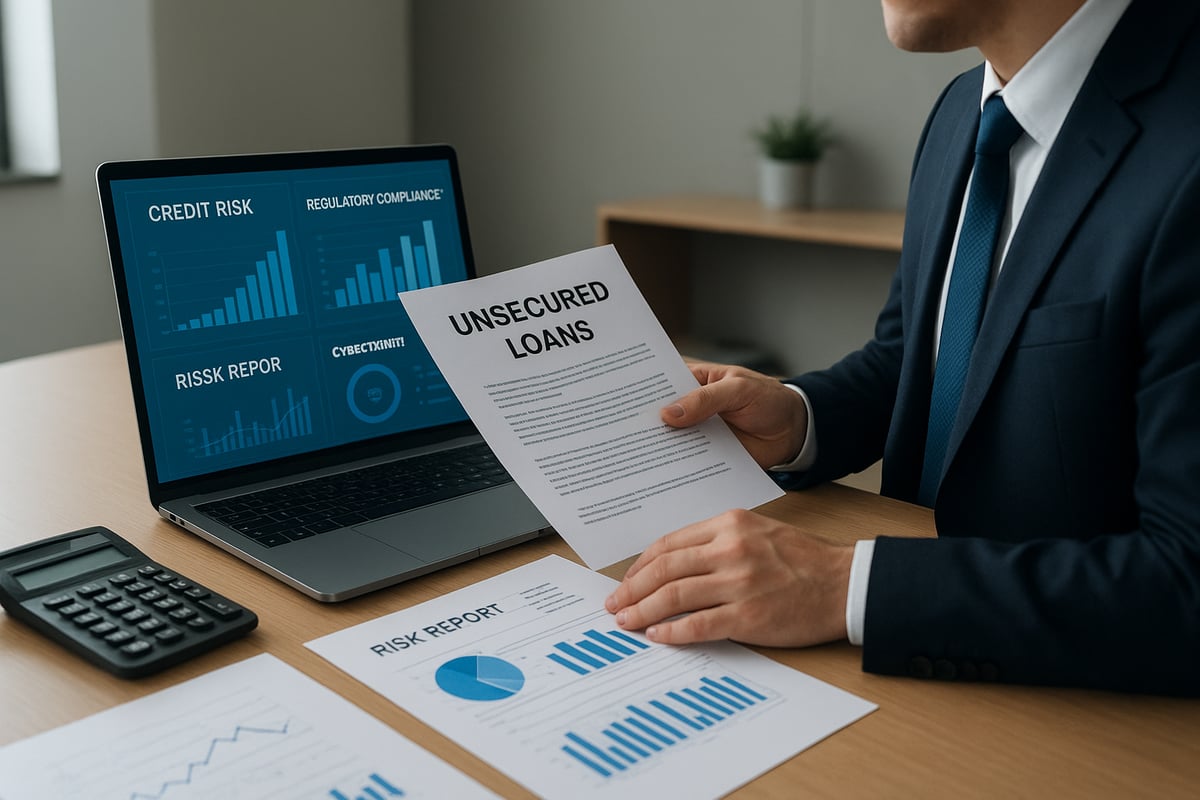
Credit risk remains the primary challenge in unsecured consumer lending because no collateral backs the loans. Lenders rely heavily on credit histories and income verification, yet rising delinquencies and economic volatility can lead to increased defaults. As seen in the TransUnion 2026 Consumer Credit Forecast, trends indicate that credit card balances and missed payments are on the rise, highlighting the importance of robust risk management.
To address these risks, lenders use advanced credit scoring models, real-time monitoring, and risk-based pricing strategies. Portfolio diversification can help mitigate exposure, especially during economic downturns. For example, a sudden spike in unemployment may lead to higher default rates, directly impacting profitability for institutions engaged in unsecured consumer lending.
Borrowers should recognize that missed payments can quickly harm credit scores, making future borrowing more difficult. Lenders are continuously adapting their underwriting processes to respond to shifts in consumer behavior and macroeconomic conditions, ensuring the sustainability of unsecured consumer lending.
Regulatory and Legal Risks
Regulatory and legal compliance is critical in unsecured consumer lending. Federal and state laws such as the Truth in Lending Act set strict requirements for disclosures, interest rates, and fee transparency. Lenders risk fines, lawsuits, or reputational harm if they fail to meet these standards.
Fair lending and anti-discrimination laws demand that lenders treat all applicants equally, regardless of background or credit history. Enhanced data privacy and cybersecurity mandates require robust protection of borrower information. Recent regulatory actions against predatory lenders underscore the importance of staying up to date with changing compliance expectations in unsecured consumer lending.
Consumer Protection and Responsible Lending
Consumer protection is at the forefront of unsecured consumer lending. Risks like predatory lending, misleading terms, and debt traps make it essential for both lenders and borrowers to prioritize transparency. Clear disclosures, plain language contracts, and upfront explanations of terms help build trust and prevent misunderstandings.
Financial literacy programs and borrower education are vital tools for reducing risk. Consumer advocacy groups and government agencies are active in monitoring the market, holding lenders accountable, and ensuring ethical practices. Enforcement actions and settlements serve as reminders that responsible lending is non-negotiable in unsecured consumer lending.
Fraud and Cybersecurity Threats
The digital transformation in unsecured consumer lending has increased vulnerability to fraud and cyberattacks. Identity theft and synthetic fraud are growing concerns, especially as more applications move online. Lenders deploy multi-factor authentication, encryption, and continuous monitoring to protect sensitive data.
Regulators now expect strict adherence to data protection standards. High-profile breaches have shown how quickly consumer trust can erode. Best practices in fraud prevention include robust verification processes, employee training, and regular security audits. Both borrowers and lenders must remain vigilant as digital threats continue to evolve in unsecured consumer lending.
Operational and Reputational Risks
Operational risks, such as technology outages or errors in loan servicing, can disrupt the unsecured consumer lending process. Customer service quality and timely complaint resolution are crucial for maintaining a positive reputation.
Social media and online reviews can amplify issues quickly. Negative publicity from lending scandals or process failures may damage brand credibility. Proactive risk management and transparent communication help lenders safeguard their reputation and ensure ongoing trust in unsecured consumer lending.
Borrower’s Guide: Navigating Unsecured Loans in 2026
Navigating unsecured consumer lending in 2026 requires a thoughtful approach. With new technologies, evolving borrower profiles, and regulatory shifts, making the right choices is more important than ever. This guide will help you assess your options, understand costs, and avoid common pitfalls while leveraging the benefits of unsecured consumer lending.
Assessing Your Needs and Loan Options
Before applying for any unsecured consumer lending product, clearly define your financial goal. Are you consolidating debt, funding a home upgrade, or covering an unexpected expense? Matching your need to the right loan type is crucial.
Common options include personal loans, credit cards, lines of credit, and Buy Now, Pay Later (BNPL) programs. Each comes with unique features, terms, and repayment structures. For example, personal loans are ideal for one-time expenses, while lines of credit offer ongoing flexibility.
Evaluate the amount needed, your ability to repay, and the impact on your monthly budget. If you have assets, compare unsecured consumer lending with secured loans, credit union offers, or peer-to-peer lending. For a home improvement project, a personal loan may provide fixed payments and clear terms, making budgeting easier.
Understanding Loan Terms and Costs
Understanding the terms and costs of unsecured consumer lending is essential to avoid surprises. Start by comparing interest rates: fixed rates provide predictable payments, while variable rates can change over time.
Fees matter, too. Watch for origination charges, late payment fees, and prepayment penalties. The Annual Percentage Rate (APR) combines interest and fees, offering a clear picture of the total borrowing cost.
Use the following table to compare typical loan costs:
| Fee Type | Description | Typical Range |
|---|---|---|
| Origination Fee | One-time fee for processing | 1% – 8% |
| Late Payment Fee | Charged for missed payments | $15 – $40 |
| Prepayment Penalty | Fee for early repayment | 0% – 5% |
Carefully read loan offers, compare APRs, and calculate the total repayment over the loan term before committing.
Application Process and Approval Criteria
Applying for unsecured consumer lending involves gathering documents such as ID, proof of income, and credit information. Lenders assess your credit score, debt-to-income ratio, and employment status.
Pre-qualification offers a soft credit check and estimate of terms, while pre-approval involves a hard inquiry that may affect your score. Improve your chances by paying down existing debts and correcting errors on your credit report.
During the application, be ready to provide accurate information and respond to verification requests promptly. Understanding what lenders look for can help you secure better terms and a smoother approval process.
Managing Repayment and Avoiding Debt Traps
Effective management of unsecured consumer lending is key to maintaining financial health. Set up a repayment plan that aligns with your income and expenses. Many lenders offer automatic payments and digital reminders, minimizing the risk of missed payments.
Early repayment can save on interest, but check for prepayment penalties. If you miss a payment, contact your lender right away to discuss options and prevent negative credit impacts.
Watch for warning signs of debt cycles, such as borrowing to cover existing debts. Responsible borrowing and timely payments help you avoid the pitfalls of revolving debt.
Protecting Your Credit and Financial Health
Unsecured consumer lending directly affects your credit profile. On-time payments build a positive history, while late or missed payments can lower your score.
Monitor your credit report regularly to spot errors or unauthorized activity. Consider debt consolidation or refinancing if you’re struggling with multiple loans. If financial hardship arises, seek help from reputable credit counselors.
Responsible use of unsecured consumer lending can strengthen your financial position and open doors to future opportunities.
Common Mistakes and How to Avoid Them
Many borrowers fall into traps with unsecured consumer lending by overborrowing or neglecting to review loan details. Always scrutinize the fine print, including fees, interest rates, and repayment terms.
Be wary of predatory lenders and digital scams. Research, like The Cost of Convenience: Identifying, Analyzing, and Mitigating Predatory Loan Applications on Android, highlights risks in the fast-growing digital lending space. Protect yourself by choosing reputable lenders and comparing multiple offers.
Plan for emergencies and avoid taking on more debt than you can handle. Being informed is your best defense.
Flexible Lending Solutions with Standard Financial
Standard Financial specializes in unsecured consumer lending, even for those with past credit setbacks. They offer flexible financing plans, refinancing, and a range of loan types for home improvements, medical needs, education, and more.
Serving Louisiana, Mississippi, Tennessee, and Georgia, Standard Financial provides local, personalized service at 14 branch locations. They welcome applicants with bankruptcies, limited credit, or unique financial situations.
Expert guidance is available throughout the application process, with competitive and affordable payment options. Their online application and payment portal add convenience. Standard Financial is committed to customer satisfaction and financial empowerment for all borrowers.
The Future of Unsecured Consumer Lending: What to Expect by 2026
As 2026 approaches, the future of unsecured consumer lending is set to be shaped by rapid technological progress, changing regulations, and evolving consumer needs. Lenders, borrowers, and industry stakeholders must stay informed to navigate this shifting landscape effectively. Let’s explore the trends and innovations that will define unsecured consumer lending over the next few years.
New Technologies and Digital Transformation
Unsecured consumer lending is undergoing a digital revolution. Lenders are deploying AI-driven underwriting, blockchain-based identity verification, and embedded finance solutions. These advancements enable real-time payments and instant loan approvals, transforming the borrowing experience.
For example, digital assistants and chatbots streamline customer service, while API-based lending platforms make it easier to access funds. Automation also enhances risk assessment and fraud detection. Many lenders now offer flexible lending solutions, providing borrowers with convenient online applications and fast decisions.
This technology-driven approach boosts efficiency and accessibility, making unsecured consumer lending more responsive to modern demands.
Regulatory Outlook and Policy Drivers
The regulatory environment for unsecured consumer lending is evolving rapidly. Federal and state agencies are increasing their focus on data protection, transparency, and fair lending practices. Anticipated regulations may include stricter disclosure requirements, open banking mandates, and enhanced oversight of alternative data usage.
Regulators are responding to economic volatility by encouraging responsible lending and improving consumer protections. Lenders must adapt to new compliance standards, which often require investment in advanced monitoring systems and updated policies. These changes aim to foster trust and stability in unsecured consumer lending.
A table summarizing key regulatory drivers:
| Area | 2026 Focus |
|---|---|
| Data Privacy | Enhanced consumer data protection |
| Lending Transparency | Clearer disclosures, fee caps |
| Open Banking | Greater data portability |
| Fair Lending | Monitoring for bias, inclusive practices |
Shifting Consumer Behaviors and Expectations
Borrowers are demanding faster, more seamless unsecured consumer lending experiences. The rise of digital channels, mobile-first applications, and self-service tools is changing how consumers interact with lenders.
Millennials and Gen Z, in particular, expect instant approvals, transparent terms, and the ability to manage loans online. Financial literacy is rising, empowering borrowers to compare offers and make informed choices. The trend toward mobile loan applications is accelerating, reflecting a broader shift in consumer behavior.
These evolving expectations require lenders to innovate, ensuring unsecured consumer lending keeps pace with digital lifestyles and higher service standards.
Competitive Landscape and Market Consolidation
The unsecured consumer lending market is becoming more competitive and diverse. Big tech companies, non-bank lenders, and fintech startups are entering the space. This influx drives innovation and widens borrower options.
Mergers, acquisitions, and strategic partnerships are reshaping the landscape. Many lenders are targeting niche demographics, such as gig workers or recent immigrants, with tailored products. Fintech-bank collaborations offer unique advantages, combining technology with established financial expertise.
For example, regional providers like Louisiana unsecured loan options showcase how local lenders adapt to meet specific needs in their communities. This dynamic environment enhances choice and promotes better terms for borrowers.
Financial Inclusion and Social Impact
Advancements in unsecured consumer lending are expanding access to credit for underserved populations. Lenders now leverage alternative data sources to evaluate applicants with limited credit history, helping bridge financial gaps.
Community-based lending models and social responsibility initiatives are gaining traction. Programs designed for low- and moderate-income borrowers promote economic empowerment and foster long-term financial stability.
The industry’s commitment to inclusion is further supported by regulatory encouragement and technology, making unsecured consumer lending a catalyst for broader social impact.
Preparing for Economic Uncertainty
Economic uncertainty remains a core consideration for unsecured consumer lending. Both lenders and borrowers must plan for rising interest rates, inflation, and potential downturns.
Key strategies include:
- Stress testing loan portfolios
- Building emergency savings
- Scenario planning for changing market conditions
- Offering flexible loan terms and support programs
Being proactive helps all parties navigate uncertainty and maintain stability in the unsecured consumer lending market.
As you look ahead to 2026 and consider your options for unsecured consumer lending, it's important to work with a partner who truly understands your needs—even if you’ve faced credit challenges in the past. At Standard Financial, we’re committed to helping you find the right financing solution, whether it’s for a home improvement, medical expense, or education. With flexible plans, local support across Louisiana, Mississippi, Tennessee, and Georgia, and a straightforward online process, you can take control of your financial future with confidence. Ready to move forward? Apply For A Loan Today





No comment yet, add your voice below!