

When you borrow money, whether for home improvements, medical expenses, or education, understanding the fine print can save you thousands of dollars. The phrase "loan terms" appears throughout lending agreements, but many borrowers don't fully grasp what these terms mean or how they impact their financial future. This comprehensive guide breaks down everything you need to know about loan terms, helping you make informed decisions that align with your budget and long-term financial goals.
What Are Loan Terms and Why Do They Matter?
Loan terms refer to both the duration of your repayment period and the specific conditions outlined in your lending agreement. Understanding loan terms is crucial because they directly influence your monthly payment amount, total interest paid, and overall financial obligations.
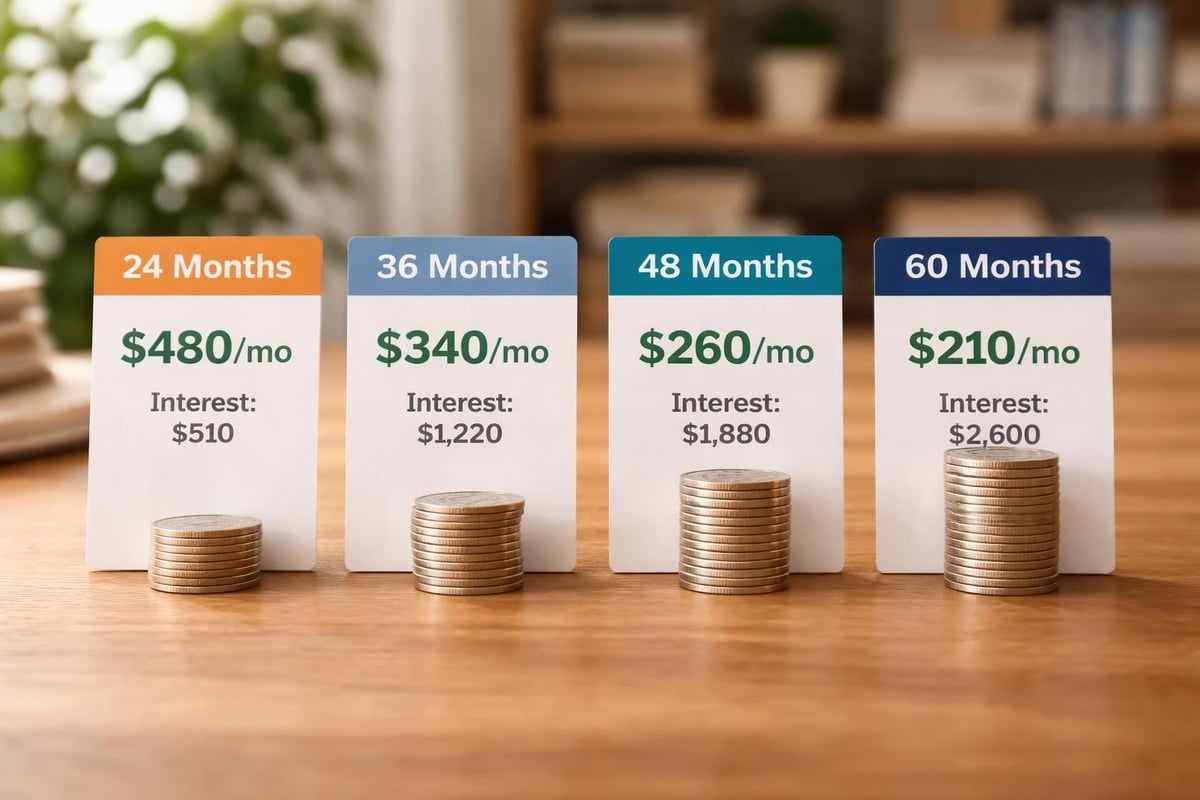
The repayment period typically ranges from a few months to several years, depending on the loan type and amount. Personal loans commonly feature terms between 12 and 84 months, though some lenders offer more flexible options. A shorter term means higher monthly payments but less total interest, while a longer term reduces monthly obligations but increases the total cost of borrowing.
The Dual Meaning of Loan Terms
Understanding both definitions helps you evaluate loan offers:
- Term length: The time period you have to repay the borrowed amount
- Term conditions: The specific rules, rates, and requirements in your agreement
- Combined impact: How duration and conditions work together to determine affordability
These elements interact to shape your borrowing experience. A five-year personal loan at 8% APR creates different obligations than a three-year loan at the same rate, even with identical principal amounts.
Key Components That Define Your Loan Terms
Every lending agreement contains several critical elements that collectively form your loan terms. Recognizing these components empowers you to compare offers effectively and negotiate better conditions.
Principal and Interest Rate
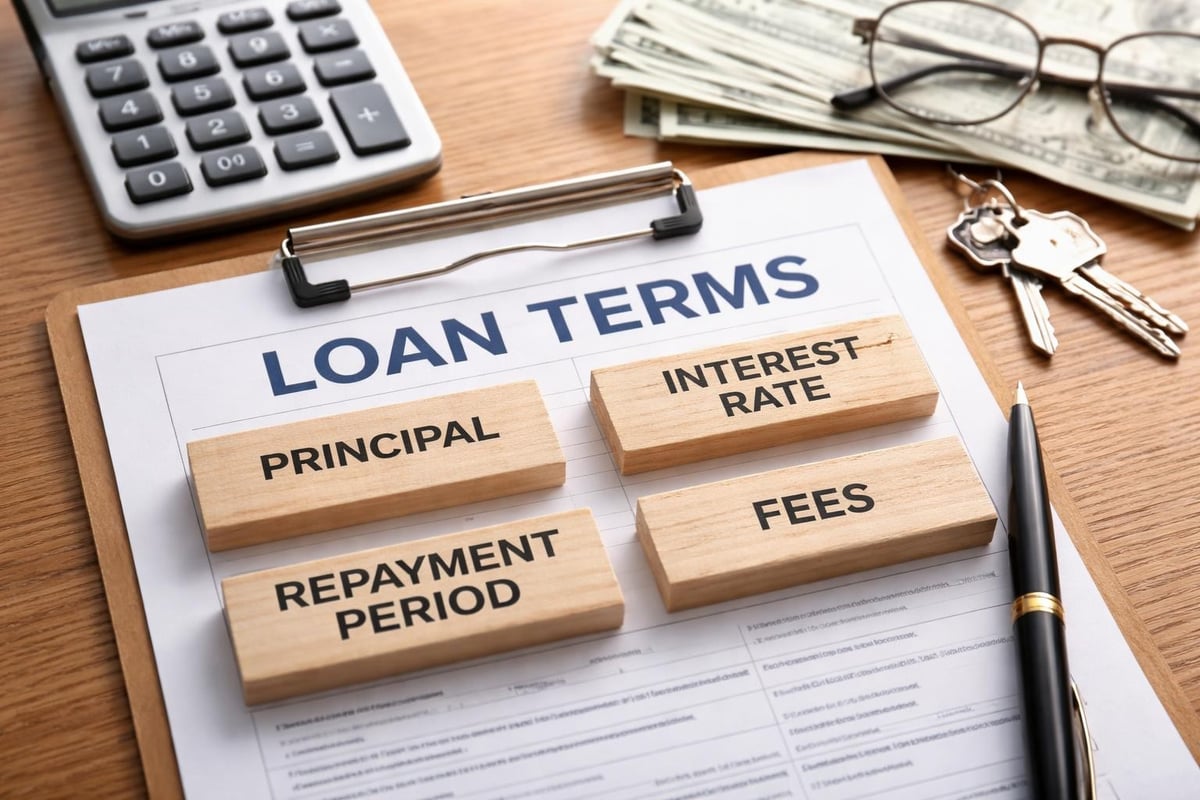
The principal represents the actual amount you borrow, while the interest rate determines how much you pay for that privilege. Together, they calculate your monthly payment and total repayment amount. Fixed rates remain constant throughout the loan term, providing predictable payments. Variable rates fluctuate based on market conditions, potentially lowering or raising your obligations.
Annual Percentage Rate (APR) offers a more complete picture than the interest rate alone. This comprehensive measure includes fees and other costs, revealing the true cost of borrowing.
Payment Schedule and Frequency
Most personal loans require monthly payments, but some agreements allow bi-weekly or weekly schedules. The payment frequency affects how quickly you reduce the principal balance and how much interest accumulates.
| Payment Frequency | Payments Per Year | Impact on Interest | Best For |
|---|---|---|---|
| Monthly | 12 | Standard accumulation | Most borrowers |
| Bi-weekly | 26 | Slightly reduced | Those paid bi-weekly |
| Weekly | 52 | Further reduced | Weekly income earners |
Aligning your payment schedule with your income frequency helps maintain consistent cash flow and reduces the risk of missed payments.
Prepayment and Penalty Clauses
Some loan terms include prepayment penalties that charge fees if you pay off the balance early. Understanding these clauses matters because paying extra toward principal can significantly reduce total interest costs. Before signing, confirm whether your agreement allows additional payments without penalties.
Common prepayment structures include:
- No penalty for extra payments or early payoff
- Penalties that decrease over time
- Flat fees for paying off within a specific timeframe
- Percentage-based charges on the remaining balance
How Loan Term Length Affects Your Finances
The length of your loan term dramatically impacts both monthly affordability and total cost. Choosing the right duration requires balancing immediate budget constraints against long-term financial efficiency.
Short-Term Loans: Higher Payments, Lower Costs
Loan terms ranging from 12 to 36 months typically feature higher monthly payments but significantly lower total interest. Borrowers who can afford the steeper monthly obligations save money over the life of the loan.
For example, a $10,000 loan at 9% APR paid over 24 months requires approximately $456 monthly but costs roughly $950 in total interest. The same loan extended to 60 months drops the monthly payment to about $208 but increases total interest to approximately $2,480.
Long-Term Loans: Lower Payments, Higher Costs
Extended loan terms between 48 and 84 months make borrowing more accessible by reducing monthly payments. This option works well for borrowers managing tight budgets or dealing with other financial obligations like medical expenses or home improvements.
However, longer terms mean more interest accumulation. You pay interest on the principal for additional years, which substantially increases the total amount repaid. Additionally, longer terms may result in owing more than the original purchase value if you financed a depreciating asset.
Finding the Right Balance
The optimal loan term depends on your specific financial situation. Consider your monthly income, existing debts, emergency savings, and future financial goals. A term that stretches your budget too thin increases default risk, while an unnecessarily short term might prevent you from building emergency reserves.
Understanding Other Important Loan Term Conditions
Beyond repayment duration, loan terms encompass numerous conditions that govern your borrowing relationship. These contractual elements protect both lender and borrower while establishing clear expectations.
Collateral and Security Requirements
Secured loans require collateral-an asset that the lender can claim if you default. Unsecured personal loans don't require collateral but typically carry higher interest rates to offset the lender's increased risk. Understanding whether your loan terms include security requirements helps you assess potential consequences of non-payment.
Default and Delinquency Terms
Loan agreements specify what constitutes default and the resulting penalties. Missing one payment might incur a late fee, while extended delinquency could trigger the entire balance becoming due immediately. Reviewing these terms helps you understand the importance of timely payments and available options if financial hardship occurs.
Typical consequences of default include:
- Late payment fees ranging from $25 to $50
- Increased interest rates or penalty APR
- Negative reporting to credit bureaus
- Collection agency involvement
- Potential legal action or wage garnishment
Modification and Refinancing Options
Some loan terms allow modifications if your financial circumstances change. Others permit refinancing, letting you replace existing terms with new conditions that better suit your current situation. Understanding these options provides flexibility when facing unexpected life changes.
Special Considerations for Different Loan Types
Loan terms vary significantly across different borrowing purposes. Personal loans for home improvements, medical expenses, and education each present unique considerations that affect term selection.
Home Improvement Loans
Financing renovations or repairs typically involves larger amounts and potentially longer terms. Because home improvements often increase property value, borrowers might justify extended terms knowing the investment appreciates. However, matching the loan term to the improvement's lifespan makes financial sense-financing a roof replacement over ten years when roofs last 20-25 years is reasonable, but extending a cosmetic upgrade to the same duration may not be.
Medical Expense Financing
Medical loans often feature shorter terms since healthcare needs are immediate and don't create lasting assets. Many lenders offer special terms for medical financing, including promotional periods with reduced or zero interest. Carefully reviewing these terms reveals when promotional rates expire and what standard rates apply afterward.
| Loan Purpose | Typical Term Range | Common Features | Key Considerations |
|---|---|---|---|
| Home Improvement | 36-120 months | Larger amounts, moderate rates | Match term to improvement lifespan |
| Medical Expenses | 12-60 months | Quick approval, promotional offers | Watch for rate changes after promo periods |
| Education | 24-84 months | Flexible repayment, deferment options | Consider income-based alternatives |
| Debt Consolidation | 36-72 months | Fixed rates, streamlined payments | Ensure savings exceed origination fees |
Education Financing
Private education loans complement federal student aid, featuring terms that accommodate students' limited current income. Some agreements include deferment options allowing borrowers to delay payments until after graduation. Understanding these terms prevents surprises when repayment begins and helps plan for future obligations.
How Your Credit Affects Loan Terms
Creditworthiness significantly influences the loan terms lenders offer. Borrowers with strong credit histories typically receive more favorable conditions, including lower interest rates, longer term options, and reduced fees. However, lenders specializing in working with clients who have past credit issues can still provide viable financing solutions.
Credit Score Impact on Interest Rates
Your credit score directly affects your interest rate, which in turn impacts total borrowing costs. The difference between excellent and poor credit might mean several percentage points in APR. On a $15,000 loan over 48 months, the difference between 6% and 14% APR translates to approximately $2,400 in additional interest.
Credit score ranges and typical impacts:
- Excellent (720+): Lowest rates, best terms, highest approval chances
- Good (680-719): Competitive rates, favorable terms, strong approval odds
- Fair (640-679): Moderate rates, standard terms, reasonable approval
- Poor (below 640): Higher rates, stricter terms, specialized lenders needed
Improving Terms Through Better Credit
Even if your current credit limits your options, working to improve your score can unlock better terms through refinancing. Making consistent on-time payments, reducing debt-to-income ratio, and disputing credit report errors all contribute to higher scores over time.

Negotiating Better Loan Terms
Many borrowers don't realize loan terms are sometimes negotiable. While lenders maintain standard offers, demonstrating strong financial credentials or establishing a relationship can create opportunities for improved conditions.
Strategies for Better Terms
Approach negotiations with preparation:
- Research competitor offers: Knowledge of market rates strengthens your negotiating position
- Highlight positive factors: Emphasize stable employment, strong income, or substantial down payments
- Request specific changes: Ask for reduced rates, waived fees, or flexible payment schedules
- Consider relationship benefits: Existing customers often receive preferential treatment
- Time your application strategically: Apply when you have strongest financial standing
What You Can Potentially Negotiate
Interest rates represent the most impactful negotiable element, but other components may also have flexibility. Origination fees, prepayment penalties, and payment due dates sometimes adjust based on borrower requests and lender policies.
Reading and Understanding Your Loan Agreement
Before signing, thoroughly review your loan agreement to ensure you understand all terms. The contractual language might seem complex, but taking time to comprehend each section prevents future problems.
Essential Sections to Review
Every loan agreement contains critical sections requiring careful attention. The payment schedule details exact amounts and due dates. The interest rate section specifies whether rates are fixed or variable and explains how changes occur. The fees section outlines all costs including origination, late payment, and prepayment charges.
Key questions to answer before signing:
- What is my exact monthly payment amount?
- When is my first payment due?
- Can I make extra payments without penalty?
- What happens if I miss a payment?
- Are there any fees beyond the interest rate?
- Can the terms change during the loan period?
Getting Help Understanding Terms
Don't hesitate to ask questions if terms seem unclear. Reputable lenders welcome inquiries and provide explanations in plain language. If you feel pressured to sign quickly or discouraged from asking questions, consider it a warning sign.
Managing Your Loan Terms Successfully
Once you accept loan terms, managing them responsibly protects your credit and ensures successful repayment. Establishing good habits from the start prevents problems and positions you for better terms on future borrowing.
Setting Up Payment Systems
Automatic payments ensure you never miss a due date, protecting your credit score and avoiding late fees. Most lenders offer autopay options that withdraw payments from your checking account on scheduled dates. Some even provide small interest rate discounts for enrolling in automatic payments.
Building a Buffer
Even with autopay, maintaining a buffer in your payment account prevents overdraft fees if other expenses exceed expectations. Keeping at least one full payment amount extra ensures sufficient funds regardless of timing variations.
Monitoring Your Loan Progress
Regularly reviewing your loan statements helps track progress and catch potential errors. Watch for unexpected fees, payment allocation discrepancies, or balance calculations that don't match your records. Addressing issues promptly prevents small problems from becoming major disputes.
When to Consider Refinancing
Life circumstances change, and loan terms that once fit your situation might become burdensome or inefficient. Refinancing replaces existing terms with new conditions that better align with your current financial reality.
Refinancing Triggers
Consider refinancing when:
- Your credit score has improved significantly since originating the loan
- Market interest rates have dropped substantially
- Your income has increased, allowing higher payments on a shorter term
- You need to reduce monthly payments due to financial hardship
- Your current terms include unfavorable conditions like high fees
Calculating Refinancing Benefits
Refinancing involves costs, typically including application fees, origination charges, and potentially prepayment penalties on your existing loan. Calculate whether interest savings over the remaining term exceed these upfront costs. Generally, refinancing makes sense when you reduce your rate by at least one percentage point and plan to keep the loan for enough time to recoup closing costs.
Common Loan Term Mistakes to Avoid
Understanding common pitfalls helps you sidestep expensive errors that extend repayment periods or increase total costs. Learning from others' mistakes is far less expensive than making them yourself.
Focusing Solely on Monthly Payments
The biggest mistake borrowers make involves choosing loan terms based exclusively on affordable monthly payments. While staying within budget matters, overlooking total interest costs can result in paying thousands of dollars more than necessary. Always evaluate both monthly affordability and total repayment amount.
Ignoring the Fine Print
Loan agreements contain important details that significantly impact your obligations. Skipping over sections about fees, penalties, or rate adjustment triggers can lead to unpleasant surprises. Every paragraph exists for a reason-read them all.
Borrowing More Than Needed
Loan terms often allow borrowing up to certain limits, but maximizing available credit isn't always wise. Borrowing excess funds increases both monthly payments and total interest, creating unnecessary financial burden. Determine your actual need and borrow accordingly, even if approved for more.
Understanding loan terms empowers you to make borrowing decisions that support rather than strain your financial health. The right combination of repayment duration, interest rate, and contractual conditions creates a manageable path to achieving your goals while building financial stability. Whether you're financing home improvements, covering medical expenses, or pursuing education, Standard Financial offers flexible loan terms tailored to your unique situation, with branch offices throughout Louisiana, Mississippi, Tennessee, and Georgia ready to help you find the right solution-even if past credit issues have limited your options elsewhere.







No comment yet, add your voice below!