

Baton Rouge offers a unique blend of Southern charm, cultural richness, and economic opportunity that attracts thousands of new residents each year. Understanding the financial landscape before making the move or planning a budget is essential for anyone considering life in Louisiana's capital city. The cost of living in Baton Rouge remains competitive compared to many major metropolitan areas across the United States, though specific expenses vary significantly depending on lifestyle choices, family size, and neighborhood preferences. This comprehensive guide examines every major expense category to help you make informed financial decisions about living in this vibrant Gulf Coast city.
Housing Costs: The Largest Budget Item
Housing represents the most significant expense for Baton Rouge residents, whether renting or purchasing property. The median home value and household income data shows considerable variation across different neighborhoods and districts throughout the metropolitan area.
Purchasing a Home
Home prices in Baton Rouge have experienced steady growth over recent years, though they remain significantly below national averages. The median home price hovers around $245,000 as of mid-2026, offering substantial value compared to cities like Nashville, Atlanta, or Charlotte.
Popular neighborhoods and their typical price ranges include:
- Mid City: $180,000 – $280,000 for renovated historic homes
- Southdowns: $220,000 – $350,000 for established family residences
- The Garden District: $300,000 – $550,000 for upscale properties
- Central: $160,000 – $240,000 for suburban family homes
- Prairieville: $250,000 – $400,000 for newer construction
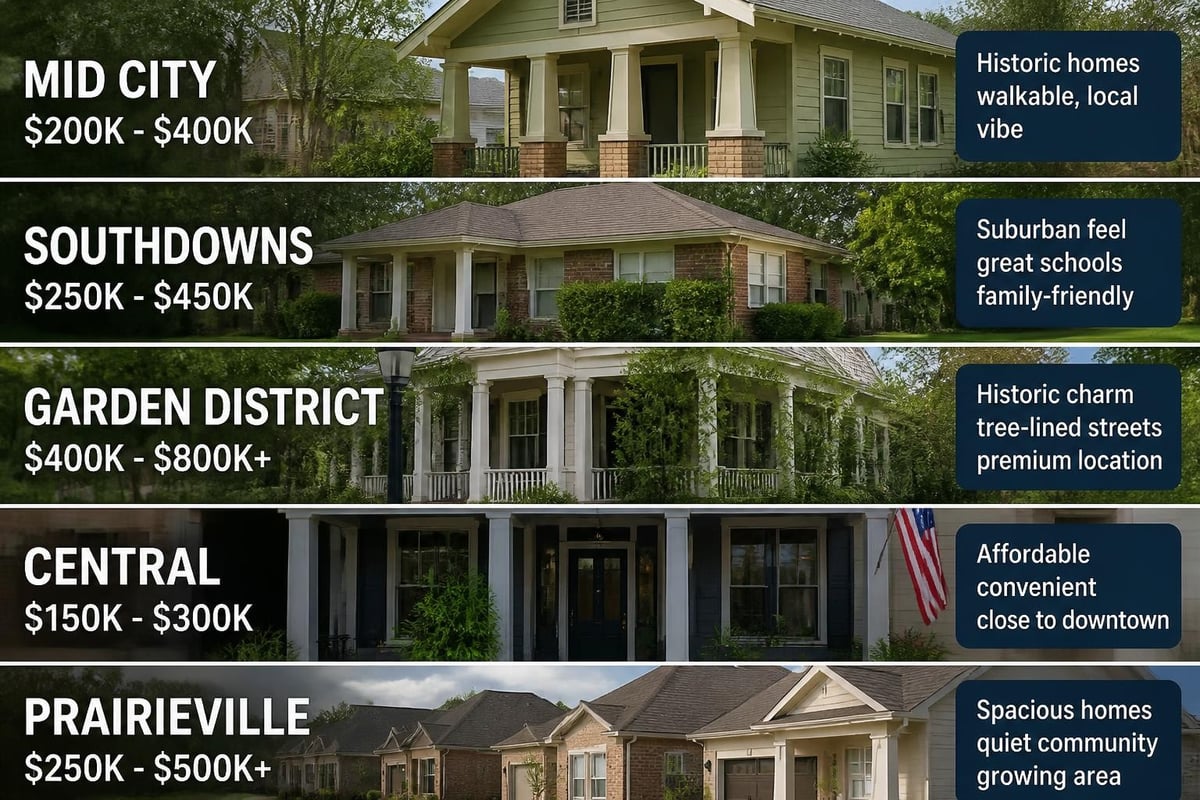
First-time homebuyers often find opportunities in developing areas where property values are appreciating. A 20% down payment on a median-priced home requires approximately $49,000, though various loan programs allow for smaller down payments. Monthly mortgage payments, including property taxes and insurance, typically range from $1,400 to $2,200 for median-priced homes.
Renting an Apartment or House
Rental markets provide flexibility for those not ready to purchase property. According to household rent spending data, renters dedicate approximately 34.3% of their income to housing costs, which aligns closely with the recommended 30% threshold financial advisors suggest.
| Property Type | Average Monthly Rent | Typical Size |
|---|---|---|
| Studio Apartment | $750 – $950 | 400-550 sq ft |
| 1-Bedroom | $900 – $1,200 | 600-750 sq ft |
| 2-Bedroom | $1,100 – $1,500 | 850-1,100 sq ft |
| 3-Bedroom House | $1,400 – $2,000 | 1,200-1,600 sq ft |
| 4-Bedroom House | $1,800 – $2,600 | 1,800-2,400 sq ft |
Areas near LSU campus command premium rents due to student demand, while suburban locations like Denham Springs or Baker offer more affordable options.
Utilities and Essential Services
The cost of living in Baton Rouge includes various utility expenses that fluctuate based on usage patterns, season, and property size. Louisiana's humid subtropical climate significantly impacts energy consumption, particularly during summer months when air conditioning becomes essential.
Monthly Utility Breakdown
Detailed utility cost information reveals that average households spend between $200 and $350 monthly on essential services. Electricity represents the largest component, especially from June through September when temperatures regularly exceed 90 degrees.
Typical monthly utility costs include:
- Electricity: $120 – $200 (higher in summer)
- Water and Sewer: $45 – $70
- Natural Gas: $30 – $60 (higher in winter)
- Trash Collection: $15 – $25
- Internet Service: $50 – $90
- Cable/Streaming: $40 – $100 (optional)
Energy-efficient appliances and proper insulation can significantly reduce electricity expenses. Many residents budget $250 monthly for combined utilities in a standard three-bedroom home.
Transportation Expenses
Baton Rouge is primarily a car-dependent city, making vehicle ownership and maintenance crucial budget considerations. Public transportation exists but serves limited routes compared to larger metropolitan areas.
Vehicle Ownership Costs
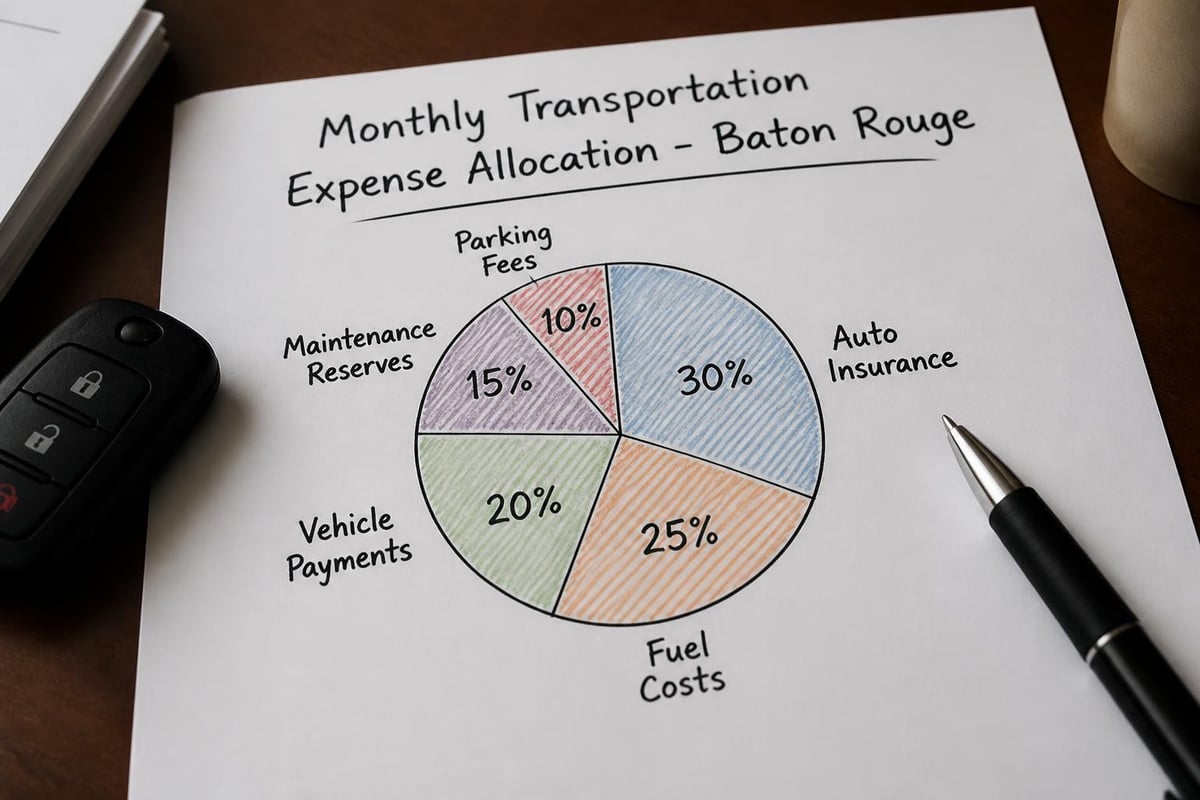
Most households require at least one vehicle for commuting and daily errands. Monthly transportation expenses include car payments, insurance, fuel, maintenance, and parking.
- Auto Insurance: $140 – $220 monthly (Louisiana rates run higher than national averages)
- Gasoline: $180 – $280 monthly (assuming 1,200 miles at current prices)
- Vehicle Payment: $350 – $550 monthly (for financed vehicles)
- Maintenance: $75 – $150 monthly (budgeted average)
- Parking: $0 – $50 monthly (mostly free except downtown areas)
Public Transit Options
Capital Area Transit System (CATS) provides bus service throughout Baton Rouge with monthly passes costing $48 for unlimited rides. However, limited routes and schedules make personal vehicles more practical for most residents.
Food and Grocery Expenses
The Cost of Living Index breakdown shows that grocery prices in Baton Rouge track slightly below the national average, offering residents good value on everyday food items.
Grocery Shopping
A family of four typically spends $700 to $1,000 monthly on groceries, depending on dietary preferences and shopping habits. Local options include major chains like Walmart, Kroger, Rouses, and Albertsons, plus specialty stores and farmers markets.
| Food Category | Monthly Cost (Family of 4) |
|---|---|
| Meat & Poultry | $180 – $250 |
| Fresh Produce | $150 – $220 |
| Dairy Products | $100 – $140 |
| Grains & Bread | $80 – $120 |
| Snacks & Beverages | $120 – $180 |
| Household Items | $70 – $90 |
Dining Out
Restaurant expenses vary dramatically based on frequency and establishment choice. Budget-friendly local eateries offer meals for $8 to $15 per person, while upscale dining experiences range from $30 to $60 per person. Most households allocate $250 to $500 monthly for restaurant meals and takeout.
Healthcare Costs
Healthcare represents a significant portion of household budgets, particularly for families requiring regular medical services or managing chronic conditions.
Insurance Premiums
Employer-sponsored health insurance typically costs $150 to $350 monthly for individual coverage and $500 to $800 for family plans, with employees covering their portion of premiums. Marketplace plans for those without employer coverage range from $300 to $700 monthly depending on subsidy eligibility.
Out-of-Pocket Medical Expenses
Beyond insurance premiums, residents budget for:
- Primary Care Visits: $25 – $50 copays
- Specialist Appointments: $40 – $75 copays
- Prescription Medications: $50 – $200 monthly
- Dental Care: $100 – $300 annually for cleanings
- Vision Care: $80 – $150 annually for exams
Major medical centers including Our Lady of the Lake Regional Medical Center and Baton Rouge General Medical Center provide comprehensive healthcare services.
Childcare and Education
Families with children face substantial additional expenses for childcare and educational needs beyond public school tuition.
Childcare Options
Full-time daycare for infants costs $650 to $950 monthly, while preschool programs range from $500 to $800 monthly. Before and after-school care for elementary students typically runs $300 to $500 monthly.
Childcare cost comparison:
- Infant care (6 weeks – 12 months): $700 – $950/month
- Toddler care (1-3 years): $650 – $850/month
- Preschool (3-5 years): $500 – $800/month
- After-school programs: $300 – $500/month

Private School Tuition
Private school options exist throughout Baton Rouge with tuition ranging from $4,500 to $12,000 annually depending on the institution and grade level. Catholic schools generally offer lower tuition than non-denominational private academies.
Entertainment and Lifestyle
Quality of life expenses contribute to overall satisfaction with living in Baton Rouge. The city offers diverse entertainment options at various price points.
Recreation and Activities
Monthly entertainment budgets typically include:
- Gym Memberships: $30 – $70 per person
- Streaming Services: $40 – $80 for multiple platforms
- Sports and Hobbies: $50 – $150
- Events and Concerts: $50 – $200
- Weekend Activities: $100 – $300
LSU sporting events, festivals, outdoor recreation at area parks, and cultural attractions provide affordable entertainment options for residents.
Taxes and Insurance
Louisiana's tax structure impacts take-home pay and overall financial planning for Baton Rouge residents.
State and Local Taxes
- State Income Tax: Graduated rates from 1.85% to 4.25%
- Sales Tax: Combined state and local rates of 9% to 10%
- Property Tax: Approximately 0.53% of assessed value (among the lowest nationally)
Insurance Requirements
Beyond auto and health insurance, homeowners need property insurance coverage. Standard homeowners insurance costs $1,200 to $2,000 annually, though Louisiana's hurricane risk can increase premiums for certain properties.
Comparing Overall Expenses
When evaluating the cost of living in Baton Rouge against other regional cities, residents generally find favorable comparisons. The composite cost of living index places Baton Rouge at approximately 90-95 compared to the national baseline of 100, indicating costs run 5-10% below average.
| Expense Category | Monthly Cost Range | Annual Total |
|---|---|---|
| Housing (Rent/Mortgage) | $1,100 – $2,000 | $13,200 – $24,000 |
| Utilities | $200 – $350 | $2,400 – $4,200 |
| Transportation | $500 – $800 | $6,000 – $9,600 |
| Groceries | $500 – $800 | $6,000 – $9,600 |
| Healthcare | $300 – $600 | $3,600 – $7,200 |
| Insurance | $200 – $400 | $2,400 – $4,800 |
| Entertainment | $200 – $400 | $2,400 – $4,800 |
| Total | $3,000 – $5,350 | $36,000 – $64,200 |
Financial Planning Strategies
Successfully managing expenses in Baton Rouge requires strategic budgeting and awareness of cost-saving opportunities throughout the city.
Budget Optimization Tips
Residents who thrive financially typically employ several key strategies:
- Housing location trade-offs: Consider neighborhoods farther from downtown for better value
- Energy efficiency: Invest in programmable thermostats and proper insulation
- Transportation planning: Coordinate errands to minimize fuel consumption
- Grocery shopping: Use loyalty programs and shop seasonal produce
- Healthcare planning: Maximize preventive care covered by insurance
Local credit unions and financial institutions offer resources for budget planning and savings programs. Building an emergency fund covering three to six months of expenses provides crucial financial security.
Managing Unexpected Expenses
Even with careful planning, unexpected costs arise for home repairs, medical emergencies, vehicle breakdowns, or family needs. Many Baton Rouge residents face situations where planned budgets get disrupted by unforeseen circumstances requiring immediate financial solutions.
Understanding the cost of living in Baton Rouge helps residents and prospective newcomers make informed decisions about their financial futures in Louisiana's capital city. While expenses vary based on lifestyle choices and family circumstances, Baton Rouge generally offers excellent value compared to many metropolitan areas across the South and nation. When unexpected expenses or financial challenges arise, Standard Financial provides flexible lending solutions designed specifically for Louisiana residents, offering personal loans for home improvements, medical expenses, education costs, and other needs, even for clients working to rebuild their credit history.







No comment yet, add your voice below!