
The fastest way to lower your electric bill is to cut the biggest energy users first: heating and cooling, water heating, and appliances that run all day. Small habit changes help, but adjusting your thermostat, sealing air leaks, and lowering your water heater temperature usually produce the largest savings. This guide walks through each step in order, from free fixes to upgrades worth financing.
Why Is My Electric Bill So High All of a Sudden in 2026?
A sudden jump in your electric bill in 2026 usually comes from one of four causes: a change in weather, a higher rate, a failing appliance, or a change in how much time your household spends at home.
Check these first:
- Extreme weather. A hot stretch in Louisiana, Mississippi, Tennessee, or Georgia can push air conditioning to run nearly nonstop. A cold snap does the same for electric heat.
- Rate changes. Utilities adjust rates and fuel charges, and some customers on variable plans see monthly swings.
- Aging equipment. An older air conditioner, a failing water heater element, or a refrigerator with worn door seals can quietly draw far more power than before.
- Household changes. More people at home, a new work-from-home schedule, or children out of school all raise daily use.
- Estimated readings. If your utility estimated your usage instead of reading the meter, the next bill may correct the difference.
Compare the kilowatt-hours (kWh) on this bill with the same month last year. If usage rose, look at equipment and habits. If usage stayed flat but the total rose, the rate is the cause.
Where Does the Energy in Your Home Actually Go?
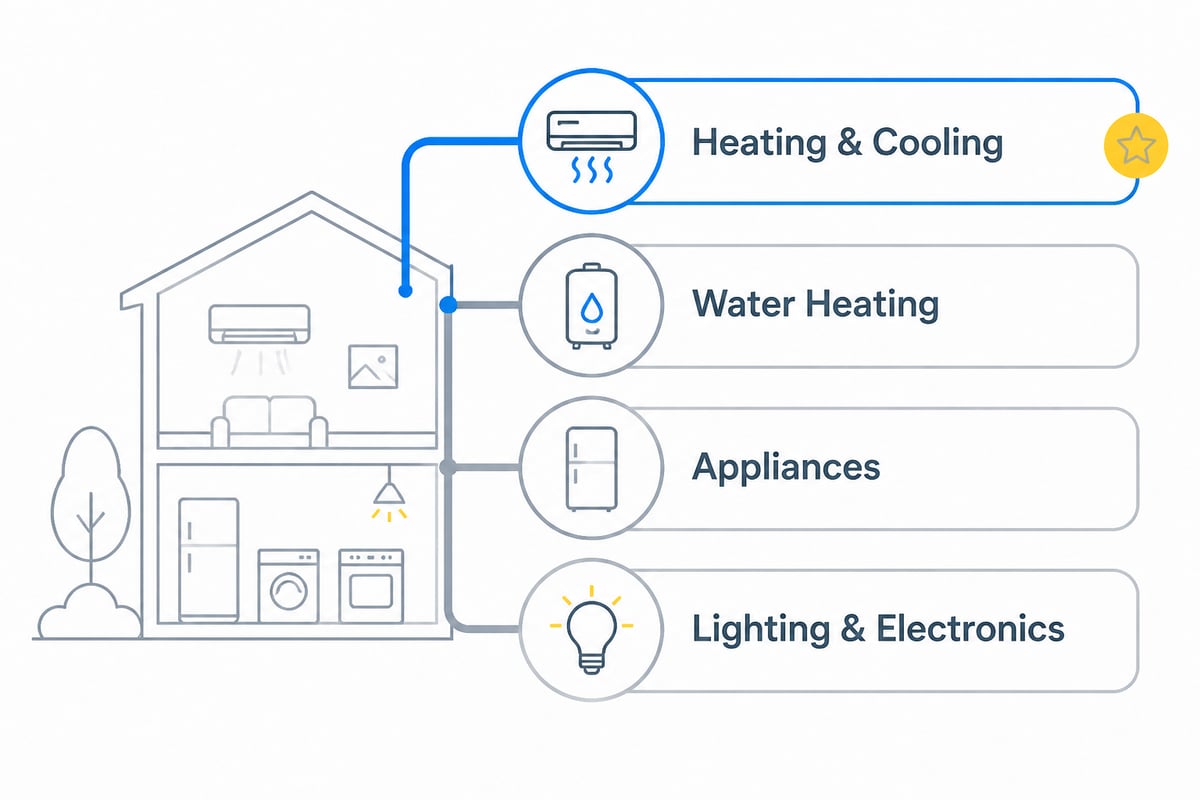
Most of your electric bill comes from heating and cooling, followed by water heating, with lighting, electronics, and appliances making up the rest. Knowing this order tells you where effort pays off.
The U.S. Department of Energy reports that heating systems use about 30% of a home’s utility bill on average, and heating can account for almost half of an average family's winter energy bill. Water heating comes next, using nearly 20% of the average home's energy.
A short priority list follows from that:
- Heating and cooling
- Water heating
- Large appliances (refrigerator, dryer, washer)
- Lighting and electronics
How to Lower Your Electric Bill With Heating and Cooling Changes
Heating and cooling changes cut the most from your bill because they target the largest single expense. Start with the thermostat, then fix the home's envelope.
Adjust the Thermostat on a Schedule
The Department of Energy says that turning a thermostat back 7 to 10 degrees Fahrenheit for 8 hours a day can save as much as 10% a year on heating and cooling. In summer, raise the setting when no one is home. In winter, lower it overnight and during work hours. A programmable or smart thermostat handles this automatically, but a manual adjustment on your way out the door works too.
Replace Filters and Service the System
A clogged filter forces your system to work harder. Check filters monthly during heavy-use seasons and replace them when they look dirty. Annual service on your air conditioner or heat pump keeps efficiency from slipping.
Seal Air Leaks and Add Insulation
Conditioned air escapes through gaps around windows, doors, outlets, and attic hatches. Caulk and weatherstripping cost little and often pay for themselves within a season. Adding attic insulation is a larger project, but it reduces the load on your system year-round.
Use Fans and Shade Wisely
Ceiling fans let you raise the thermostat a few degrees without losing comfort, provided you turn them off in empty rooms. In the Gulf South and Georgia, closing blinds and curtains on sun-facing windows during the afternoon reduces heat gain noticeably.
What Is the Cheapest Time of Day to Use Electricity?
The cheapest time of day to use electricity is typically overnight and early morning, but only if your utility offers time-of-use or off-peak pricing. Under a standard flat rate, every hour costs the same.
Check your plan or call your utility to find out. If you are on a time-of-use plan, shift flexible tasks to off-peak hours:
- Run the dishwasher and washing machine late at night
- Charge devices and electric vehicles overnight
- Pre-cool or pre-heat the home before peak hours begin
- Avoid running the dryer during late-afternoon peaks
Many utilities in the Southeast publish peak-hour schedules online. If yours does, a few weeks of shifted usage will show whether the plan beats your current rate.
How Much Can You Save on Water Heating?
Lowering your water heater temperature and reducing hot water use can trim a meaningful share of your bill, since water heating accounts for 14% to 25% of the energy used in a home, according to the Department of Energy’s Home Energy Checklist. The DOE recommends setting the heater to 120 degrees Fahrenheit.
Practical steps:
- Turn the thermostat on the tank to 120°F. Many tanks ship set higher than needed.
- Insulate the tank and the first few feet of pipe. This slows heat loss, especially in garages or unheated utility closets.
- Fix dripping hot water faucets. A slow drip wastes both water and the energy used to heat it.
- Wash laundry in cold water. Most modern detergents work well at lower temperatures.
- Install low-flow showerheads. They cut hot water volume without a big change in pressure.
If your tank is more than 10 to 15 years old, plan for replacement. A heat pump water heater uses far less electricity than a standard electric tank.
Does Turning Off Lights Really Save Electricity?
Yes, turning off lights saves electricity, though lighting is a smaller part of your bill than cooling or water heating. The savings from switching bulbs are often larger than the savings from flipping switches.
Do both:
- Replace remaining incandescent bulbs with LEDs, which use a fraction of the power and last far longer.
- Turn off lights in rooms no one is using.
- Use timers or motion sensors for porch, garage, and hallway lights.
- Rely on natural light during the day where possible.
Individually these changes are small, but they add up over a year, especially in a home with many fixtures.
Which Appliances and Electronics Quietly Raise Your Bill?
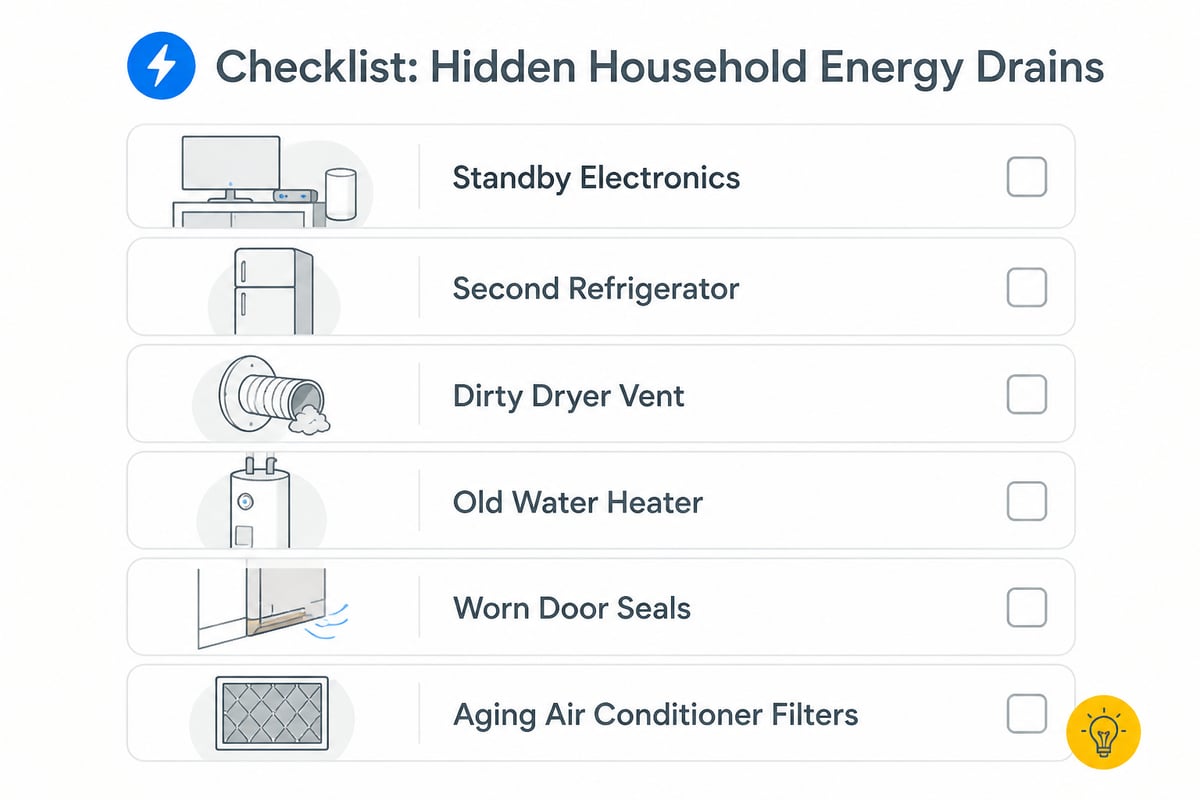
Appliances that run constantly or draw power while idle raise your bill without any obvious cause. Several devices deserve a closer look.
Standby Power
Televisions, game consoles, cable boxes, and chargers draw electricity even when off. Plug groups of devices into a power strip and switch it off when not in use. Smart strips can cut power automatically.
Refrigerators and Freezers
A second refrigerator in the garage is a common culprit, especially in hot climates where it works harder. Check door seals with a sheet of paper: if it slides out easily when the door is closed, the seal is worn. Keep the unit away from heat sources and avoid overpacking it.
Laundry
Clean the dryer's lint trap before every load and the exhaust vent regularly. Run full loads, use the highest spin speed on your washer, and consider line-drying when weather allows.
Dishwashers and Ovens
Run the dishwasher only when full and use the air-dry setting. Use a microwave, toaster oven, or slow cooker for small meals instead of heating a full-size oven, which also adds heat your air conditioner must remove.
Should You Switch Electricity Plans or Providers?
Switching plans can lower your bill if you live where retail choice is available, and even where it is not, you may still be able to change your rate structure with your current utility. Availability varies by state and utility, so check with your own provider.
Before you switch, compare these points:
- Rate type: fixed, variable, or time-of-use
- Contract length and early termination fees
- Monthly fees and minimum usage charges
- Billing programs: budget billing spreads costs evenly across the year and removes surprise spikes
Also ask your utility about assistance programs, weatherization services, and free home energy audits. Many offer them, and an audit identifies the specific leaks and inefficiencies in your home.
When Do Bigger Upgrades Make Sense?
Bigger upgrades make sense when equipment is near the end of its life or when the projected savings clearly exceed the cost over time. Replacing a failing system with an efficient one avoids paying twice.
The strongest candidates:
| Upgrade | Why it helps |
|---|---|
| Heat pump (heating and cooling) | Replaces worn-out equipment with more efficient operation |
| Heat pump water heater | Cuts water heating electricity use |
| Attic and wall insulation | Reduces heating and cooling load year-round |
| Energy-efficient windows | Limits heat transfer through glass |
| High-efficiency appliances | Lowers the draw of daily-use equipment |
The Department of Energy notes that for most American households assessed, replacing worn-out heating equipment with a properly matched heat pump would save on energy bills. Results depend on your home, climate, and current equipment, so get a quote and an estimate of annual savings before committing.
How to Pay for Efficiency Upgrades
Upfront cost is the main barrier. If a failed air conditioner or water heater forces a purchase you did not plan for, spreading the cost over time can be more practical than draining savings. A personal loan for home improvements lets you replace the equipment now and offset part of the payment with lower monthly utility costs. Standard Financial offers flexible financing plans and works with people who have past credit problems or limited credit, giving customers a chance to explain their credit situation and building a solution around it. Visit Standard Financial's product pages or contact a branch to learn what options fit your project.
How Can You Track Your Progress?
You can track progress by comparing kWh usage month to month and year to year, not just the dollar total. Dollar amounts shift with rates and weather, while kWh shows whether your changes are working.
A simple routine:
- Record your kWh and total each month in a notebook or spreadsheet.
- Note any changes you made, such as a new thermostat schedule or sealed windows.
- Compare to the same month last year to account for seasons.
- Use your utility's online account or app to view daily usage if available.
If usage does not fall after several changes, an energy audit can locate what is still driving the bill.
FAQ
What Are 10 Ways to Save Electricity at Home?
Set the thermostat back when you are away, replace dirty filters, seal air leaks, and lower your water heater to 120°F. Switch to LED bulbs, unplug or power-strip idle electronics, wash clothes in cold water, run full loads in the dishwasher and dryer, use fans instead of lowering the air conditioner setting, and close blinds on sunny windows. Together these steps address your largest energy uses.
Will a Smart Thermostat Lower My Bill?
A smart thermostat lowers your bill when it replaces a constant setting with an efficient schedule. The savings come from the temperature setbacks, not the device itself, so a manual thermostat adjusted consistently performs similarly.
Is It Worth Paying for a Home Energy Audit?
An energy audit is worth it if your bill stays high after simple fixes. It identifies air leaks, insulation gaps, and equipment problems, and some utilities offer audits at low or no cost.
If your bill is still high, start this week by comparing your last two months of kWh usage and adjusting your thermostat schedule. When a larger repair or upgrade is the real fix, financing can make it manageable, and Standard Financial offers flexible financing plans and personal loans for home improvements, so you can apply for a loan even if you have past credit issues or limited credit. With branch offices across Louisiana, Mississippi, Tennessee, and Georgia, the team will listen to your situation and work toward a plan that fits.

1 Comment
[…] This eliminates most investment options. For the cash itself, our guide to choosing an emergency savings account explains the safe, accessible options that fit […]