
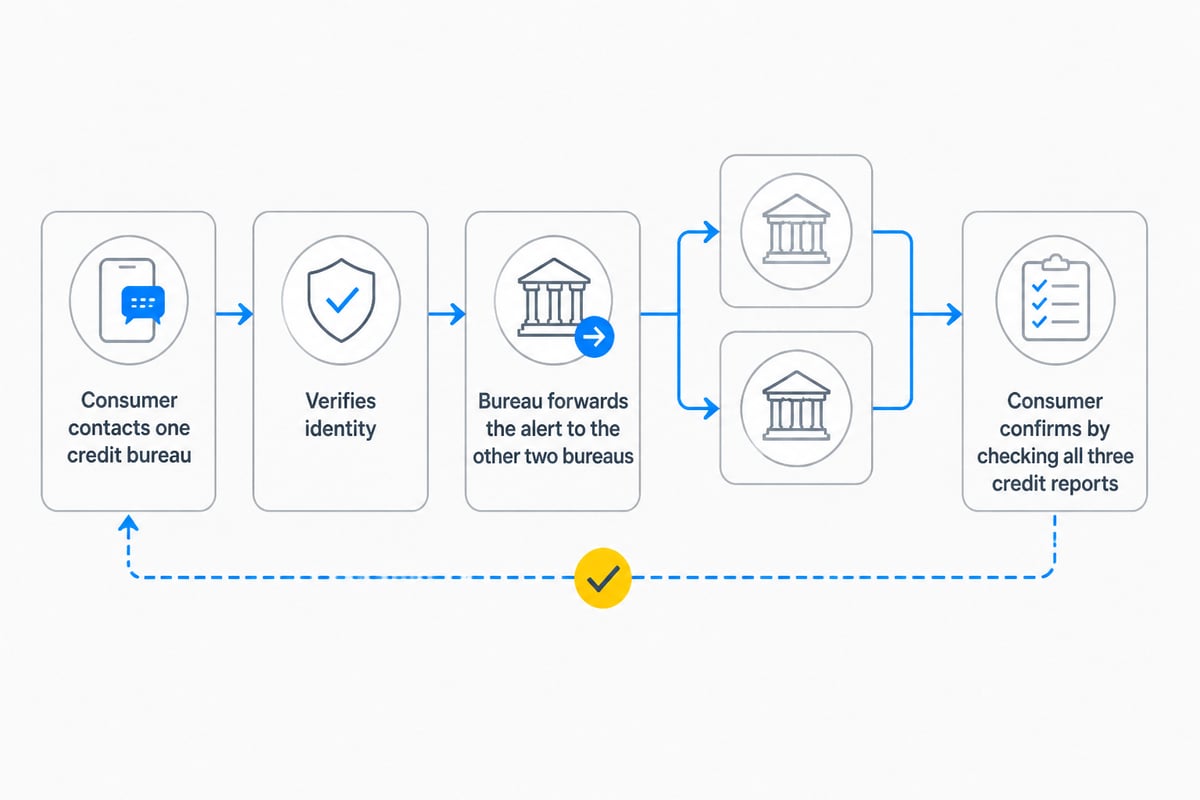
To place a fraud alert, contact one of the three nationwide credit bureaus (Equifax, Experian or TransUnion), verify your identity and request the alert; that bureau must notify the other two. The process takes only a few minutes and costs nothing. This guide explains how to place a fraud alert, which type to choose, what changes when you apply for credit afterward, and how the alert fits with a credit freeze.
What a Fraud Alert Does and When to Use One
A fraud alert is a notice added to your credit report that tells lenders to take extra steps to verify your identity before approving new credit in your name. It does not lock your report, and it does not stop you from applying for credit yourself.
Consider placing one if any of the following applies:
- Your Social Security number, driver's license or account information was exposed in a data breach.
- Your wallet, purse or mail was lost or stolen.
- You noticed accounts, inquiries or balances on your credit report that you do not recognize.
- A lender or collector contacted you about a debt you never opened.
- You are an active-duty service member deployed away from home.
The alert works as an early warning layer. A lender that sees it may call you at a phone number you provide, or take another verification step, before extending credit.
What You Need Before You Start
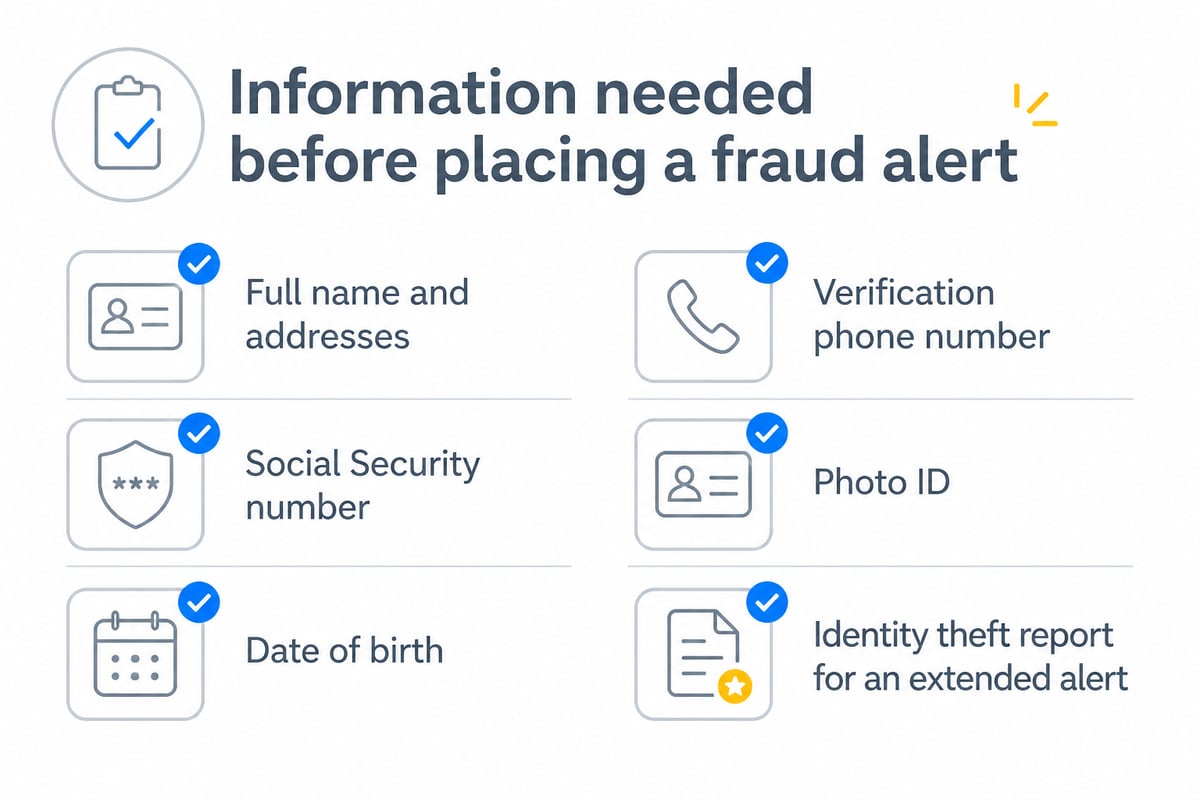
Gather your information first so the request goes quickly. You will typically be asked for:
- Your full legal name, current address and previous addresses from the last two years
- Your Social Security number and date of birth
- A phone number where lenders can reach you for verification
- Proof of identity, such as a driver's license, if the bureau requests it
- A police report or Federal Trade Commission identity theft report, only if you want an extended alert
Have a recent credit report on hand as well. You can request free reports at AnnualCreditReport.com, which helps you see whether any fraudulent accounts already exist.
Step 1: Choose the Type of Fraud Alert
Pick the type that matches your situation before you contact a bureau, because the type determines how long the protection lasts and what documentation you need. There are three.
| Alert type | Cost | Duration | Documentation needed |
|---|---|---|---|
| Initial fraud alert | Free | One year, renewable | None beyond identity verification |
| Extended fraud alert | Free | Extended period | Identity theft report |
| Active-duty alert | Free | One year, renewable | Proof of active-duty status |
An initial fraud alert is free and lasts one year, and it can be renewed for additional one-year periods. It suits most people who suspect their data is at risk but have no confirmed theft.
An extended fraud alert is meant for confirmed identity theft victims. It also can remove you from prescreened credit-card and insurance offers for a set period, which reduces the number of unsolicited offers in your mailbox that could be intercepted.
An active-duty alert is designed for service members who are deployed. It is free and lasts one year, and it can remove your name from prescreened credit-card and insurance offers for two years.
Step 2: Contact One Credit Bureau
You only need to contact a single bureau, and it is responsible for passing the alert to the other two. Choose whichever is easiest to reach. Each bureau offers an online form, a phone line and a mailing address.
- Equifax: 1-800-685-1111, or its fraud alert page online
- Experian: 1-888-397-3742, or its fraud center online
- TransUnion: 1-800-916-8800, or its fraud alert page online
Online is usually fastest because you can complete verification immediately. If you prefer the phone, expect an automated menu followed by identity questions. Mail works too, but it is the slowest route, so reserve it for situations where you cannot use the other options.
The Federal Trade Commission's IdentityTheft.gov guidance for lost or exposed personal information lays out the recommended steps if your information has been compromised, including when fraud alerts and freezes apply.
Step 3: Verify Your Identity and Request the Alert
Once you reach the bureau, state clearly which type of alert you want, then answer the verification questions. These are often based on information in your credit file, such as past addresses or loan details. Answer accurately; guessing can lock you out of the online process and force you to mail documents.
If you are requesting an extended alert, submit your identity theft report. Many people create this through the FTC's reporting tool, which produces a report you can print and attach. Keep the original for your own records.
Provide a reliable contact number. Lenders who see the alert may call it, and a wrong or disconnected number can delay a legitimate application later.
Step 4: Confirm the Alert Is Active on All Three Reports
Do not assume the alert is in place everywhere until you check. Most bureaus send a confirmation by email or mail. Save it, and note the date so you know when the alert will expire.
Then verify the result:
- Request your free report from each bureau and look for the alert statement near the top.
- Confirm that the contact number listed is correct.
- Review every account and inquiry for anything unfamiliar.
- Repeat the request directly with a second or third bureau if the alert is missing, which is rare but possible.
Set a calendar reminder about 30 days before an initial alert expires, since it does not renew itself.
How to Place a Fraud Alert if You Plan to Apply for a Loan
You can still apply for a personal loan with a fraud alert on your file; the alert simply adds a verification step. If you know a loan application is coming, whether for home improvements, medical bills or tuition, take a few practical steps so nothing stalls the process.
- Answer the phone number you listed. A lender may call to confirm that you are the one applying, and a missed call can slow approval.
- Tell the lender about the alert up front so they expect the extra step.
- Keep your photo ID and proof of address ready.
- Use consistent personal information on every form. Mismatched addresses or name spellings can look like fraud and trigger additional review.
Borrowers with past credit problems or thin credit files sometimes worry that a fraud alert will count against them. It does not lower a credit score. Standard Financial works with people who have past credit problems or limited credit, and it gives customers a chance to explain their credit situation and builds a tailor-made solution around it. To learn how that process works at a specific branch, check its contact page.
Fraud Alert vs. Credit Freeze
A fraud alert asks lenders to verify who you are, while a credit freeze blocks most lenders from viewing your report at all. Many people use both, and the right choice depends on how much friction you can accept.
A credit freeze is free and must be requested separately from each of the three credit bureaus. Unlike a fraud alert, it limits access to your credit report, which makes it stronger protection against new accounts opened in your name.
Here is how they compare in everyday use:
- Fraud alert: One request reaches all three bureaus. Credit applications still go through, with added verification.
- Credit freeze: You must contact each bureau separately. You will need to temporarily lift the freeze before applying for a loan, then freeze again afterward.
If you are about to apply for a loan, a fraud alert is easier to live with. If you have confirmed identity theft and are not planning to borrow soon, a freeze offers stronger protection. You are allowed to place both at the same time.

What to Do if Someone Opened an Account in Your Name
If a fraudulent account already exists, act quickly and in this order:
- Place a fraud alert, or an extended alert if you have a theft report.
- Contact the lender or card issuer that opened the account and report it as fraud. Ask for the account to be closed and for written confirmation.
- File a report at IdentityTheft.gov, which generates a recovery plan and an identity theft report.
- Dispute the fraudulent entries with each credit bureau in writing and include supporting documents.
- Review your reports every few months, since additional accounts can surface later.
The Consumer Financial Protection Bureau's guidance on protecting your credit after theft lists ways to contact the credit bureaus and explains your rights as a consumer.
What Counts as Evidence of Fraud
The strongest evidence is a paper trail that shows the account or transaction was not yours. Useful documents include:
- Your FTC identity theft report
- A police report, if you filed one
- Credit report entries you are disputing, marked up
- Collection letters or billing statements for accounts you did not open
- Records showing you were elsewhere or had no access, such as travel receipts, when relevant
- Correspondence with the lender confirming the account was opened fraudulently
Keep copies of everything and send disputes by certified mail when possible so you have proof of delivery.
How to Remove or Renew a Fraud Alert
Initial alerts expire on their own, and you can renew them by contacting a bureau again before the year ends. To remove an alert early, contact the bureau, verify your identity and ask for the alert to be taken off. Confirm the removal in writing.
Think carefully before removing an alert while you are still at risk. If your information was part of a breach, keeping the alert active, or switching to a freeze, may be the safer path.
Common Mistakes to Avoid
- Contacting only one bureau and never checking the others. Verify the alert appears on all three reports.
- Listing an outdated phone number. Lenders rely on it to verify you, so keep it current.
- Letting the alert lapse. An initial alert ends after one year unless you renew it.
- Confusing a fraud alert with a freeze. An alert does not block access to your report.
- Skipping the report review. An alert prevents new fraud but does not remove accounts already opened.
- Ignoring verification calls during a loan application. A missed call can delay approval.
FAQ
How do I put a fraud alert on my credit report?
Contact any one of Equifax, Experian or TransUnion by phone, online or mail, verify your identity and request the alert. That bureau must notify the other two. Confirm the alert by checking each of your credit reports.
How can I unfreeze my credit report?
Contact the bureau where the freeze is in place, verify your identity and request that the freeze be lifted. Lift it ahead of time if you are applying for a loan, since processing can take a short while. Because freezes are managed separately at each bureau, lift only those that the lender will check.
Does a fraud alert affect my credit score?
No, a fraud alert does not lower your credit score. It only adds a verification step for lenders reviewing applications in your name.
Start today by requesting your free credit reports and placing an initial fraud alert with one bureau, then set a reminder to renew it in a year. If you are planning a loan for home repairs, medical costs or education and have past credit issues or a limited credit history, Standard Financial offers flexible financing plans and refinancing options, with branch offices in Louisiana, Mississippi, Tennessee and Georgia.

No comment yet, add your voice below!