

Building a strong credit profile remains one of the most important financial goals for Americans in 2026. Whether you're planning to buy a home, finance a vehicle, or secure better interest rates on future loans, your credit score plays a crucial role in your financial opportunities. Many consumers across Louisiana, Mississippi, Tennessee, and Georgia wonder: can personal loans build credit? The answer is yes, but understanding how this works and implementing the right strategies makes all the difference between success and potential setbacks.
How Personal Loans Impact Your Credit Score
Personal loans affect your credit score through multiple pathways, each contributing to the complex calculation that determines your creditworthiness. When you understand these mechanisms, you can leverage personal loans as powerful credit-building tools.
The Five Factors That Determine Your Credit Score
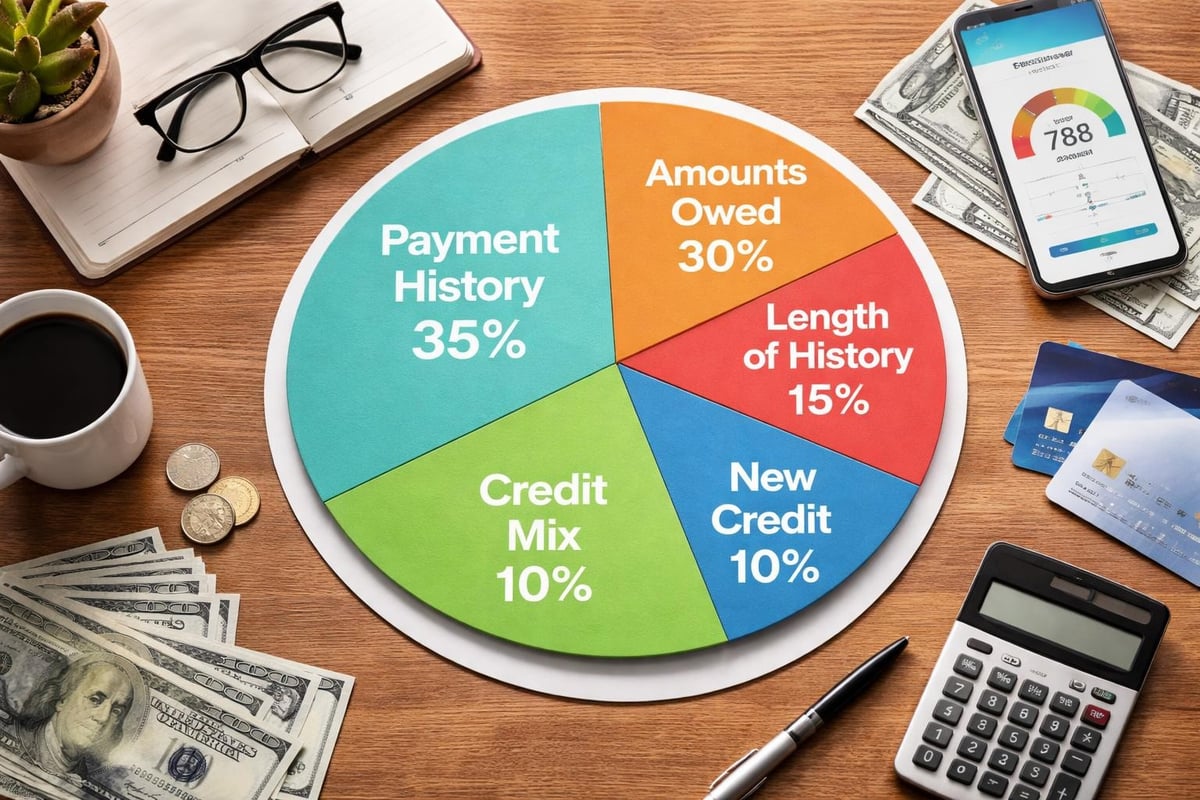
Your credit score isn't a random number. It's calculated using five distinct categories, each carrying different weight in the final calculation:
| Credit Factor | Weight | How Personal Loans Affect It |
|---|---|---|
| Payment History | 35% | Every on-time payment builds positive history |
| Amounts Owed | 30% | Affects overall debt-to-income ratio |
| Length of Credit History | 15% | Adds a new account with aging potential |
| Credit Mix | 10% | Adds installment loan diversity |
| New Credit | 10% | Initial hard inquiry may lower score temporarily |
Payment history stands as the most influential factor. According to how personal loans can boost your credit score, consistent on-time payments demonstrate reliability to future lenders. Each month you make your personal loan payment on schedule, you're building a positive track record that credit bureaus reward.
The credit mix category rewards consumers who manage different types of credit responsibly. Most people have revolving credit through credit cards, but adding an installment loan like a personal loan diversifies your credit portfolio. This variety shows lenders you can handle multiple credit products simultaneously.
Understanding the Initial Credit Score Impact
When you first apply for a personal loan, expect a temporary dip in your credit score. Lenders perform a hard inquiry to review your credit history, which typically reduces your score by 5-10 points. This decrease is temporary and usually recovers within a few months of responsible payment behavior.
The new account also initially lowers your average account age. If you've maintained credit accounts for several years, adding a new personal loan reduces this average. However, this effect diminishes over time as the account ages.
Can Personal Loans Build Credit Through Strategic Use
The question "can personal loans build credit" has a nuanced answer that depends entirely on how you manage the loan. Strategic borrowing coupled with disciplined repayment creates the optimal environment for credit growth.
Establishing Positive Payment Patterns
Consistency matters more than speed. Making every payment on time for the loan's entire term demonstrates long-term financial responsibility. Credit bureaus receive monthly updates from lenders, so each on-time payment adds another positive data point to your credit report.
Setting up automatic payments eliminates the risk of missed due dates. Most lenders, including those serving the Southeast region, offer autopay options that deduct your payment directly from your checking account. This simple step protects your credit-building efforts from forgetfulness or unexpected scheduling conflicts.
Consider these payment strategies:
- Schedule payments for right after your paycheck deposits
- Set calendar reminders three days before the due date
- Pay slightly more than the minimum when possible
- Keep a payment buffer in your checking account
Reducing Your Credit Utilization Ratio
One powerful but often overlooked benefit of personal loans involves credit utilization improvement. When you use a personal loan to consolidate credit card debt, you're shifting balances from revolving credit to installment credit. This move can significantly lower your credit utilization ratio.
Personal loans can positively impact payment history and amounts owed, two factors that together account for 65% of your credit score. The amounts owed category heavily weights credit card utilization, calculated as your total credit card balances divided by total credit limits.
Example scenario: You have $8,000 in credit card debt across cards with $10,000 total limits, creating an 80% utilization ratio. Taking a personal loan to pay off these cards drops your utilization to 0% while creating a new installment account. Your credit score may increase substantially within 30-60 days.
Types of Personal Loans for Credit Building
Not all personal loans serve the same purpose or offer identical credit-building benefits. Understanding the distinctions helps you choose the right product for your financial situation and credit goals.
Traditional Installment Personal Loans
These loans provide a lump sum upfront that you repay over a fixed term with consistent monthly payments. They're ideal for specific purposes like home improvements, medical expenses, or education costs. The predictable payment schedule makes budgeting straightforward and supports consistent payment history.
Traditional personal loans typically range from $1,000 to $50,000 with repayment terms between 12 and 84 months. The longer your loan term, the more opportunities you have to build positive payment history, though you'll pay more interest overall.
Credit Builder Loans
Credit builder loans work differently than traditional personal loans. Rather than receiving funds upfront, you make payments into a secured savings account. Once you've completed all payments, you receive the accumulated funds minus interest and fees.
These specialized products specifically target credit building, making them excellent options for individuals with limited credit history or those recovering from past credit challenges. Many credit unions and community banks offer these programs.
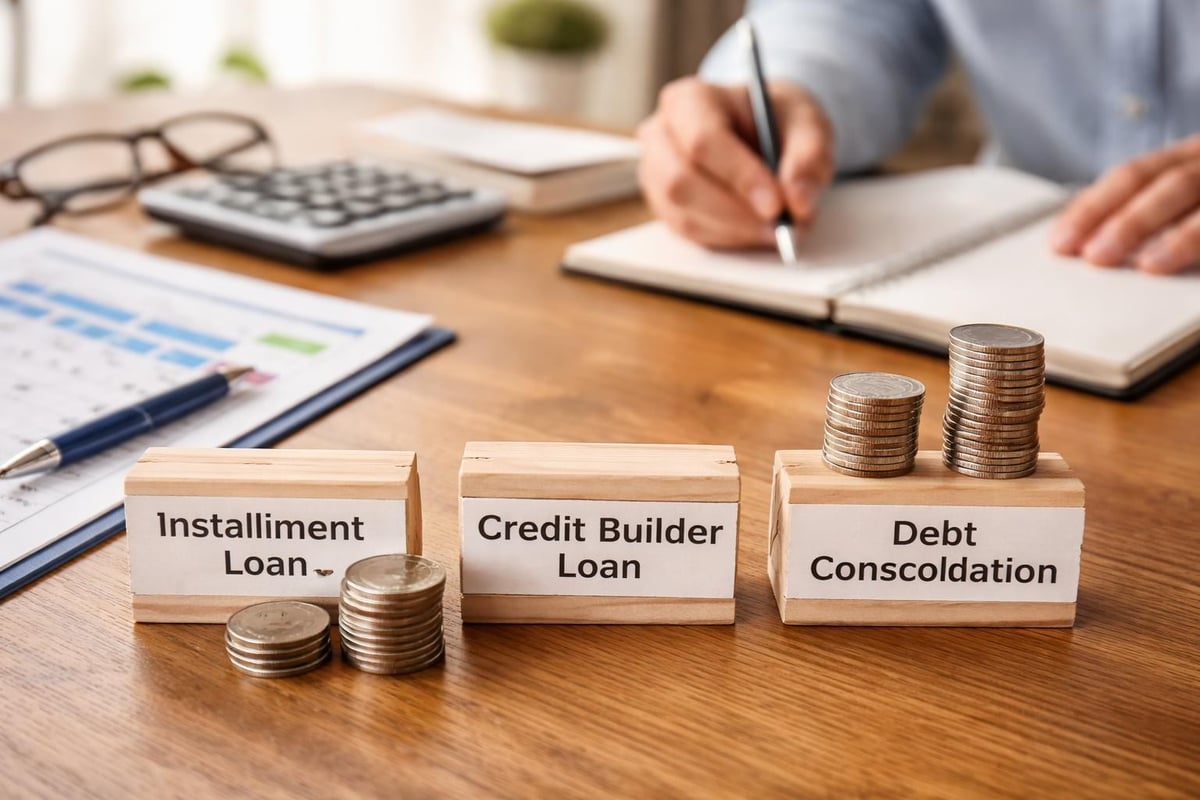
| Loan Type | Funds Availability | Best For | Credit Building Speed |
|---|---|---|---|
| Traditional Personal Loan | Immediate | Specific expenses | Moderate to Fast |
| Credit Builder Loan | After completion | No immediate need | Moderate |
| Secured Personal Loan | Immediate | Limited credit options | Moderate |
| Debt Consolidation Loan | Immediate | High credit card debt | Fast |
Secured vs. Unsecured Personal Loans
Secured personal loans require collateral such as a vehicle, savings account, or other valuable asset. These loans typically offer lower interest rates and may be easier to qualify for with challenged credit. They build credit just as effectively as unsecured loans when managed properly.
Unsecured personal loans don't require collateral but generally demand higher credit scores and come with higher interest rates. The credit-building benefit remains identical regardless of whether your loan is secured or unsecured, as credit bureaus don't distinguish between these types on your credit report.
Avoiding Common Mistakes That Damage Credit
While personal loans can build credit effectively, certain missteps can derail your progress or even damage your credit score. Understanding these pitfalls helps you navigate the credit-building journey successfully.
The Danger of Late or Missed Payments
Nothing harms your credit score faster than missed payments. A single payment that's 30 days late can drop your score by 60-110 points, depending on your current credit profile. The impact worsens as the delinquency extends to 60, 90, or 120 days past due.
According to insights on how personal loans affect credit scores, payment history's 35% weight in credit scoring means that consistent on-time payments matter more than any other factor. If you anticipate difficulty making a payment, contact your lender immediately to discuss options like payment deferral or loan modification.
Borrowing More Than You Can Afford
Taking a personal loan with monthly payments that strain your budget creates a dangerous situation. Financial stress increases the likelihood of missed payments, and the resulting credit damage can take years to repair.
Calculate your debt-to-income ratio before applying:
- Add all monthly debt payments (credit cards, auto loans, student loans, etc.)
- Include the proposed personal loan payment
- Divide total monthly debt by gross monthly income
- Aim to keep this ratio below 36%
Applying for Multiple Loans Simultaneously
Each loan application generates a hard inquiry on your credit report. Multiple inquiries within a short period signal financial distress to lenders and can significantly lower your credit score. Credit scoring models typically count multiple inquiries for the same type of loan within 14-45 days as a single inquiry, but this protection doesn't extend across different loan types.
Strategic Timeline for Building Credit with Personal Loans
Understanding the timeline for credit improvement helps set realistic expectations and maintain motivation throughout your credit-building journey.
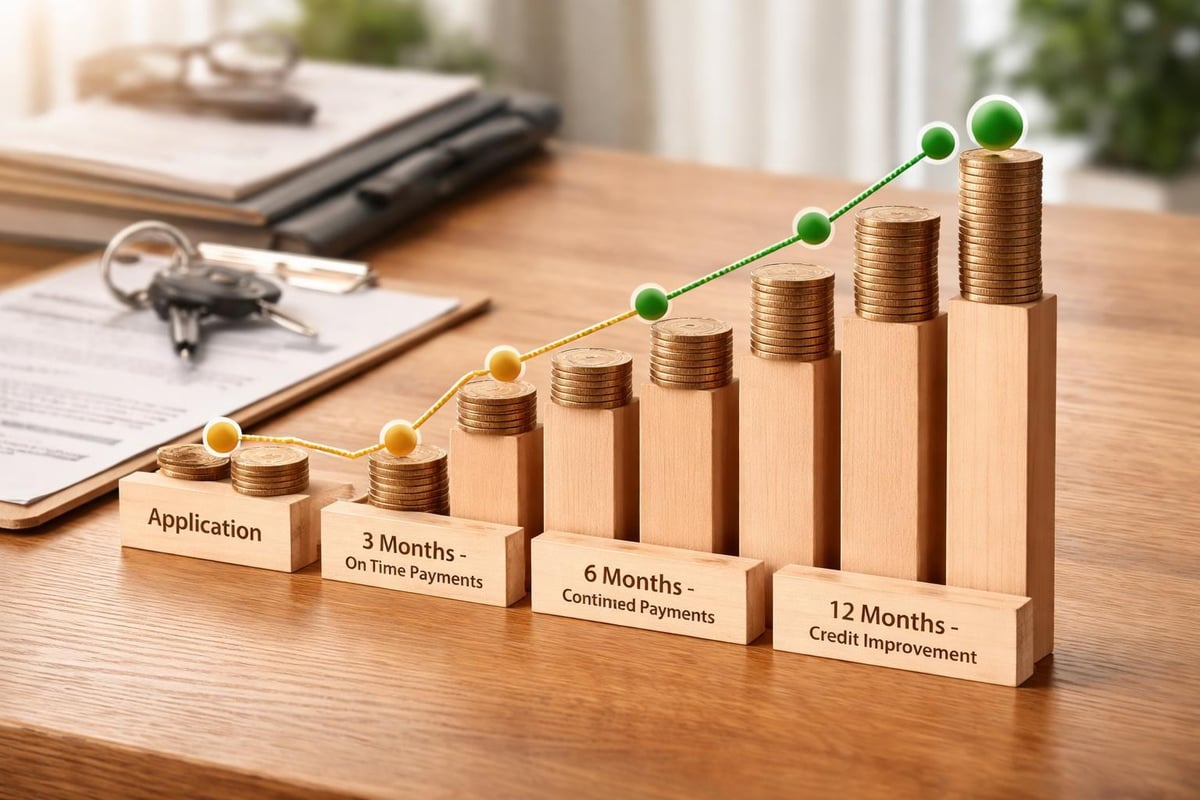
Months 1-3: Foundation Period
The first quarter after obtaining your personal loan focuses on establishing patterns. Your credit score may actually decrease slightly during this period due to the hard inquiry and new account. This is normal and temporary.
Focus areas during this period:
- Make first three payments on time without exception
- Set up automatic payments if not already configured
- Monitor your credit report for accurate loan reporting
- Avoid applying for additional credit
Months 4-12: Growth Phase
Personal loans appear on credit reports and build credit when managed properly, with the most noticeable improvements typically occurring after six months of consistent payments. During this phase, the positive impact of your payment history begins outweighing the initial inquiry and new account effects.
Your average account age starts increasing, and the new credit inquiry's negative effect diminishes. Many consumers see credit score increases of 20-50 points during this period, assuming no other negative credit events occur.
Months 13+: Sustained Improvement
Long-term credit building accelerates as your personal loan ages beyond one year. The account contributes significantly to your payment history, demonstrates long-term financial responsibility, and enhances your credit mix. Consumers who maintain perfect payment records often see their scores continue climbing throughout the loan's entire term.
Maximizing Credit Building Opportunities
Strategic approaches can amplify the credit-building benefits of personal loans beyond basic on-time payments. These advanced tactics help you optimize your credit profile improvement.
Combining Personal Loans with Other Credit Building Strategies
Personal loans work best as part of a comprehensive credit improvement strategy. Understanding whether a personal loan suits your credit-building needs involves considering your entire financial picture and combining multiple approaches.
Complementary strategies include:
- Maintaining low credit card balances (below 30% utilization)
- Keeping old credit accounts open to preserve credit history length
- Becoming an authorized user on a family member's established account
- Disputing any errors on your credit reports
- Diversifying your credit mix with different account types
Making Extra Payments Strategically
While extra payments don't directly improve your credit score faster, they reduce the total interest paid and can free up budget space for other credit-building activities. Some consumers make biweekly half-payments instead of monthly full payments, resulting in one extra payment annually.
Important consideration: Verify your lender doesn't charge prepayment penalties before making extra payments. Most modern personal loans don't include these fees, but checking your loan agreement prevents unexpected charges.
Monitoring Progress and Adjusting Strategies
Regular credit monitoring helps you track improvement and identify potential issues early. Many credit card companies and financial institutions now offer free credit score tracking, providing monthly updates on your progress.
Review your credit reports from all three major bureaus (Equifax, Experian, TransUnion) at least annually through AnnualCreditReport.com. These reports show how your personal loan appears to lenders and reveal any inaccuracies that might harm your score.
Special Considerations for Challenged Credit Situations
Consumers with past credit challenges can still use personal loans to rebuild their credit profiles. The approach requires additional care but offers a proven path toward credit recovery.
Personal Loans After Bankruptcy or Foreclosure
Major credit events like bankruptcy or foreclosure significantly damage credit scores, but they don't prevent future credit building. Personal loans designed for consumers with past credit issues provide opportunities to demonstrate renewed financial responsibility.
These specialized loans typically feature:
- Higher interest rates reflecting increased lender risk
- Smaller initial loan amounts ($1,000-$5,000)
- Shorter repayment terms (12-36 months)
- Possible requirement for cosigners or collateral
Working with Lenders Who Specialize in Credit Rebuilding
Financial institutions that focus on helping consumers rebuild credit often provide additional resources beyond simple loan products. Many offer financial education, budgeting tools, and personalized guidance to support long-term credit health.
When researching lenders in Louisiana, Mississippi, Tennessee, or Georgia, prioritize those with proven track records in consumer lending and flexible qualification criteria. Local institutions often provide more personalized service and may consider factors beyond just credit scores when making lending decisions.
Alternatives and Complementary Options
While evaluating whether can personal loans build credit for your situation, consider these alternative or complementary approaches that may better suit your circumstances.
Secured Credit Cards
Secured credit cards require a cash deposit that typically equals your credit limit. They report to credit bureaus just like traditional credit cards and can build credit effectively with responsible use. The main advantage is accessibility for those with minimal credit history or past credit challenges.
Key differences from personal loans:
- Revolving credit instead of installment credit
- Potential for higher utilization impact on credit scores
- More flexibility in payment amounts
- Lower barrier to entry
Credit Building Programs Through Financial Institutions
Many credit unions and community banks offer structured credit-building programs that combine financial education with supervised credit products. These programs may include credit builder loans, secured credit cards, and regular credit counseling sessions.
According to research on personal loans and credit building, combining multiple credit-building approaches often produces faster results than relying on a single strategy. The key is maintaining manageable payment obligations across all accounts.
Rent and Utility Reporting Services
Newer credit-building services now report rent and utility payments to credit bureaus. While not all scoring models include this data, these services can supplement other credit-building efforts at minimal cost. Some are free, while others charge monthly fees ranging from $5 to $25.
Real-World Success Factors
Understanding theoretical concepts about how can personal loans build credit is valuable, but practical application determines actual results. Several factors influence your success probability.
Income Stability and Employment History
Lenders assess your ability to repay based largely on income stability. Consistent employment in the same field or with the same employer strengthens your application and increases approval odds. While employment history doesn't directly appear on credit reports, it affects your ability to maintain consistent payments that build credit.
Realistic Loan Terms and Amounts
Matching your loan amount and term to your actual financial capacity prevents overextension. A $3,000 personal loan with a 24-month term builds credit just as effectively as a $15,000 loan, provided you make all payments on time. The smaller loan offers greater payment security and reduces financial stress.
Ongoing Financial Education
Credit building isn't a one-time activity but an ongoing process. Consumers who invest time learning about credit management, budgeting, and financial planning consistently achieve better results than those who simply make payments without understanding the broader context.
Free resources available through nonprofit credit counseling agencies, government websites, and reputable financial institutions provide valuable education. Taking advantage of these resources accelerates your credit-building journey and helps you avoid costly mistakes.
Regional Considerations for Southeast Borrowers
Consumers in Louisiana, Mississippi, Tennessee, and Georgia face unique financial circumstances that influence personal loan strategies and credit-building approaches.
State-Specific Lending Regulations
Each southeastern state maintains its own lending regulations that affect interest rates, fees, and loan terms. Louisiana and Tennessee cap annual percentage rates on consumer loans, while Mississippi and Georgia have different regulatory frameworks. Understanding these protections helps you identify predatory lending practices and choose legitimate lenders.
Economic Factors Affecting Credit Building
The Southeast's economic landscape includes diverse industries from manufacturing to healthcare to tourism. Economic fluctuations in these sectors can affect employment stability and income consistency, which directly impact your ability to maintain loan payments.
Building an emergency fund equivalent to three to six months of expenses provides crucial protection against temporary income disruptions. This financial cushion ensures you can continue making loan payments even during unexpected job changes or reduced hours, protecting your credit-building progress.
Personal loans offer a proven pathway to building and improving your credit score when managed responsibly through consistent on-time payments and strategic borrowing decisions. The combination of payment history benefits, credit mix diversification, and potential utilization improvements makes personal loans powerful tools in your credit-building arsenal. Whether you're recovering from past credit challenges, establishing credit for the first time, or optimizing an already-strong credit profile, Standard Financial provides flexible personal loan options across Louisiana, Mississippi, Tennessee, and Georgia designed to meet your unique needs and support your credit-building journey with personalized service and competitive terms.






No comment yet, add your voice below!