

Understanding the consumer loans loan landscape has become increasingly important for Americans seeking financial flexibility in 2026. With over $2 trillion in outstanding consumer credit across the United States, personal borrowing continues to serve as a vital tool for managing expenses ranging from medical bills to home renovations. Whether you're considering your first personal loan or exploring refinancing options, knowing how these financial products work empowers you to make informed decisions that align with your budget and long-term goals.
What Defines a Consumer Loans Loan
A consumer loans loan represents a category of financing designed specifically for individual borrowers rather than businesses or commercial entities. These financial products enable consumers to access funds for various personal purposes, from consolidating debt to covering unexpected expenses.
The FDIC defines consumer lending as loans extended primarily for personal, family, or household purposes. This broad classification encompasses numerous loan types that share common characteristics:
- Fixed or variable interest rates based on creditworthiness
- Structured repayment schedules with defined terms
- Unsecured or secured lending options
- Regulated disclosure requirements protecting borrowers
Primary Categories of Consumer Financing
Consumer loans loan products fall into several distinct categories, each serving different financial needs. Understanding these variations helps borrowers select the most appropriate option for their situation.
| Loan Type | Typical Use | Security Required | Term Length |
|---|---|---|---|
| Personal Installment | General purpose | Usually unsecured | 1-7 years |
| Auto Loans | Vehicle purchase | Secured by vehicle | 3-6 years |
| Home Improvement | Renovation projects | May be secured | 2-10 years |
| Medical Loans | Healthcare expenses | Typically unsecured | 1-5 years |
Personal installment loans represent the most flexible consumer loans loan option. Borrowers receive a lump sum and repay through fixed monthly payments over a predetermined period. This predictability makes budgeting straightforward and eliminates surprises.
Medical expense financing has grown particularly relevant as healthcare costs continue rising. These specialized consumer loans loan products often feature promotional periods or healthcare-specific benefits that traditional personal loans don't offer.

How Consumer Loans Loan Approval Works
The approval process for a consumer loans loan involves multiple evaluation factors that lenders use to assess risk and determine terms. Understanding these criteria helps applicants strengthen their applications and secure favorable rates.
Credit Score Impact and Requirements
Your credit score serves as the primary indicator lenders examine when reviewing consumer loans loan applications. This three-digit number reflects your borrowing history and repayment reliability.
Credit score ranges generally fall into these categories:
- Excellent (750+): Access to best rates and terms
- Good (700-749): Competitive rates with standard terms
- Fair (650-699): Higher rates, possible additional requirements
- Poor (below 650): Limited options, highest rates
Even borrowers with past credit challenges can access consumer loans loan products through specialized lenders who consider factors beyond credit scores. Alternative underwriting approaches examine income stability, employment history, and overall financial behavior.
Income Verification and Debt-to-Income Ratio
Lenders calculate your debt-to-income (DTI) ratio to ensure you can comfortably afford additional monthly payments. This metric divides your total monthly debt obligations by your gross monthly income.
Most lenders prefer DTI ratios below 43% for consumer loans loan approval, though some programs accommodate higher ratios when other compensating factors exist. Documentation requirements typically include:
- Recent pay stubs or income statements
- Tax returns for self-employed applicants
- Bank statements showing deposit patterns
- Verification of additional income sources
The Federal Reserve’s analysis of personal loans reveals that income verification practices have become more sophisticated, with lenders increasingly using automated systems to confirm employment and earnings.
Legal Protections for Consumer Borrowers
Federal and state regulations provide substantial protections for individuals seeking consumer loans loan products. These laws ensure transparent lending practices and prevent discriminatory or predatory behavior.
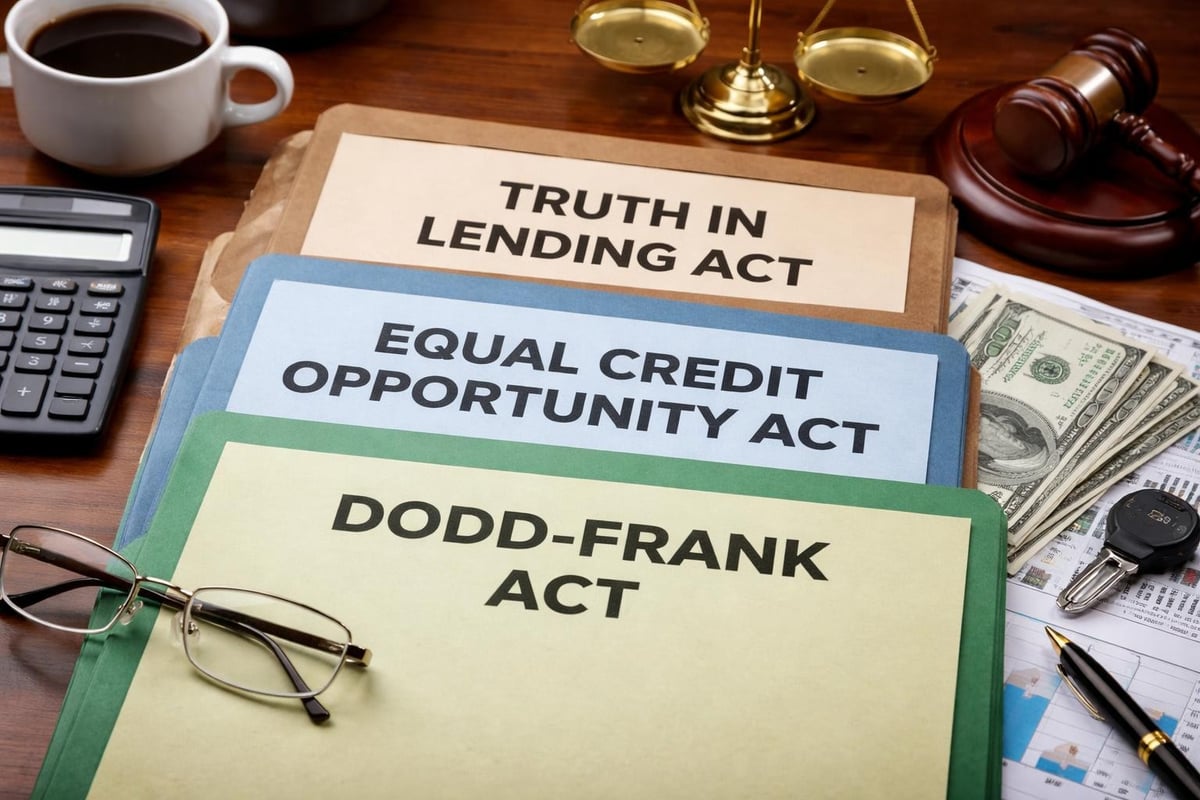
The Truth in Lending Act under Regulation Z requires lenders to provide clear disclosure of loan terms, including annual percentage rates (APR), finance charges, and total repayment amounts. This transparency enables borrowers to compare offers accurately.
Equal Access and Anti-Discrimination Laws
The Equal Credit Opportunity Act prohibits lenders from discriminating based on race, color, religion, national origin, sex, marital status, age, or receipt of public assistance. Every consumer loans loan applicant must receive fair consideration based solely on creditworthiness and financial qualifications.
Your rights as a borrower include:
- Receiving loan decisions within 30 days
- Understanding specific reasons for denial
- Accessing free credit reports after adverse action
- Protection from predatory lending practices
The Dodd-Frank Wall Street Reform Act established the Consumer Financial Protection Bureau (CFPB), which oversees consumer lending practices and enforces compliance with federal lending laws. This oversight has strengthened consumer protections across the industry.
Strategic Uses for Consumer Loans Loan Financing
Smart borrowers leverage consumer loans loan products strategically to improve their financial positions rather than simply accessing additional credit. Understanding optimal use cases helps maximize value while minimizing costs.
Debt Consolidation Benefits
Consolidating multiple high-interest debts into a single consumer loans loan often reduces overall interest costs and simplifies monthly payment management. This strategy works particularly well when:
- Current debts carry interest rates above 15%
- Multiple payment due dates create management challenges
- The new loan offers a lower blended rate
- Fixed payments provide budgeting certainty
Example scenario: A borrower with $15,000 across three credit cards averaging 22% APR could consolidate into a consumer loans loan at 12% APR, potentially saving thousands in interest while reducing monthly payments.
Home Improvement and Property Value
Financing renovations through a consumer loans loan enables homeowners to increase property value while spreading costs over manageable monthly payments. Projects that typically generate positive returns include:
- Kitchen remodels and updates
- Bathroom renovations
- Energy-efficient upgrades
- Roof replacement or repair
- HVAC system improvements
These improvements often yield returns exceeding financing costs, particularly in appreciating markets where updated homes command premium prices.
Medical Expense Management
Healthcare costs frequently exceed emergency savings, making consumer loans loan financing a practical solution for managing necessary treatments. Medical financing offers advantages over credit cards:
| Feature | Medical Consumer Loan | Credit Cards |
|---|---|---|
| Interest Rates | Fixed, often lower | Variable, typically higher |
| Repayment Terms | Structured, predictable | Minimum payments, prolonged debt |
| Payment Flexibility | May include deferment options | Limited flexibility |
| Credit Impact | Single inquiry | Utilization affects score |
Many healthcare providers have established relationships with lenders offering specialized consumer loans loan programs with favorable terms for medical expenses.
Interest Rates and Fee Structures
Understanding how lenders price consumer loans loan products helps borrowers evaluate offers and negotiate better terms. Multiple factors influence the rates and fees you'll encounter.
Components of Total Borrowing Cost
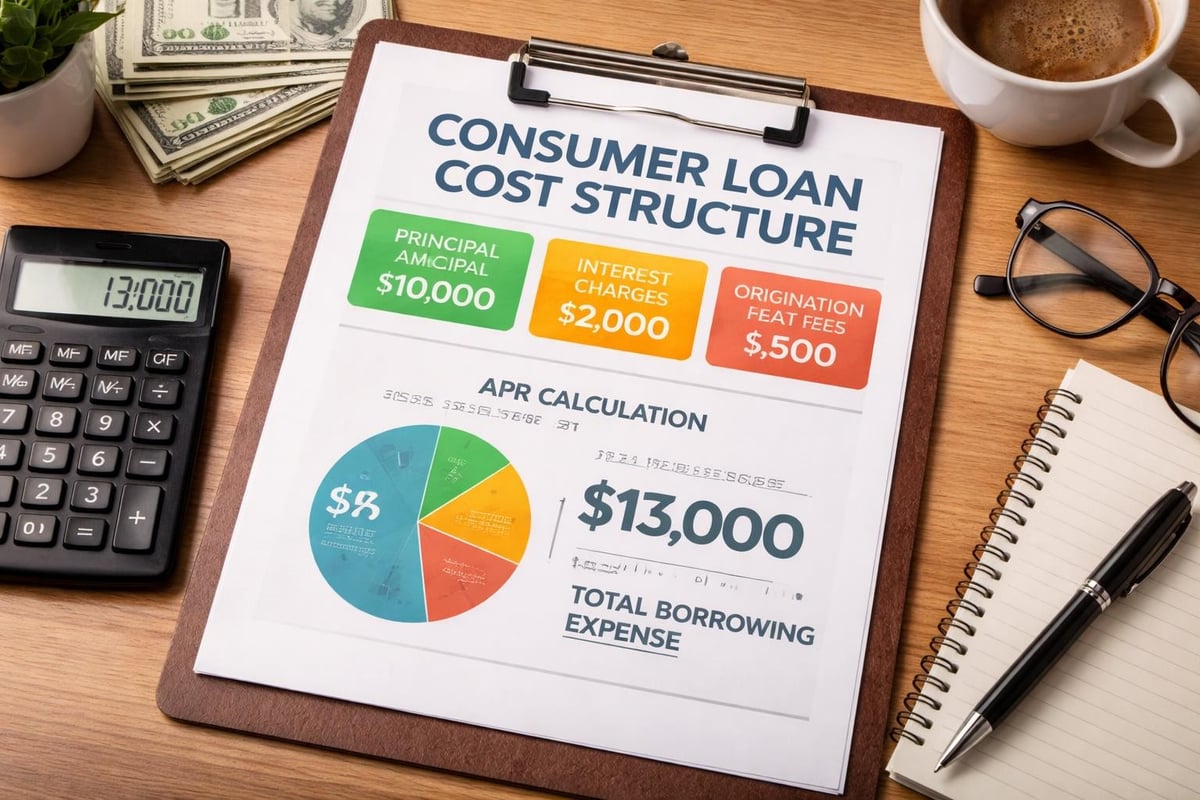
The annual percentage rate (APR) represents the true cost of borrowing, combining the interest rate with fees and other charges. When comparing consumer loans loan offers, always focus on APR rather than interest rate alone.
Common fees that may apply include:
- Origination fees: 1-8% of loan amount
- Application fees: $25-50 (less common in 2026)
- Late payment penalties: Typically $25-40
- Prepayment penalties: Increasingly rare but still exist
Rate determinants extend beyond credit scores to include loan amount, term length, and whether collateral secures the debt. Larger loan amounts and longer terms generally command higher rates due to increased lender risk.
Fixed Versus Variable Rate Considerations
Most consumer loans loan products feature fixed interest rates that remain constant throughout the repayment period. This stability provides predictable monthly payments and protection against rising interest rate environments.
Variable-rate consumer loans loan options tie rates to benchmark indexes, causing payments to fluctuate with market conditions. While initial rates may be lower, these products carry uncertainty that can complicate budgeting.
In the current economic environment of 2026, fixed-rate consumer loans loan products have become increasingly popular as borrowers seek payment certainty amid ongoing economic adjustments.
Application Process and Documentation
Securing a consumer loans loan has become more streamlined in recent years, with many lenders offering online applications and rapid approval decisions. However, proper preparation accelerates the process and improves approval odds.
Preparing Your Application Package
Essential documentation for most consumer loans loan applications includes:
- Government-issued photo identification
- Social Security number for credit check authorization
- Proof of income (pay stubs, tax returns, bank statements)
- Employment verification details
- Residence history for the past two years
- List of current debts and monthly obligations
Having these materials organized before starting your application prevents delays and demonstrates financial responsibility to lenders.
Timeline Expectations
Modern consumer loans loan processing has accelerated significantly. Many lenders now provide:
- Instant pre-qualification: Soft credit check results in minutes
- Formal approval: 1-3 business days after documentation review
- Fund disbursement: 1-5 business days post-approval
Some lenders offer same-day or next-day funding for borrowers meeting specific criteria, though traditional timelines of 5-7 business days remain standard for many institutions.
Refinancing Existing Consumer Debt
Refinancing a consumer loans loan makes financial sense when market conditions or personal circumstances change favorably. This strategy can reduce interest costs, lower monthly payments, or adjust repayment timelines.
When Refinancing Provides Value
Consider refinancing your existing consumer loans loan when:
- Your credit score has improved by 50+ points since original borrowing
- Market interest rates have decreased by at least 2 percentage points
- You need lower monthly payments due to income changes
- You want to shorten the repayment term and save on total interest
Important consideration: Refinancing resets the loan clock. If you've already paid several years on a consumer loans loan, extending the term might increase total interest costs despite lower monthly payments.
Calculating Refinancing Benefits
Before refinancing, calculate the true savings by comparing total costs:
| Original Loan | Refinanced Loan | Net Benefit |
|---|---|---|
| $20,000 at 14% APR | $18,000 balance at 9% APR | $3,200 interest savings |
| 60 months remaining | 48 months new term | 12 months faster payoff |
| $465 monthly payment | $448 monthly payment | $17 monthly reduction |
This analysis reveals whether refinancing fees and new terms justify the switch. Some consumer loans loan products include prepayment penalties that could offset refinancing benefits.
Managing Consumer Loans Loan Repayment
Successful repayment requires strategic planning and disciplined execution. Building good habits from your first payment establishes patterns that benefit your overall financial health.
Automation and Payment Timing
Set up automatic payments to ensure on-time payment history, which accounts for 35% of your credit score calculation. Many lenders offer interest rate discounts (typically 0.25-0.50%) for enrolling in autopay programs.
Strategic payment timing can reduce interest costs. Making payments earlier in your billing cycle or adding extra principal payments accelerates debt elimination and saves on interest charges.
Handling Financial Hardship
If circumstances prevent making scheduled consumer loans loan payments, contact your lender immediately. Most institutions offer hardship programs providing:
- Temporary payment deferrals
- Modified payment arrangements
- Interest-only payment periods
- Loan term extensions
The Fair Debt Collection Practices Act protects consumers from abusive collection practices if accounts become delinquent. Understanding your rights helps you navigate difficult situations while protecting your financial interests.
Credit Score Impact of Consumer Borrowing
Taking out a consumer loans loan affects your credit profile in multiple ways, both positively and negatively. Understanding these impacts helps you manage your credit strategically.
Short-Term Credit Effects
Initial application triggers a hard inquiry that may temporarily reduce your credit score by 5-10 points. This impact diminishes over 3-6 months and disappears completely after 12 months.
New credit account initially lowers your average account age, which comprises 15% of your credit score. This effect moderates as the consumer loans loan ages and you maintain positive payment history.
Long-Term Credit Building
Consistent on-time payments build positive credit history, the most influential factor in credit scoring models. A well-managed consumer loans loan demonstrates:
- Payment reliability to future lenders
- Ability to handle installment debt
- Responsible credit utilization
- Diverse credit mix (if previously only had revolving credit)
Credit mix diversity accounts for 10% of your FICO score. Adding an installment consumer loans loan to a credit profile containing only credit cards can improve this component.
Regional Considerations for Southern Borrowers
Consumers in Louisiana, Mississippi, Tennessee, and Georgia encounter unique economic conditions that influence consumer loans loan availability and terms. Understanding regional factors helps borrowers make location-appropriate decisions.
State-Specific Regulations
Each state maintains distinct lending regulations affecting consumer loans loan products:
Louisiana caps interest rates on certain loan types and requires specific licensing for lenders. The state's legal framework balances consumer protection with market accessibility.
Mississippi permits higher interest rates than some neighboring states, creating varied lending options for borrowers with different credit profiles.
Tennessee and Georgia maintain moderate regulatory environments that foster competitive lending markets while protecting consumer interests.
Economic Factors Affecting Approval
Regional employment patterns influence lender risk assessment. Areas with diverse economic bases often see more favorable consumer loans loan terms than regions dependent on single industries.
Local lenders with multiple branch locations frequently offer advantages over national online-only institutions, including:
- Face-to-face relationship building
- Understanding of regional economic conditions
- Flexibility in underwriting decisions
- Community investment priorities
These factors can prove particularly valuable for borrowers with non-traditional income sources or those recovering from past credit challenges.
Alternative Consumer Financing Options
While traditional consumer loans loan products serve most borrowing needs effectively, alternative financing methods merit consideration for specific situations.
Credit Union Advantages
Credit unions often provide consumer loans loan products with lower rates and fees than banks or finance companies. Membership requirements typically involve living, working, or worshiping in specific geographic areas or employment in certain industries.
Benefits of credit union consumer loans include:
- Interest rates 2-4 percentage points below market averages
- Lower or waived origination fees
- More flexible underwriting for members with challenged credit
- Personalized service and financial counseling
Peer-to-Peer Lending Platforms
Online peer-to-peer platforms connect borrowers directly with individual investors willing to fund consumer loans loan requests. These marketplaces may offer competitive rates for borrowers with strong credit profiles.
Considerations for peer-to-peer borrowing include longer funding timelines, platform fees, and varying interest rates based on investor demand for your specific loan listing.
Smart Borrowing Strategies for 2026
The consumer lending landscape continues evolving with technological advances and regulatory changes. Successful borrowers adapt strategies to maximize benefits while minimizing costs and risks.
Comparison Shopping Methods
Never accept the first consumer loans loan offer without exploring alternatives. Effective comparison requires examining:
- APR and total interest costs over the full loan term
- Monthly payment amounts and budget fit
- Fee structures including origination and potential penalties
- Repayment flexibility such as extra payment options
- Customer service quality and lender reputation
Use loan calculators to model different scenarios before committing. Small rate differences create substantial savings over multi-year repayment periods.
Building Negotiating Leverage
Strong borrowers can negotiate better consumer loans loan terms by:
- Demonstrating creditworthiness through documentation
- Showing competing offers from other lenders
- Emphasizing relationship value if you maintain other accounts
- Agreeing to automatic payments for rate discounts
- Considering larger down payments for secured loans
Lenders value borrowers who present low risk and demonstrate financial responsibility. Positioning yourself advantageously improves negotiating outcomes.
Timing Your Application
Market conditions influence consumer loans loan availability and pricing. Monitor economic indicators and consider timing applications when:
- Federal interest rates stabilize or decline
- Your credit score reaches the next rating tier
- Seasonal promotions offer enhanced terms
- Employment and income are most stable
Strategic timing can save thousands of dollars over a loan's lifetime while improving approval odds for borderline applications.
Understanding how consumer loans loan products work, the approval process, regulatory protections, and strategic uses empowers you to make borrowing decisions aligned with your financial goals. Whether you need funds for medical expenses, home improvements, or debt consolidation, the right financing approach can provide flexibility while protecting your long-term financial health. Standard Financial specializes in helping borrowers throughout Louisiana, Mississippi, Tennessee, and Georgia access flexible consumer loans loan options tailored to their unique situations, including solutions for those rebuilding credit. Visit a branch location near you to discuss how personalized financing can help you achieve your goals.







No comment yet, add your voice below!