

Consumer loan services have become an essential financial resource for millions of Americans seeking to fund important life expenses, consolidate debt, or manage unexpected costs. Whether you need financing for home renovations, medical procedures, educational pursuits, or simply bridging a temporary cash flow gap, understanding how consumer loan services operate can help you make informed decisions about your financial future. With lending institutions expanding their offerings and adapting to modern consumer needs, the landscape of personal financing has evolved significantly, providing more accessible options even for those with less-than-perfect credit histories.
Understanding Consumer Loan Services
Consumer loan services encompass a broad range of financial products designed to provide individuals with capital for personal use. These services differ fundamentally from business loans or commercial financing by focusing exclusively on individual borrowers' needs rather than corporate requirements.
The structure of consumer loan services typically involves a lender providing a specific amount of money to a borrower, who then repays that amount plus interest over a predetermined period. This straightforward arrangement has made personal lending one of the most common financial transactions in the United States.
Key Components of Consumer Loans
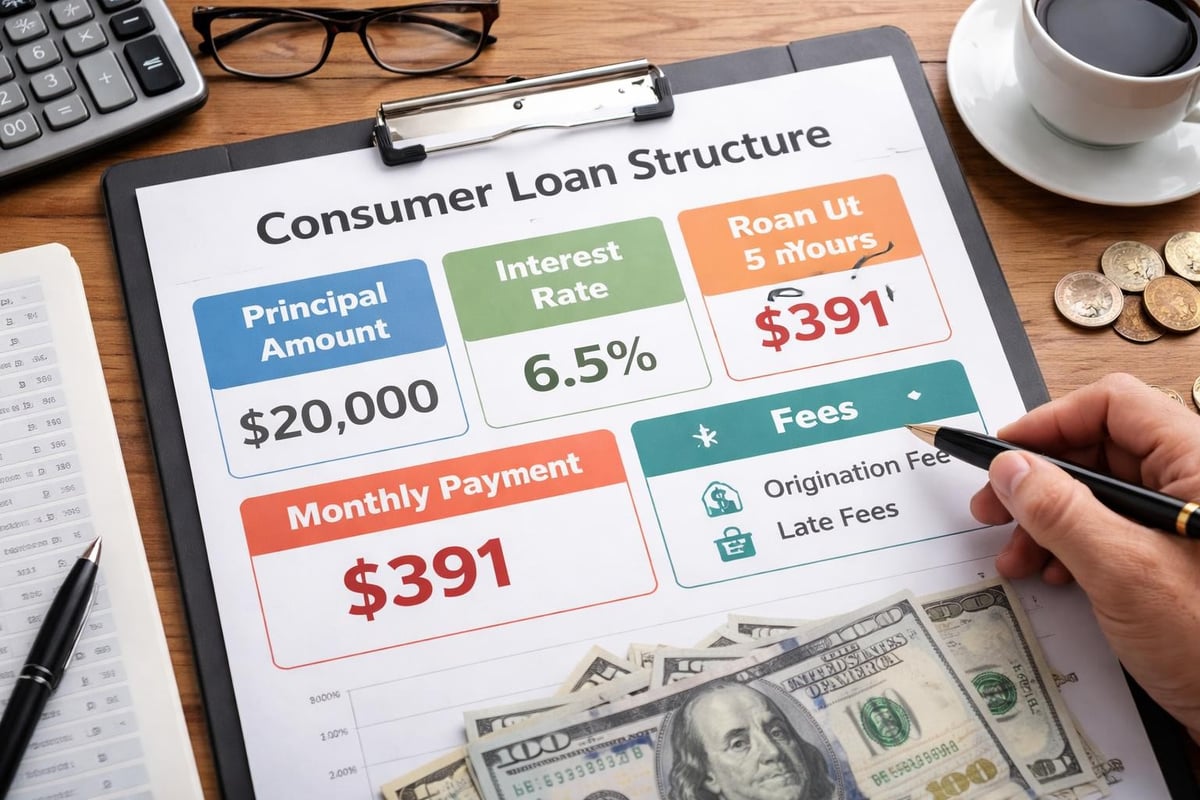
Every consumer loan consists of several fundamental elements that borrowers should understand before committing to any agreement:
- Principal amount: The actual sum borrowed from the lender
- Interest rate: The cost of borrowing, expressed as an annual percentage rate (APR)
- Loan term: The duration over which the borrower must repay the loan
- Monthly payment: The regular installment amount due each month
- Fees and charges: Additional costs such as origination fees, late payment penalties, or prepayment charges
Understanding these components helps borrowers compare different consumer loan services effectively and choose the option that best aligns with their financial situation and repayment capacity.
Types of Consumer Loan Services Available
The consumer lending industry offers diverse products tailored to specific needs and circumstances. Recognizing which type of loan best suits your situation can save thousands of dollars in interest and fees over the life of the loan.
Secured vs. Unsecured Loans
| Loan Type | Collateral Required | Interest Rates | Approval Difficulty | Risk to Borrower |
|---|---|---|---|---|
| Secured | Yes (home, vehicle, etc.) | Lower | Easier | Loss of collateral if defaulted |
| Unsecured | No | Higher | More stringent | Credit score impact only |
Secured loans require borrowers to pledge an asset as collateral, which reduces the lender's risk and typically results in more favorable terms. Unsecured loans, conversely, rely solely on the borrower's creditworthiness and promise to repay.
Specialized Consumer Loan Categories
Different life situations call for different financing solutions. Consumer loan services have evolved to address specific needs:
Home Improvement Loans enable homeowners to finance renovations, repairs, or upgrades without tapping into home equity or depleting savings. These loans recognize that maintaining and improving property value often requires significant capital investment.
Medical Expense Financing addresses the reality that healthcare costs can create sudden financial burdens. Many consumer loan services now offer specialized products with flexible terms for medical procedures, dental work, or ongoing treatment costs.
Education Loans beyond traditional student loans help individuals finance continuing education, professional certifications, or skill development programs that can enhance career prospects.
Debt Consolidation Products allow borrowers to combine multiple high-interest obligations into a single, more manageable payment, often at a lower overall interest rate.
The Consumer Financial Protection Bureau provides valuable resources for understanding the nuances of different loan products and making informed borrowing decisions.
The Application Process for Consumer Loan Services
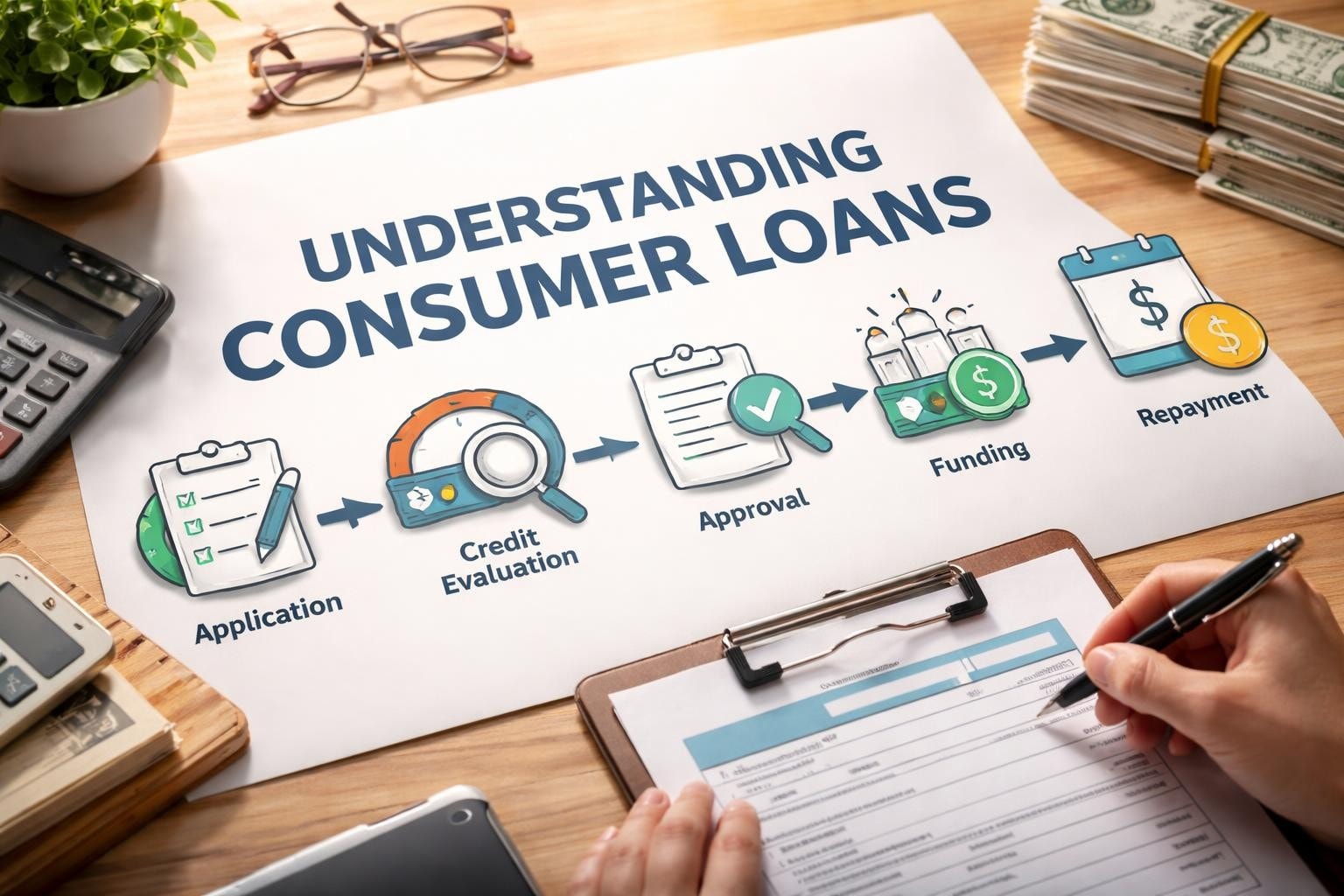
Securing financing through consumer loan services follows a systematic process designed to assess borrower qualifications and determine appropriate loan terms. Understanding this process can help applicants prepare adequately and improve their chances of approval.
Step-by-Step Application Journey
- Pre-qualification assessment: Initial evaluation of basic financial information without impacting credit scores
- Formal application submission: Providing detailed personal, employment, and financial documentation
- Credit review and verification: Lender examines credit history, income sources, and existing obligations
- Underwriting decision: Comprehensive analysis determines approval, denial, or conditional approval
- Loan agreement and funding: Final terms negotiation, document signing, and disbursement of funds
This structured approach, governed by regulations like the Truth in Lending Act, ensures transparency and fairness throughout the borrowing process.
Documentation Requirements
Lenders typically request specific documentation to verify applicant information and assess creditworthiness:
- Government-issued identification (driver's license, passport)
- Proof of income (pay stubs, tax returns, bank statements)
- Employment verification (employer contact information, employment letters)
- Residence confirmation (utility bills, lease agreements, mortgage statements)
- Credit authorization forms
- Additional documentation depending on loan purpose

Factors Affecting Consumer Loan Approval and Terms
Consumer loan services evaluate multiple factors when determining whether to approve applications and what interest rates and terms to offer. Understanding these criteria empowers borrowers to strengthen their applications and negotiate better terms.
Credit Score Impact
Your credit score remains one of the most significant determinants of loan approval and pricing. This three-digit number summarizes your credit history and predicts future repayment behavior.
| Credit Score Range | Rating | Typical Impact on Loan Terms |
|---|---|---|
| 800+ | Exceptional | Best rates, highest approval odds |
| 740-799 | Very Good | Excellent rates, strong approval likelihood |
| 670-739 | Good | Competitive rates, good approval chances |
| 580-669 | Fair | Higher rates, moderate approval difficulty |
| Below 580 | Poor | Highest rates, specialized programs may be needed |
Many consumer loan services now work with borrowers across the credit spectrum, recognizing that past credit challenges don't necessarily predict future behavior, especially when circumstances have changed.
Debt-to-Income Ratio Considerations
Lenders calculate your debt-to-income (DTI) ratio by dividing your monthly debt obligations by your gross monthly income. This metric reveals how much of your income already services existing debts.
Most consumer loan services prefer DTI ratios below 43%, though some programs accommodate higher ratios when other qualifying factors are strong. Reducing existing debts or increasing income before applying can significantly improve approval odds.
Employment Stability and Income Verification
Consistent employment history demonstrates financial stability and reliable income streams. Lenders typically prefer borrowers who have maintained steady employment for at least two years, though exceptions exist for recent graduates or career changers with strong credentials.
The FDIC’s consumer lending guidelines outline regulatory expectations for income verification and employment assessment in the lending process.
Geographic Considerations in Consumer Lending
Consumer loan services often operate within specific geographic regions, and understanding local market dynamics can benefit borrowers seeking financing. Regional lenders frequently offer advantages over national institutions through personalized service and community knowledge.
Regional Lending Benefits
Louisiana, Mississippi, Tennessee, and Georgia represent markets where regional consumer loan services have thrived by understanding local economic conditions, employment patterns, and community needs. Borrowers in these states often find that local lenders offer:
- More flexible underwriting that considers regional employment norms
- Personal relationships with loan officers who understand local circumstances
- Faster application processing through streamlined local operations
- Community investment mindset that prioritizes long-term customer relationships
Branch Access and Personal Service
While digital lending has expanded dramatically, many borrowers still value face-to-face interactions when making significant financial decisions. Multiple branch locations provide:
- In-person consultations for complex financial situations
- Document review assistance and application support
- Immediate answers to questions and concerns
- Relationship building with financial professionals who understand your goals
- Local economic insight and market-specific guidance
This hybrid approach combining technology convenience with personal accessibility represents the evolution of modern consumer loan services.

Special Circumstances and Consumer Loan Options
Consumer loan services have evolved to address borrowers facing unique challenges or circumstances that traditional lending criteria might overlook. This inclusivity has expanded access to credit for millions of Americans previously underserved by conventional financial institutions.
Financing with Past Credit Challenges
Previous credit difficulties don't permanently disqualify borrowers from accessing consumer loan services. Many lenders now employ more nuanced underwriting approaches that consider:
Recent credit behavior rather than exclusively focusing on historical issues, recognizing that financial recovery demonstrates responsibility and commitment to improved money management.
Alternative data sources including rent payment history, utility bill payments, and banking relationship longevity that traditional credit reports might not capture but still indicate creditworthiness.
Explanatory circumstances such as medical emergencies, divorce, job loss, or other life events that temporarily disrupted finances but have since been resolved.
The Consumer Credit Protection Act of 1968 established important protections ensuring fair access to credit regardless of past challenges, provided current circumstances demonstrate repayment capacity.
Refinancing Opportunities
Existing borrowers can often improve their financial situations through refinancing consumer loan services that replace current obligations with new loans featuring better terms:
- Lower interest rates when credit scores have improved or market rates have decreased
- Extended repayment periods that reduce monthly payment amounts when cash flow is tight
- Consolidated payments combining multiple loans into single, simpler obligations
- Adjusted loan amounts that provide additional capital while refinancing existing debt
| Refinancing Benefit | Typical Impact | Best For |
|---|---|---|
| Rate Reduction | Lower total interest paid | Improved credit borrowers |
| Term Extension | Reduced monthly payments | Cash flow management |
| Debt Consolidation | Simplified finances | Multiple loan management |
| Cash-Out Refinance | Additional funds accessed | New expense funding |
Interest Rates and Fee Structures
Understanding how consumer loan services price their products helps borrowers make cost-effective decisions and avoid unnecessary expenses. Transparency in lending costs has improved significantly through regulatory requirements and competitive market pressures.
APR vs. Interest Rate
The Annual Percentage Rate (APR) differs from the simple interest rate by incorporating fees and other loan costs into a single percentage that reflects the true cost of borrowing. This standardized metric enables accurate comparison between different consumer loan services.
Interest rates alone don't capture origination fees, processing charges, or other costs that affect total borrowing expenses. Always compare APRs rather than advertised interest rates when evaluating loan options.
Common Fee Structures
Consumer loan services may charge various fees depending on loan type, amount, and borrower qualifications:
- Origination fees: Typically 1-8% of loan amount, charged for processing the loan
- Application fees: Upfront charges for credit checks and initial processing
- Late payment penalties: Charges assessed when payments arrive after due dates
- Prepayment penalties: Fees some lenders charge for early loan payoff (less common in 2026)
- NSF fees: Charges for insufficient funds when automatic payments fail
Transparent lenders clearly disclose all fees before borrowers commit to loan agreements, ensuring no surprises throughout the repayment period.
Responsible Borrowing Practices
Accessing consumer loan services responsibly requires careful planning and honest assessment of repayment capacity. Smart borrowing decisions today prevent financial stress tomorrow.
Before Applying for Loans
Calculate your genuine need rather than borrowing the maximum amount offered. Interest accrues on the entire borrowed sum, so minimizing the principal reduces total costs.
Compare multiple offers from different consumer loan services to ensure competitive terms. Rate and fee differences can translate to thousands of dollars over loan lifespans.
Understand total repayment costs by examining both monthly payments and total interest paid over the loan term. Sometimes shorter terms with higher monthly payments cost less overall.
During the Loan Period
Successful loan management requires consistent attention and proactive communication:
- Set up automatic payments to avoid missed deadlines and late fees
- Maintain emergency savings to cover payments during unexpected income disruptions
- Communicate with lenders immediately if financial difficulties arise
- Consider extra payments when possible to reduce principal and save interest
- Monitor credit reports to ensure accurate payment reporting
The Consumer Financial Protection Bureau’s compliance resources offer guidance on borrower rights and lender responsibilities throughout the loan lifecycle.
Technological Advances in Consumer Lending
Modern consumer loan services leverage technology to streamline applications, accelerate approvals, and enhance customer experiences. These innovations have democratized access to credit while maintaining appropriate underwriting standards.
Digital Application Platforms
Online and mobile applications have transformed how borrowers access consumer loan services:
- 24/7 application submission without geographic or time constraints
- Instant pre-qualification decisions based on initial information
- Secure document upload eliminating physical paperwork and mailing delays
- Real-time application tracking providing transparency throughout the process
- Electronic signatures expediting final approval and funding
Despite these digital conveniences, many borrowers still appreciate the option to visit physical branches for complex questions or situations requiring detailed discussion.
Data Analytics and Approval Speed
Advanced algorithms now analyze borrower data more comprehensively and quickly than traditional manual underwriting. This technology enables:
Same-day approvals for qualified borrowers with straightforward financial profiles and complete documentation.
More accurate risk assessment that considers nuanced patterns in credit behavior rather than relying solely on traditional scores.
Personalized loan products tailored to individual circumstances and repayment capacities rather than one-size-fits-all offerings.
Regulatory Framework and Consumer Protections
Consumer loan services operate within a comprehensive regulatory environment designed to protect borrowers from predatory practices and ensure fair treatment throughout the lending process.
Federal Oversight
Multiple federal agencies oversee consumer lending activities:
- Consumer Financial Protection Bureau (CFPB): Primary regulator for consumer financial products
- Federal Deposit Insurance Corporation (FDIC): Supervises banks offering consumer loans
- Federal Reserve: Sets monetary policy affecting interest rates and credit availability
- Federal Trade Commission (FTC): Enforces consumer protection laws in lending
This multi-agency approach ensures comprehensive oversight and accountability within the industry.
State-Level Regulations
Individual states maintain additional regulations governing consumer loan services operating within their borders. These state laws may include:
- Interest rate caps limiting maximum APRs
- Licensing requirements for lenders and loan officers
- Disclosure mandates beyond federal requirements
- Collection practice restrictions
- Dispute resolution procedures
Borrowers benefit from understanding both federal and state protections applicable to their loans.
Consumer loan services provide essential financial tools that help individuals achieve important goals, manage unexpected expenses, and navigate temporary cash flow challenges. By understanding loan types, application processes, approval factors, and responsible borrowing practices, you can make informed decisions that support your long-term financial health. Whether you need financing for home improvements, medical expenses, education, or other personal needs, Standard Financial offers flexible financing solutions with multiple branch locations across Louisiana, Mississippi, Tennessee, and Georgia, serving clients at all credit levels with personalized service and competitive terms.





No comment yet, add your voice below!