

The financial landscape has transformed dramatically over the past decade, with technology reshaping how consumers access credit. A loan marketplace operates as a digital platform connecting borrowers with multiple lenders simultaneously, streamlining the loan application process and providing unprecedented access to competitive financing options. For consumers across Louisiana, Mississippi, Tennessee, and Georgia seeking personal loans for home improvements, medical expenses, or education, understanding how these platforms work can open doors to better rates and more flexible terms, even for those with past credit challenges.
Understanding the Modern Loan Marketplace
A loan marketplace functions as an intermediary between borrowers and lenders, creating an efficient ecosystem where multiple financial institutions compete for your business. Rather than visiting individual banks or credit unions, borrowers complete a single application that reaches numerous lenders simultaneously.
The marketplace lending model has evolved significantly since its inception. These platforms leverage technology to assess creditworthiness, match borrowers with appropriate lenders, and facilitate the entire loan origination process digitally.
Key components of a loan marketplace include:
- Automated underwriting systems that evaluate applications quickly
- Diverse lender networks offering various loan products
- Transparent comparison tools showing rates and terms side-by-side
- Streamlined application processes requiring minimal documentation
- Real-time decision capabilities for faster funding

How Marketplace Platforms Evaluate Borrowers
Traditional lending relied heavily on FICO scores and rigid underwriting criteria. Modern loan marketplace platforms take a more nuanced approach, considering multiple data points to assess creditworthiness and match borrowers with suitable lenders.
These platforms analyze employment history, income stability, debt-to-income ratios, and payment patterns beyond just credit scores. This comprehensive evaluation benefits consumers with past credit issues who might be overlooked by conventional lenders but demonstrate current financial responsibility.
| Evaluation Factor | Traditional Lending | Marketplace Lending |
|---|---|---|
| Credit Score Weight | 70-80% | 40-50% |
| Alternative Data | Minimal | Extensive |
| Decision Speed | 5-7 days | Minutes to hours |
| Human Review | Always required | Often automated |
| Flexibility | Limited | High customization |
The technology powering these assessments continues advancing. Machine learning algorithms identify patterns that human underwriters might miss, enabling more accurate risk assessment while expanding access to credit for qualified borrowers.
Benefits of Using a Loan Marketplace
For consumers seeking personal loans, marketplace platforms offer compelling advantages over traditional single-lender approaches. The competitive environment naturally drives better outcomes for qualified borrowers.
Competitive Rate Shopping
When multiple lenders bid for your business, rates become more competitive. A loan marketplace creates this environment automatically, eliminating the need to visit multiple institutions individually. Borrowers often save hundreds or thousands of dollars in interest over the loan term simply by accessing competitive offers.
This competition proves particularly valuable for borrowers with less-than-perfect credit. While one lender might decline an application, another within the same marketplace might approve it with reasonable terms based on different underwriting criteria.
Time efficiency represents another major benefit:
- Complete one comprehensive application instead of multiple forms
- Receive multiple offers simultaneously rather than sequentially
- Compare terms side-by-side with standardized information
- Make informed decisions without pressure from individual loan officers
- Close loans faster through streamlined digital processes
Transparency and Consumer Control
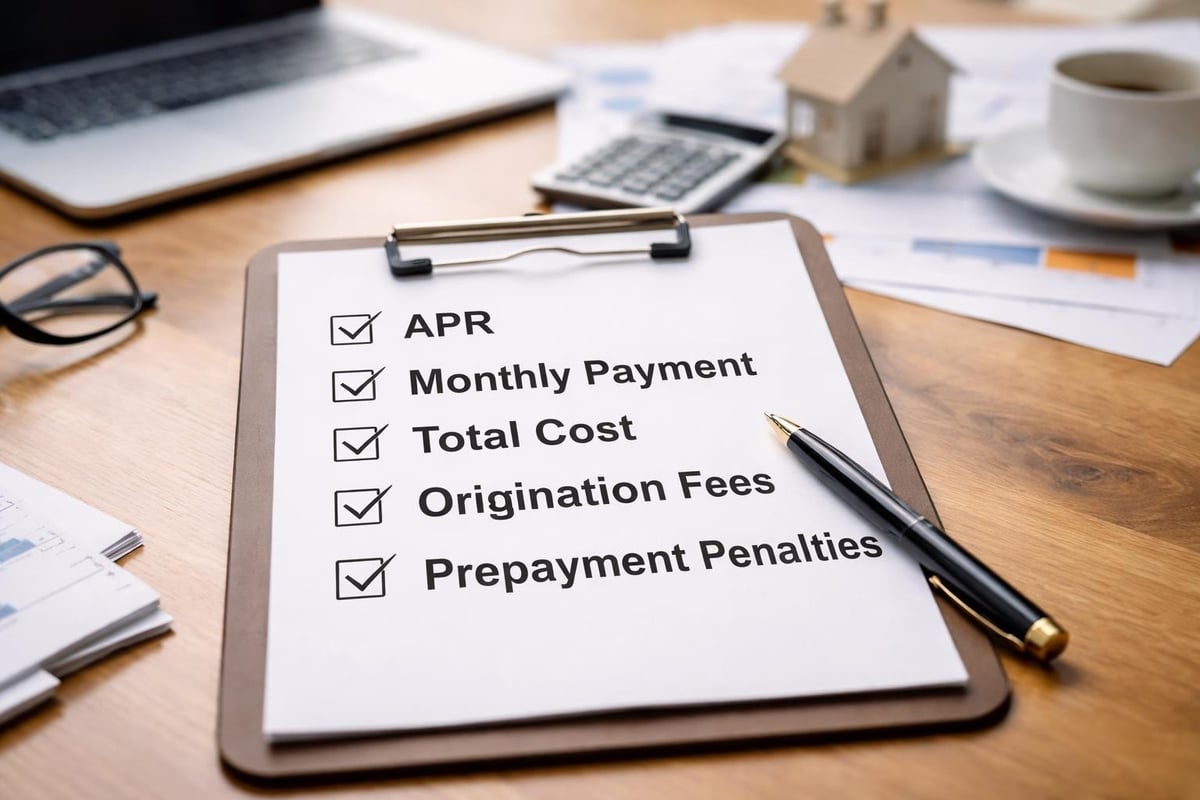
Marketplace platforms provide unprecedented transparency into loan terms, fees, and total costs. Borrowers can clearly see annual percentage rates, monthly payments, origination fees, and prepayment penalties before committing to any lender.
This transparency empowers consumers to make educated decisions aligned with their financial goals. Whether seeking funds for home improvements or medical expenses, understanding the true cost of borrowing prevents surprises and buyer's remorse.
The Consumer Financial Protection Bureau emphasizes the importance of clear disclosure in emerging lending models, noting that transparency protects consumers while promoting healthy market competition.
Types of Loans Available Through Marketplaces
Modern loan marketplaces accommodate diverse borrowing needs, offering products ranging from small personal loans to substantial home improvement financing. Understanding available options helps borrowers select the right product for their situation.
Personal Loan Categories
Secured versus unsecured loans present the first major distinction:
- Secured loans require collateral (vehicle, savings account, property)
- Unsecured loans rely solely on creditworthiness and income
- Secured options typically offer lower rates but carry asset risk
- Unsecured loans provide faster processing with no collateral evaluation
Personal loans through marketplace platforms commonly fund home improvements, medical procedures, debt consolidation, education expenses, and major purchases. Lenders within marketplaces often specialize in specific loan types, allowing platforms to match borrowers with institutions experienced in their particular needs.

Specialized Lending Products
Beyond standard personal loans, marketplace platforms increasingly offer specialized products. Medical financing programs provide extended repayment terms for procedures not covered by insurance. Education loans help adult learners pursue professional development or degree completion.
| Loan Type | Typical Amount | Common Terms | Primary Use Cases |
|---|---|---|---|
| Home Improvement | $5,000-$100,000 | 3-7 years | Renovations, repairs, upgrades |
| Medical Financing | $2,000-$50,000 | 2-5 years | Procedures, treatments, equipment |
| Education Loans | $3,000-$75,000 | 3-10 years | Tuition, training, certification |
| Debt Consolidation | $5,000-$50,000 | 3-7 years | Credit card payoff, loan combining |
| Emergency Funds | $1,000-$25,000 | 1-5 years | Unexpected expenses, urgent needs |
Refinancing options also flow through marketplace platforms, enabling borrowers to replace existing high-rate loans with more favorable terms as their credit improves or market conditions change.
Regulatory Landscape and Consumer Protections
The loan marketplace operates within a complex regulatory framework designed to protect consumers while fostering innovation. Understanding these protections helps borrowers navigate the lending landscape confidently.
Federal and State Oversight
Federal regulations govern truth-in-lending disclosures, fair lending practices, and consumer data protection. The Truth in Lending Act requires clear disclosure of APRs, finance charges, and total payment amounts before loan consummation.
State-level regulations add another layer, with each state maintaining its own licensing requirements, interest rate caps, and consumer protection statutes. Recent regulatory trends in loan markets reflect ongoing efforts to balance innovation with consumer safety.
Key consumer protections include:
- Mandatory cooling-off periods in some states
- Maximum interest rate caps preventing predatory lending
- Required disclosures about fees and penalties
- Right to dispute inaccurate credit reporting
- Protection against discriminatory lending practices
The regulatory environment continues evolving as state regulations increasingly impact fintech scalability, creating challenges for marketplace platforms operating across multiple jurisdictions.
Choosing Reputable Platforms
Not all loan marketplaces maintain the same standards. Borrowers should verify platform credentials, research lender networks, and understand fee structures before sharing personal information.
Legitimate platforms clearly disclose how they earn revenue (typically through lender fees, not borrower charges), maintain transparent privacy policies, and employ bank-level security for data protection. Reading reviews from actual borrowers provides valuable insights into platform reliability and customer service quality.
Maximizing Success in the Loan Marketplace
Strategic approaches to marketplace lending significantly improve outcomes. Borrowers who understand how to present their financial situation effectively and compare offers intelligently secure better terms.
Preparing Your Application
Strong applications receive better offers. Before entering a loan marketplace, borrowers should gather documentation proving income stability, employment history, and current debt obligations. Recent pay stubs, tax returns, and bank statements support the application and expedite processing.
Checking your credit report before applying allows you to identify and dispute errors that might negatively impact offers. Even small credit score improvements can substantially affect interest rates, potentially saving thousands over the loan term.
Application optimization strategies:
- Pay down credit card balances to improve debt-to-income ratios
- Avoid new credit inquiries in the months preceding your application
- Document all income sources, including side businesses or freelance work
- Prepare explanations for any past credit issues with supporting evidence
- Calculate exactly how much you need rather than requesting round numbers
Comparing Offers Effectively
Receiving multiple offers creates the opportunity for comparison, but borrowers must look beyond advertised rates to understand true costs. The annual percentage rate incorporates both interest and fees, providing a more accurate cost comparison than interest rate alone.
Monthly payment amounts matter, but total repayment amounts reveal the real cost. A lower monthly payment stretched over more years might actually cost significantly more than a higher payment over a shorter term.
| Offer | APR | Term | Monthly Payment | Total Repayment | Total Interest |
|---|---|---|---|---|---|
| Lender A | 8.99% | 3 years | $318 | $11,448 | $1,448 |
| Lender B | 9.49% | 5 years | $210 | $12,600 | $2,600 |
| Lender C | 7.99% | 4 years | $244 | $11,712 | $1,712 |
This comparison demonstrates how Lender B's lower monthly payment actually costs $1,152 more in total interest than Lender A, despite appearing more affordable initially.
Technology Driving Marketplace Innovation
The loan marketplace continues evolving through technological advancement. Artificial intelligence, machine learning, and alternative data sources reshape how platforms assess creditworthiness and match borrowers with lenders.
Alternative Data and Credit Scoring
Traditional credit scoring relies primarily on credit bureau data reflecting past borrowing behavior. Modern marketplace platforms incorporate alternative data sources including rental payment history, utility bill payments, and banking transaction patterns.
Research from the Journal of Banking & Finance analyzes marketplace lender performance, revealing how these platforms achieve competitive risk-adjusted returns through sophisticated data analysis and local market knowledge.
This expanded data universe benefits borrowers with limited credit history or past issues who demonstrate current financial responsibility. Young adults, recent immigrants, and those recovering from financial setbacks gain access to credit that traditional models might deny.
Mobile-First Lending Experiences
Smartphone adoption drives marketplace platforms toward mobile-optimized experiences. Borrowers can complete applications, upload documents, review offers, and sign agreements entirely from mobile devices.
This accessibility proves particularly valuable for consumers in rural areas or those with limited access to physical bank branches. Across states like Louisiana, Mississippi, Tennessee, and Georgia, mobile lending platforms democratize access to competitive financing options regardless of geographic location.
Mobile platform capabilities include:
- Document capture using smartphone cameras
- Biometric authentication for security and convenience
- Real-time application status notifications
- Digital signature capabilities meeting legal requirements
- Instant funding to linked bank accounts
Risk Considerations and Informed Borrowing
While loan marketplaces offer significant benefits, borrowers must approach them with realistic expectations and awareness of potential pitfalls. Informed consumers make better decisions and achieve more positive outcomes.
Understanding True Costs
Some marketplace offers that appear attractive initially carry hidden costs. Origination fees, prepayment penalties, and late payment charges can substantially increase the true cost of borrowing. Carefully reviewing loan agreements before signing prevents unpleasant surprises.
The alternative lending platform market continues growing, but growth doesn't automatically equate to borrower advantage. Consumers must remain vigilant about terms and conditions regardless of platform popularity or marketing claims.
Avoiding Overborrowing
Marketplace platforms often approve borrowers for larger amounts than they initially requested. While tempting, borrowing more than necessary increases interest costs and monthly obligations that strain budgets.
Borrowers should resist the urge to maximize loan amounts simply because approval exists. Calculating actual need, considering emergency reserves, and borrowing only what's required demonstrates financial discipline that serves long-term stability.
Integration with Traditional Banking Services
The relationship between loan marketplaces and traditional financial institutions continues evolving. Many banks now participate in marketplace platforms as lending partners, while maintaining their own direct lending operations.
Bank Partnership Models
The bank-partnership model in fintech lending allows innovative platforms to leverage established institutions' regulatory compliance infrastructure while bringing technological efficiency and customer reach.
These partnerships benefit consumers by combining traditional banking stability with marketplace innovation. Borrowers gain access to competitive rates from federally insured institutions while enjoying the convenience of modern digital platforms.
Community banks and regional lenders particularly benefit from marketplace participation. These institutions gain access to borrowers beyond their geographic footprint while maintaining underwriting control and portfolio ownership.
Direct Lending Remains Relevant
Despite marketplace growth, direct relationships with established lenders maintain value. Long-standing customers often receive preferential rates, faster approvals, and more flexible terms based on relationship history.
For consumers in Louisiana, Mississippi, Tennessee, and Georgia, local lenders with community knowledge and branch presence offer personalized service that purely digital platforms cannot replicate. The optimal strategy often combines marketplace rate shopping with relationship banking for different financial needs.
The loan marketplace revolutionizes consumer access to competitive financing through technology-driven efficiency and lender competition. Understanding how these platforms work, what protections exist, and how to maximize their benefits empowers borrowers to make informed financial decisions that align with their goals and circumstances. Whether you're planning home improvements, covering medical expenses, or pursuing educational opportunities, Standard Financial offers the personalized service and flexible financing options you need, with multiple branch locations throughout Louisiana, Mississippi, Tennessee, and Georgia ready to help you explore the best loan solutions for your unique situation, even if you've faced credit challenges in the past.






No comment yet, add your voice below!