

Homeownership represents one of the most significant financial commitments most people will make, and the terms of your original mortgage don't have to remain fixed forever. A mortgage refinance allows homeowners to replace their existing home loan with a new one, potentially securing better terms, lower interest rates, or accessing the equity they've built over time. Whether you're looking to reduce monthly payments, shorten your loan term, or tap into your home's value for important expenses, understanding the refinancing process can help you make informed decisions that align with your financial goals.
Understanding the Mortgage Refinance Process
Refinancing your home loan involves applying for a completely new mortgage that pays off your existing one. The process shares similarities with your original home purchase, requiring documentation, credit checks, property appraisals, and closing procedures.
When you refinance, lenders evaluate your current financial situation, including income, credit score, employment history, and the amount of equity you've accumulated in your property. The goal is to determine whether you qualify for terms that improve your financial position compared to your existing loan.
Key Reasons Homeowners Choose to Refinance
Multiple motivations drive homeowners to pursue a mortgage refinance. The most common reason involves securing a lower interest rate, which can reduce monthly payments and decrease the total interest paid over the loan's lifetime.
- Lower interest rates: Even a reduction of one percentage point can translate to significant savings
- Shorter loan terms: Moving from a 30-year to a 15-year mortgage builds equity faster
- Cash-out options: Access equity for home improvements, medical expenses, or education costs
- Payment stability: Converting from adjustable-rate to fixed-rate mortgages
- Debt consolidation: Combining high-interest debts into one lower-rate payment
The projected mortgage refinance rates for 2026 suggest strategic opportunities for homeowners who monitor market conditions carefully. Understanding when rates favor refinancing requires attention to both national trends and your personal financial circumstances.

Types of Mortgage Refinance Options
Different refinancing programs serve distinct financial objectives. Selecting the right type depends on your goals, current loan terms, and financial situation.
Rate-and-Term Refinance
This standard refinancing approach focuses on changing your interest rate, loan term, or both, without accessing additional cash. Homeowners use rate-and-term refinancing to lower monthly payments or accelerate equity building.
The mathematics prove compelling when interest rates drop. For example, refinancing a $250,000 mortgage from 6.5% to 5.0% on a 30-year term can reduce monthly payments by approximately $370, adding up to substantial savings over time.
Cash-Out Refinance
A cash-out refinance replaces your existing mortgage with a larger loan, allowing you to receive the difference in cash. This option works well for homeowners with significant equity who need funds for specific purposes.
Common uses include:
- Home renovations that increase property value
- Medical expenses requiring substantial upfront payment
- Educational costs for family members
- Consolidating high-interest credit card debt
- Starting or expanding a business venture
Veterans and active military members have access to specialized programs like the VA cash-out refinance, which offers favorable terms and potentially lower closing costs compared to conventional options.
Streamline Refinance Programs
Streamline refinancing provides an expedited process for existing FHA, VA, or USDA loan holders. These programs reduce paperwork requirements and may eliminate the need for new appraisals, making the refinancing process faster and less expensive.
| Refinance Type | Best For | Key Benefit | Typical Requirement |
|---|---|---|---|
| Rate-and-Term | Lower payments | Reduced interest costs | Good credit, equity |
| Cash-Out | Accessing equity | Lump sum funding | 20%+ equity typically |
| Streamline | FHA/VA holders | Faster processing | Existing government loan |
| Short Refinance | Avoiding foreclosure | Loan modification | Financial hardship |
Evaluating Your Refinancing Readiness
Not every homeowner benefits equally from mortgage refinance opportunities. Several factors determine whether refinancing makes financial sense for your specific situation.
Credit Score Considerations
Your credit score significantly impacts the interest rates lenders offer. Generally, scores above 740 qualify for the most favorable terms, while scores between 620 and 739 receive moderate rates. Homeowners with lower incomes can still pursue refinancing by emphasizing other strengths like substantial equity or improved debt-to-income ratios.
Recent credit improvements can position you for better refinancing terms than your original mortgage. If you've paid down debts, increased your income, or corrected past credit issues, refinancing might unlock opportunities previously unavailable.
Home Equity Requirements
Most conventional refinancing programs require homeowners to maintain at least 20% equity after refinancing. This means if your home is worth $300,000, you should owe no more than $240,000 on your new mortgage.
Equity serves as a safety buffer for lenders and typically eliminates the need for private mortgage insurance (PMI). Homeowners with less equity may still qualify but often face higher interest rates or additional insurance requirements.

Calculating Your Break-Even Point
The break-even point represents when your accumulated savings from lower payments exceed your refinancing costs. Understanding this timeline proves essential for smart refinancing decisions.
Break-even calculation example:
- Refinancing closing costs: $4,500
- Monthly payment reduction: $250
- Break-even point: 18 months ($4,500 ÷ $250)
If you plan to stay in your home longer than your break-even point, refinancing typically makes financial sense. Homeowners who may relocate within a few years should carefully weigh whether short-term savings justify upfront costs.
The Mortgage Refinance Application Process
Securing a new mortgage follows a structured process that requires preparation and documentation. Understanding each stage helps you navigate refinancing efficiently.
Documentation Requirements
Lenders need comprehensive financial information to evaluate your application. Gathering these documents before starting the process accelerates approval:
- Recent pay stubs covering the last 30-60 days
- Two years of W-2 forms or tax returns for self-employed applicants
- Bank statements from all accounts for the past two months
- Current mortgage statement showing balance and payment history
- Homeowners insurance policy information
- Property tax records and recent appraisal data
Self-employed borrowers or those with non-traditional income sources may need additional documentation proving income stability and reliability.
Property Appraisal and Valuation
Most mortgage refinance applications require a new property appraisal to establish current market value. Appraisers examine comparable sales in your neighborhood, property condition, and any improvements made since your original purchase.
Strong appraisals benefit borrowers by:
- Confirming sufficient equity for favorable loan terms
- Potentially eliminating PMI requirements
- Supporting higher cash-out amounts if desired
- Demonstrating property value appreciation
Special Refinancing Situations
Some homeowners face unique circumstances requiring specialized refinancing approaches. Understanding these options expands possibilities for those with non-traditional situations.
Refinancing with Past Credit Challenges
Homeowners who experienced previous credit difficulties need not be permanently excluded from refinancing opportunities. Lenders increasingly recognize that financial setbacks happen and evaluate the complete picture.
Demonstrating credit rehabilitation involves:
- Establishing consistent on-time payments for 12-24 months
- Reducing debt-to-income ratios below 43%
- Building emergency savings as a financial buffer
- Providing explanations for past credit events
- Working with lenders who specialize in second-chance lending
Regional lenders often show more flexibility than large national institutions, considering local economic conditions and individual circumstances more holistically.
Short Refinance Options
Short refinancing represents a specialized solution for homeowners facing potential foreclosure. In this arrangement, lenders agree to refinance the property for its current market value, even when that amount is less than the existing loan balance.
This option benefits both parties by avoiding foreclosure costs and allowing homeowners to retain their properties. Qualification requires demonstrating financial hardship and proving ability to afford the new, reduced loan amount.
Timing Your Mortgage Refinance Decision
Market conditions, personal finances, and life circumstances all influence optimal refinancing timing. Strategic homeowners monitor multiple factors before initiating the process.
Interest Rate Trends and Market Conditions
While no one can perfectly predict rate movements, understanding broader economic indicators helps inform timing decisions. Federal Reserve policies, inflation rates, and employment data all influence mortgage rates.
However, waiting indefinitely for the "perfect" rate often costs more than acting when conditions are favorable. Timing considerations should balance market conditions with personal financial readiness.
Personal Financial Milestones
Your individual circumstances matter more than general market conditions. Consider refinancing when you've:
- Significantly improved your credit score since your original mortgage
- Paid down enough principal to eliminate PMI
- Received a substantial income increase improving debt ratios
- Accumulated equity through property appreciation or payments
- Experienced major life changes affecting housing needs
| Timing Factor | Favorable Indicator | Action Recommended |
|---|---|---|
| Interest Rates | 0.75%+ below current rate | Proceed with application |
| Home Equity | 20%+ equity available | Excellent refinancing position |
| Credit Score | 40+ point improvement | Request rate quotes |
| Financial Stability | 2+ years steady income | Strong qualification likelihood |
| Break-Even Period | Under 3 years | Beneficial for most scenarios |
Costs Associated with Refinancing
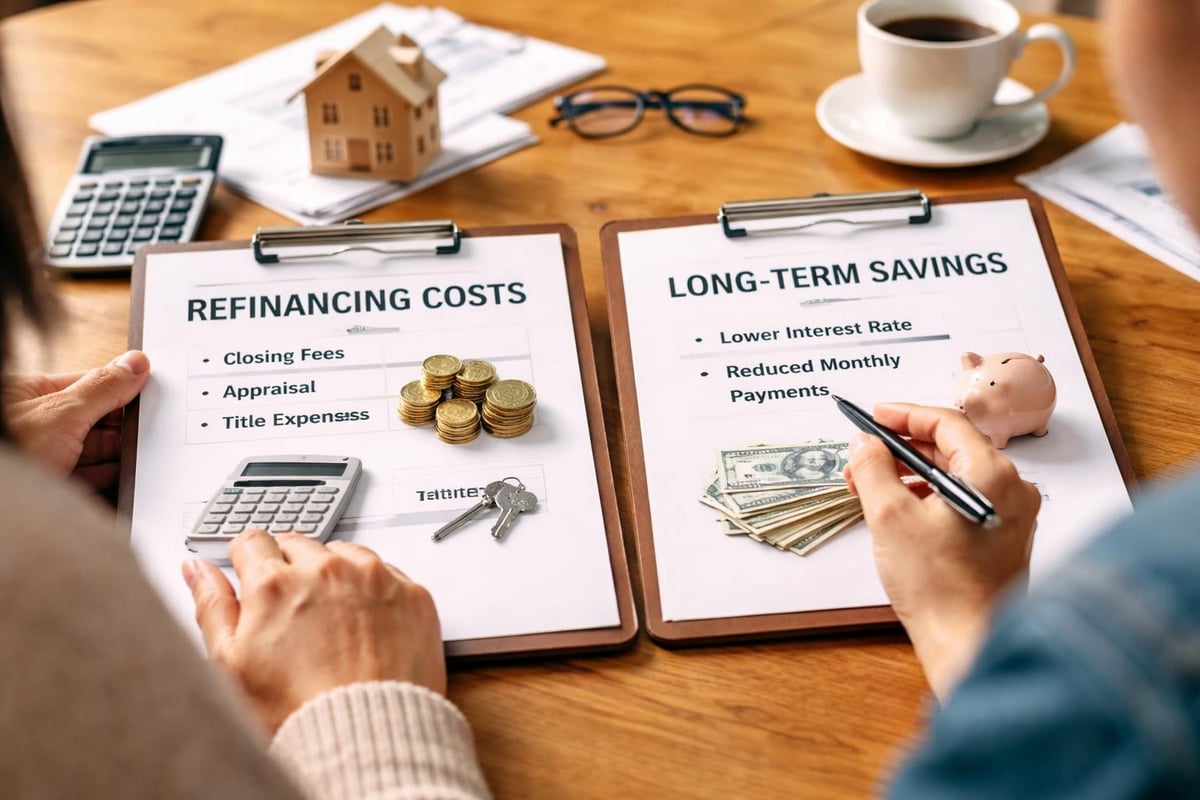
Understanding the financial investment required for mortgage refinance helps you accurately calculate potential savings and make informed decisions.
Typical Closing Costs
Refinancing involves various fees that typically range from 2% to 5% of the loan amount. For a $200,000 mortgage, expect closing costs between $4,000 and $10,000.
Common fees include:
- Application fee: $75-$500 for processing your request
- Origination fee: 0.5%-1% of loan amount for underwriting
- Appraisal: $300-$600 for property valuation
- Title search and insurance: $700-$900 for ownership verification
- Credit report: $25-$50 per applicant
- Recording fees: $50-$250 for government registration
Some lenders offer "no-closing-cost" refinancing, but these programs typically incorporate fees into higher interest rates or loan balances. Calculating the true cost over your loan term reveals whether this approach saves money.
Strategies to Reduce Refinancing Expenses
Smart homeowners can minimize costs through several approaches:
- Shop multiple lenders to compare fee structures and rates
- Negotiate origination fees and ask about fee waivers
- Time your closing near month's end to reduce prepaid interest
- Review the Loan Estimate carefully for unnecessary charges
- Consider lender credits that offset closing costs with slightly higher rates
Regional lenders serving specific communities often provide more competitive pricing than national institutions, particularly for borrowers with established local ties.
Alternatives to Traditional Refinancing
Mortgage refinance isn't the only option for homeowners seeking financial flexibility or improved loan terms. Several alternatives deserve consideration based on your specific goals.
Home Equity Lines of Credit
A HELOC provides revolving credit based on your home equity without replacing your existing mortgage. This option works well when you need flexible access to funds over time rather than a single lump sum.
Loan Modification Programs
Borrowers experiencing temporary financial hardship may qualify for loan modifications that adjust terms without full refinancing. These programs can extend loan terms, reduce interest rates, or defer payments while you stabilize your finances.
Home Equity Loans
Unlike cash-out refinancing, home equity loans add a second mortgage while preserving your original loan. This approach makes sense when your current mortgage has excellent terms you want to maintain.
Working with the Right Lending Partner
Selecting an experienced, flexible lender significantly impacts your refinancing experience and outcomes. Regional institutions often provide advantages over large national banks.
Benefits of Community-Focused Lenders
Lenders with deep roots in specific regions understand local market conditions, property values, and economic factors that affect homeowners. They often demonstrate more flexibility in evaluating applications, particularly for borrowers with unique circumstances.
Advantages include:
- Personalized service with direct access to decision-makers
- Greater understanding of regional economic conditions
- Flexibility for borrowers with past credit challenges
- Competitive rates reflecting lower operational overhead
- Streamlined processes with faster approval timelines
Questions to Ask Potential Lenders
Before committing to a refinancing partner, gather comprehensive information:
- What interest rates do you currently offer for my credit profile?
- What are all fees associated with this refinancing?
- Do you offer programs for borrowers with past credit issues?
- How long does your typical refinancing process take?
- Can you provide references from recent refinancing clients?
- What loan terms and payment structures are available?
Comparing multiple offers ensures you secure the most favorable terms available for your situation.
Maximizing Long-Term Benefits
Successful mortgage refinance extends beyond simply securing a new loan. Strategic borrowers use refinancing as a tool within broader financial planning.
Using Refinancing for Wealth Building
Lower monthly payments free up cash flow for other wealth-building activities. Consider directing refinancing savings toward:
- Retirement contributions to compound tax-advantaged growth
- Emergency fund development providing financial security
- Investment portfolios diversifying your assets
- Education savings for family members
- Additional mortgage principal to accelerate equity building
Avoiding Common Refinancing Mistakes
Even beneficial refinancing can become problematic through poor planning. Watch for these pitfalls:
| Mistake | Consequence | Prevention Strategy |
|---|---|---|
| Extending loan term excessively | More total interest paid | Consider hybrid approaches |
| Ignoring closing costs | Negative short-term impact | Calculate break-even carefully |
| Withdrawing too much equity | Reduced financial cushion | Limit cash-out to essential needs |
| Failing to shop rates | Higher costs than necessary | Compare 3-5 lenders minimum |
| Poor timing decisions | Missing better opportunities | Monitor rates but act when ready |
The mortgage refinance landscape continues evolving with technology, regulation, and market conditions. Homeowners who understand their options and work with experienced lending partners position themselves for optimal outcomes, whether their goals involve reducing payments, accessing equity, or restructuring debt. By carefully evaluating personal finances, market conditions, and long-term objectives, you can determine whether refinancing aligns with your financial journey and make decisions that support lasting prosperity.
Refinancing your mortgage can unlock significant financial benefits when approached strategically and executed with the right partner. Whether you're looking to lower monthly payments, access equity for important expenses, or improve loan terms, understanding your options empowers better decisions. Standard Financial specializes in helping homeowners across Louisiana, Mississippi, Tennessee, and Georgia navigate refinancing opportunities, offering flexible solutions tailored to individual circumstances, including options for those with past credit challenges. Contact Standard Financial today to explore how refinancing can support your financial goals.







No comment yet, add your voice below!