

Managing debt effectively starts with understanding the various ways you can repay what you owe. Whether you're dealing with personal loans, student debt, medical financing, or home improvement loans, having a clear grasp of your loan repayment options empowers you to make informed financial decisions. The right repayment strategy can reduce stress, lower total interest costs, and help you achieve financial freedom faster. For borrowers across Louisiana, Mississippi, Tennessee, and Georgia, knowing which repayment structure aligns with your income, goals, and life circumstances makes all the difference in successfully managing debt obligations.
Understanding Basic Repayment Structures
Every loan comes with a repayment agreement that outlines how you'll pay back the principal amount plus interest. The structure of these payments varies significantly based on loan type, lender policies, and your individual circumstances.
Standard repayment plans represent the most straightforward approach. You make fixed monthly payments over a predetermined period, typically ranging from one to seven years for personal loans. This predictability helps with budgeting since you know exactly what you'll owe each month.
Graduated repayment schedules start with lower monthly payments that increase over time, usually every two years. This structure benefits borrowers who expect their income to grow, such as recent graduates entering the workforce or professionals in expanding career fields.
Extended repayment terms stretch payments over longer periods, reducing monthly obligations but increasing total interest paid over the life of the loan. These plans work well when immediate cash flow relief is necessary.
Key Factors That Influence Your Options
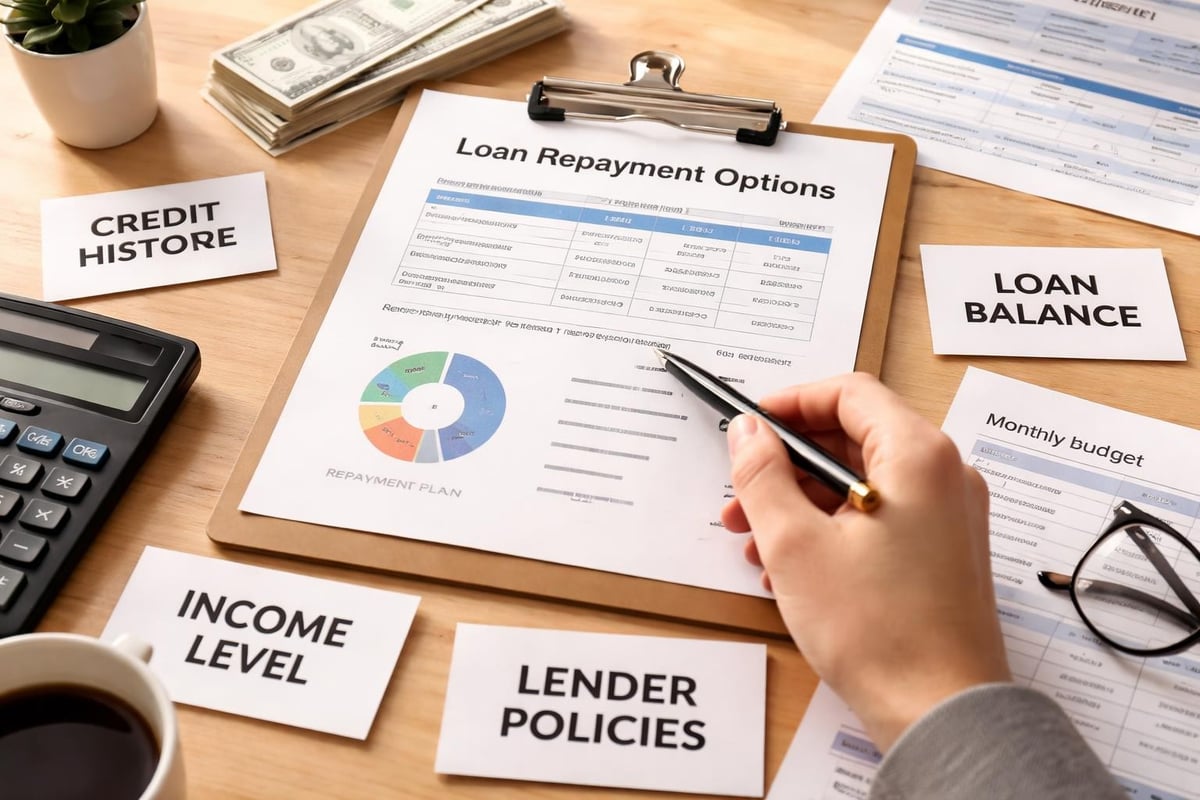
Several elements determine which loan repayment options are available to you:
- Loan type: Federal student loans offer different options than private personal loans
- Credit history: Your payment track record affects refinancing eligibility
- Income level: Some plans adjust based on what you earn
- Loan balance: Larger debts may qualify for extended terms
- Lender flexibility: Different institutions offer varying accommodation levels
Income-Based Repayment Strategies
For borrowers whose income fluctuates or who face financial hardship, income-driven plans provide critical relief. While these options are most commonly associated with federal student loans, understanding the principles helps when negotiating with private lenders.
Income-based repayment calculates your monthly payment as a percentage of your discretionary income rather than the loan balance. This approach ensures payments remain affordable relative to your earnings. The Federal Student Aid Toolkit provides comprehensive information on federal student loan repayment options, including various income-driven plans.
| Plan Type | Payment Calculation | Term Length | Forgiveness Option |
|---|---|---|---|
| Standard | Fixed amount | 10 years | No |
| Income-Based | 10-15% of discretionary income | 20-25 years | Yes (remaining balance) |
| Graduated | Starts low, increases | 10 years | No |
| Extended | Lower fixed amount | Up to 25 years | No |
Applying Income-Driven Principles to Personal Loans
While formal income-driven programs exist primarily for student debt, the concept applies when working with consumer lenders. Many financial institutions, especially those focused on serving communities with diverse economic situations, will work with borrowers experiencing temporary hardship.
Communication is essential. When your income decreases due to job loss, medical issues, or other circumstances, contact your lender immediately. Document your situation and propose a modified payment schedule based on your current earning capacity. Lenders often prefer working out arrangements rather than dealing with defaults.
Refinancing and Consolidation Options
Refinancing replaces your existing loan with a new one, ideally at better terms. This strategy makes sense when interest rates have dropped, your credit score has improved, or you want to adjust your repayment timeline.
Benefits of refinancing include:
- Lower interest rates that reduce total cost
- Simplified finances through consolidation
- Flexible term selection matching current goals
- Potential for reduced monthly payments
Before refinancing, calculate whether the long-term savings outweigh any fees associated with the new loan. Consider how extending the term affects total interest paid versus the benefit of lower monthly obligations.
Consolidation for Multiple Loans
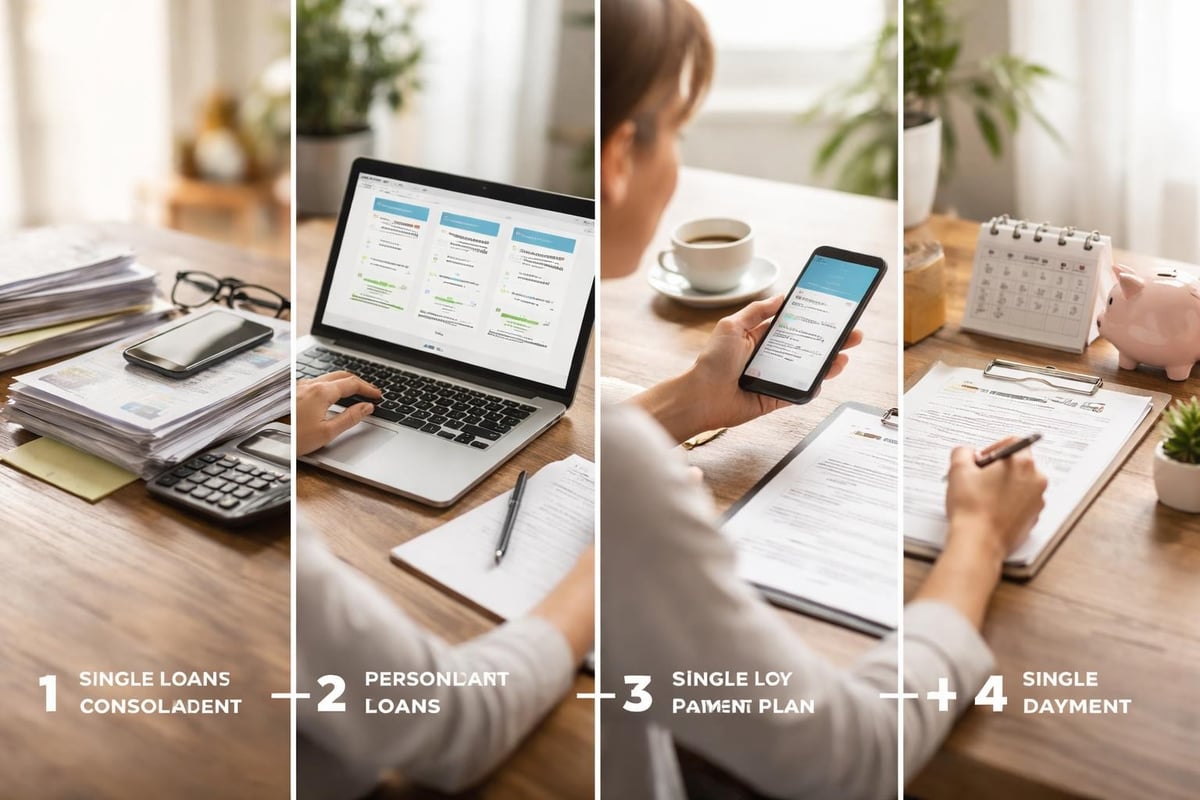
If you're managing several loans for different purposes-perhaps one for medical expenses, another for home improvements, and a third for educational costs-consolidation streamlines your finances. Instead of tracking multiple due dates and payment amounts, you make one payment to a single lender.
This approach works particularly well for borrowers with good payment histories who qualify for favorable terms. The Consumer Financial Protection Bureau offers guidance on repaying private education loans, including consolidation considerations that apply broadly to personal debt management.
Key consolidation considerations:
- Compare the new interest rate to your current rates
- Evaluate total interest over the life of the consolidated loan
- Understand any fees or prepayment penalties
- Verify that monthly savings justify any term extension
- Confirm your payment due date and autopay options
Flexible Payment Arrangements
Life rarely follows a predictable path. Job changes, medical emergencies, family obligations, and economic shifts affect your ability to maintain consistent payments. Understanding your loan repayment options for managing these challenges prevents minor setbacks from becoming major financial crises.
Deferment and Forbearance
Deferment temporarily pauses your loan payments under specific circumstances. During deferment, interest may or may not accrue depending on your loan type and lender policies. Common qualifying situations include returning to school, active military service, or economic hardship programs.
Forbearance also suspends or reduces payments temporarily, but interest typically continues accruing. Lenders grant forbearance when you don't qualify for deferment but face genuine financial difficulty. The period usually lasts three to twelve months, with possible extensions.
Both options provide breathing room, but use them strategically. The better understanding of loan repayment systems can improve borrowers’ financial realities, particularly when borrowers know when and how to access relief programs.
Partial Payment Plans
Some lenders accept reduced payments when you cannot afford the full amount. This arrangement keeps your account in better standing than missing payments entirely, though it may extend your repayment period.
Negotiate these arrangements proactively. Explain your situation, demonstrate your commitment to repaying the debt, and propose a realistic payment amount you can sustain. Documentation of income changes strengthens your case.
Accelerated Repayment Strategies
While much discussion focuses on reducing monthly payments, accelerated repayment offers significant advantages for borrowers with available resources. Paying off debt faster saves money on interest and frees up future income for other goals.
Biweekly payment schedules split your monthly payment in half and pay every two weeks. This creates 26 half-payments annually-equivalent to 13 full monthly payments instead of 12. The extra payment each year accelerates principal reduction without dramatically affecting your budget.
Principal prepayment involves making additional payments directly to your loan principal. Even modest extra amounts make a difference over time. For example, adding $50 monthly to a $10,000 loan at 7% interest can save hundreds in interest and months of payments.
Understanding Prepayment Terms
Before accelerating payments, verify your loan allows prepayment without penalties. Most modern consumer loans permit extra payments, but always confirm. When making additional payments, specify the funds should apply to principal, not future interest.
| Payment Strategy | Time Savings | Interest Savings | Budget Impact |
|---|---|---|---|
| Standard payments only | Baseline | Baseline | Moderate |
| Add $25 monthly | 3-6 months | 5-8% | Low |
| Add $50 monthly | 6-12 months | 10-15% | Moderate |
| Biweekly payments | 12-18 months | 12-18% | Low to Moderate |
Managing Multiple Loan Types
Many borrowers juggle various debt obligations simultaneously. Student loans, personal loans for medical expenses, home improvement financing, and credit card balances all demand attention. Prioritizing these effectively requires understanding each loan's characteristics and your overall financial picture.
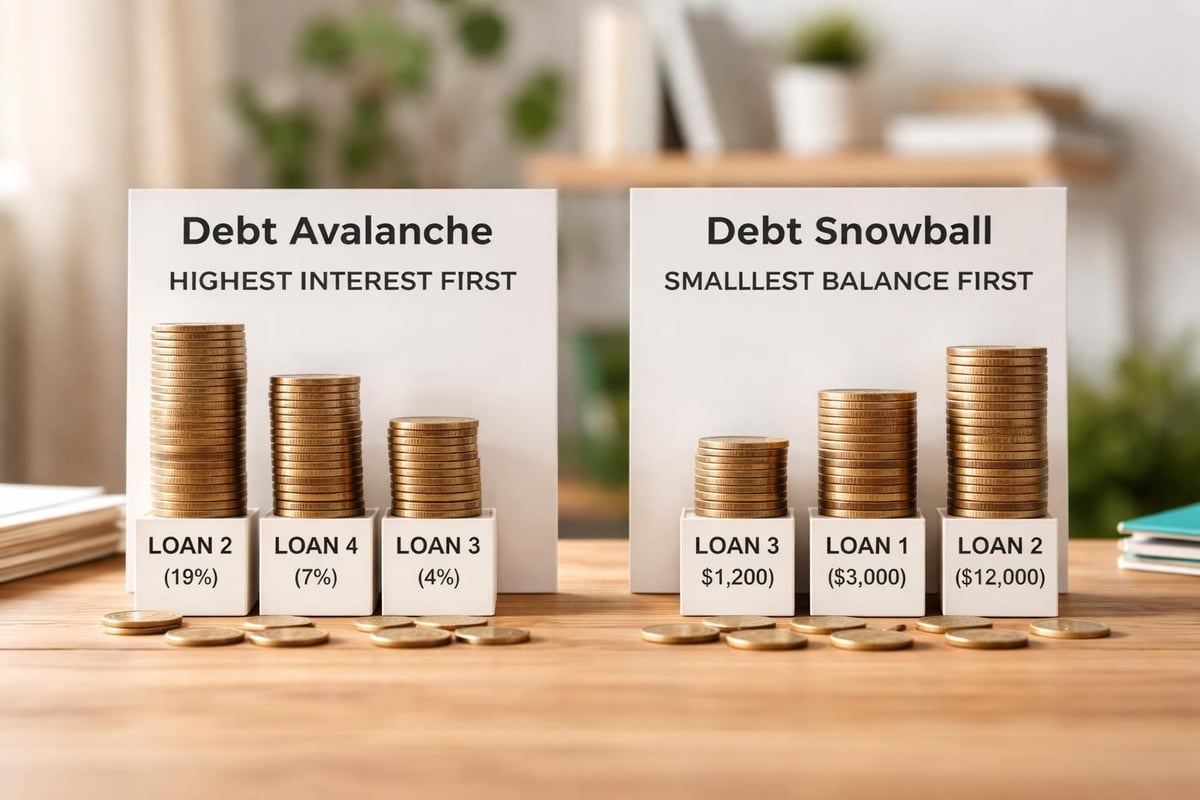
The Debt Avalanche Method
This mathematical approach targets loans with the highest interest rates first while maintaining minimum payments on others. By eliminating high-interest debt quickly, you minimize total interest paid across all obligations.
Implementation steps:
- List all debts with interest rates and minimum payments
- Continue minimum payments on all loans
- Direct extra funds to the highest-rate loan
- Once paid off, apply those funds to the next highest rate
- Repeat until debt-free
The Debt Snowball Method
This psychological approach pays smallest balances first, creating momentum through quick wins. While potentially costing more in total interest than the avalanche method, the emotional benefit of eliminating entire debts motivates consistent payment behavior.
Both strategies work. Choose based on whether mathematical optimization or motivational momentum serves your personality and circumstances better. The important factor is maintaining consistent progress toward becoming debt-free.
Protecting Your Credit During Repayment
Your payment history constitutes the largest factor in credit scoring models. Managing your loan repayment options strategically protects and improves your credit profile, opening doors to better financial opportunities in the future.
Payment timing matters enormously. Even one payment more than 30 days late can drop your score significantly. Set up automatic payments to prevent accidental missed deadlines, ensuring funds are available before the due date.
Credit Impact of Different Options
Refinancing may temporarily reduce your score due to the hard credit inquiry and new account, but responsible payment quickly recovers and improves your profile through better utilization and payment history.
Deferment and forbearance typically don't hurt credit directly, as the lender reports the account as deferred rather than delinquent. However, accruing interest during these periods increases total debt, potentially affecting future credit applications.
Consolidation simplifies tracking, reducing the risk of missed payments across multiple accounts. The new account and credit inquiry cause minor temporary effects, but improved payment consistency usually outweighs these factors.
Working With Your Lender
The relationship between borrower and lender significantly influences your experience repaying debt. Proactive communication, understanding lender policies, and knowing your rights create better outcomes for everyone involved.
Before problems arise, familiarize yourself with your lender's hardship programs, contact procedures, and available assistance. Many institutions offer resources beyond basic repayment plans, including financial counseling, budgeting tools, and educational materials.
When financial difficulties emerge, contact your lender immediately. Explain your situation honestly, provide documentation when requested, and propose realistic solutions. Lenders dealing with consumer loans-particularly those serving diverse communities across the Southeast-often have experience working with borrowers through various challenges.
Questions to Ask Your Lender
- What loan repayment options are available if my income changes?
- Do you charge prepayment penalties for early payoff?
- How does deferment or forbearance affect my loan terms?
- What's the process for requesting modified payment arrangements?
- Can I change my payment due date to align with my income schedule?
- What resources do you offer for financial education and budgeting?
Understanding student loan repayment options and considerations for borrowers applies broadly to consumer lending, as the fundamental principles of communication, documentation, and proactive management transcend specific loan types.
Special Considerations for Different Loan Purposes
The purpose behind your loan sometimes affects available repayment structures and strategies. Personal loans for medical expenses, education, or home improvements each carry unique considerations.
Medical Loan Repayment
Medical debt often arrives unexpectedly, creating immediate financial pressure. Many healthcare-focused lenders offer extended repayment terms recognizing that medical expenses weren't planned expenditures. Some programs provide interest-free periods or reduced rates for prompt payment.
If struggling with medical loan payments, explore whether your provider participates in financial assistance programs. Additionally, verify that all insurance applications processed correctly, as billing errors sometimes create unnecessary debt.
Education Loan Management
Educational financing involves both federal and private loans, each with distinct repayment ecosystems. Federal loans offer the most diverse income-driven options and forgiveness programs. Private education loans typically provide less flexibility but may offer competitive refinancing rates for borrowers with strong credit.
The California Department of Financial Protection and Innovation emphasizes understanding loan details and staying informed about repayment plans-advice that applies regardless of your location or loan servicer.
Home Improvement Financing
Loans for home repairs or renovations sometimes offer tax benefits if they qualify as home equity products. Understanding the tax implications affects your effective interest rate and overall repayment strategy. Consult with tax professionals to maximize these benefits.
Building Long-Term Financial Health
Successfully managing loan repayment options extends beyond simply making payments. The habits, knowledge, and strategies you develop create lasting financial capability.
Emergency fund development protects against future borrowing needs. Even while repaying current debt, setting aside small amounts regularly builds a cushion for unexpected expenses. Start with $500, then gradually increase to cover three to six months of essential expenses.
Budget optimization identifies opportunities to accelerate debt repayment or build savings. Review expenses monthly, distinguishing between needs and wants. Redirect discretionary spending toward financial goals without creating unsustainable restriction that leads to abandoning your plan.
Credit monitoring tracks your progress and alerts you to potential issues. Many financial institutions offer free credit score tracking. Regular review helps you understand how payment behavior affects your profile and celebrates improvements over time.
Planning Beyond Current Debt
As you progress through repayment, begin planning for the financial freedom that comes after becoming debt-free. Whether that means saving for retirement, building a down payment for a home, or funding your children's education, having clear next steps maintains motivation and provides purpose to your disciplined payment behavior.
The strategies and habits developed while managing current obligations serve every future financial goal. Consistent payments demonstrate reliability. Budget discipline creates margins for saving. Proactive communication builds confidence navigating financial systems. These skills compound over time, creating opportunities far beyond simply repaying what you borrowed.
Understanding and strategically managing your loan repayment options transforms debt from a burden into a manageable part of your financial journey. Whether you're navigating standard payments, exploring income-based arrangements, or accelerating your path to being debt-free, the right approach makes all the difference. Standard Financial works with borrowers throughout Louisiana, Mississippi, Tennessee, and Georgia to create flexible repayment plans that fit your unique circumstances, even if past credit challenges have limited your options elsewhere. Our experienced team understands the real-world financial situations facing families across the Southeast and stands ready to help you find the repayment strategy that works for your life.






No comment yet, add your voice below!