

Are you considering borrowing in 2026? Taking time to understand consumer loan rates could be the key to saving thousands of dollars on your next loan.
This guide will clarify the complexities of consumer loan rates for 2026, empowering you to make informed and cost-effective borrowing decisions.
You will learn what influences loan rates, explore various types of consumer loans, uncover trends for 2026, and discover practical strategies to compare offers and secure the best rates for your needs.
Understanding Consumer Loan Rates: The Basics
Borrowers often encounter a maze of terms and numbers when exploring consumer loan rates. Understanding these fundamentals is the first step in making wise financial choices. But what exactly are consumer loans, and how do they differ from other forms of credit?
Consumer loans are personal borrowing products designed for individuals, not businesses. Unlike mortgages or business loans, consumer loans typically fund personal expenses like home improvements, auto purchases, or consolidating debt. Common types include personal loans, auto loans, home improvement loans, and credit cards.
A key term you'll encounter is the Annual Percentage Rate (APR). APR reflects the total yearly cost of borrowing, including both interest and fees. This figure gives a clearer picture of what you'll actually pay compared to just the interest rate alone. For example, if two loans have the same interest rate but different fees, the one with a higher APR will cost more over time.
Another important distinction is between fixed and variable rates. A fixed rate stays the same throughout your loan term, making budgeting predictable. In contrast, a variable rate can change based on market conditions, which means your payments could increase or decrease during the repayment period.
Let’s break down some common loan terms:
- Principal: The original amount you borrow.
- Interest: The cost you pay to borrow the principal.
- Repayment period: The time you have to pay back the loan, often expressed in months or years.
Understanding these elements and how they interact is key to navigating consumer loan rates. To illustrate, here’s a table summarizing typical APR ranges for major consumer loan types in 2025:
| Loan Type | Typical APR Range (2025) | Example Repayment Period |
|---|---|---|
| Personal Loan | 8% – 20% | 24 – 60 months |
| Auto Loan | 5% – 12% | 36 – 72 months |
| Credit Card | 18% – 25% | Revolving (no set term) |
Recent data show the average personal loan APR in 2025 was 13.35% for a 60-month term. For more detailed statistics and trends, you can review the latest average personal loan interest rates.
Why does this matter? Knowing how consumer loan rates work helps you budget accurately and avoid costly surprises. The APR you’re offered directly affects your monthly payment and the total interest you’ll pay over the life of the loan. Even a small difference in rates can lead to significant savings or extra costs.
For example, on a $10,000 personal loan over five years, a 13% APR results in a monthly payment of about $228, while a 20% APR would push that payment to roughly $265. Over the term, that’s a difference of more than $2,200 in total interest paid.
Mastering the basics of consumer loan rates empowers you to compare offers confidently and select options that fit your financial goals. By understanding APR, rate types, and key loan terms, you lay the groundwork for smarter borrowing decisions.

Key Factors Influencing Consumer Loan Rates in 2026
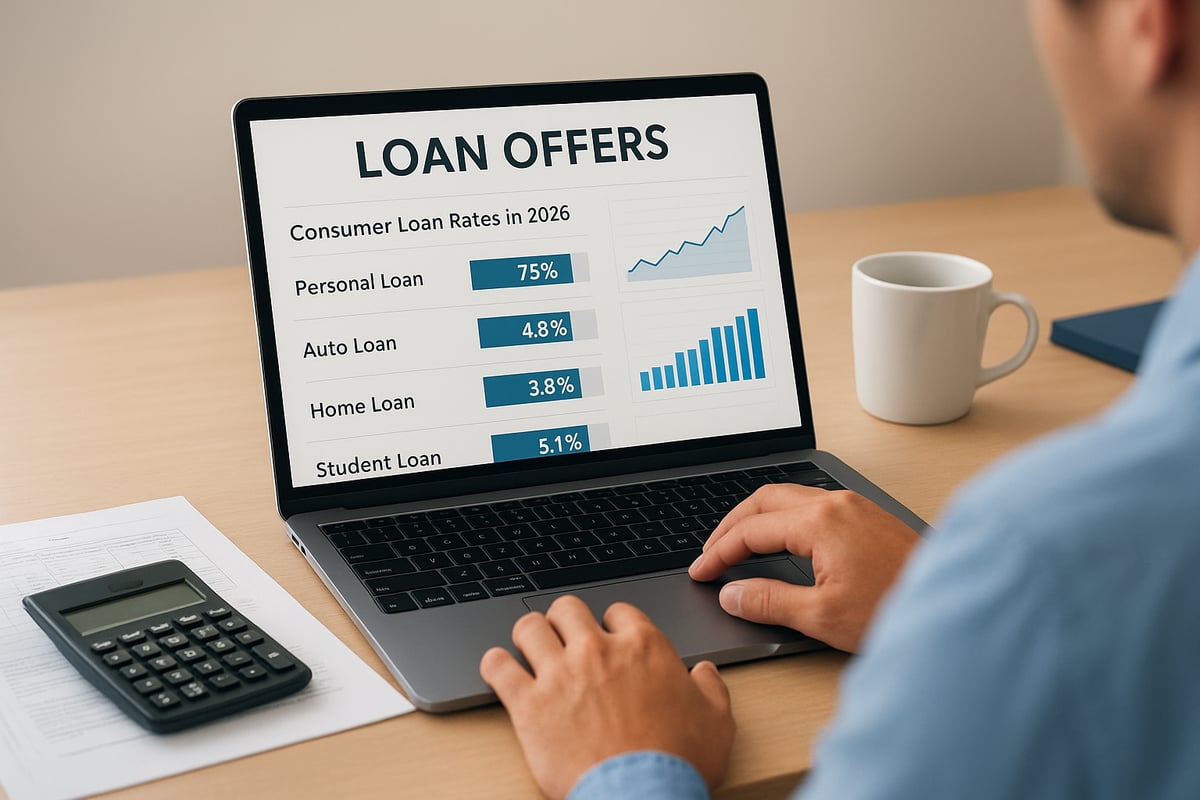
Understanding what drives consumer loan rates in 2026 is essential for every borrower. These rates are shaped by a combination of economic trends, your personal financial profile, the type and terms of your loan, and the lender you choose. Knowing how each of these elements interacts can help you secure more favorable loan terms.
Economic Conditions and Federal Policy
Economic forces play a powerful role in shaping consumer loan rates. The Federal Reserve’s decisions on benchmark interest rates directly influence what banks and lenders charge consumers. For example, when the Fed lowers its key rate, borrowing typically becomes less expensive, while rate hikes can make loans costlier.
Inflation and economic growth forecasts also affect consumer loan rates. If inflation is expected to rise, lenders may increase rates to protect their margins. Conversely, stable or declining inflation can help keep rates steady. In 2025, the Federal Reserve’s rate changes had a noticeable impact on lending costs, as detailed in this AP news report on a key rate cut. As we move into 2026, analysts expect continued sensitivity to Fed moves and economic projections, making it vital for borrowers to stay informed.
Creditworthiness and Personal Financial Profile
Your credit score is one of the most significant factors determining the consumer loan rates you’re offered. Lenders use your credit history, income, debt-to-income ratio, and employment status to gauge risk. A high credit score, such as 750 or above, can unlock rates as low as 8 percent. In contrast, applicants with scores below 600 may see rates exceeding 20 percent.
Other financial details, including steady employment and a low debt-to-income ratio, can further improve your chances of securing competitive consumer loan rates. Before applying, review your credit report, address any errors, and take steps to boost your score. These efforts can lead to substantial savings over the life of your loan.
Loan Type, Amount, and Term
The structure of your loan has a direct impact on consumer loan rates. Secured loans, which require collateral, generally come with lower rates than unsecured loans. For instance, certificate-secured loans might offer rates as little as 2 percent above the certificate’s yield, making them attractive options for eligible borrowers.
Loan amount and repayment duration also influence your rate. Larger loan amounts or longer repayment terms can increase risk for lenders, often resulting in higher consumer loan rates. Conversely, shorter terms and smaller loans may qualify for lower rates, but they usually require higher monthly payments.
Lender Type and Competition
Not all lenders offer the same consumer loan rates. Traditional banks, credit unions, online lenders, and specialty finance companies each have unique policies and pricing strategies. Credit unions, for example, often provide lower rates to their members, leveraging their nonprofit status to return value to borrowers.
Online lenders and financial technology companies increase competition, which can drive down rates and introduce more flexible loan options. Comparing offers from multiple types of lenders ensures you find the most favorable consumer loan rates and terms for your situation.
Each of these factors plays a crucial part in the final rate you receive. By understanding how they interact, you can make more informed decisions and potentially save thousands on your next loan.
Types of Consumer Loans and Their Expected Rates in 2026
Choosing the right loan type is crucial for borrowers aiming to secure the most competitive consumer loan rates. Each loan product comes with its own features, rate structures, and eligibility criteria. By understanding these differences, you can make informed decisions and potentially save thousands over the life of your loan.

Personal Loans
Personal loans are among the most flexible consumer lending options. They can be unsecured or secured, and are often used for home improvement, consolidating debt, or covering major expenses. In 2025, the average APR for a 60 month unsecured personal loan stood at 13.35 percent.
Looking ahead, experts project that consumer loan rates for personal loans in 2026 will range from 8 percent for highly qualified borrowers to over 20 percent for those with less favorable credit. For example, a $10,000 loan at 13.35 percent APR over five years would result in monthly payments of approximately $230, totaling $13,800 paid. Secured personal loans, which require collateral, may offer lower rates.
Table: Projected 2026 APR Ranges for Major Loan Types
| Loan Type | 2025 Avg. APR | 2026 Projected APR |
|---|---|---|
| Personal Loan | 13.35% | 8% – 20%+ |
| Auto Loan (New) | 7.03% | 7% – 9% |
| Home Equity Loan | 8.5% | 7% – 11% |
| Credit Card | 20.68% | 21% – 25%+ |
Auto Loans
Auto loans remain a popular form of installment credit, allowing consumers to finance new or used vehicles. The type of vehicle, loan term, and your credit profile all influence consumer loan rates in this category.
In 2025, the average APR for new car loans was about 7.03 percent, while used car loans averaged slightly higher. In 2026, most analysts expect a modest increase or stabilization in auto loan rates. For a $25,000 new car loan at 7.5 percent APR over 60 months, monthly payments would be around $500. Used car loans could see APRs between 8 percent and 11 percent, depending on the lender and borrower credit.
Home Improvement and Equity Loans
Home improvement loans can be either unsecured personal loans or secured home equity loans. Home equity loans use your property as collateral, often resulting in lower consumer loan rates compared to unsecured options.
In 2025, the average home equity loan APR was approximately 8.5 percent. For 2026, projections suggest rates between 7 percent and 11 percent, with fixed rates being common but some lenders offering variable options. Home equity lines of credit (HELOCs) may offer introductory rates, but these can adjust over time. For renovation projects, a lower rate can significantly reduce total interest paid.
Credit Cards and Revolving Credit
Credit cards offer revolving credit lines, typically with higher consumer loan rates than installment loans. The average APR for credit cards in 2025 was 20.68 percent, and forecasts for 2026 suggest rates could climb even higher, especially for variable-rate cards.
Consumers should be aware that carrying a balance on credit cards can quickly become expensive. For example, a $5,000 balance at 22 percent APR would accrue over $1,100 in interest if paid off over twelve months. Comparing credit card APRs to other consumer loans is essential when choosing a financing method.
Specialty Loans: Medical, Education, and Others
Specialty loans address specific needs, such as medical expenses, education, or even travel. The consumer loan rates for these products can vary widely based on the lender, loan purpose, and borrower profile.
Medical loans may offer promotional rates for certain procedures, sometimes as low as 6 percent for qualified applicants. Education loans, particularly private options, often mirror personal loan rates or slightly higher, depending on credit. Always review all terms before committing to specialty financing.
Secured vs. Unsecured Loans: Rate Implications
The distinction between secured and unsecured loans is pivotal in determining consumer loan rates. Secured loans, such as certificate or share-secured loans, require collateral and generally provide lower APRs. For instance, share-secured loans can offer rates as low as 2.80 percent APR for up to 120 months, making them attractive for borrowers with collateral.
Unsecured loans, which do not require collateral, tend to have higher rates due to increased risk for lenders. Borrowers with strong credit may still find competitive rates, but those with limited or poor credit could face APRs above 20 percent. Exploring a range of options offered by Standard Financial lending solutions can help you match your needs with the best possible rate and terms for 2026.
Understanding these loan types and projected consumer loan rates empowers you to make financial decisions that align with your goals and budget.
How to Compare Consumer Loan Offers Effectively
Comparing consumer loan rates is essential for making informed borrowing decisions. With a wide range of lenders and products available in 2026, understanding how to evaluate offers can help you avoid unnecessary costs and secure the most favorable terms for your needs.
Evaluating APR, Fees, and Total Cost
The Annual Percentage Rate (APR) is the most important figure to compare when evaluating consumer loan rates. Unlike a simple interest rate, the APR includes both interest charges and mandatory fees, giving you a clear picture of the total annual cost of borrowing.
Common fees to watch for include:
- Origination fees
- Prepayment penalties
- Late payment charges
Even small differences in APR or fees can significantly impact your overall repayment. Consider the following table, which compares two loan offers:
| Offer | APR | Origination Fee | Total Cost (5 Years, $10,000) |
|---|---|---|---|
| Loan A | 11.5% | $100 | $13,130 |
| Loan B | 13.5% | $0 | $13,800 |
In this example, Loan A has a lower APR but a small fee, while Loan B has a higher APR and no fee. Over the life of the loan, the difference in consumer loan rates leads to $670 in savings.
Always calculate the total cost, including all fees, before making a decision. This ensures you are not misled by a lower advertised rate that hides higher fees.
Understanding Loan Terms and Repayment Options
The loan term, or length of time you have to repay, directly impacts your monthly payments and total interest paid. Shorter terms usually mean higher monthly payments but less total interest, while longer terms offer lower payments but increase the overall cost.
For example, a $15,000 loan at 10% APR over 36 months results in a higher monthly payment than the same loan over 60 months, but you pay much less interest overall. When comparing consumer loan rates, factor in how the repayment period aligns with your budget and long-term financial plans.
Flexibility in repayment schedules, such as options for biweekly payments or early payoff without penalty, can also add value to your loan offer.
Using Loan Calculators and Online Tools
Online loan calculators are invaluable for comparing consumer loan rates and estimating monthly payments across different offers. By entering the loan amount, term, and APR, you can quickly see how each factor affects your total repayment.
For a hands-on experience, you can explore interest rates using online tools that let you adjust variables and view real-time comparisons. These resources help you identify the best options based on your credit profile and financial goals.
Before committing, run several scenarios to ensure the loan fits comfortably within your budget and minimizes interest paid over time.
Reading the Fine Print: Disclosures and Conditions
Before signing any agreement, carefully review all disclosures and conditions. Key terms to look for include:
- Variable rate clauses
- Penalty fees for late or missed payments
- Automatic rate adjustments
Variable rates can cause your payments to increase unexpectedly, while hidden penalties may add to your total cost. Understanding every detail ensures you are fully aware of how consumer loan rates and other terms may change over the life of the loan.
Taking the time to read the fine print protects you from surprises and helps you make a confident, informed choice.
Where to Find and Compare Offers
The best consumer loan rates can be found by shopping across multiple channels. Explore options from banks, credit unions, online lenders, and financial marketplaces. Many lenders offer prequalification tools that let you compare rates without impacting your credit score.
Gather at least three to five offers, review their terms side by side, and ask questions if anything is unclear. This approach increases your chances of finding the most competitive rate and the right loan for your needs.
Standard Financial: Flexible Lending Solutions for 2026 Borrowers
Navigating consumer loan rates in 2026 can feel overwhelming, but Standard Financial stands out as a trusted regional leader committed to making borrowing easier for individuals and families. Serving Louisiana, Mississippi, Tennessee, and Georgia, Standard Financial offers a comprehensive range of lending solutions tailored to the needs of today’s borrowers.
Their loan portfolio includes:
- Personal loans for every purpose
- Refinancing options to lower monthly payments
- Home improvement and renovation loans
- Medical expense and education loans
What makes Standard Financial unique is its flexible approach. The company is dedicated to helping clients secure loans even if they have faced credit challenges in the past. Borrowers benefit from:
- Flexible financing plans
- Competitive consumer loan rates
- Personalized service with a focus on customer satisfaction
- Affordable payments and clear terms
For example, individuals seeking personal loan options in Louisiana can find solutions designed to fit their financial circumstances, whether they have a strong credit history or are working to rebuild it. Standard Financial’s willingness to work with a variety of credit backgrounds sets it apart from many traditional lenders.
The application process is straightforward and designed for convenience, ensuring borrowers can access funds quickly and with minimal hassle. In a market where consumer loan rates can vary widely, Standard Financial’s transparent terms and commitment to competitive offers empower borrowers to make confident financial decisions.
If you’re searching for reliable, flexible lending in 2026, consider exploring what Standard Financial has to offer. Their commitment to affordable payments, personalized options, and customer support can help you secure the right loan at the best possible consumer loan rates.
Tips to Secure the Best Consumer Loan Rates in 2026
Securing the best consumer loan rates in 2026 requires a proactive and informed approach. By understanding what lenders look for and timing your application wisely, you can position yourself for optimal borrowing terms. The following strategies will help you take control of your financial journey and reduce the total cost of your loan.
Improving Your Credit Score Before Applying
Your credit score is one of the most significant factors in determining consumer loan rates. Start by checking your credit report for errors and disputing any inaccuracies you find. Pay down existing debts to lower your credit utilization ratio and make all payments on time to demonstrate reliability.
Avoid opening new lines of credit right before applying, as multiple inquiries can temporarily lower your score. Improvement may take several months, but even a modest increase can qualify you for lower consumer loan rates. Remember, lenders often reserve their best offers for borrowers with excellent credit profiles.
Timing Your Loan Application
When you apply for a loan can impact the consumer loan rates you receive. Economic cycles and Federal Reserve decisions often influence lender offers. For instance, rate drops sometimes follow policy changes or periods of economic uncertainty.
Stay informed by monitoring Projected US interest rates in 5 years to anticipate shifts that could affect your borrowing costs. Applying during periods of lower rates or lender promotions can make a noticeable difference in your monthly payments and the overall cost of your loan.
Shopping Around and Negotiating Terms
Never settle for the first offer you receive. Comparing multiple lenders is essential for finding the most competitive consumer loan rates. Each lender has unique approval criteria, and rates can vary widely even for similar borrower profiles.
Request prequalification from several institutions, as this usually does not impact your credit score. Once you have a few offers, use them as leverage to negotiate better terms. Some lenders may lower rates or reduce fees to win your business, resulting in long-term savings.
Choosing the Right Loan Type for Your Needs
Selecting the appropriate loan product is key to securing favorable consumer loan rates. Assess your borrowing purpose and match it to the loan type with the best terms. For example, home improvement projects may qualify for lower rates through secured loans or specialized products.
Review options like personal loans, auto loans, and home equity loans to determine which offers the lowest rates and fits your needs. If you are considering a renovation, researching home improvement loan rates can help you compare options and avoid overpaying.
Avoiding Common Pitfalls and Costly Mistakes
Borrowers often overlook hidden fees, variable rate clauses, or the long-term impact of extended repayment periods. To secure the best consumer loan rates, read the fine print for details on prepayment penalties, late fees, and potential rate changes.
Avoid borrowing more than you need, as this increases the total interest paid over time. Use loan calculators to estimate monthly payments and total costs, ensuring the loan fits comfortably within your budget and financial goals.
Leveraging Lender Relationships and Memberships
Building strong relationships with lenders can unlock exclusive consumer loan rates and benefits. Credit unions and regional lenders often offer lower rates or fee waivers to their members. If you already bank with a particular institution, inquire about loyalty discounts or special promotions.
Membership can also mean more flexible underwriting standards, especially for borrowers with less-than-perfect credit. Maintaining a positive relationship with your lender may result in better terms and a smoother borrowing experience.
2026 Consumer Loan Rate Outlook: Trends and Predictions
As we look ahead to 2026, understanding where consumer loan rates are headed is essential for anyone planning to borrow. Several factors, from economic shifts to new technologies, will shape the lending landscape. Let’s explore the trends and predictions borrowers should know.
Macroeconomic Factors Shaping 2026 Rates
The broader economy plays a pivotal role in determining consumer loan rates. The Federal Reserve’s policy decisions, especially changes to its benchmark rate, directly impact borrowing costs for consumers. In 2025, several rate hikes occurred in response to persistent inflation, pushing average personal loan APRs to around 13.35%.
Looking ahead, experts expect the Fed to maintain a cautious approach in 2026, balancing economic growth with inflation control. If inflation cools, modest rate reductions may follow, providing relief to borrowers. However, should inflation persist, consumer loan rates could remain elevated.
Economic forecasts suggest continued volatility. Monitoring Federal Reserve statements and economic indicators will help borrowers anticipate when consumer loan rates might shift. This awareness is crucial for timing loan applications to secure favorable terms.
Technological Advances and Online Lending
Fintech innovation is transforming how consumers access loans. Digital lenders and online marketplaces offer instant rate quotes, streamlined applications, and rapid approvals. These advances create fierce competition, often resulting in more attractive consumer loan rates for qualified applicants.
Borrowers can now use comparison tools to evaluate dozens of offers within minutes. This transparency encourages lenders to maintain competitive pricing. Digital verification and data-driven underwriting also make it easier for consumers with non-traditional credit backgrounds to qualify.
Technology’s influence will likely grow in 2026, making it essential to leverage online resources when shopping for consumer loan rates. Staying updated with new platforms can provide a significant advantage in finding the best deals.
Regulatory Changes and Consumer Protections
Regulatory shifts are another key trend influencing consumer loan rates. In 2026, new federal guidelines are expected to enhance transparency, requiring clearer disclosures of loan terms and costs. Rate caps on certain products may become more widespread, especially for high-cost short-term loans.
These changes aim to protect borrowers from predatory practices and hidden fees. Lenders must now provide more comprehensive breakdowns of interest, fees, and repayment schedules. This helps consumers make better-informed decisions and reduces the risk of costly surprises.
Staying informed about evolving regulations is critical. Borrowers should review all disclosures thoroughly and seek clarification on any unclear terms before agreeing to a loan.
Regional Variations in Consumer Loan Rates
Consumer loan rates can differ significantly based on location and lender type. Regional banks and local credit unions often offer more competitive rates than national lenders, particularly in the Southeast United States. For example, credit unions in states like Louisiana and Mississippi may provide lower average rates for auto and personal loans.
Borrowers should compare options across various institutions, including online lenders and specialty providers. Exploring auto loan rates in 2026 from regional lenders can reveal valuable opportunities, especially for those with strong local ties.
Understanding these geographic differences empowers borrowers to seek out the most favorable consumer loan rates in their area.
Predictions: Where Will Rates Go Next?
Experts predict that consumer loan rates will remain sensitive to economic and policy changes throughout 2026. While some stabilization is expected if inflation eases, rates may still fluctuate in response to global events or shifts in the labor market.
Borrowers should stay proactive by monitoring economic news and lender announcements. Flexibility and preparedness will be key. By following trends and using available tools, consumers can adapt to changing conditions and secure the best possible consumer loan rates.
Now that you have a clearer understanding of what influences consumer loan rates and how to navigate your options for 2026, you might be considering your next steps. At Standard Financial, we are committed to helping you secure financing that fits your needs, whether you are looking to consolidate debt, manage medical expenses, or invest in home improvements—even if your credit history is less than perfect. If you are ready to take control of your financial future with a lender who prioritizes flexibility and personalized service, Apply For A Loan Today.





No comment yet, add your voice below!