

Refinancing your car loan can be one of the smartest financial decisions you make in 2026, especially if you secured your original financing when rates were higher or your credit score has improved. Understanding car loan refinance rates and how they compare to your current loan terms is essential for determining whether you could save money each month. With interest rates fluctuating throughout the year and lenders offering competitive refinancing programs, now is an excellent time to explore your options and potentially reduce your monthly payments or shorten your loan term.
Understanding Car Loan Refinance Rates in 2026
Car loan refinance rates represent the interest percentage a lender charges when you replace your existing auto loan with a new one. These rates vary based on multiple factors and can differ significantly from what you originally secured when you purchased your vehicle.
The average car loan refinance rates in early 2026 typically range from 5.49% to 12.99% for borrowers with varying credit profiles. However, these rates change frequently based on economic conditions, Federal Reserve decisions, and individual lender policies. Your specific rate depends on your creditworthiness, loan amount, vehicle age, and the remaining loan balance.

Factors That Influence Your Refinance Rate
Multiple variables determine the car loan refinance rates you'll qualify for when seeking new financing:
- Credit score: The single most important factor, with scores above 720 typically receiving the best rates
- Loan-to-value ratio: How much you owe compared to your vehicle's current value
- Loan term: Shorter terms usually come with lower rates but higher monthly payments
- Vehicle age and mileage: Older vehicles or those with high mileage may face higher rates
- Income stability: Consistent employment history demonstrates repayment ability
- Debt-to-income ratio: Lower ratios indicate better financial management
Lenders also consider the current market conditions and their own funding costs when setting car loan refinance rates. This means the same borrower might receive different rate quotes from various lenders, making comparison shopping essential.
When Refinancing Makes Financial Sense
Not every situation calls for refinancing, even when car loan refinance rates appear attractive. You need to evaluate your personal circumstances and calculate potential savings before proceeding.
According to the Consumer Financial Protection Bureau’s guidance on auto loan refinancing, you should consider refinancing when you can reduce your interest rate by at least 1-2 percentage points. This threshold ensures that the savings outweigh any fees associated with the new loan.
Ideal Scenarios for Refinancing
| Situation | Potential Benefit | Consideration |
|---|---|---|
| Credit score improved 50+ points | Qualify for significantly lower rates | Review credit report first |
| Original loan rate above current market | Immediate monthly savings | Check for prepayment penalties |
| Need lower monthly payments | Extend term to reduce payment | May pay more total interest |
| Want to pay off loan faster | Shorten term with same payment | Higher monthly commitment |
| Removing a co-signer | Simplified loan responsibility | Must qualify independently |
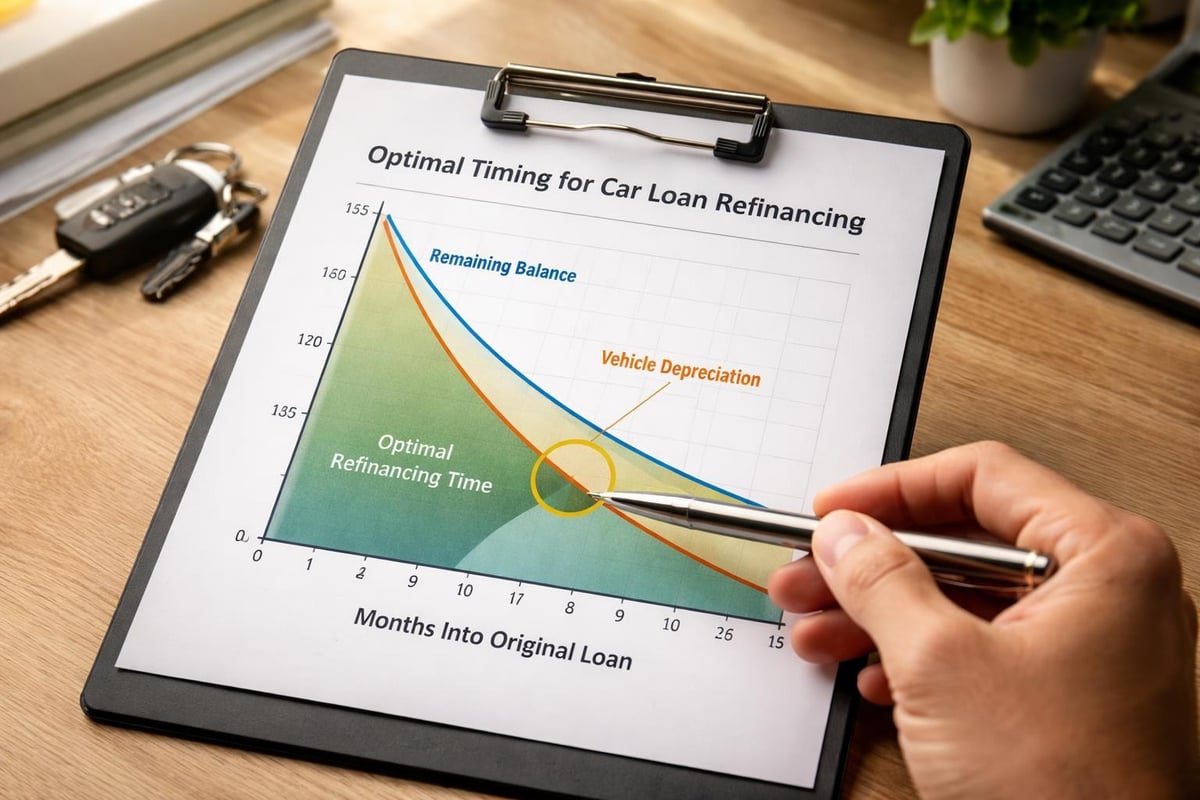
Refinancing works best when you're at least six months into your original loan but still have two or more years remaining. This timing allows you to maximize interest savings while ensuring sufficient remaining balance to make the process worthwhile.
You should avoid refinancing if you're close to paying off your current loan, as the fees and administrative costs might exceed potential savings. Similarly, if your vehicle has depreciated significantly and you owe more than it's worth, finding favorable car loan refinance rates becomes more challenging.
How to Find the Best Car Loan Refinance Rates
Securing competitive car loan refinance rates requires strategic planning and thorough research. The process involves multiple steps that help you identify lenders offering the most favorable terms for your specific situation.
Step-by-Step Rate Shopping Process
- Check your credit score and report: Obtain free copies from all three bureaus and dispute any errors
- Determine your vehicle's value: Use reliable sources like Kelley Blue Book or NADA guides
- Calculate your payoff amount: Contact your current lender for the exact balance
- Research multiple lenders: Compare banks, credit unions, and online lenders
- Gather pre-qualification offers: Many lenders provide rate estimates without hard credit pulls
- Compare total costs: Look beyond monthly payments to total interest paid
- Apply with your top choices: Submit formal applications within a 14-day window to minimize credit impact
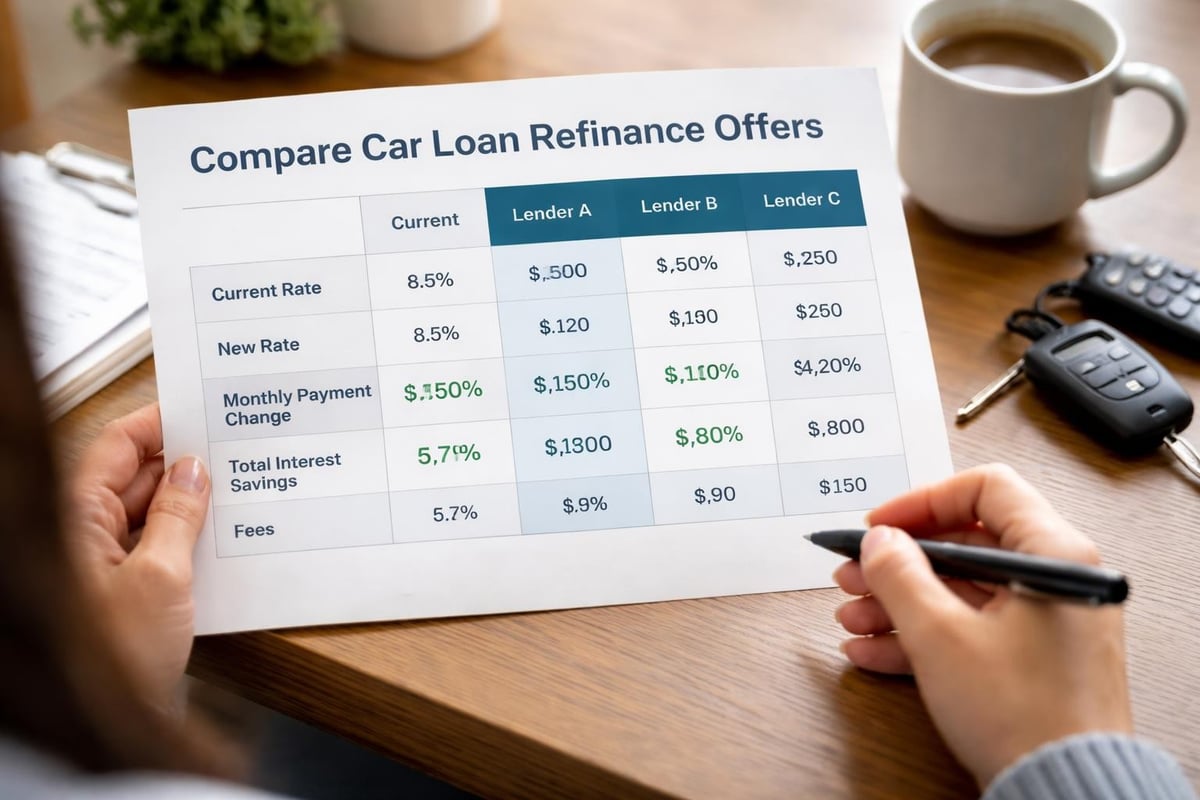
Credit Karma’s auto loan refinance guide emphasizes the importance of comparing at least three to five lenders before making a decision. This approach ensures you're getting truly competitive car loan refinance rates rather than settling for the first offer you receive.
Different Lender Types and Their Rates
The type of financial institution you choose significantly impacts the car loan refinance rates available to you:
Credit unions often provide the most competitive rates because they operate as non-profit organizations. Members typically enjoy rates 0.5% to 1% lower than traditional banks, though membership requirements may limit accessibility.
Traditional banks offer convenience and existing relationship benefits. If you already bank with an institution, you might receive preferential car loan refinance rates as a loyalty incentive, though their standard rates may not be the lowest available.
Online lenders have grown increasingly popular due to their streamlined application processes and competitive pricing. Without physical branches, these lenders often pass savings to customers through reduced car loan refinance rates and minimal fees.
Consumer lending specialists focus specifically on personal loans and refinancing products. These institutions often work with borrowers across various credit profiles and may offer more flexible terms than traditional lenders.
Calculating Your Potential Savings
Understanding the actual financial impact of different car loan refinance rates helps you make an informed decision. Simple calculations reveal whether refinancing delivers meaningful benefits or marginal improvements.
Sample Savings Scenarios
Consider a borrower with a $25,000 loan balance, 48 months remaining, and a current rate of 8.5%. Here's how different car loan refinance rates would affect their situation:
| New Rate | Monthly Payment | Total Interest | Monthly Savings | Total Savings |
|---|---|---|---|---|
| 8.5% (current) | $615 | $4,520 | $0 | $0 |
| 7.0% | $598 | $3,704 | $17 | $816 |
| 6.0% | $587 | $3,176 | $28 | $1,344 |
| 5.0% | $576 | $2,648 | $39 | $1,872 |
These examples demonstrate how even modest improvements in car loan refinance rates translate to substantial long-term savings. A two-percentage-point reduction saves this borrower nearly $1,500 over the remaining loan term.
Remember to factor in any fees when calculating your true savings. Some lenders charge origination fees, application fees, or title transfer costs that reduce your net benefit. A loan with slightly higher car loan refinance rates but no fees might prove more economical than one with lower rates and significant upfront costs.
Common Refinancing Mistakes to Avoid
Many borrowers inadvertently diminish their refinancing benefits by making preventable errors. Being aware of these pitfalls helps you navigate the process more effectively and secure better car loan refinance rates.
Critical Errors That Cost Money
- Extending the loan term excessively: While lower payments seem attractive, significantly extending your term means paying far more in total interest
- Ignoring fees and closing costs: Some lenders advertise low car loan refinance rates but compensate with high fees
- Refinancing too frequently: Each refinance involves costs and credit inquiries that can outweigh incremental rate improvements
- Failing to read the fine print: Prepayment penalties, variable rates, or balloon payments can create unexpected financial burdens
- Not shopping around: Accepting the first offer typically means leaving money on the table
Autotrader’s analysis of refinancing scenarios highlights that borrowers who compare multiple offers save an average of $80-$100 monthly compared to those who refinance with their first quote. This difference stems primarily from variations in car loan refinance rates between lenders.
Another frequent mistake involves refinancing when you're underwater on your loan. If you owe significantly more than your vehicle's current value, lenders may either decline your application or offer less favorable car loan refinance rates to offset their increased risk.
Special Considerations for Different Credit Profiles
Your credit situation dramatically influences which car loan refinance rates you can access and whether refinancing makes sense for your circumstances. Understanding how lenders view different credit profiles helps set realistic expectations.
Excellent Credit (720+)
Borrowers with excellent credit enjoy access to the most competitive car loan refinance rates available in 2026. You'll typically qualify for rates between 5.49% and 7.99%, depending on loan term and vehicle specifics.
Your refinancing strategy should focus on maximizing savings by securing the absolute lowest rate possible. Don't hesitate to negotiate with lenders, as they compete aggressively for borrowers with strong credit profiles. Consider shorter loan terms if your budget allows, as the combination of low rates and reduced time produces substantial interest savings.
Good Credit (680-719)
Good credit still provides access to favorable car loan refinance rates, typically ranging from 7.50% to 10.49%. While not quite as low as excellent credit rates, these percentages still offer significant savings opportunities if your current loan carries a higher rate.
Focus on demonstrating financial stability when applying. Recent payment history, consistent income, and low debt-to-income ratios can sometimes help you secure rates at the lower end of your eligible range.
Fair Credit (620-679)
Fair credit presents more challenges but doesn't eliminate refinancing possibilities. Car loan refinance rates for this range typically fall between 10.50% and 14.99%, though some specialized lenders offer more competitive options.
Your best approach involves improvement before application. Consider taking several months to pay down other debts, ensure all bills are current, and dispute any credit report errors. Even a 20-30 point score increase can shift you into a better rate tier and save thousands over your loan term.
Rebuilding Credit (Below 620)
Borrowers rebuilding their credit face the highest car loan refinance rates but shouldn't automatically assume refinancing is impossible. Consumer lending specialists and credit unions sometimes work with borrowers in this category, particularly if they demonstrate improved financial habits since obtaining their original loan.
Documentation and Application Process
Preparing proper documentation streamlines the refinancing process and can sometimes influence the car loan refinance rates lenders offer. Being organized demonstrates financial responsibility and reduces processing time.
Required Documents for Most Lenders
- Government-issued photo identification: Driver's license or passport
- Proof of income: Recent pay stubs, tax returns, or bank statements
- Proof of residence: Utility bill, lease agreement, or mortgage statement
- Current loan information: Account number, payoff amount, and lender contact details
- Vehicle information: Registration, title, current mileage, and VIN
- Proof of insurance: Current policy showing comprehensive and collision coverage
- References: Personal or professional contacts for verification
Some lenders request additional documentation based on your employment type or income sources. Self-employed borrowers typically need two years of tax returns and profit-and-loss statements, while those with variable income might provide six months of bank statements showing deposits.
Timeline Expectations
The refinancing process typically takes 7-14 business days from application to funding, though some online lenders complete transactions in as few as 3-5 days. During this period, your new lender contacts your current lender to obtain payoff details and arrange the loan transfer.
Rate locks are crucial if car loan refinance rates are fluctuating. Most lenders hold your approved rate for 30-45 days, protecting you from increases during processing. However, rates aren't guaranteed until you complete the formal application and receive written approval.
Geographic Considerations in the Southeast
Borrowers in Louisiana, Mississippi, Tennessee, and Georgia benefit from competitive regional lending markets where numerous institutions vie for refinancing business. These states feature diverse economic conditions that sometimes produce unique car loan refinance rates opportunities.
Regional Market Characteristics
| State | Average Credit Score | Market Competition | Special Considerations |
|---|---|---|---|
| Louisiana | 658 | Moderate-High | Oil industry impacts income stability |
| Mississippi | 652 | Moderate | Rural areas may have fewer lender options |
| Tennessee | 674 | High | Major metro areas offer best rates |
| Georgia | 673 | Very High | Atlanta market particularly competitive |
Regional credit unions often provide excellent car loan refinance rates for residents of these states, particularly those affiliated with employers, universities, or community organizations. These institutions understand local economic conditions and may offer more flexible underwriting than national lenders.
The presence of multiple branches from consumer lending specialists throughout these states creates additional competition that benefits borrowers. This competitive environment can result in car loan refinance rates that are 0.25% to 0.75% lower than national averages for similar credit profiles.
Impact of Vehicle Age and Type
Your vehicle's characteristics influence the car loan refinance rates lenders offer, with newer vehicles typically qualifying for better terms than older ones. Understanding these relationships helps set appropriate expectations during your search.
Age-Based Rate Adjustments
Most lenders impose rate increases or restrictions based on vehicle age and mileage. Generally, vehicles under five years old receive the best car loan refinance rates, while those over ten years old face significantly higher rates or may not qualify at all with certain lenders.
Mileage matters significantly as well. A three-year-old vehicle with 75,000 miles might receive higher rates than a five-year-old vehicle with 40,000 miles, as excessive mileage indicates heavier wear and potentially reduced collateral value.
Luxury vehicles, trucks, and SUVs sometimes command more favorable car loan refinance rates than economy sedans due to their higher resale values and broader market appeal. However, this advantage diminishes as vehicles age and depreciate.
Timing Your Refinance Application
Strategic timing can improve the car loan refinance rates you receive and maximize your overall savings. Several factors influence optimal application timing beyond just comparing current rates to your existing loan.
Seasonal Rate Patterns
Car loan refinance rates often follow predictable seasonal patterns influenced by Federal Reserve meetings, economic reports, and consumer lending cycles. Historically, rates tend to be most competitive during the first quarter and late fall when lenders seek to boost their lending volumes.
Federal Reserve announcements impact interest rates across all consumer lending products. Monitoring these meetings and acting quickly when rates drop can secure better car loan refinance rates before they potentially rise again.
Your personal financial calendar matters too. Apply when your credit utilization is lowest, typically right after paying off credit cards each month. This timing can result in a slightly higher credit score, potentially moving you into a better rate tier.
Refinancing your auto loan in 2026 offers substantial opportunities for savings when approached strategically, with the potential to reduce monthly payments or shorten your loan term significantly. By understanding how car loan refinance rates work, comparing multiple lenders, and timing your application appropriately, you can make an informed decision that improves your financial situation. Whether you're looking to lower your monthly obligations or pay off your vehicle faster, Standard Financial provides flexible refinancing options across Louisiana, Mississippi, Tennessee, and Georgia, with experienced loan specialists ready to help you find the best solution for your unique circumstances, even if you've faced credit challenges in the past.







No comment yet, add your voice below!