

The retail lending sector faces unprecedented change as we move toward 2026. Rapid digital disruption, shifting consumer demands, and economic uncertainty are redefining how lenders operate.
This guide equips financial institutions, fintechs, and lenders with strategies to succeed in the evolving retail lending landscape. You will discover emerging trends, innovative models, digital transformation tactics, risk management approaches, regulatory updates, and customer-focused practices.
Adapt now to seize new opportunities. Use these insights to future-proof your retail lending operations and drive sustainable growth.
The Retail Lending Landscape in 2026: Trends and Market Forces
As we approach 2026, the retail lending sector stands at a pivotal crossroads. Shifting macroeconomic conditions, digital disruption, and evolving consumer demands are reshaping how financial institutions, fintechs, and new entrants compete for borrower attention. The ability to anticipate change and adapt quickly is now a defining factor for success in retail lending.

Key Trends Shaping Retail Lending
Retail lending faces a new era defined by rapid transformation and fierce competition. Macroeconomic conditions such as inflation, fluctuating interest rates, and global uncertainty continue to shape lending volumes and risk appetites. Institutions are responding by rethinking their strategies and placing greater emphasis on agility.
The rise of fintech competitors and non-traditional entrants is intensifying the battle for market share. These agile players are leveraging digital onboarding and seamless, omnichannel experiences to attract younger, tech-savvy borrowers. For example, fintech lenders have rapidly grown their market share by streamlining the retail lending application process and reducing friction for customers.
Digitalization is now central to delivering value. Borrowers expect frictionless journeys, whether applying online, via mobile, or in-branch. As a result, both banks and fintechs are investing heavily in omnichannel platforms and digital tools. Heightened regulatory and compliance requirements, prompted by innovation, demand robust frameworks that balance speed with security.
Profit margins remain under pressure as competition heats up and customer expectations rise. Retail lending providers are finding new ways to serve underbanked and credit-challenged populations, prioritizing financial inclusion. According to Simon-Kucher insights, lending volumes continue to fluctuate with economic cycles, and margin compression is a persistent challenge.
To keep pace with these shifts, industry leaders turn to resources like retail lending insights and trends, which provide ongoing updates on best practices and market developments. Staying informed is essential for navigating the complexities ahead.
Competitive Dynamics: Banks vs. Fintechs vs. Big Tech
The competitive landscape in retail lending is evolving rapidly. Traditional banks bring extensive networks, deep customer relationships, and regulatory expertise. However, they often face challenges with legacy technology and slower innovation cycles.
Fintechs excel in speed, innovation, and customer experience. By leveraging advanced analytics and digital-first processes, they can offer personalized retail lending products and flexible pricing. Their agility allows them to respond quickly to market changes and shifting borrower preferences.
Big tech companies are emerging as formidable players, utilizing vast data sets and technology infrastructure to offer embedded lending solutions. Their strengths include scale, user engagement, and seamless integration within broader digital ecosystems.
Collaboration is increasingly common. Bank-fintech alliances enable traditional institutions to access innovative technologies and expand their retail lending offerings. For example, fintechs frequently use innovative pricing and product bundling to attract new customers and differentiate themselves.
Here is a summary table of competitive strengths:
| Player | Strengths | Weaknesses |
|---|---|---|
| Banks | Trust, regulatory experience, scale | Legacy systems, slower pace |
| Fintechs | Agility, tech innovation, CX focus | Brand recognition, scale |
| Big Tech | Data, tech, integration | Regulatory scrutiny |
Digital lenders’ share of new loan originations continues to rise, signaling a shift in consumer preferences and market dynamics. As each type of player adapts, retail lending will reflect a blend of innovation, partnership, and relentless focus on customer needs.
Building a Future-Ready Retail Lending Strategy
In the fast-evolving world of retail lending, building a strategy that stands the test of time is more crucial than ever. As 2026 approaches, financial institutions must rethink their approach to stay ahead of shifting consumer expectations, emerging technologies, and unpredictable market forces.

Embracing a Customer-Centric Approach
A future-ready retail lending strategy starts with the customer at its core. Lenders must move beyond generic products, instead designing solutions that adapt to borrowers' unique needs and life stages. For instance, flexible repayment options and tailored loan packages can significantly improve customer satisfaction.
Financial institutions that embed customer-centricity into their operations see higher engagement and long-term loyalty. By mapping out borrower journeys and identifying pain points, lenders can streamline processes and create value at every touchpoint in retail lending.
Leveraging Data-Driven Insights
Data is the backbone of modern retail lending. Leading organizations harness advanced analytics to understand borrower behavior, assess risk, and anticipate market shifts. This enables more accurate credit decisions and proactive portfolio management.
Utilizing big data, lenders can personalize offers, optimize pricing, and predict trends with greater confidence. Data-driven insights also support faster loan approvals and reduce friction in the application process, giving lenders a competitive edge in retail lending.
Integrating Digital Transformation
Digital transformation is essential for institutions aiming to future-proof their retail lending operations. Automation, artificial intelligence, and seamless digital platforms enable lenders to deliver faster, more convenient experiences while reducing operational costs.
Successful retail lending strategies combine digital onboarding, omnichannel access, and self-service tools to meet borrowers wherever they are. For a deeper look at how organizations are embracing innovation, explore about our lending solutions to see strategic approaches in action.
Agility and Adaptability as Success Factors
The retail lending landscape is marked by rapid change. Institutions that prioritize agility can quickly pivot in response to new regulations, economic cycles, or emerging competitors. This flexibility is vital for navigating margin pressures and evolving customer preferences.
Agile organizations foster a culture that embraces experimentation and continuous improvement. By encouraging cross-functional collaboration and swift decision-making, lenders can respond to opportunities and threats more effectively in retail lending.
The Role of Organizational Culture in Driving Innovation
A forward-thinking organizational culture underpins every successful retail lending strategy. Leaders must champion innovation, encourage open communication, and reward creative problem-solving. When teams feel empowered to propose new ideas, institutions are better positioned to adapt and thrive.
Embedding a culture of learning ensures that staff are equipped with the latest skills and insights. This commitment to development not only drives innovation but also strengthens the institution’s ability to deliver exceptional retail lending experiences.
In summary, developing a future-ready retail lending strategy requires a blend of customer focus, data intelligence, digital capabilities, agility, and a culture that champions innovation. By aligning these elements, lenders can build resilience and secure sustainable growth in a competitive market.
Digital Transformation and Technology in Retail Lending
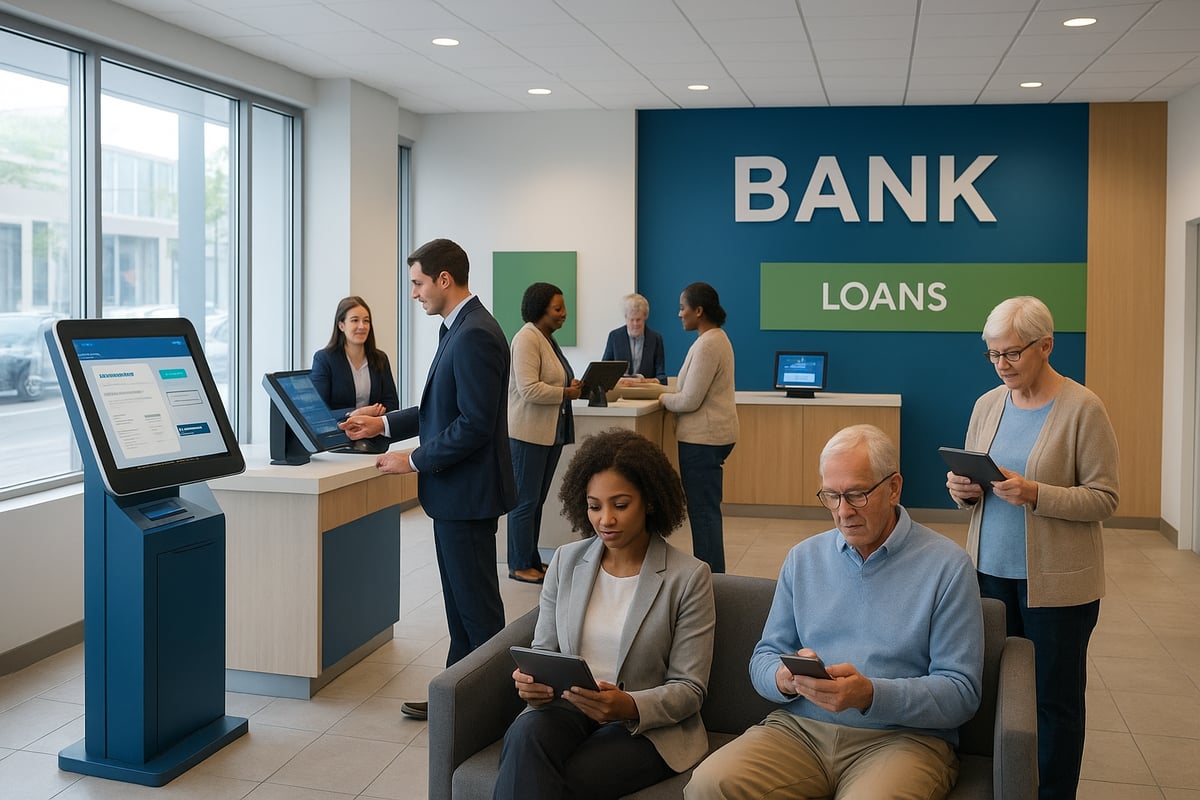
Digital transformation is reshaping retail lending, setting new standards for speed, convenience, and personalization. As borrowers demand seamless experiences, financial institutions must adopt advanced technology to remain competitive.
Automation, artificial intelligence, and machine learning are now central to modern retail lending strategies. These tools streamline loan origination, speed up underwriting, and reduce operational costs. For instance, banks deploying digital onboarding processes can cut application times from days to minutes, directly boosting customer satisfaction.
The shift to digital channels is driving higher conversion rates and improved loyalty. Omnichannel platforms make it possible to serve customers wherever they are, whether online, on mobile, or in branch. With rising competition and evolving customer expectations, technology is no longer optional. It is the foundation for delivering superior retail lending experiences and operational efficiency.
Leveraging Data and Analytics for Smarter Lending
Data and analytics are revolutionizing retail lending by enabling smarter, faster decisions. Predictive analytics help lenders assess credit risk and forecast loan performance with greater accuracy. By analyzing both traditional and alternative data sources, institutions can expand access to credit and reduce default rates.
Machine learning models can quickly identify patterns in applicant behavior, supporting real-time decision-making and fraud detection. For example, lenders are now using alternative data, such as utility payments and rental history, to evaluate thin-file borrowers who may lack a conventional credit record.
Adopting generative AI and advanced analytics is becoming a priority, as seen in the industry’s rapid investment in these technologies. According to recent studies, Generative AI adoption in lending is accelerating, with 83 percent of financial institutions increasing their budgets to enhance customer experience and efficiency.
Retail lending powered by smart analytics not only improves risk management but also enables personalized borrower journeys. This technology-driven approach is setting new benchmarks for accuracy and inclusivity.
Omnichannel Fulfillment and Service Excellence
Seamless integration of digital and in-person channels is now essential for retail lending success. Omnichannel fulfillment combines branch, online, and mobile experiences, allowing borrowers to start an application on one channel and finish it on another without friction.
Self-service platforms, such as mobile apps and online portals, empower customers to manage their loans independently. At the same time, staff-assisted options remain available for those who need guidance, ensuring everyone receives the right level of support.
Financial institutions are leveraging collaboration tools to coordinate service across all channels. This unified approach not only increases fulfillment rates but also helps optimize the customer journey from inquiry to funding.
As customer expectations grow, retail lending providers must deliver outstanding service at every touchpoint. Omnichannel excellence is a key differentiator, driving both customer acquisition and retention.
Risk Management and Fraud Prevention in the Digital Age
Modern retail lending faces increasingly sophisticated digital threats. Advanced risk analytics and automation tools are essential for identifying potential issues before they escalate. By continuously monitoring loan portfolios and borrower behavior, institutions can proactively mitigate risk.
Cross-channel fraud detection solutions help protect against identity theft and financial crime. Automated anti-money laundering (AML) systems streamline compliance, reducing manual workloads and the risk of human error.
Regulatory demands are also increasing, making compliance automation a strategic advantage. As fraud schemes evolve, retail lending providers must stay one step ahead with adaptive technology and robust security protocols.
In this digital age, combining technology with vigilant risk management is critical for safeguarding trust and ensuring long-term sustainability in retail lending.
Regulatory, Compliance, and ESG Considerations for 2026
Navigating the regulatory landscape in retail lending is more complex than ever as we approach 2026. Financial institutions must adapt to a web of evolving rules focused on consumer protection, data privacy, and responsible lending. These shifts are not just regional but global, shaping how products are designed, marketed, and delivered. Staying ahead of these changes is essential for building trust and ensuring long-term business viability.

Regulatory demands are intensifying as digital transformation accelerates in retail lending. Institutions now face stricter requirements for data handling, anti-money laundering, and fair lending practices. Global and regional regulators are responding with updated guidelines, prompting lenders to adopt automated compliance checks throughout the loan lifecycle. For example, some banks have integrated compliance automation tools that reduce manual errors and speed up regulatory reporting, allowing them to focus more on customer service and innovation.
Environmental, Social, and Governance (ESG) factors are rapidly becoming central to retail lending strategies. Lenders must now consider the impact of their portfolios on sustainability and social equity. This shift requires robust ESG screening, transparent disclosures, and proactive management of climate-related risks. Consider a case where leading banks have embedded ESG criteria into their lending decisions, using automated systems to flag high-risk loans and ensure alignment with global sustainability goals.
Balancing innovation with compliance is a true differentiator in retail lending. Those who leverage technology to automate regulatory processes can launch new products faster while staying within the bounds of the law. According to recent insights, regulators are actively updating standards to keep pace with digital advancements. For a comprehensive look at how digital strategies intersect with compliance, see this Digital transformation in retail banks literature review.
Transparent communications and ethical lending practices will be crucial in the years ahead. Customers increasingly expect clarity around data use, pricing, and responsible lending. By prioritizing transparency and adopting ethical frameworks, lenders can strengthen relationships and build loyalty. The future of retail lending will belong to those who integrate compliance, ESG, and customer trust into every aspect of their operations.
Customer-Centric Lending: Personalization, Inclusion, and Experience
Adopting a customer-centric approach is essential for financial institutions aiming to excel in retail lending. As borrower needs grow more diverse and expectations rise, lenders must deliver tailored experiences across every touchpoint. Customer-centric retail lending is more than a trend; it is the key to sustainable growth, improved satisfaction, and long-term loyalty.
Financial Inclusion and Alternative Credit Assessment
Expanding access to credit remains a vital goal in retail lending. Many consumers, especially those with limited or poor credit histories, have traditionally faced barriers when seeking financial products. Today, lenders are leveraging alternative data sources, such as utility payments and rental history, to assess creditworthiness beyond conventional scores.
This shift enables retail lending providers to serve underbanked and credit-challenged individuals more effectively. By adopting non-traditional scoring models, institutions can responsibly broaden their customer base and foster financial inclusion. Fintechs have pioneered these approaches, making digital onboarding and alternative assessments central to their strategies.
Personalization is also transforming the retail lending application process, allowing borrowers to experience streamlined, user-friendly journeys. Customized offers and transparent communication build trust, while digital tools simplify applications for all segments. These innovations not only expand access but also create a sense of empowerment for borrowers.
Enhancing Customer Engagement and Retention
Building long-term relationships in retail lending requires proactive engagement and a strong focus on customer experience. Lenders are increasingly using data analytics and customer feedback to refine products and personalize services. By understanding borrower preferences and behaviors, institutions can deliver relevant communications and anticipate needs.
Effective engagement strategies include timely updates, educational resources, and loyalty programs that reward ongoing relationships. Many banks now bundle value-added services like financial education alongside lending products, helping customers make informed decisions and strengthening their connection to the brand.
Digital engagement tools play a crucial role in boosting retention and wallet share. For example, banks using interactive platforms and personalized outreach have seen measurable improvements in customer satisfaction and loyalty. Data consistently shows that tailored lending experiences drive higher retention rates, making customer-centricity the foundation of successful retail lending.
Prioritizing each borrower's unique journey, from application to servicing, ensures that retail lending institutions remain competitive in a rapidly evolving market. By fostering inclusion, personalization, and proactive engagement, lenders can build trust and achieve sustainable growth.
The Future of Retail Lending: Innovation, Growth, and Opportunities
As the financial landscape races toward 2026, the future of retail lending is defined by rapid innovation and constant change. Institutions that anticipate the next wave of disruption are best positioned to thrive.
Anticipated Innovations in Retail Lending
The next generation of retail lending will revolve around breakthrough technologies. Embedded lending, where loans are seamlessly offered within non-bank platforms, is redefining how and where customers access credit. Open banking is unlocking new data-driven opportunities, enabling lenders to create hyper-personalized products. Real-time payments are streamlining the loan disbursement and repayment process, improving the borrower experience.
| Innovation | Description | Impact |
|---|---|---|
| Embedded Lending | Loans offered within third-party platforms | Expands lending reach and convenience |
| Open Banking | Secure data sharing across institutions | Enables personalization, faster decisions |
| Real-Time Payments | Instant transfer of funds and repayments | Enhances customer satisfaction |
Opportunities for Growth and Expansion
Retail lending is set to expand into underserved markets, particularly among underbanked and credit-challenged populations. By leveraging alternative data and innovative risk assessment tools, lenders can responsibly reach new borrowers. Additionally, new product categories such as green loans and buy-now-pay-later solutions are emerging as key growth drivers.
Strategic partnerships are central to this transformation. Banks are joining forces with fintechs to co-develop digital loan products, combine resources, and speed up time-to-market. These ecosystems allow institutions to adapt quickly and tap into niche customer segments.
The Role of Continuous Innovation
To remain competitive, organizations must foster a culture of ongoing innovation. This means making investments in technology, talent, and process redesign. As highlighted in Retail banking re-imagined, embracing digital transformation is essential for institutions of all sizes to stay relevant in retail lending.
Market data supports this urgency. By 2026, digital channels are projected to account for over 60% of all new retail lending originations globally. Technology adoption rates are accelerating, and customer expectations for seamless, personalized experiences are higher than ever.
Preparing for the Next Wave
The future of retail lending will be shaped by those who anticipate change rather than react to it. Institutions that innovate, collaborate, and place customers at the center of their strategy will unlock lasting growth. To explore how your organization can capitalize on these opportunities, contact our lending experts for tailored guidance.
As we look ahead to 2026, it's clear that staying ahead in retail lending means combining innovative strategies with a genuine understanding of your customers' needs. At Standard Financial, we’re committed to providing flexible financing solutions, whether you’re seeking a loan for home improvements, education, or other important life goals—even if you’ve faced credit challenges in the past. By applying the insights from this guide, you can confidently shape your financial future with a partner who puts your needs first. If you’re ready to take the next step, Apply For A Loan Today.






4 Comments
[…] rates or fees. Use current market data and trends to support your case. Staying informed about retail lending trends 2026 can give you an edge during […]
[…] as inflation and shifting employment patterns, have pushed lenders to innovate. According to recent retail lending trends for 2026, fintech-driven loans have increased by 30% from 2024 to 2026, reflecting rising demand for […]
[…] the pool of loan customers nationwide. For deeper insights on these evolving patterns, the Retail lending trends in 2026 article provides a comprehensive […]
[…] Review customer feedback and loan features to find the best fit. For a deeper look at lender options, see this Retail lending overview. […]