

Purchasing a camper opens up a world of adventure, family memories, and travel freedom. Whether you're planning weekend getaways, extended cross-country trips, or even considering full-time RV living, financing this significant purchase requires careful planning. A loan for a camper works differently than traditional auto financing, with unique terms, requirements, and opportunities that borrowers should understand before signing any paperwork. This comprehensive guide walks you through everything you need to know about camper financing in 2026, from initial approval to final payment.
Understanding Camper Loan Basics
A loan for a camper falls into a specialized category of recreational vehicle financing that blends elements of auto loans and personal loans. Lenders typically categorize these as secured loans, using the camper itself as collateral. This security allows financial institutions to offer competitive rates, though terms vary significantly based on the vehicle type, age, and total loan amount.
Camper loans typically feature:
- Loan amounts ranging from $10,000 to $300,000 or more
- Repayment terms between 10 and 20 years depending on the purchase price
- Fixed or variable interest rates based on creditworthiness
- Down payment requirements of 10% to 20% of the purchase price
- Secured financing using the camper as collateral
The RV Industry Association tracks lending trends that reveal how financial institutions approach this market. Recent data shows that lenders have become more sophisticated in their underwriting, considering factors beyond credit scores such as debt-to-income ratios, camping experience, and intended use of the vehicle.
Types of Campers and Financing Implications
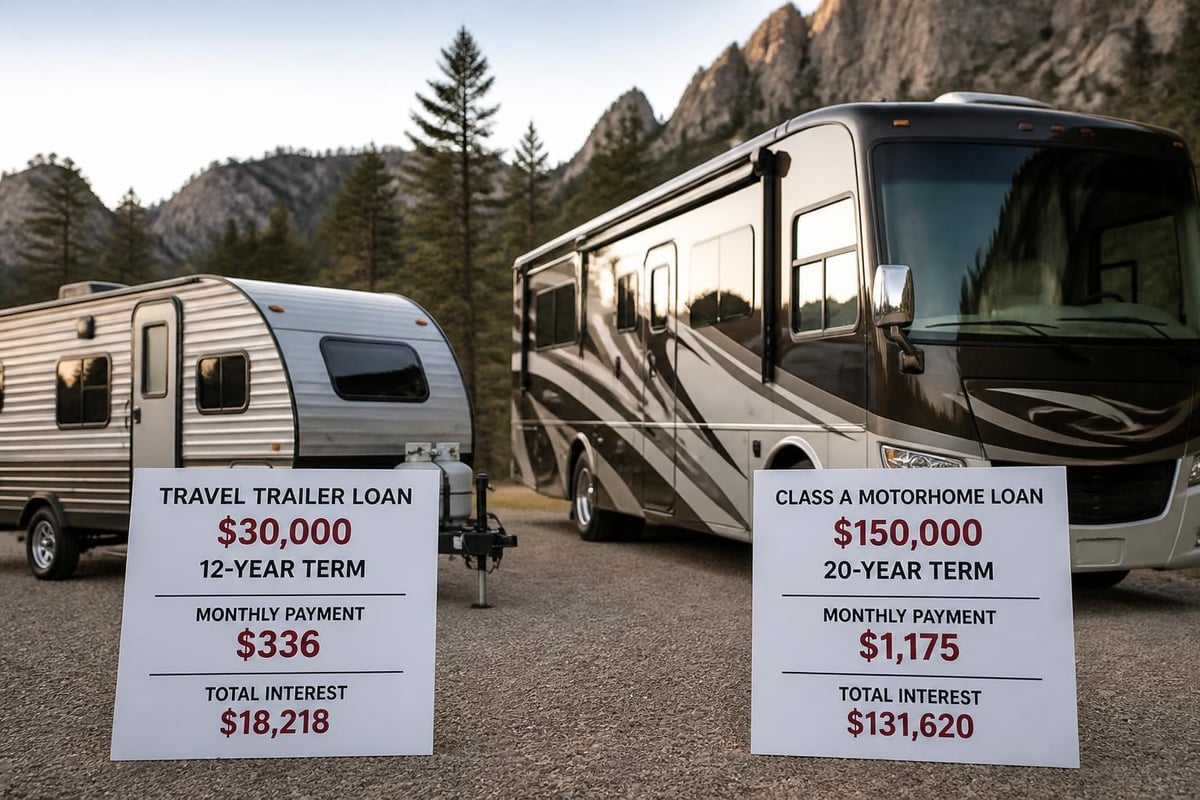
Different camper types affect loan terms and approval requirements. Travel trailers, fifth wheels, Class A motorhomes, Class B camper vans, and Class C motorhomes each carry different price points and depreciation rates that lenders consider.
Smaller travel trailers under $25,000 may qualify for personal loan financing, while larger motorhomes typically require specialized RV loans. The age of the camper matters significantly, with many lenders refusing to finance units more than 10 to 15 years old or requiring shorter terms and higher rates for older models.
Qualifying for a Loan for a Camper
Lenders evaluate camper loan applications using criteria similar to other major purchases, but with specific considerations for recreational vehicles. Understanding these requirements helps borrowers prepare strong applications and improve approval odds.
| Qualification Factor | Minimum Requirement | Preferred Level |
|---|---|---|
| Credit Score | 600-620 | 700+ |
| Debt-to-Income Ratio | Below 45% | Below 36% |
| Down Payment | 10% | 20% or more |
| Employment History | 1 year stable | 2+ years same field |
| Annual Income | Varies by loan amount | $40,000+ |
Credit scores play a crucial role in determining both approval and interest rates. Borrowers with excellent credit (740+) may secure rates several percentage points lower than those with fair credit (620-679). This difference compounds significantly over a 15 or 20-year term, potentially costing tens of thousands in additional interest.
Income and Employment Verification
Lenders want assurance that borrowers can comfortably afford monthly payments alongside existing obligations. Most require documentation proving stable income through pay stubs, tax returns, or bank statements. Self-employed applicants typically need two years of tax returns to verify income consistency.
The debt-to-income calculation includes your proposed camper payment plus all existing debts (mortgages, car loans, credit cards, student loans) divided by gross monthly income. Keeping this ratio below 40% significantly improves approval chances for a loan for a camper.
Comparing Financing Options
Borrowers have several paths to finance a camper purchase, each with distinct advantages and drawbacks. Choosing the right option depends on your financial situation, the camper's specifications, and your long-term goals.
Specialized RV Loans
Dedicated RV lenders and credit unions specializing in recreational vehicle financing often provide the most competitive terms for camper purchases. These institutions understand the unique aspects of RV ownership and depreciation patterns, allowing them to structure loans appropriately.
Advantages include:
- Extended repayment terms (up to 20 years for newer, high-value units)
- Competitive interest rates for qualified borrowers
- Flexible down payment options
- Expertise in RV-specific lending considerations
These specialized lenders may also offer seasonal payment plans or balloon payment options that align with how owners use their campers. Bankrate’s comprehensive RV loan guide provides current market rates and helps borrowers understand what to expect when shopping for financing.
Personal Loans for Smaller Campers
Personal loans work well for smaller campers, pop-up trailers, or used units that don't qualify for traditional RV financing. These unsecured loans typically offer faster approval and less stringent requirements, though with higher interest rates and shorter terms.
A personal loan for a camper makes sense when the purchase price falls below $25,000 or the unit is older than most RV lenders will finance. Standard Financial specializes in personal loans that give borrowers flexibility, even when credit history presents challenges.
Home Equity Financing
Homeowners with substantial equity might consider home equity loans or lines of credit to finance camper purchases. These secured loans against your home typically offer lower interest rates than traditional camper financing.
However, using home equity requires careful consideration. You're putting your home at risk if financial circumstances change, and the closing costs may offset interest savings on smaller loan amounts. The decision depends on your overall financial strategy and comfort level with secured debt.

Interest Rates and Terms Explained
Interest rates on a loan for a camper fluctuate based on market conditions, Federal Reserve policy, and individual borrower qualifications. In 2026, rates range from approximately 5.5% for well-qualified buyers on newer units to 12% or higher for subprime borrowers or older campers.
How Lenders Set Rates
Financial institutions price camper loans using a base rate plus a margin reflecting your credit risk. The base rate typically tracks with broader interest rate trends, while your personal margin depends on credit score, down payment size, income verification, and the camper's age and value.
Longer loan terms generally carry slightly higher rates to compensate lenders for extended risk exposure. A 20-year loan might have an interest rate 0.5% to 1% higher than a 10-year loan for the same borrower and vehicle.
| Loan Term | Average Rate (Excellent Credit) | Average Rate (Fair Credit) | Total Interest on $50,000 |
|---|---|---|---|
| 10 years | 6.25% | 9.75% | $17,229 |
| 15 years | 6.75% | 10.25% | $26,598 |
| 20 years | 7.25% | 10.75% | $37,042 |
These figures illustrate why comparing total loan costs matters as much as monthly payment affordability. A lower monthly payment stretched over 20 years costs substantially more than a slightly higher payment over a shorter period.
Fixed vs. Variable Rates
Most camper loans feature fixed interest rates, providing payment stability throughout the loan term. Fixed rates protect borrowers from market fluctuations and simplify budgeting for years ahead.
Variable-rate camper loans, while less common, may start with lower initial rates that adjust periodically based on market indices. These carry risk if rates rise significantly, potentially increasing monthly payments beyond comfortable levels.
Navigating the Application Process
Securing a loan for a camper involves several steps, from initial research through final approval. Understanding this process helps borrowers move efficiently and avoid common pitfalls.
Step-by-step application process:
- Check your credit reports and scores from all three bureaus
- Calculate your budget including monthly payment, insurance, storage, and maintenance
- Get pre-approved from multiple lenders to compare offers
- Shop for your camper with a clear price range in mind
- Submit formal application with your chosen lender
- Provide required documentation (income verification, identification, insurance quotes)
- Complete vehicle inspection if required by the lender
- Review and sign loan documents
- Finalize purchase and take delivery of your camper
Pre-approval gives you negotiating power at dealerships and private sales. Sellers take you more seriously when you demonstrate financing capability, and you avoid the pressure of dealer financing that may not offer the best terms.
Documentation Requirements
Thorough preparation accelerates the approval process. Gather these documents before applying:
- Valid driver's license or government-issued identification
- Recent pay stubs (last two months) or tax returns (if self-employed)
- Bank statements showing down payment funds
- Proof of residence (utility bills, lease agreements)
- Information about the camper (VIN, make, model, year, condition)
- Insurance quotes for the proposed purchase
- List of current debts and monthly obligations
Lenders may request additional documentation based on your specific situation. Responding quickly to these requests prevents delays and demonstrates your seriousness as a borrower.
Special Considerations and Tax Implications
A loan for a camper sometimes offers unique benefits beyond recreational vehicle ownership. Understanding these considerations helps you maximize the value of your purchase.
Tax Deductions for Qualified RVs
Certain campers qualify as second homes for tax purposes if they contain sleeping, cooking, and bathroom facilities. When used as a qualified second home, the mortgage interest may be tax-deductible, subject to current tax law limitations.
IRS Publication 463 outlines specific requirements and documentation standards for claiming these deductions. Consult with a tax professional to determine if your camper qualifies and how to properly claim available deductions.
Business owners using campers for work purposes might qualify for additional deductions or financing options through the Small Business Administration, particularly if the vehicle serves a legitimate business function like mobile offices or contractor housing.

Insurance Requirements
Lenders require comprehensive insurance coverage protecting their collateral interest. RV insurance differs from standard auto coverage, with specialized policies addressing unique risks like awning damage, personal belongings, emergency expenses, and vacation liability.
Insurance costs vary based on camper value, usage patterns, and coverage levels. Budget between $1,000 and $3,000 annually for full-coverage RV insurance, with higher premiums for expensive motorhomes or full-time living situations.
Market Trends and Future Outlook
The camper financing market continues evolving as more Americans embrace RV lifestyles. Current market data shows sustained interest in recreational vehicles, with financing terms adapting to meet diverse buyer needs.
Economic factors influence lending availability and terms. When Federal Reserve rates increase, camper loan rates typically follow, affecting monthly payment affordability. Conversely, rate decreases create opportunities for refinancing existing loans at better terms.
Avoiding Common Pitfalls
Smart borrowers avoid mistakes that increase costs or create financial strain:
- Don't overextend your budget: Keep monthly payments below 15% of gross income
- Avoid negative equity: Make substantial down payments to prevent owing more than the camper's worth
- Read all terms carefully: Understand prepayment penalties, late fees, and balloon payments
- Consider total ownership costs: Factor in insurance, maintenance, storage, and fuel
- Skip unnecessary add-ons: Dealer warranties and insurance products often carry high markups
The Consumer Financial Protection Bureau’s auto loan guidance applies equally to camper financing, helping borrowers understand their rights and identify predatory lending practices. Their research on negative equity provides valuable insights into maintaining healthy loan-to-value ratios throughout your financing term.
Refinancing Your Camper Loan
Market conditions and personal financial improvements create refinancing opportunities that reduce interest costs or adjust payment schedules. Refinancing a loan for a camper follows similar processes to original financing but focuses on replacing existing debt with better terms.
When Refinancing Makes Sense
Consider refinancing if:
- Current market rates have dropped 1% or more below your existing rate
- Your credit score has improved significantly since original financing
- You want to shorten or extend your loan term
- You can eliminate private mortgage insurance or similar charges
- Monthly payments strain your budget and term extension provides relief
Calculate the break-even point by dividing refinancing costs by monthly savings. If you plan to keep the camper longer than this period, refinancing likely saves money overall.
The Refinancing Process
Refinancing applications mirror original loan applications with credit checks, income verification, and vehicle appraisals. Many lenders offer streamlined processes for refinancing, particularly if you're staying with the same institution.
Shop multiple lenders to find the best refinancing terms. Your current lender may match or beat competing offers to retain your business, creating leverage in negotiations.
Lifestyle and Financial Planning
Retirement planning increasingly includes RV ownership, with many retirees using campers for extended travel or seasonal living. Financing considerations differ for retirement-age buyers, who may prefer shorter loan terms or larger down payments to avoid extended debt obligations.
Younger buyers often maximize loan terms to minimize monthly payments, accepting higher total interest costs in exchange for current cash flow flexibility. This strategy works when other financial priorities (retirement savings, emergency funds, home equity building) take precedence over minimizing loan interest.
Budget holistically when planning a loan for a camper. Beyond monthly payments, account for:
- Storage fees ($50 to $500 monthly depending on location and facility)
- Maintenance and repairs (typically 1% to 3% of camper value annually)
- Campground fees ($30 to $100+ per night)
- Fuel costs (large motorhomes average 6 to 10 miles per gallon)
- Registration, taxes, and licensing fees
- Emergency repair fund (recommended $2,000 to $5,000)
Making Your Decision
Securing a loan for a camper represents a significant financial commitment that requires thorough research, honest budget assessment, and careful lender comparison. The right financing structure balances affordable monthly payments with reasonable total interest costs while preserving financial flexibility for other goals.
Start by determining your realistic budget based on current income and expenses. Use online calculators to model different loan amounts, terms, and interest rates, understanding how each variable affects monthly obligations and total costs.
Visit multiple lenders to compare actual offers rather than relying solely on advertised rates. Credit unions, specialized RV lenders, and consumer finance companies each bring different strengths to camper financing. Don't hesitate to negotiate terms or ask about rate matching based on competing offers.
Financing a camper transforms from overwhelming to manageable when you understand available options, qualification requirements, and strategic approaches to securing the best terms. Whether you're purchasing your first travel trailer or upgrading to a luxury motorhome, informed borrowers make decisions that support both immediate dreams and long-term financial health. Standard Financial offers flexible personal loan solutions throughout Louisiana, Mississippi, Tennessee, and Georgia, working with clients across credit profiles to make recreational vehicle ownership accessible. Visit a branch office or apply online today to explore your financing options and start planning your next adventure.


No comment yet, add your voice below!