
Title loans in Louisiana are short-term loans secured by your vehicle's title, and approval generally depends on owning a car outright, showing identification, and proving you can repay. The cost is the main concern: these loans carry high finance charges, and missing payments can lead to losing the vehicle. This article covers what you need to qualify, how much you can borrow, what the loan really costs, and which alternatives may serve you better.
What Are Title Loans in Louisiana and How Do They Work?
A title loan lets you borrow money by pledging your vehicle's title as collateral while you keep driving the car. The lender places a lien on the title, and the lien is released once you repay the loan in full.
The process is short. You bring your vehicle and paperwork to a lender, the vehicle is appraised, and an offer is made based on its value and your repayment ability. If you accept, you sign the loan agreement and the lender holds your title until the balance is cleared.
Because the vehicle secures the debt, lenders often place less weight on credit history than banks do. That is the main appeal for borrowers with past credit problems or thin credit files. It is also the main risk, because the vehicle itself is on the line if payments stop.
Louisiana's lending rules apply to these transactions. Under Louisiana Revised Statutes § 10:12-103, transactions covered by that chapter remain subject to applicable consumer laws and other laws regulating loan rates, charges, agreements, and practices. In practical terms, a lender's paperwork does not exempt it from those consumer protections.
What Do You Need to Qualify for a Title Loan in Louisiana?
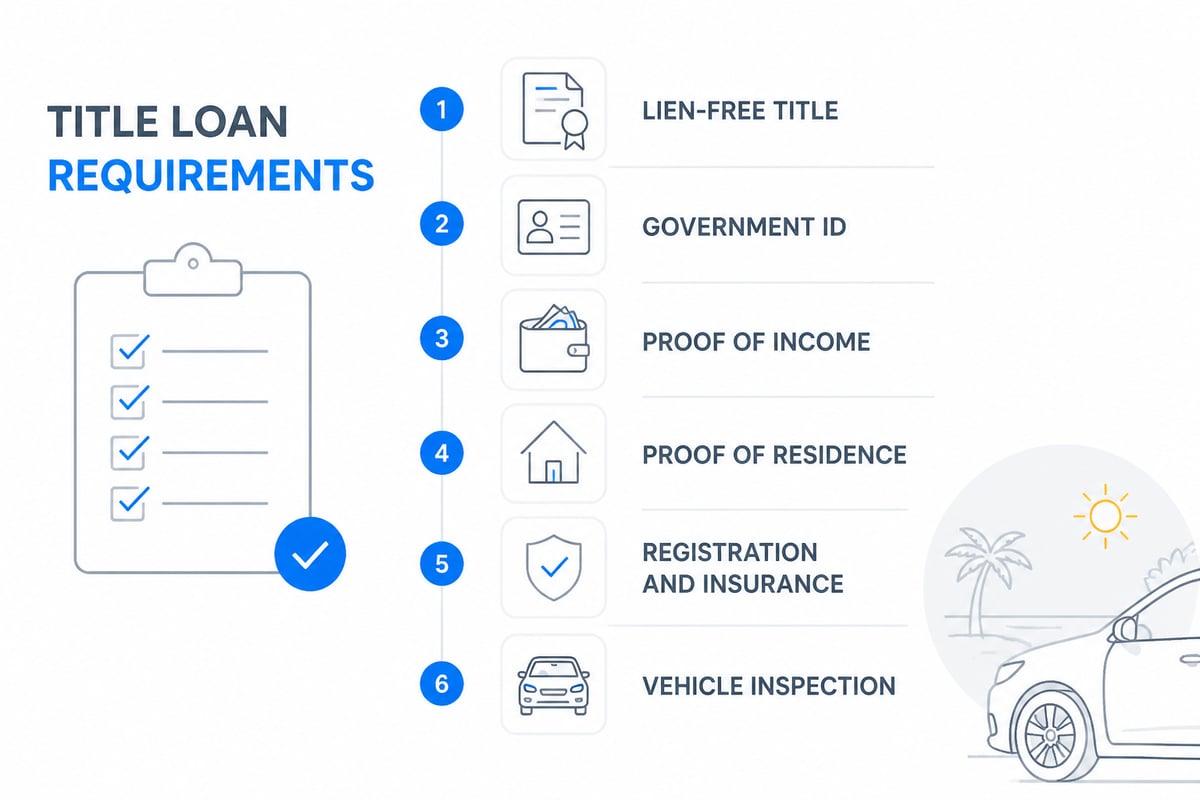
To qualify, you generally need a vehicle you own outright, a valid government-issued ID, proof of income, and proof of residence. Each lender sets its own list, so confirm requirements before you visit a branch.
Typical documents include:
- A lien-free title in your name, meaning no other lender has a claim on the vehicle
- A valid driver's license or state ID with a matching name and address
- Proof of income, such as recent pay stubs, benefit letters, or bank statements
- Proof of residence, such as a utility bill or lease
- The vehicle itself, so it can be inspected and appraised
- Current registration and, in many cases, proof of insurance
A lien-free title is the requirement that trips up the most applicants. If you still owe money on the car, the lender who financed it holds a lien, and a title lender will usually decline until that balance is paid off.
Before you apply, it helps to gather your paperwork, clean the vehicle, and locate any spare keys. A vehicle in good condition tends to appraise higher, which can affect the offer.
How to Get a Title in Louisiana If You Don't Have One
To get a title in Louisiana, you apply through the Office of Motor Vehicles with proof of ownership, identification, and any required fees. If you have lost the title, you request a duplicate, and if you recently bought the car, the title is issued in your name after the transfer is processed.
Since a title lender needs the physical title in your name, sort this out before applying. The usual steps are:
- Confirm whether a lender still holds a lien and, if so, pay it off and obtain the lien release.
- Gather your ID, proof of ownership such as a bill of sale, and your insurance information.
- Submit the application and fees to the Office of Motor Vehicles.
- Wait for the title to be issued, then confirm the name and vehicle details are correct.
Requirements and fees can change, so check current instructions with the Office of Motor Vehicles before you go. A title in someone else's name, such as a relative who sold you the car informally, will not work as collateral until it is transferred to you.
How Much Can You Borrow With a Title Loan?
Most title loans range from a few hundred dollars to a few thousand, and the amount is tied to your vehicle's appraised value and your income. A common practice is to lend a fraction of the car's wholesale value rather than its full worth.
Several factors shape the offer:
- Vehicle value: Age, mileage, condition, and make all affect the appraisal.
- Income: Lenders want evidence that your monthly budget can handle the payment.
- Existing obligations: Other debts reduce how much you can comfortably repay.
- Lender policy: Each company sets its own caps and terms.
Borrowing the maximum offered is rarely wise. A smaller amount means a smaller finance charge and a shorter path to getting your title back. Decide the exact dollar figure you need, then borrow that and no more.
What Do Title Loans in Louisiana Actually Cost?
The cost of title loans in Louisiana includes finance charges, fees, and in some cases the price of losing your vehicle, so the sticker rate understates the real expense. Always ask for the annual percentage rate (APR) in writing, since that figure lets you compare the loan against other options.
Louisiana law sets some boundaries on charges. Louisiana Revised Statutes § 9:3519 allows a minimum loan finance charge in place of other finance charges under the cited provision, and that minimum is capped by the amount advanced. That provision addresses minimum charges on small loans, and your actual cost depends on the specific loan type and agreement you sign.
When reviewing any offer, look for these line items:
| Cost element | What to ask |
|---|---|
| Finance charge | What is the total dollar amount over the full term? |
| APR | What is the annualized rate, including fees? |
| Origination or processing fees | Are they added to the balance or paid up front? |
| Late fees | When do they apply and how much are they? |
| Repossession and storage fees | What will be charged if the vehicle is taken? |
Add up every charge and compare the total repayment to the amount you receive. If the gap surprises you, that is useful information before you sign.
What Happens If You Can't Repay a Title Loan?
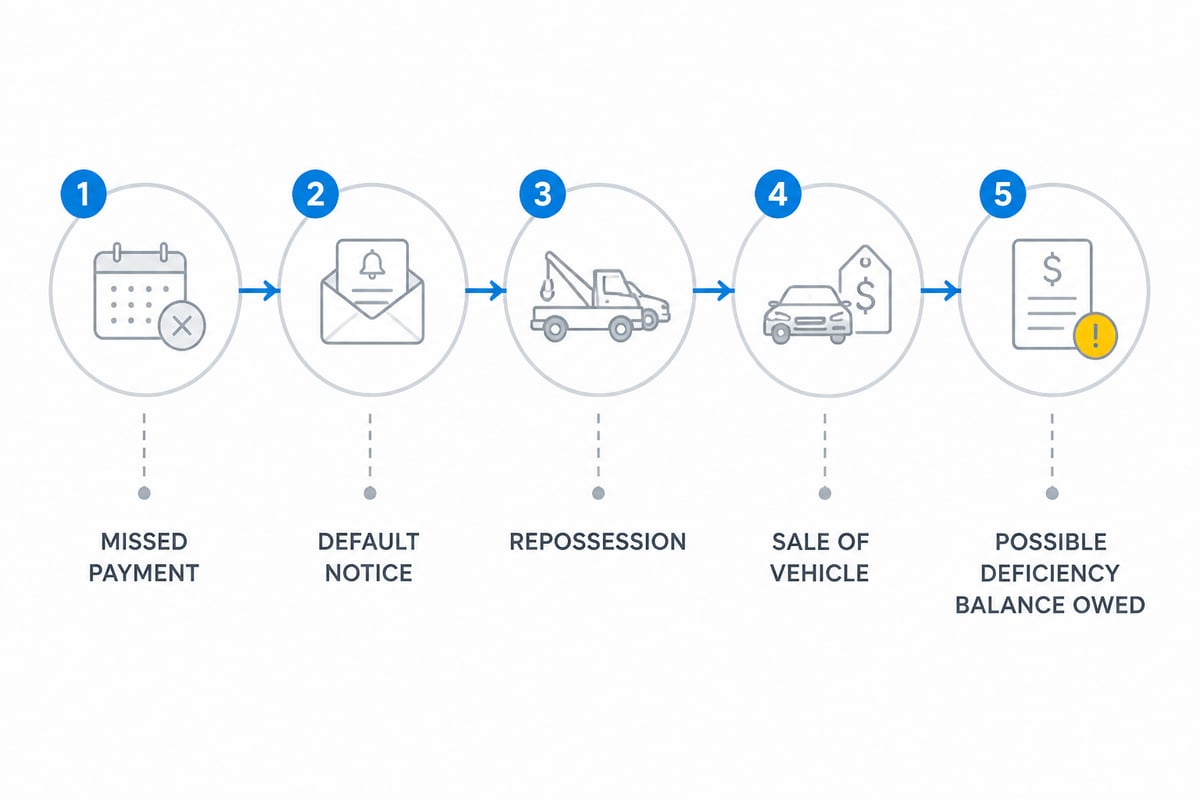
If you cannot repay, the lender may repossess your vehicle, and you can still owe money afterward. Repossession typically follows a default, and the exact timing depends on your loan agreement and Louisiana law.
The Consumer Financial Protection Bureau states that a repossession fee charged to a consumer must be reasonable, and that you can ask the lender for a list of repossession costs. It also notes you may owe a deficiency if the sale proceeds do not cover the debt and fees. In other words, losing the car does not always end the obligation.
Losing a vehicle can also make it harder to get to work, since many people rely on a car to commute. That ripple effect is why a title loan should only be considered when you are confident about repayment.
If you are falling behind, contact the lender before you miss a payment. Ask whether an extension, a revised schedule, or a partial payment is possible, and get any agreement in writing.
Are Title Loans Better Than Payday Loans?
Title loans are not clearly better than payday loans; each carries high costs, but title loans put your vehicle at risk while payday loans typically do not. The better choice depends on the amount you need, how quickly you can repay, and what you can afford to lose.
A payday loan is usually smaller and due on your next paycheck, with the risk centered on repeated renewals and fees. A title loan often allows a larger amount and longer term, but default can mean losing transportation.
For many borrowers, neither is the best fit. An installment loan with fixed payments and a clear end date is easier to plan around, and it avoids pledging the car you depend on every day.

Can You Get a Title Loan Without a Job?
You can sometimes get a title loan without a traditional job, but you still need to show a reliable source of income. Lenders commonly accept benefits, retirement income, disability payments, or self-employment records as proof.
What they will not do is approve a loan with no way to repay it. If your income is irregular, bring several months of bank statements to show consistent deposits.
If you have no steady income at all, a title loan is a risky choice, because a missed payment puts your vehicle in jeopardy immediately. In that situation, explore assistance programs, a co-signer, or a smaller loan sized to your actual budget.
Title Loans in Baton Rouge Through Standard Financial
For borrowers in the Baton Rouge area who want to understand a vehicle-secured loan before committing, Standard Financial publishes information on its title loans in Baton Rouge. Standard Financial works with people who have past credit issues, and it gives customers a chance to explain their credit situation so a solution can be built around it.
That conversation matters because the right product depends on your circumstances. A branch representative can walk through your income, your vehicle, and your goals, and tell you plainly what each option would cost.
Alternatives to Title Loans for Borrowers With Limited Credit
Several alternatives can meet the same need at lower risk, and many do not require you to pledge your car. Start with the options below before signing a title loan agreement.
- Installment personal loans: Fixed payments over a set term make budgeting simple, and purposes like home improvements, medical expenses, or education can often be financed this way.
- Refinancing an existing loan: If current payments are straining your budget, refinancing may lower the monthly amount or change the schedule.
- Credit union or community lender loans: Smaller institutions sometimes offer more flexible underwriting for members.
- Payment arrangements with creditors: Utilities, medical providers, and landlords will often agree to a payment plan if you ask early.
- A co-signer: A trusted person with stronger credit can improve your terms.
Standard Financial offers flexible financing plans and refinancing options through branch offices across Louisiana, Mississippi, Tennessee, and Georgia. A conversation about a personal loan or a refinance may reveal a path that keeps your title in your own hands.
How to Compare Offers Before You Sign
Compare every offer by total repayment, APR, term length, and the consequences of default, not by the monthly payment alone. A low payment stretched over a long term can cost far more than a higher payment paid off quickly.
Use this short process:
- Request the APR and total repayment amount in writing from each lender.
- Check whether the lender charges fees for early payoff, and choose one that does not.
- Confirm exactly what happens if you miss a payment, including fees and timelines.
- Read the agreement fully, and take it home if you need time.
- Walk away from any lender who pressures you to sign immediately.
Borrowers everywhere benefit from the same discipline: know the full cost, borrow only what you need, and keep a repayment plan you can actually follow.
FAQ
Do title loans in Louisiana affect my credit score?
Title lenders may not report on-time payments to credit bureaus, so the loan may not help your score. If you default and the debt goes to collections, however, the account can appear on your credit report and cause damage.
Can I keep driving my car during a title loan?
Yes, you keep using the vehicle while you repay, since the lender holds only the title. You are typically required to keep the car insured and in working condition for the length of the loan.
Can I pay off a title loan early?
Often you can, and doing so reduces the total finance charges you pay. Ask the lender before signing whether any early payoff penalty applies and get the answer in writing.
If you are weighing a title loan, your next step is to request the APR and total repayment amount in writing from any lender, including the title loans offered in Baton Rouge, so you can compare real costs. Standard Financial is a consumer lender with branch offices in Louisiana, Mississippi, Tennessee, and Georgia, offering flexible financing plans, refinancing options, and personal loans for needs like home improvements, medical expenses, and education, even for clients with past credit issues. If you would rather talk through your situation with someone who will listen to your credit history first, you can apply for a loan with Standard Financial and see which option fits your budget.

1 Comment
[…] specific situations. Borrowers considering a title loan as an alternative should read our guide to Louisiana title loans, which explains the requirements, costs, and repossession […]