
Flexible loans are borrowing products that give you some control over how much you borrow, how long you repay, or how your payments are structured, rather than locking you into a single rigid arrangement. Most people who qualify are working adults with a steady income, and many lenders will also consider applicants with past credit problems or limited credit history. This article explains the main types, how repayment works, what lenders review, and how to compare costs before you sign.
What Are Flexible Loans?
Flexible loans are loans with adjustable features, such as a choice of repayment term, a customized payment schedule, or the ability to borrow again against an existing account. The word "flexible" is a description, not a legal category, so the exact features depend on the lender and the product.
In practice, the term covers several different structures:
- Installment loans with a chosen term. You borrow a set amount and select a repayment period that fits your budget.
- Revolving or flex-style lines. You receive an approved limit, draw what you need, and repay over time. Once you pay down the balance, you may be able to borrow again.
- Refinanced loans. An existing loan is replaced with new terms, often to lower a payment or consolidate several debts.
- Purpose-based personal loans. These fund a specific need, such as home repairs, medical bills, or tuition, with terms matched to the project.
Because the label is broad, the most useful question to ask any lender is exactly which features you can change and which are fixed.
How Flexible Loans Work
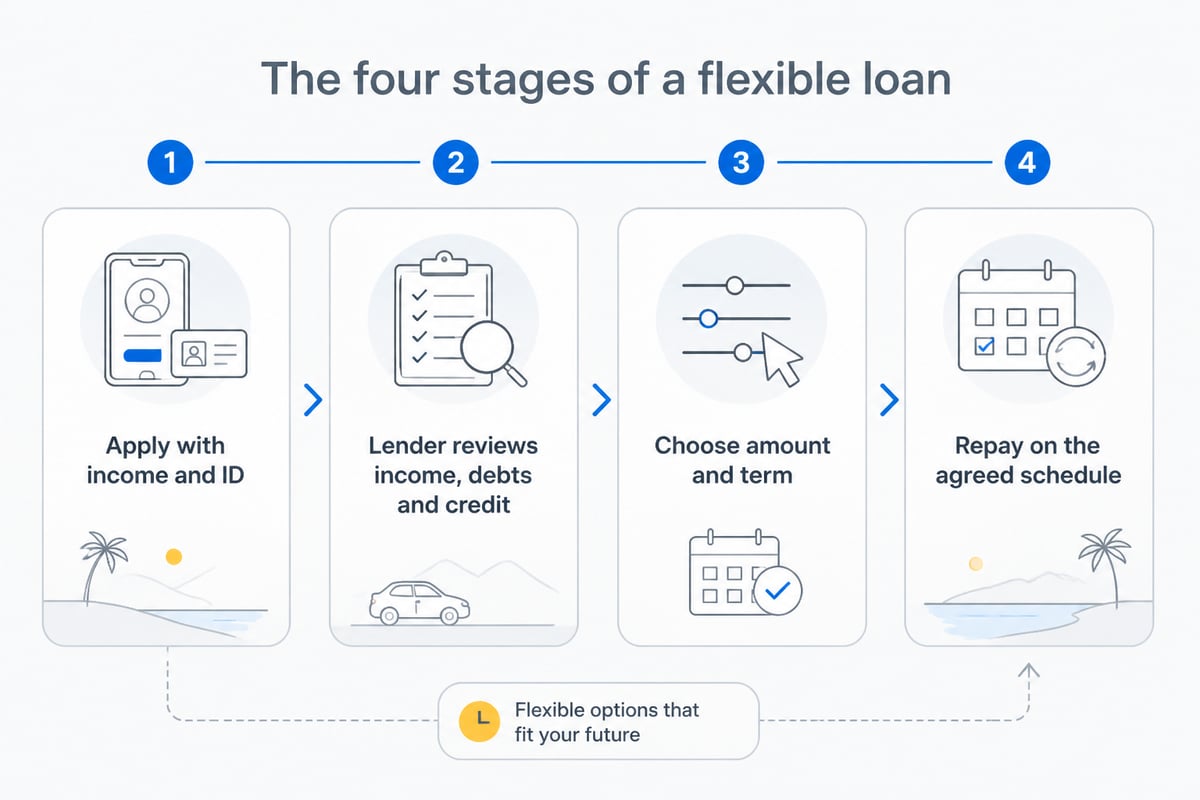
A flexible loan works in four stages: you apply, the lender reviews your income and credit, you agree to a structure, and you repay according to the schedule you selected. The details vary, but the sequence is consistent across most consumer lenders.
The Application and Review
You provide basic identification, proof of income, and information about your current obligations. The lender then reviews your ability to repay. Capital One notes that lenders may verify income and consider debt-to-income ratio, which means your monthly debts compared with your monthly earnings carry real weight alongside your credit score.
Choosing a Structure
This is where flexibility shows up. Depending on the product, you may select the loan amount, the number of months, and sometimes the payment date. A longer term lowers each payment but usually increases the total interest paid. A shorter term does the opposite.
Repayment
Repayment style is the clearest difference between loan types. MoneyHelper, a UK government-backed guidance service, observes that credit-card spending and balance transfers offer flexible repayments, while personal loans generally have fixed monthly repayments. The same distinction applies broadly to U.S. products: revolving accounts let you vary what you pay each month, while installment loans set a predictable amount.
Common Types of Flexible Loans
The most common types are installment personal loans, revolving flex loans, and refinanced loans, and each suits a different situation. Comparing them side by side makes the trade-offs clear.
| Loan type | Payment pattern | Best used for | Main trade-off |
|---|---|---|---|
| Installment personal loan | Fixed amount, set term | One-time expenses with a known cost | Less room to adjust payments mid-loan |
| Revolving flex loan | Variable, within minimums | Ongoing or uncertain expenses | Easier to carry a balance longer |
| Refinanced loan | New fixed schedule | Lowering a payment or combining debts | May extend the total repayment period |
| Purpose-based loan | Fixed, tied to a project | Home repairs, medical bills, tuition | Funds are meant for the stated purpose |
An overdraft is a related form of borrowing. MoneyHelper explains that it lets you spend more than your account balance up to an agreed limit, with interest usually charged daily until it is repaid. It is flexible, but daily interest can add up quickly if the balance lingers.
Who Qualifies for Flexible Loans?
Qualification depends mainly on proof of steady income, your existing debt load, and your credit profile, and no single credit score decides the outcome. Lenders weigh these factors together.
Credit Score
Score requirements differ by lender. Capital One gives 580 to 660 as an example range that may be considered fair credit, and notes that requirements vary by lender. A score in that range does not close the door on borrowing, though it can affect the rate and the amount offered.
Income and Debt-to-Income Ratio
Lenders want evidence that a new payment fits your budget. Recent pay stubs, benefit statements, or other consistent income records are typical. If a large share of your income already goes to debt payments, you may be offered a smaller amount or a longer term.
Past Credit Problems and Limited Credit
A past delinquency, a charge-off, or a thin credit file does not automatically disqualify you with every lender. Some lenders evaluate the full picture and give applicants a chance to explain what happened. Standard Financial, for example, offers personal loans and financing options that can be available to clients with past credit issues. If you live in Louisiana, Mississippi, Tennessee, or Georgia, that kind of branch-based conversation can matter more than a score alone.
What Flexible Loans Typically Cost
The cost of a flexible loan is the interest rate plus any fees, and the total depends on how long you carry the balance. Reading the full cost before you accept is the single most protective step you can take.
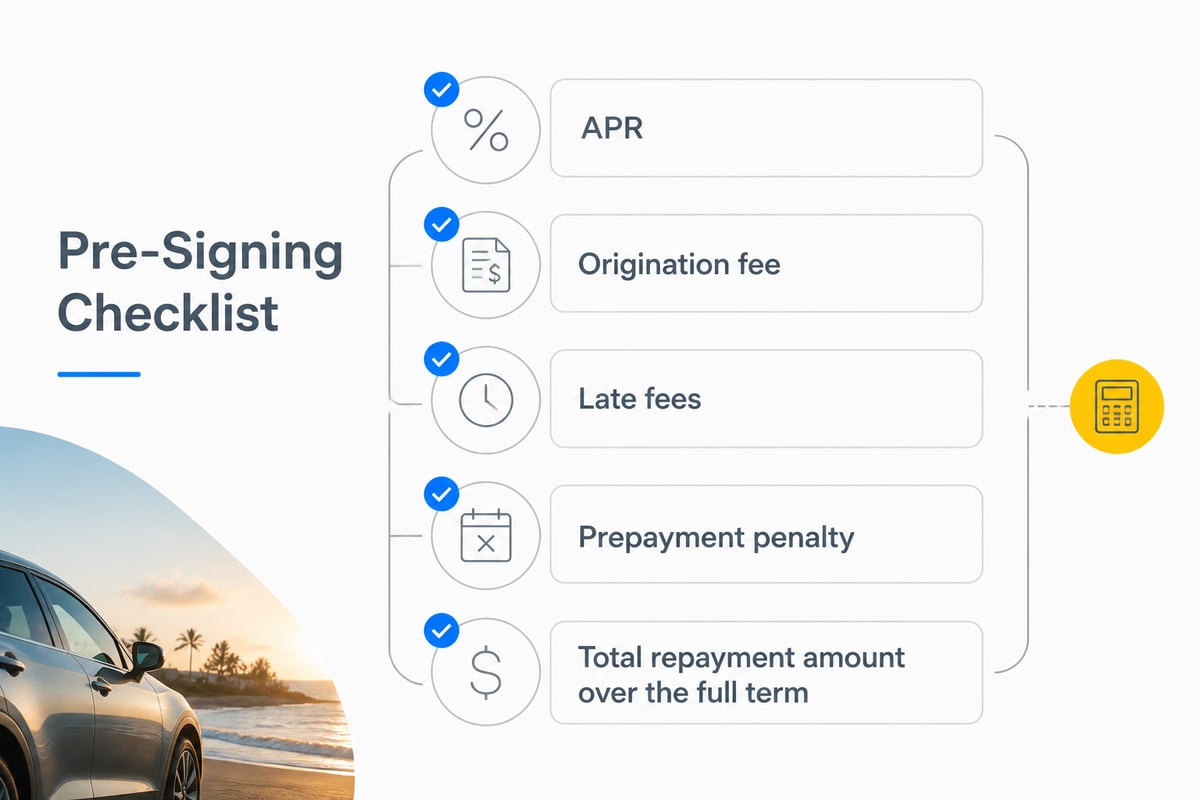
Check each of these items before signing:
- Annual percentage rate (APR). This reflects the yearly cost of borrowing, including certain fees.
- Origination or processing fees. Some lenders deduct these from the amount you receive.
- Late fees and returned-payment fees. Know the amount and the grace period.
- Prepayment terms. Confirm whether you can pay early without a penalty.
- Total repayment amount. Ask for the full dollar figure you will pay over the life of the loan.
Flexibility has a price in some cases. A product that lets you make small payments can keep you in debt longer, and the interest accumulates the whole time. Press the lender to show you the total cost at the minimum payment and at a higher payment so you can see the difference.
How Flexible Loans Affect Your Credit
A flexible loan affects your credit through the application inquiry, your payment history, and your overall balances. Handled well, it can help; handled poorly, it can hurt.
On time payments are reported to credit bureaus by many lenders and build a positive record over the months. A missed payment can do the opposite and stay on your report for years. Applying also creates a credit inquiry, which can cause a small, temporary dip.
With revolving products, the share of your available limit that you use also matters. Carrying a balance near the limit can weigh on your profile, so drawing only what you need is a sound habit. MoneyHelper's guidance on borrowing options is a useful reference for understanding how revolving credit behaves.

Flexible Loans for Common Southeast Needs
Flexible loans are most useful when the expense is real, the cost is known, and the repayment fits your monthly budget. Residents of Louisiana, Mississippi, Tennessee, and Georgia often borrow for a handful of recurring reasons.
- Home improvements. Roof repairs after storm season, plumbing, or a failed air conditioner can't wait, and a loan term matched to the project keeps the payment predictable.
- Medical expenses. Out-of-pocket bills for procedures, dental work, or prescriptions can arrive all at once.
- Education. Tuition, certification programs, or trade training can pay off through higher earnings, but only if the monthly payment is manageable.
- Refinancing. If you carry several loans with different due dates, a single refinanced loan can simplify your finances and sometimes lower the monthly amount.
Matching the loan to the purpose also helps you avoid borrowing more than you need. A repair estimate or a medical invoice gives you a concrete number to work from.
Alternatives to Consider
Before choosing a loan, compare it against the other ways to borrow, since each has different limits and costs. MoneyHelper lists typical limits of £50 to £10,000 for credit-card spending and £1,000 to £50,000 for personal loans, and notes that loans up to £50,000 can often be repaid over as long as five years. Those figures are from the UK, so U.S. limits and terms will differ, but the pattern holds: cards suit smaller, short-term needs, while personal loans handle larger amounts over longer periods.
Other options worth weighing include:
- A smaller loan. Borrowing less may remove the need for extended terms.
- A payment plan with the provider. Hospitals, contractors, and schools sometimes offer interest-free installments.
- A credit card. This can work for a small expense you can repay within a month or two, but rates are often high if you carry a balance.
- Refinancing an existing loan. If the problem is a payment that is too high, new terms may solve it without adding new debt.
If you already have several debts, MoneyHelper's guidance on borrowing options can help you think through which balance to tackle first.
Questions to Ask Before You Borrow
Asking the right questions at the branch or on the phone protects you from surprises later. Bring this short list when you talk to any lender:
- What is the APR, and is it fixed or variable?
- Which parts of this loan can I adjust, and at what cost?
- Are there fees for paying early or paying late?
- Does the lender report payments to the credit bureaus?
- What is the total amount I will repay?
- What happens if I miss a payment or need to change the due date?
A clear, direct answer to each question is a good sign. Vague answers suggest you should keep comparing.
Choosing a Lender You Can Talk To
The right lender for flexible loans is one that explains the terms plainly, considers your whole situation, and gives you a realistic repayment plan. Local branch access helps, because you can sit down with a person, bring your documents, and ask follow-up questions in real time.
Standard Financial offers flexible financing plans, refinancing options, and various personal loans for home improvements, medical expenses, and education. With branch offices across Louisiana, Mississippi, Tennessee, and Georgia, applicants can discuss their circumstances face to face rather than relying only on an automated score.
Gather your last two pay stubs, a list of your current monthly debts, and a repair estimate or bill for the expense you need to cover, so you know exactly how much to borrow. With those in hand, you can compare terms with confidence and ask a lender to show you the total cost. If you want a team that listens to your credit history and builds a plan around it, Standard Financial makes it simple to start by letting you apply for a loan with a branch in Louisiana, Mississippi, Tennessee, or Georgia.

2 Comments
[…] Financial offers personal loan products with flexible repayment terms that can provide more affordable solutions than payday alternatives for customers across Louisiana, […]
[…] While some lenders maintain minimum credit score thresholds of 580-620 for personal loan consideration, others specialize in serving borrowers with past credit challenges. Louisiana's diverse lending marketplace includes institutions that evaluate applications holistically, considering factors beyond credit scores alone. Louisiana residents with damaged credit can also compare local options in our guide to bad credit loans in Baton Rouge. Borrowers who want to see how these lenders structure flexible loans and weigh past credit problems can read our guide to flexible loans explained. […]